What Are Pavers and Why Do They Matter for Outdoor Spaces?
Pavers are individual, pre-cut units of natural stone, porcelain, or concrete used to build patios, walkways, driveways, and pool surrounds. Instead of a single poured slab, they are laid piece by piece, which allows for pattern variation and easier spot repairs over time.
For outdoor projects across Northern Nevada and Northern California, material choice has a direct effect on how a surface looks and performs through changing seasons. Stone pavers, cut from materials such as granite, travertine, and quartzite, bring texture and color variation that manufactured units rarely match.
Climate matters too. Homeowners researching low-maintenance pavers for humid climates are usually comparing sealing needs, moisture handling, and finish options before choosing a material. This guide breaks down the benefits, common applications, and practical considerations involved in selecting exterior stone units, along with a straightforward comparison of popular paving materials.
Key Benefits of Pavers for Exterior Stone Projects
Stone pavers offer a distinct set of advantages over single-pour surfaces, particularly for homeowners who want visual character alongside durability. Each unit is cut and finished individually, which means natural veining and tonal variation carry through the entire finished area rather than appearing as a flat, uniform slab.
Because units are laid separately, a damaged or stained piece can often be addressed on its own instead of disturbing the surrounding surface. This modular quality also supports creative layout patterns, from herringbone walkways to mixed-format patios that blend larger and smaller stone pieces.
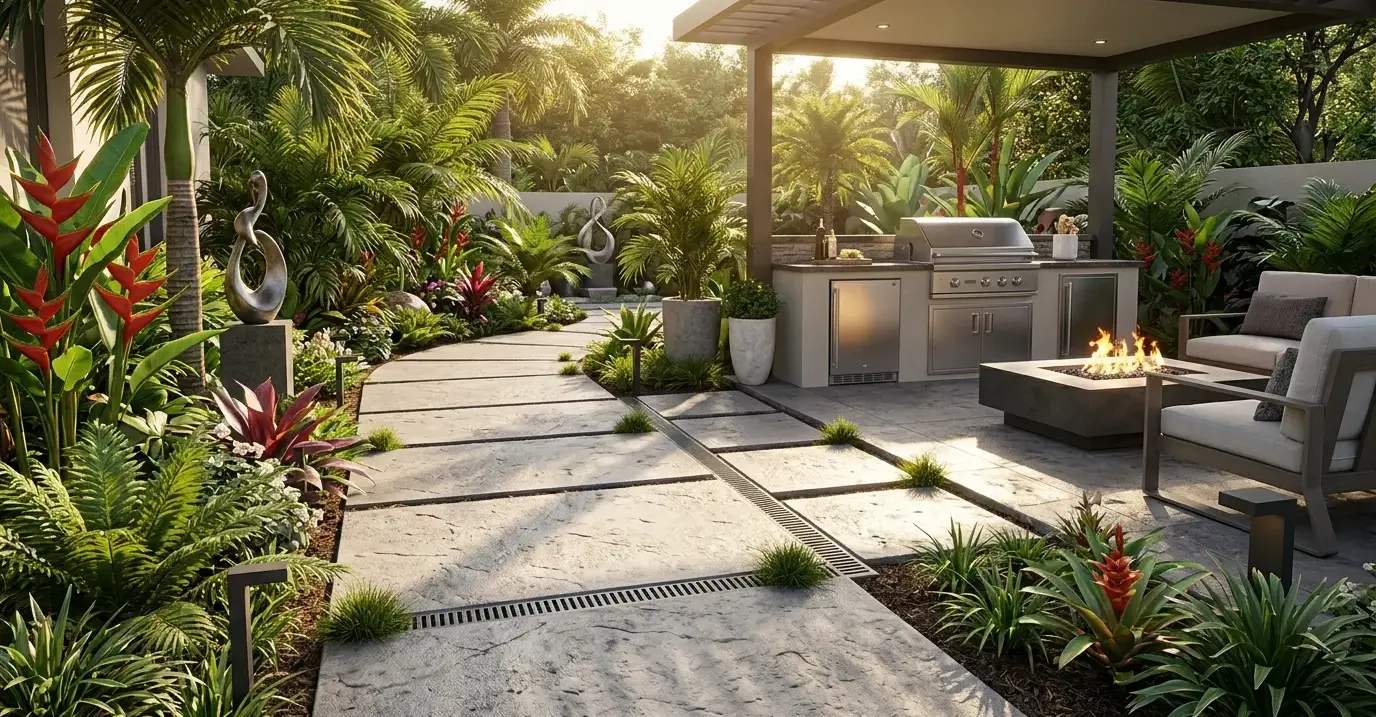 Conceptual rendering
Notable advantages of stone units for outdoor spaces include:
- Natural color and texture variation across granite, travertine, and quartzite options
- Modular layout flexibility for patios, walkways, and pool surrounds
- A range of finishes, including honed and specialty textures suited to different design goals
- Durability that holds up to regular foot traffic, with proper care and periodic sealing where required
- Compatibility with the same design language used indoors, for visual continuity between interior and exterior stone
For upkeep routines, a general cleaning guide outlines simple techniques for removing everyday dirt and light staining from hard outdoor surfaces. Regular rinsing and prompt spill cleanup go a long way toward preserving the original finish, though proper care remains an ongoing responsibility rather than a one-time task.
Design Ideas and Applications for Outdoor Stone Projects
Exterior stone units show up in a wide range of residential settings, from compact side yards to full backyard entertaining spaces. The right application depends on foot traffic, sun exposure, proximity to water, and the overall design style of a property.
Layout patterns also influence how a finished area reads visually. A running bond pattern feels linear and formal, while a mixed-module layout with varied stone sizes creates a more relaxed, organic look suited to garden paths and courtyards.
Patios and Walkways
Patios and connecting walkways are among the most common uses for exterior stone units, since these areas benefit from both visual interest and a stable walking surface. Textured, flamed, or bush-hammered finishes are generally preferred over polished or honed ones in these zones, since the added surface texture improves traction underfoot, especially when wet.
Mixed sizing and coursing patterns can help define separate zones within a single patio, such as a dining area versus a lounge space, without introducing additional materials.
Pool Decks and Wet-Area Considerations
Pool decks and other wet-adjacent areas call for extra attention to surface texture. The ANSI NFSI standard defines how wet-surface slip resistance is tested and rated for hard walkways, and it is a useful reference point when comparing finish options for a specific product with a specialist.
Granite, quartzite, and porcelain are generally the more sun-tolerant choices for full-exposure pool surrounds, though UV performance still varies by product. Verifying the exact manufacturer sun exposure rating before finalizing a material remains a worthwhile step for any full-sun, uncovered pool surround.
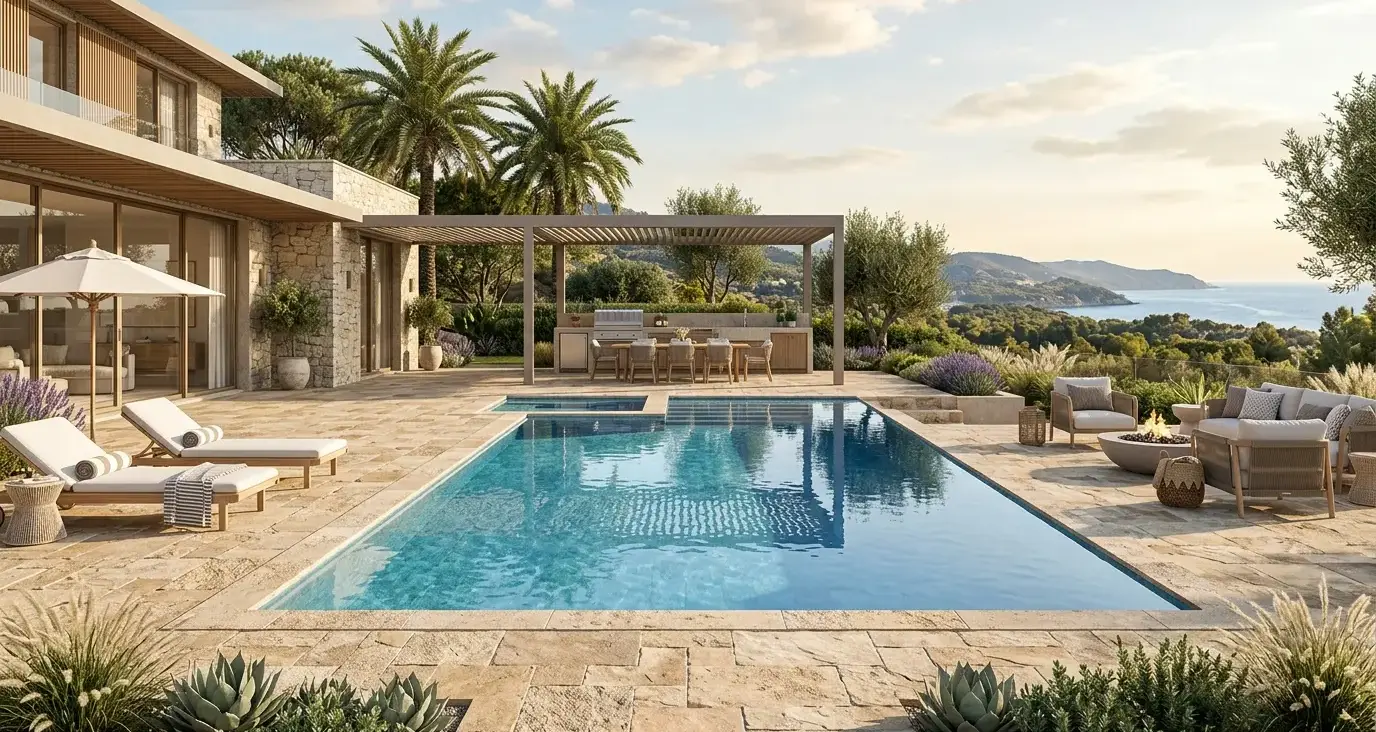 Conceptual rendering
Low-Maintenance Pavers for Humid Climates
Moisture-prone environments place different demands on exterior stone than dry inland climates do. In humid conditions, porous natural stone such as travertine benefits from periodic sealing to help manage moisture absorption and reduce the likelihood of surface staining over time.
Porcelain units, by comparison, are typically less porous and do not usually require the same sealing schedule, which can simplify upkeep in consistently damp or coastal-adjacent settings. Selecting a finish suited to the local climate, rather than defaulting to whatever looks best in a showroom photo, tends to produce better long-term results.
For a measurable way to compare moisture behavior, the ASTM C97 test method covers absorption testing for dimension stone, with slate excluded. Asking for a stone's reported absorption helps when planning a finish and sealing routine for a damp site.
Comparing Common Paving Materials
Attribute | Natural Stone Units | Porcelain Units | Concrete Units |
Material Origin | Quarried stone (granite, travertine, quartzite) | Engineered ceramic material | Manufactured cement blend |
Outdoor Suitability | Strong, varies by specific stone type | Strong, low porosity | Suitable for most residential uses |
Sealing Needs | Typically required, periodic resealing | Generally minimal | Occasionally recommended |
Color and Texture | Natural variation, unique veining | Consistent, engineered patterning | Uniform, mold-cast texture |
Typical Upkeep Level | Moderate, climate-dependent | Low to moderate | Moderate |
Advantages and Considerations of Natural Stone Units
Advantages:
- Unique veining and color depth not replicated by manufactured alternatives
- Wide range of finish options, including honed and specialty textures
- Long-term durability when paired with appropriate care and sealing
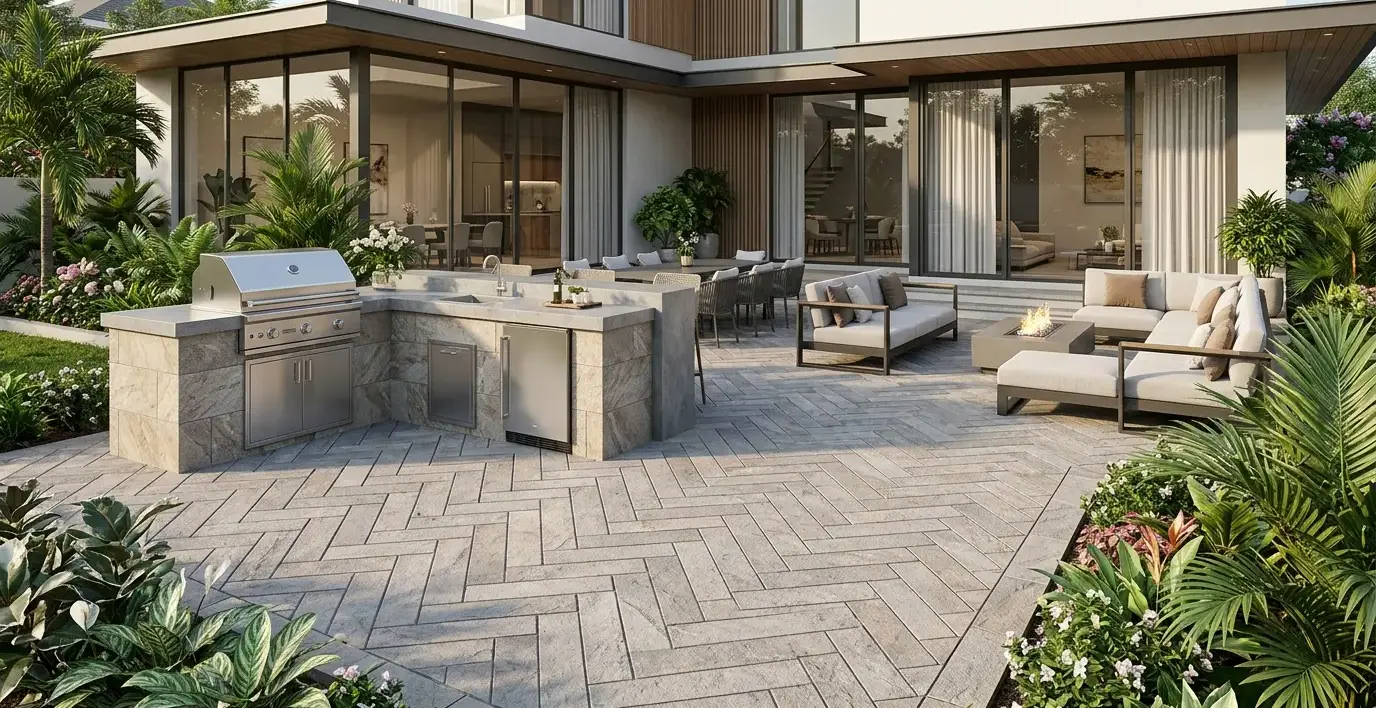 Conceptual rendering
Considerations:
- Some stone types require periodic sealing to manage moisture and staining
- Natural sourcing means color and pattern can vary somewhat between batches
- Confirming exact sun and moisture performance for a specific product benefits from a specialist conversation
5 Steps for Choosing the Right Outdoor Stone
- Define the space and its use. Note expected foot traffic, sun exposure, and proximity to a pool or water feature before comparing materials.
- Compare material categories. Weigh natural stone, porcelain, and concrete against the look, texture, and upkeep level a project calls for.
- Check climate fit. Review sealing needs and moisture handling, particularly for low-maintenance pavers for humid climates or coastal-adjacent properties.
- Review finish and texture. Favor textured, flamed, or bush-hammered surfaces over polished or honed ones in wet-adjacent or high-traffic zones.
- Bring measurements and photos to a design conversation. Viewing finish options in person often reveals color and texture differences that photos alone cannot capture.
Exploring Stone Options Through Nova Tile and Stone
Comparing exterior stone options in person makes it easier to judge color, texture, and finish before committing to a project. Nova Tile and Stone maintains showroom locations across Northern Nevada and Northern California, each carrying a range of granite, travertine, quartzite, and porcelain selections suited to outdoor use.
Staff at each location can walk through finish differences, sealing requirements, and general climate suitability for a specific project, offering practical, experience-based guidance rather than a generic recommendation.
Homeowners near the Fernley showroom location can explore in-stock stone options firsthand. The Reno showroom showroom carries a similarly wide selection for side-by-side comparison of finishes and tones.Those closer to Minden showroom will find staff available to walk through material differences in detail. Shoppers near Sacramento showroom can review the same catalog with the same level of guidance.
Full slab options can also be reviewed online ahead of a showroom visit, which is useful for narrowing choices before viewing finishes in person. Arranged delivery assistance is available for confirmed orders, helping coordinate logistics once a material has been selected.
Note: Some images on this page may be conceptual renderings created to illustrate design possibilities and may not depict actual installations.
Visit Nova Showrooms Now!
Plan the right stone choice with our team.
FERNLEY
1855 US Highway 95A North, Fernley, NV 89408
 Google Maps
Store hours this week:
- Mon. - Fri.: 7:30 am - 4:00 pm
- Sat. - Sun.: Closed
RENO
12835 Old Virginia Rd Suite 24, Reno, NV 89521
Store hours this week:
- Mon. - Fri.: 7:30 am - 6:00 pm
- Sat.: 9:00 am - 3:00 pm
- Sun.: Closed
MINDEN
2548 Business Pkwy, Minden, NV 89423
Store hours this week:
- Mon. - Fri.: 7:30 am - 6:00 pm
- Sat.: 9:00 am - 3:00 pm
- Sun.: Closed
SACRAMENTO
6100 Warehouse Way, Sacramento, CA 95826
Store hours this week:
- Mon. - Fri.: 7:30 am - 5:00 pm
- Sat. - Sun.: Closed
Conclusion
Choosing the right pavers comes down to matching material, finish, and climate considerations to a specific outdoor project. Natural stone and porcelain each bring distinct strengths, and comparing finishes in person remains the most reliable way to judge color, texture, and long-term fit. Schedule a free consultation now!
Frequently Asked Questions
Granite, travertine, and quartzite are generally well suited to outdoor use, though exact sun and moisture performance varies by specific product. Confirming sealing needs and finish with a specialist is recommended before use in an outdoor setting.
Stone pavers are cut from quarried natural material and show unique veining and color variation. Porcelain units are engineered for a more consistent look and typically require less sealing over time.
Many natural stone types, including travertine and granite, benefit from periodic sealing to manage moisture absorption and reduce staining. Porcelain generally requires little to no sealing, though this varies by product. A specialist can confirm the right resealing schedule for a specific material and local climate.
Slip resistance depends heavily on finish. Textured, flamed, and bush-hammered surfaces generally offer more traction than polished or honed finishes, and industry standards exist for testing wet-surface slip resistance on hard surfaces.
Less porous materials, such as porcelain, tend to simplify upkeep in humid or moisture-prone settings. Natural stone can still perform well with an appropriate sealing schedule suited to local conditions.