At a Glance
- Grouted look: Mortar-filled joints create a cohesive, classic wall that often suits traditional and rustic exteriors.
- Dry-stack look: Tight seams and crisp shadow lines tend to read as clean and contemporary.
- Exterior fit: Quartzite, granite and travertine are outdoor-suitable, but each product's exterior guidance should be confirmed.
- Care: Natural stone typically needs sealing, and grout joints add a cleaning detail to the routine.
- Next step: A design consultant can help compare both looks for your wall.
In This Guide
- Benefits of grout-filled joints on exterior walls
- Side-by-side style comparison
- Advantages and disadvantages of each style
- Applications, climate notes and sealing basics
- A four-step way to choose your joint style
- How Nova supports your stone selection
- Key takeaways and FAQs
Which Stone Wall Look Is Right for You?
Grouted ledger stone has visible mortar joints that unify the wall and suit traditional or rustic exteriors. Dry-stack shows tight, shadowed seams for a sleeker profile. The better choice depends on style, exposure and product guidance.
This dry-stack vs grouted ledger stone comparison explains how each joint style looks and ages outdoors. It suits anyone planning a grouted stone wall, entry feature or outdoor fireplace in Northern Nevada or Sacramento.
Ledger stone is a stacked, layered natural stone profile. Quartzite, granite and travertine are among the natural stones suited to outdoor use, though exact products and exposure limits vary.
Marble and dolomite are better reserved for indoor spaces. Joint style also changes how light, shadow and color read across the surface, so settling it early keeps other design decisions consistent.
Understanding the trade-offs first helps avoid a wall that looks right on day one but asks for more attention than expected.
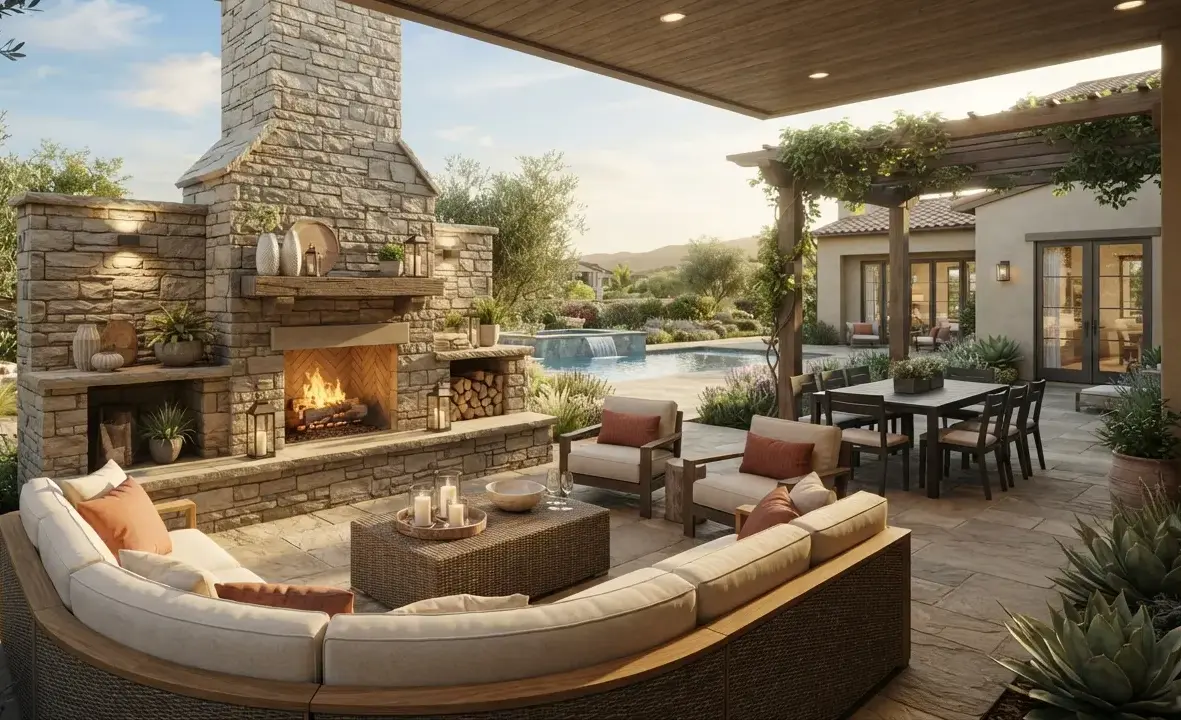 Conceptual rendering
Benefits of Grouted Ledger Stone on Exterior Walls
Mortar joints give ledger stone a continuous, finished face. They visually tie together pieces of varying height and color, which often makes irregular natural stone look deliberate and balanced.
Joint color is also a design tool. Lighter grout can brighten a shaded wall, while deeper tones may emphasize natural variation. A grouted stone wall typically reads as traditional and substantial from the street.
Grout alone does not guarantee weather protection, and joint quality matters. Technical joint design guidance notes that mortar joints can crack in some stone veneer systems, so planning and care remain important.
Key benefits of grout-filled joints:
- Cohesive appearance: Grout can unify mixed stone sizes, so the wall often reads as one surface.
- Color control: Grout shade can warm, cool or sharpen contrast, depending on the stone.
- Traditional character: The look often suits ranch, craftsman, farmhouse and Mediterranean-style homes.
- Tolerance for variation: Mortar lines can visually absorb small size differences between pieces.
- Filled seams: Joints may reduce open gaps, though sealing and joint quality still matter.
Design Ideas: Where Each Joint Style Works Best
Joint style should follow the home's architecture, the wall's exposure and the manufacturer's guidance. The sections below match each look to common exterior situations.
Side-by-Side Style Comparison
This dry-stack vs grouted ledger stone comparison highlights the differences homeowners ask about most often.
Factor | Grouted Style | Dry-Stack Style |
Visual effect | Visible mortar lines, cohesive and textured | Tight seams, crisp shadow lines |
Style fit | Traditional, rustic, farmhouse | Modern, contemporary, transitional |
Color control | Grout shade adjusts contrast | Stone color and shadow drive the look |
Weather notes | Filled joints; joint quality matters | Open seams; verify exterior approval |
Texture emphasis | Mortar lines frame each stone | Stone faces and edges stand out |
Care routine | Seal stone; clean grout lines | Seal stone; clear debris from seams |
Advantages and Disadvantages of Each Style
Neither style wins on every point. Each trades visual weight, care effort and weather considerations differently.
- Cohesive, finished look that often softens size differences
- Grout color adds design control
- Filled joints may limit open gaps
- Grout lines can stain or crack over time, so periodic checks help
- Grout color is difficult to change once chosen
- A heavier visual presence may overpower very sleek designs
- Clean, modern profile with strong shadow lines
- Puts stone texture and color in the spotlight
- Open seams may collect debris and moisture
- Some manufacturers advise caution outdoors in freeze-thaw climates
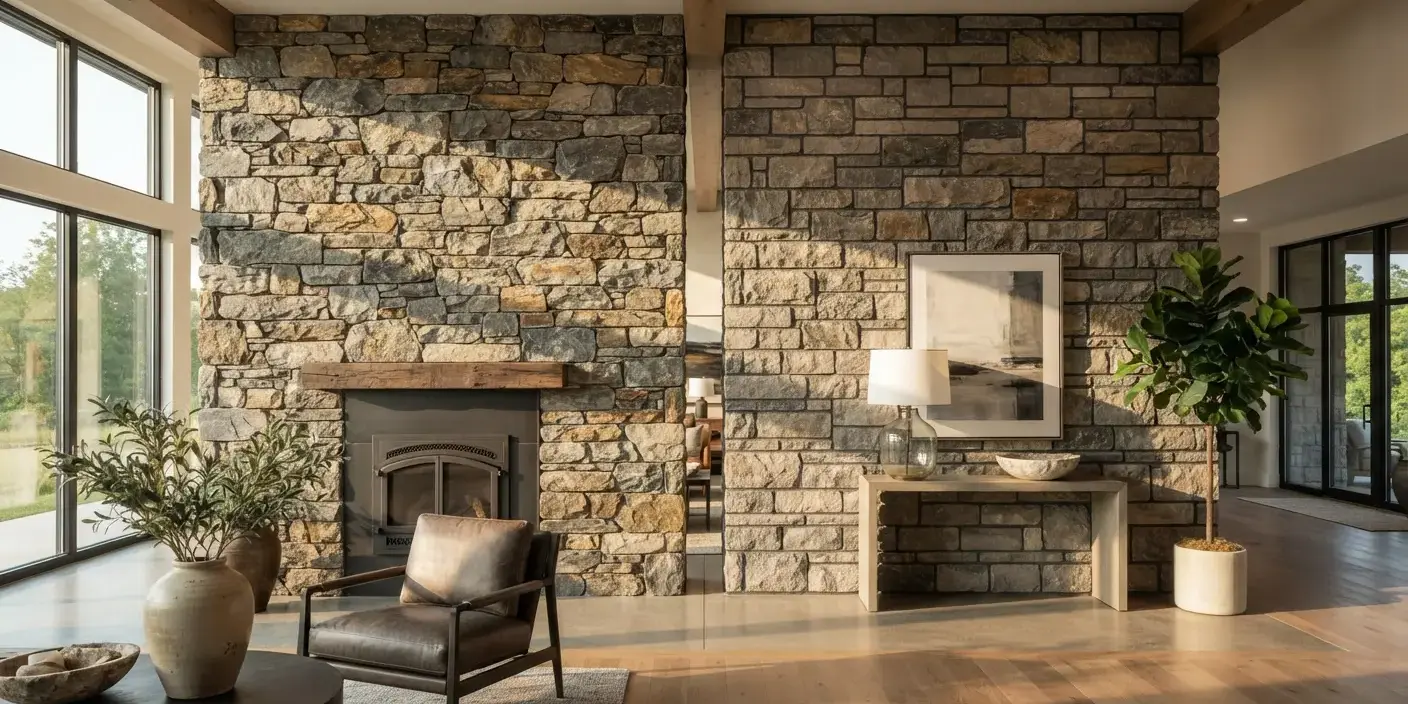 Conceptual rendering
Best Applications by Wall Type
Grouted stone suits entry columns, chimneys, foundation accents and garden walls where a rooted, traditional character is wanted. For outdoor fireplaces, confirm each product's suitability for that application.
Designers can also review adhered veneer joint guidance published in Construction Canada.
Dry-stack often fits modern facades, feature walls and courtyard accents where crisp lines matter most. Splash-prone or heavily shaded areas deserve extra product review, since moisture exposure varies.
Larger coordinating surfaces may call for slabs rather than ledger panels. Browse natural stone slabs suited to outdoor use, such as quartzite and granite.
Pairing Stone Tones With Grout Shade
Warm quartzite can pair well with sand or buff grout, while cooler gray granite often looks balanced with soft gray joints. Judge the pairing against the full stone range, since one piece rarely represents the wall.
Climate Notes for Reno, Minden and Sacramento
High-desert winters in Reno and Minden often bring freezing nights and daytime thaw. Walls in these areas benefit from stone with confirmed exterior approval and careful joint planning.
Visit the Reno showroom to review stone in natural light. Homeowners near Minden can explore the Minden showroom as well.
Sacramento summers bring strong sun, so verify the exact product's UV rating. Quartzite and granite sit in Nova's UV-resistant category, while travertine does not, so confirm manufacturer sun-exposure approval for travertine.
Sealing and Care Basics
Natural stone typically needs sealing, and timing depends on the stone and exposure. No exterior wall is entirely care-free, so gentle cleaning and prompt stain attention matter.
A simple water-drop test often shows when sealer protection is wearing thin.
Review stone care best practices from the Natural Stone Institute before choosing a sealer.
Choose Your Joint Style in Four Steps
- Define the wall's architectural style and its sun or moisture exposure.
- Review the manufacturer's exterior and freeze-thaw guidance for the product.
- Visit a showroom to compare both joint looks in daylight.
- If grouting, pick a shade that echoes the stone's undertones, then confirm sealing needs.
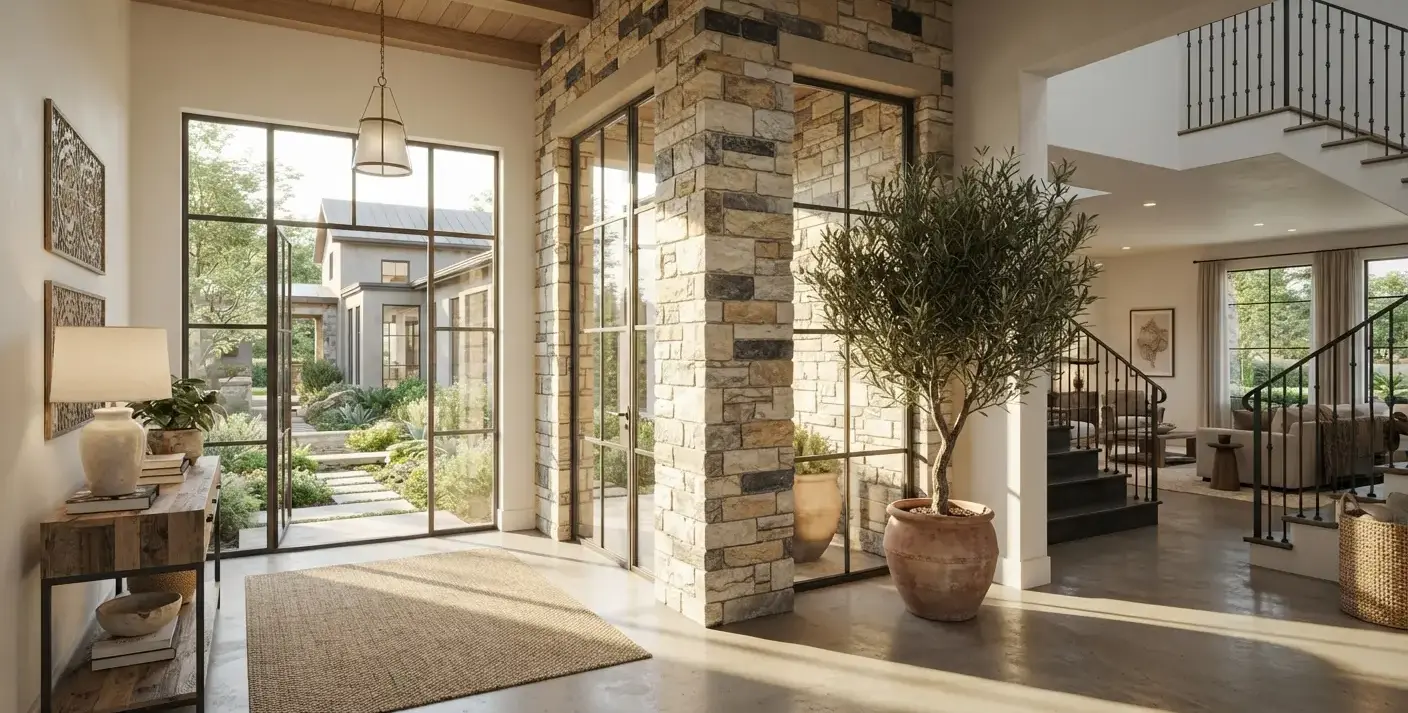 Conceptual rendering
How Nova Tile and Stone Supports Your Stone Choice
Nova Tile and Stone pairs homeowners and design professionals with commission-free design consultants. Their guidance focuses on matching stone type, finish and joint style to each wall's exposure and design goals.
Nova serves customers in Fernley, NV; Reno, NV; Minden, NV; and Sacramento, CA. Fernley visitors can explore the Fernley showroom. Sacramento customers can visit the Sacramento showroom.
Arranged delivery assistance can help materials reach your project. Bring photos of the wall, rough dimensions and sun exposure notes so a consultant can narrow options quickly.
When you are ready to compare joint styles side by side, schedule a free consultation now! to talk through your wall, climate and stone options.
Key Takeaways
- Grouted stone offers a cohesive, traditional look with color control through grout choice.
- Dry-stack delivers crisp, contemporary shadow lines but needs product-specific exterior review.
- Quartzite, granite and travertine suit outdoor walls, while marble and dolomite are better kept indoors.
- Natural stone typically needs sealing, and no exterior wall is entirely care-free.
- A design consultation can match joint style, stone and climate before you commit.
Ready to Choose Your Wall Look?
Choosing between a mortared and a stacked look is easier with a second set of eyes. A Nova design consultant can walk through your wall's exposure, style and stone options, then narrow the field to products that fit. Bring photos of your home and leave with a clearer direction for your exterior. Whether your project is in Reno, Minden, Fernley or Sacramento, the conversation is free and commission-free. Book your free consultation today!
Minden
2548 Business Pkwy, Minden, NV 89423
- Mon–Fri: 7:30am – 6:00pm
- Sat: 9:00am – 3:00pm
- Sun: Closed

BOOK NOW
Reno
12835 Old Virginia Rd, Suite 24 Reno, NV 89521
- Mon–Fri: 7:30am – 6:00pm
- Sat: 9:00am – 3:00pm
- Sun: Closed

BOOK NOW
Sacramento
6100 Warehouse Way, Sacramento, CA 95826
- Mon–Fri: 7:30am – 6:00pm
- Sat: Closed
- Sun: Closed

BOOK NOW

Frequently Asked Questions
A grouted stone wall has mortar-filled joints that create a cohesive, traditional face. Dry-stack shows tight seams with little or no visible grout, producing sharper shadow lines and a more contemporary look.
It can be, but suitability depends on the product's design, the stone type and local weather. In freeze-thaw areas such as Northern Nevada, confirm the manufacturer's exterior guidance before choosing open seams.
Natural stone such as granite, quartzite and travertine typically needs sealing, whatever the joint style. Sealer type and timing depend on the stone, finish and exposure, so follow product guidance and reseal when protection weakens.
Quartzite, granite and travertine are generally approved for outdoor use, while marble and dolomite are better reserved for indoor spaces. For sunny walls, verify the exact product's UV rating, since travertine is not in Nova's general UV-resistant category.
Match grout to the stone's undertones for a blended look, or contrast it for more defined lines. Compare options against the actual stone in daylight, since color can read differently in shade and full sun.
Sources
- Joints in Stone Panel Veneer Systems: Mason Contractors Association of America
- The Thin Alternative to Traditional Masonry: Construction Canada
- Stone Care: What You Should Know: Natural Stone Institute