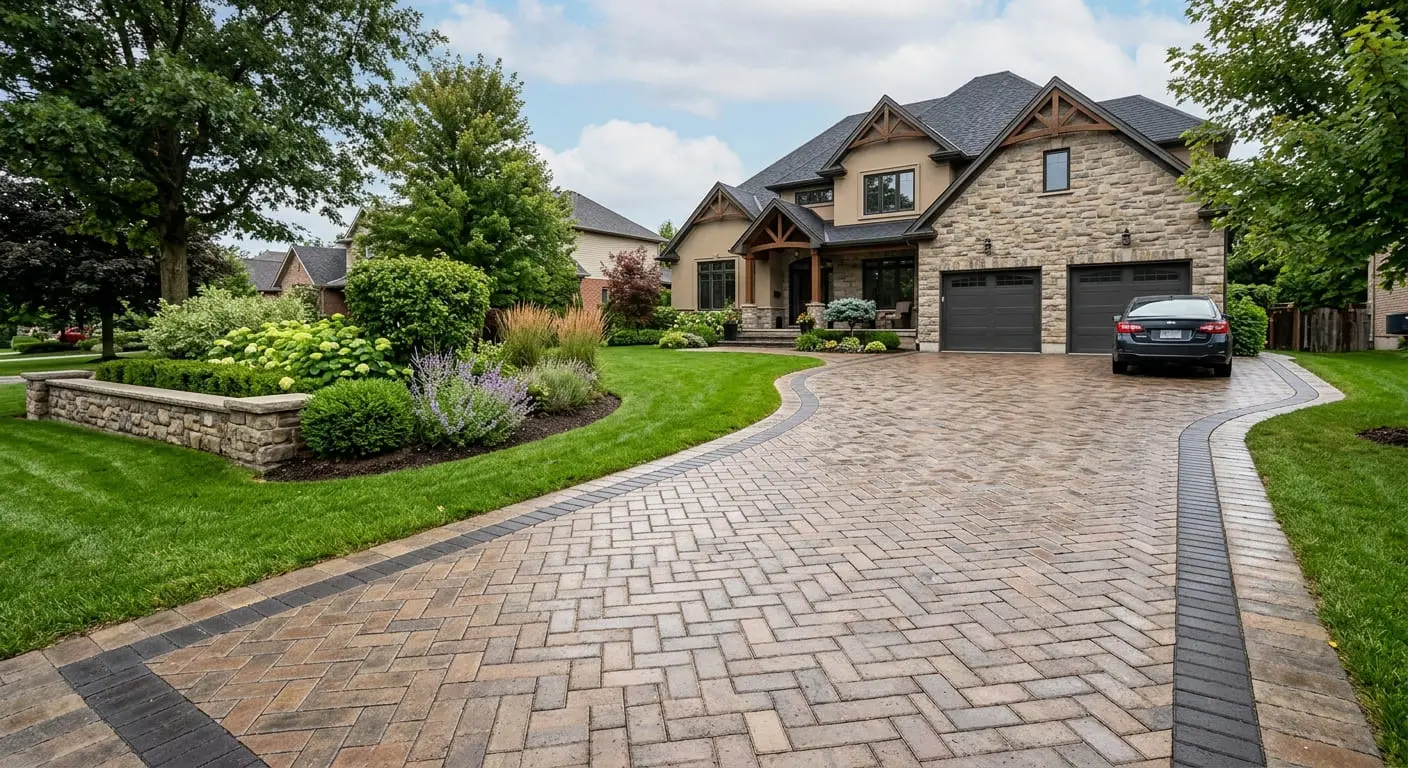
Driveway pavers are thicker than patio pavers. Concrete driveway pavers are typically 3 1/8 inches thick, while concrete patio pavers are typically 2 3/8 inches thick. The extra thickness helps driveway pavers carry the weight of cars and stay in place when tires turn. Natural stone pavers (about 1 1/4 inches thick) and porcelain pavers (about 3/4 inch thick) are thinner, so when they are used on a driveway, they are usually set on a concrete base.
Driveway and patio pavers also differ in shape and layout. Driveway pavers are usually small, compact shapes laid in a zigzag herringbone pattern that locks them together, while patio pavers often come in larger squares and rectangles. Below, we explain each difference in plain terms, compare natural stone, porcelain, concrete, and clay pavers, and share simple questions to help you choose the right paver for each part of your home.
Why Driveways Need Stronger Pavers
Think about what each space holds every day.
A patio holds people, chairs, tables, plants, and maybe a grill. That weight is spread out, and it doesn't move around much.
A driveway holds cars, SUVs, and trucks. A typical car or truck weighs somewhere between 3,000 and 6,000 pounds, and all of that weight presses down through just four tires.
Cars also move in ways people don't. When you turn your steering wheel while parked, stop on a slope, or back out of the garage, your tires push and twist against the ground. Over time, that pushing can cause weak pavers to shift, sink, or crack. Driveway pavers are made to stay in place under that kind of pressure. Many patio pavers are not.
Thickness Is the Biggest Difference
With concrete pavers, the quickest way to tell the two apart is to look at how thick they are.
Concrete patio pavers are usually about 2 3/8 inches thick. That is plenty for patios, walkways, garden paths, and pool areas. They are lighter, easier to carry, and usually cost less.
Concrete driveway pavers are usually about 3 1/8 inches thick. Pavers for heavy-duty areas like busy parking lots can be even thicker.
That extra 3/4 inch may not sound like much, but it makes a real difference. A thicker paver is heavier, so it is harder for a car to tip or rock it. Thicker pavers also have deeper sides, so the sand between them holds them together more firmly. That way, the pavers share the weight of a car instead of one paver taking all the pressure.
Some small, compact concrete patio pavers can work on a home driveway. Still, most people choose the thicker driveway version for peace of mind.
How Natural Stone and Porcelain Are Different
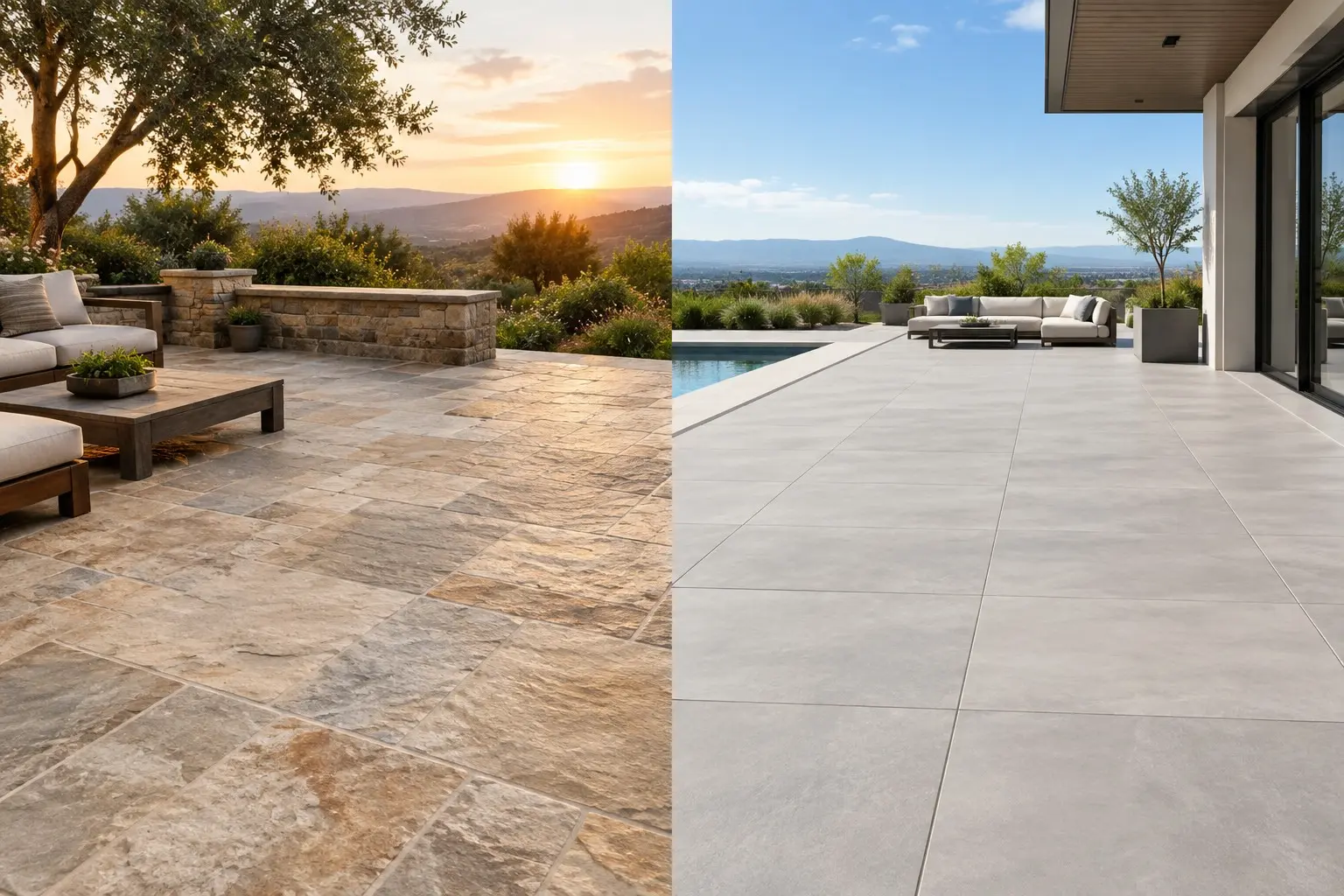
Natural stone and porcelain pavers work a little differently from concrete.
Natural stone pavers, like travertine, are commonly about 1 1/4 inches thick. That works well for patios, walkways, and pool decks. For a driveway, stone pavers are often set on a solid concrete base so the concrete carries the weight of the car, or a very hard stone like granite is used.
Porcelain pavers are usually about 3/4 inch thick. They are made mainly for patios, walkways, and outdoor living areas. They can be used on a driveway when set on a concrete base, and some brands also make thicker porcelain pavers for driveways.
The takeaway is simple. With stone and porcelain, what goes underneath the pavers matters just as much as the pavers themselves when cars are involved. If you are weighing stone against porcelain for your project, you can browse our pavers and exterior stone to get a feel for your options.
Size and Shape Matter Too
The size and shape of a paver also affect how well it holds up under a car.
Imagine a long, thin board. If you step on one end, the other end lifts up. Long, flat pavers can act the same way. When a tire rolls onto one end, the other end can pop up, or the paver can crack in the middle.
Short, chunky pavers are much less likely to have that problem. That is why most driveway pavers are small, brick-like shapes, while patios often use larger squares and rectangles.
Big square pavers, like 2 feet by 2 feet, look great on a patio. On a driveway, they are more likely to crack unless they are set on a solid concrete base underneath.
The Pattern Makes a Difference
The way pavers are laid out also matters.
For driveways, the most recommended choice is a zigzag pattern called herringbone. In this layout, each paver locks against the ones around it, which helps keep everything in place when tires turn.
Patios don't carry cars, so you have more freedom. Straight rows, staggered rows like brick walls, and mixed sizes are all popular.
Popular Paver Materials
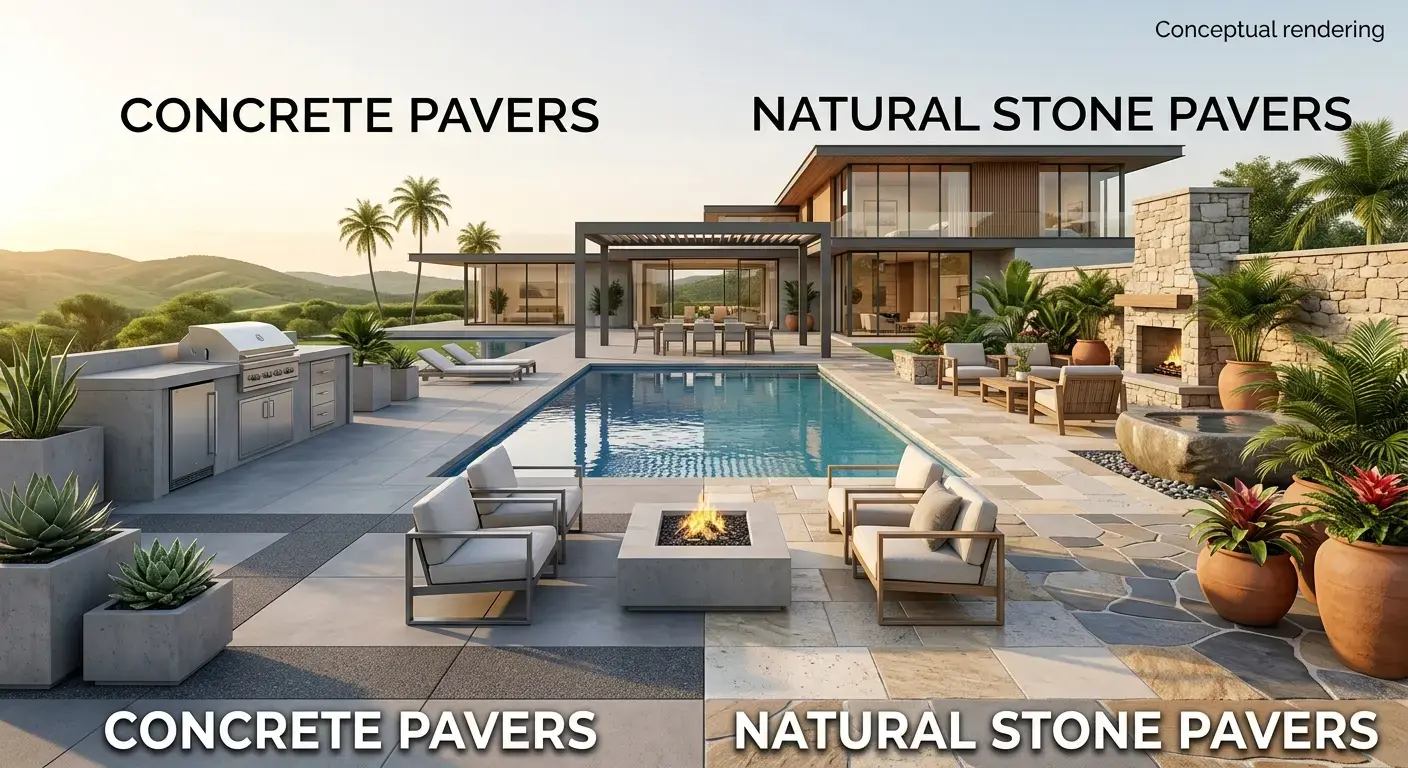
Each material has its own look and feel, and colors and textures are easiest to judge in person, so it helps to visit a showroom near you before you decide.
Natural Stone Pavers
Stones like travertine, granite, bluestone, and limestone each bring their own natural colors and textures. Travertine is a popular choice around pools because it tends to stay comfortable underfoot in the sun. Granite is one of the hardest stones available, which makes it a strong option for areas that see heavy use.
Porcelain Pavers
Porcelain pavers resist stains and are easy to clean, which makes them a good fit near outdoor kitchens and dining areas. They also come in looks that resemble natural stone, wood, and concrete, so they can suit both modern and classic homes.
Concrete Pavers
Concrete pavers are a common choice for driveways and patios. They come in many colors, shapes, and styles, and many are sold in both patio and driveway thicknesses.
Clay Brick Pavers
Clay pavers have a classic, warm look that fits older and traditional homes especially well. The color usually runs all the way through the brick, so small chips are hard to notice. If you want clay for a driveway, make sure the product is made for car traffic.
Choosing the Right Surface
Both driveways and patios should have a surface that isn't slippery, but each space has its own needs.
For patios, think about comfort. If you walk barefoot or have a pool, a textured surface gives your feet more grip. Lighter colors also stay cooler in the hot sun.
For driveways, think about grip and wear. A textured surface helps tires grip on slopes, especially in rain or ice. Pavers with slightly rounded edges are less likely to chip when cars drive over them. Blended colors in medium shades are a smart pick because they hide oil spots and tire marks better than very light or very dark colors.
If you are not sure which finish fits your space, you can book a free design consultation and compare options side by side with our team.
Can You Use Driveway Pavers on a Patio?
Yes. Driveway pavers work perfectly well on a patio. They cost a bit more and are heavier to carry, but they have no downside for walking or relaxing.
Some homeowners use driveway pavers on a patio or side yard where they might park a boat, trailer, or small vehicle once in a while. Others use them when the patio connects right to the driveway and they want one smooth, matching surface. Since the thicker option costs more, it can help to check our overstock sale for discounted materials before you commit.
Should Your Driveway and Patio Match?
Matching is a matter of taste, but it can make your home look neat and put together.
With natural stone or porcelain, you can often use the same pavers across your patio, walkway, and driveway. The driveway section is simply set on a concrete base so it can handle cars. With concrete pavers, many styles come in both thicknesses, so each area gets the right thickness while the whole yard looks like one design.
If you prefer contrast, you can pick a different color or style for the patio to set it apart as its own space. A matching border around both areas can tie them together.
Questions to Ask Yourself Before You Choose
Before picking pavers, think about how you will use the space:
- Will a car ever drive or park here, even once in a while?
- What is the biggest vehicle that might use it?
- Is the area on a slope?
- Do you want your driveway and patio to match?
- Is the area next to a pool or in strong afternoon sun?
Your answers will help you choose the right material, shape, and setup. Your installer will also check the ground underneath and recommend the right base, which matters just as much as the pavers.
If you are a contractor or landscape designer choosing pavers for a client, you can apply for a trade account to get trade pricing and job-site delivery.
Conclusion
Driveway pavers and patio pavers can look alike, but they are made for different jobs. Concrete driveway pavers are thicker, usually about 3 1/8 inches, while concrete patio pavers are usually about 2 3/8 inches. Natural stone and porcelain pavers are thinner, so they rely on a solid concrete base when cars will drive on them. Choosing the right paver and setup for each space helps your driveway and patio look good and work well for years to come.
If you are planning a new patio, walkway, pool deck, or driveway, we would love to help you explore natural stone and porcelain pavers in person. Our team can walk you through colors, textures, and finishes, and help you find a look that works from your front entry to your backyard. Visit our showrooms in Sacramento, Reno, Minden, or Fernley, and bring photos and measurements of your space so we can help you find the right pavers for your home.
Note: Some images on this page may be conceptual renderings created to illustrate design possibilities and may not depict actual installations.
Frequently Asked Questions
Sometimes. Small, compact concrete patio pavers can work on a home driveway. Large squares, natural stone, and porcelain pavers are more likely to crack under a car unless they are set on a concrete base. When in doubt, choose pavers and a setup made for driveways.
Concrete driveway pavers are usually about 3 1/8 inches thick. Natural stone and porcelain pavers are thinner, so for driveways they are usually set on a concrete base. Heavy-duty areas like busy commercial parking lots can use concrete pavers that are 4 inches thick or more.
Usually, yes. Thicker driveway pavers cost more to make and ship, and stone or porcelain driveways often need a concrete base, which adds to the project cost. The final price depends on the material and the setup you choose.
Yes. These are called permeable pavers. They have wider gaps filled with small stones, so rainwater drains down through the pavers and into a stone layer underneath instead of running off. Many are made for driveways, so check that the style you like can handle cars.
Yes. With natural stone or porcelain, you can often use the same pavers throughout your yard and set the driveway section on a concrete base. With concrete pavers, many styles come in both patio and driveway thicknesses in the same colors.