Yes, hardscaping can increase home value, and the top hardscape projects in a national Realtor survey recover 95 to 100 percent of their cost at sale. The 2023 Remodeling Impact Report: Outdoor Features, from the National Association of Realtors (NAR) and the National Association of Landscape Professionals (NALP), estimates that an outdoor kitchen recovers 100 percent of its cost. An overall landscape upgrade built around a natural flagstone front walkway also recovers an estimated 100 percent. A new 18 by 16 foot concrete paver patio recovers an estimated 95 percent.
Curb appeal is one reason outdoor projects pay back. In the NAR and NALP survey, 97 percent of Realtors said curb appeal is important in attracting a buyer, and 92 percent recommend that sellers improve curb appeal before listing.
Hardscape returns vary by project design, material quality, location, the age and condition of the home, and homeowner preferences. Patios, walkways, and outdoor kitchens that fit the neighborhood, suit the local climate, and drain properly are the most likely to recover their cost.
How Appraisers and Buyers See Outdoor Improvements
Appraisers and buyers measure hardscape in different ways. An appraiser generally values a home by comparing it with recent sales of similar homes nearby. A patio, walkway, or retaining wall is usually treated as a site improvement, and it often does not add value dollar for dollar unless comparable homes in the area show a clear pattern. A home with a finished stone patio in a neighborhood where most homes have bare dirt yards may stand out, but the appraisal still leans on what similar homes have sold for.
Buyers react to what they see and how they picture using the space. A finished patio reads as extra living area. A clean stone walkway to the front door shapes the first impression before anyone steps inside. Listing photos carry much of this effect, since buyers usually see a home's exterior online before they visit in person.
Condition matters too. A patio with cracked sections, heaved pavers, or weeds growing through the joints can signal deferred maintenance and raise questions about the rest of the property. A well-kept hardscape tells buyers the opposite.
Because appraisers and buyers weigh hardscape differently, an outdoor project's payoff can show up in buyer interest and offers as much as in the appraised value. Both outcomes count when you weigh whether a project is worth doing, and talking through scope and budget during one of our free design consultations can help you make that call before you commit.
Hardscape Features That Tend to Return the Most
Three hardscape-heavy projects in the NAR and NALP report came in near or at full estimated cost recovery.
Project in the 2023 report | What it included | Estimated cost recovered |
| Outdoor kitchen | Inset grill, stainless steel drawers, sink, and concrete countertop with veneered masonry stone | 100% |
| Overall landscape upgrade | Natural flagstone front walkway, two stone planters, shrubs, and a tree | 100% |
| New patio | 18 by 16 foot concrete paver patio | 95% |
Patios
A patio adds usable outdoor floor space, and buyers tend to count it as part of how a home lives. Patios sized to the home and connected to an indoor living area or kitchen door tend to get more use. A patio that sits far from the house or feels cut off from it is easier for a buyer to overlook.
Front Walkways and Entries
The front walkway is the first hardscape a buyer touches. The report's landscape upgrade, built around a natural flagstone path, matched the outdoor kitchen at 100 percent. Front-of-house work also appears in listing photos and drive-by impressions, which is where buyers first judge curb appeal.
Outdoor Kitchens
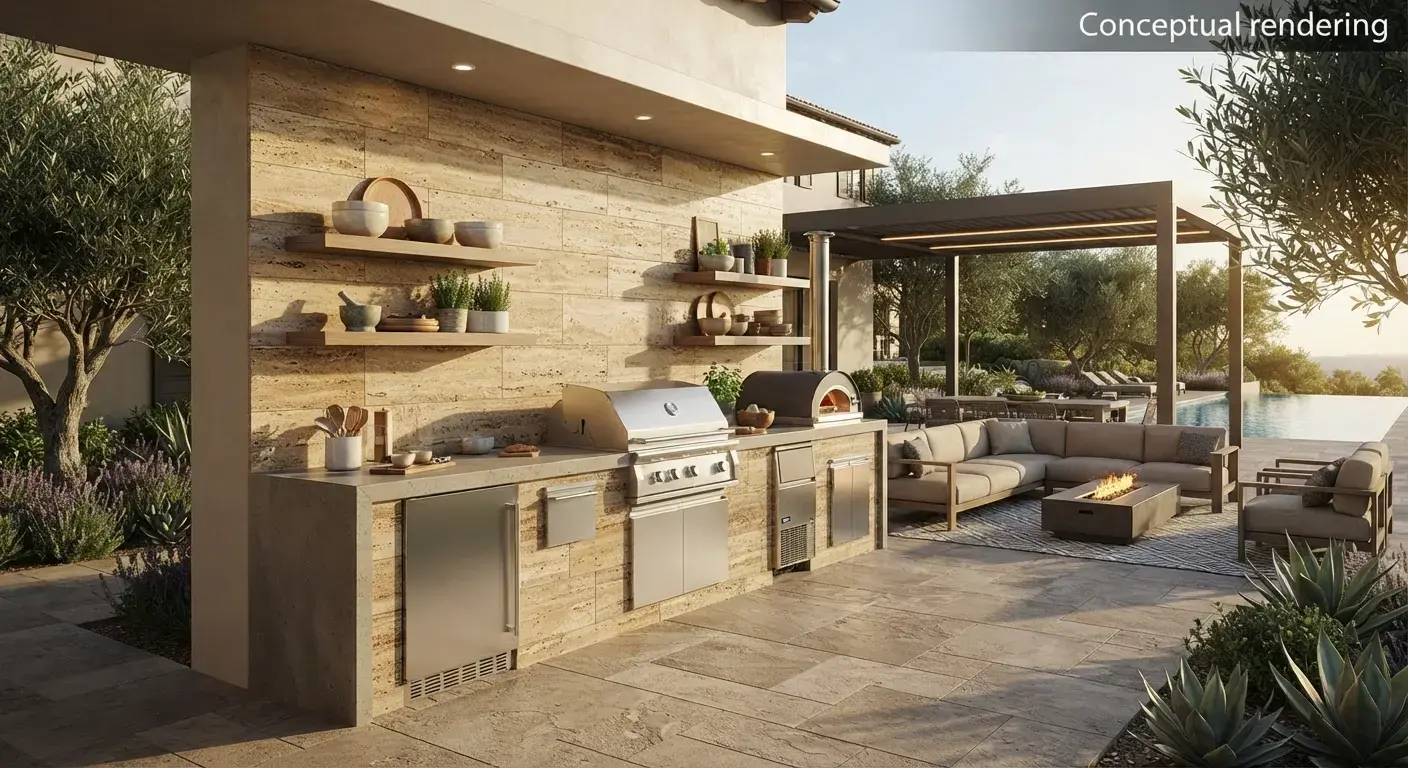
Outdoor kitchens recovered their full estimated cost in the 2023 report. The project measured in the report paired a concrete countertop with veneered masonry stone. In warm-weather regions, an outdoor cooking area can function as an extension of the home for much of the year.
Retaining Walls and Steps
Retaining walls and stone steps were not among the projects measured in the 2023 report, yet they often solve problems that would otherwise hurt value. A wall that holds back a slope, controls erosion, or turns an unusable hillside into a level terrace adds function a buyer can see. Their value often shows up as an absence of red flags during inspection. Contractors and landscape designers building walls, steps, or patios can apply for a trade account for trade pricing and job-site delivery.
How Material Choice Shapes the Return
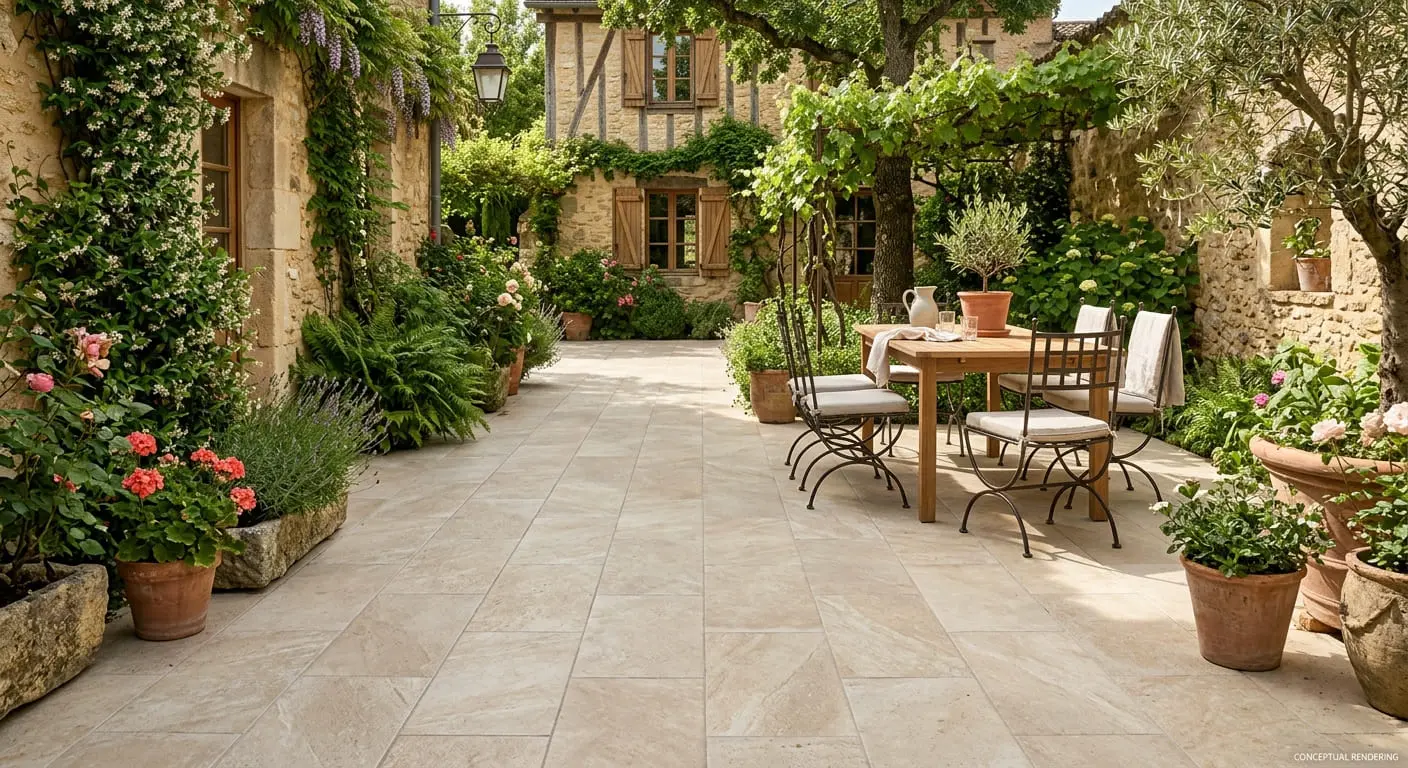
Material choice affects value through three things a buyer notices: how the surface fits the home, how much upkeep it signals, and how it has held up by the time the home is listed. No single material wins in every case. Comparing pavers and exterior stone in person makes the differences easier to judge.
Natural Stone
Natural stone pavers and flagstone show the color and texture variation of the quarry they came from. Travertine, sandstone, limestone, slate, and quartzite each behave differently outdoors. Porosity varies widely by stone type, and porous stones such as travertine and sandstone generally need periodic sealing to resist staining. Tumbled and honed finishes give better footing than polished surfaces, which matters around pools and on steps. Lighter stone colors also absorb less heat in direct sun.
Porcelain Pavers
Porcelain is defined under ANSI A137.1 as tile with water absorption of 0.5 percent or less when tested per ASTM C373. That low absorption means outdoor porcelain pavers resist staining and generally need no sealing. They are commonly 20 mm thick and come in finishes that replicate stone, wood, and concrete. Many have textured finishes intended for wet exterior areas, so check the slip resistance rating before choosing one for a pool deck or walkway.
Concrete Pavers
Concrete pavers come in a wide range of shapes and colors, and the joints between units let a patio flex with ground movement instead of cracking across a slab. Individual pavers can be lifted and replaced if one is damaged. Concrete pavers are porous, and a common recommendation is to reseal them about every two years to protect color and resist stains.
Poured Concrete
A poured slab is often the lowest upfront option, but buyers can see cracks, and a cracked slab usually has to be patched or replaced as a section. Stamped and stained concrete adds color and pattern, though repairs are hard to match.
Whichever material you pick, match it to the home. A rustic flagstone path suits a ranch or craftsman house, while large-format porcelain fits a contemporary build. A surface that looks like it belongs to the house reads as a finished, planned space.
Climate and Regional Factors in Northern California and Northern Nevada
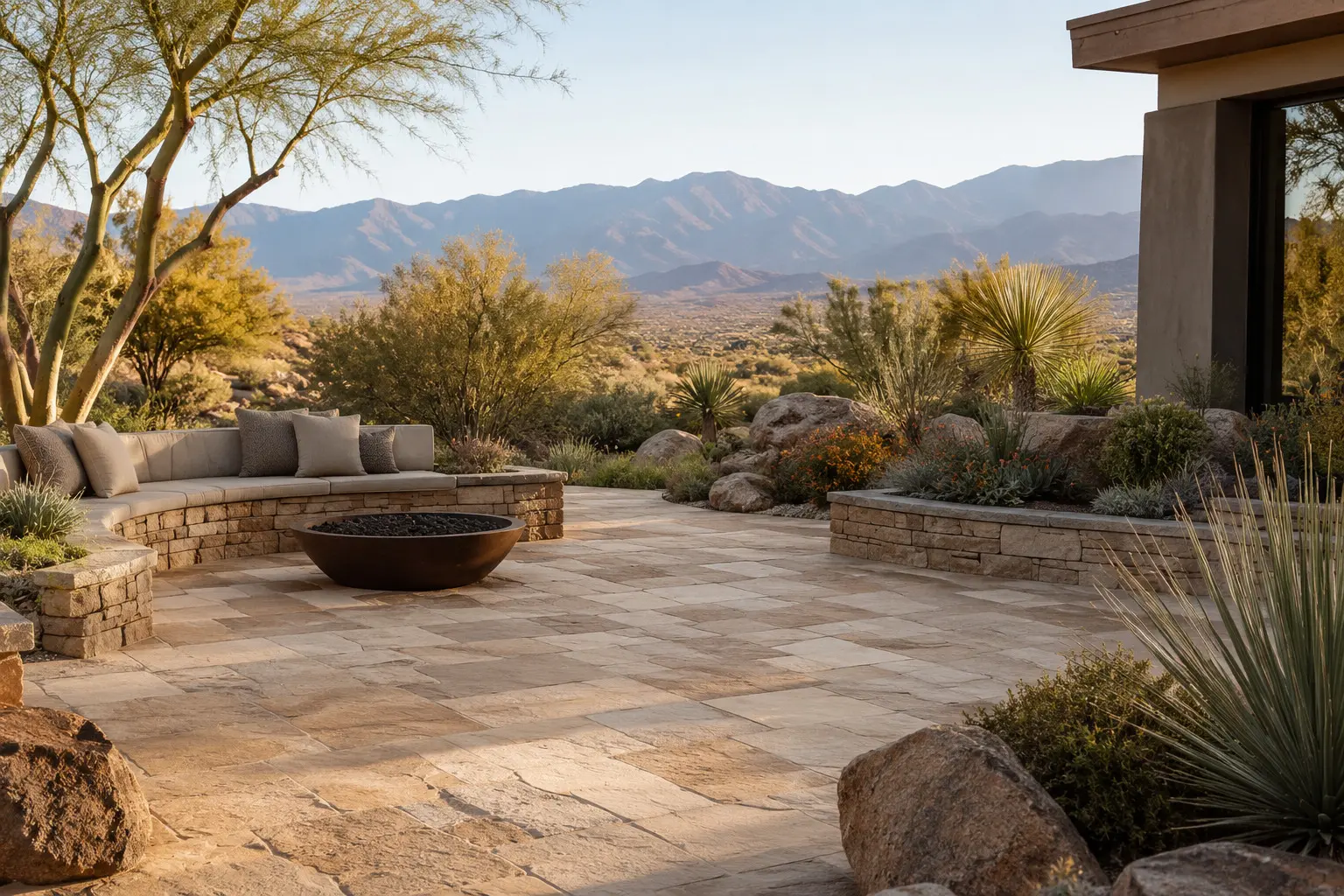
A hardscape holds its value best when it suits the local climate. Northern California and Northern Nevada put outdoor surfaces through two very different sets of conditions, and our team at your local showroom can help you match materials to the climate where you live.
The Sacramento Valley sees long, hot summers with strong afternoon sun. Here, surface temperature affects how much a patio or pool deck actually gets used. Lighter colors and materials that stay cooler underfoot make outdoor areas more comfortable from June through September, and shade structures over a patio extend its hours of use.
The high desert around Reno, Fernley, and the Carson Valley adds cold winters with repeated freeze-thaw cycles. Water that soaks into a porous surface can expand when it freezes, which leads to spalling and cracking over time. Low-absorption materials such as porcelain, along with dense natural stones, handle these cycles better. ASTM C1026 is the standard test method for measuring how ceramic and glass tile resist freeze-thaw cycling, and it is a useful reference when comparing outdoor tile and porcelain pavers.
Water use is the third factor across both regions. Recurring drought and water restrictions in both states have put more attention on yards that need less irrigation. Replacing part of a lawn with a stone patio, gravel paths, or a dry creek bed can lower water use while keeping the yard usable. A well-planned, water-wise yard can also mean lower irrigation needs for the next owner.
When Hardscaping May Not Add Value
Hardscaping does not raise value in every case. A few common situations limit or reverse the return.
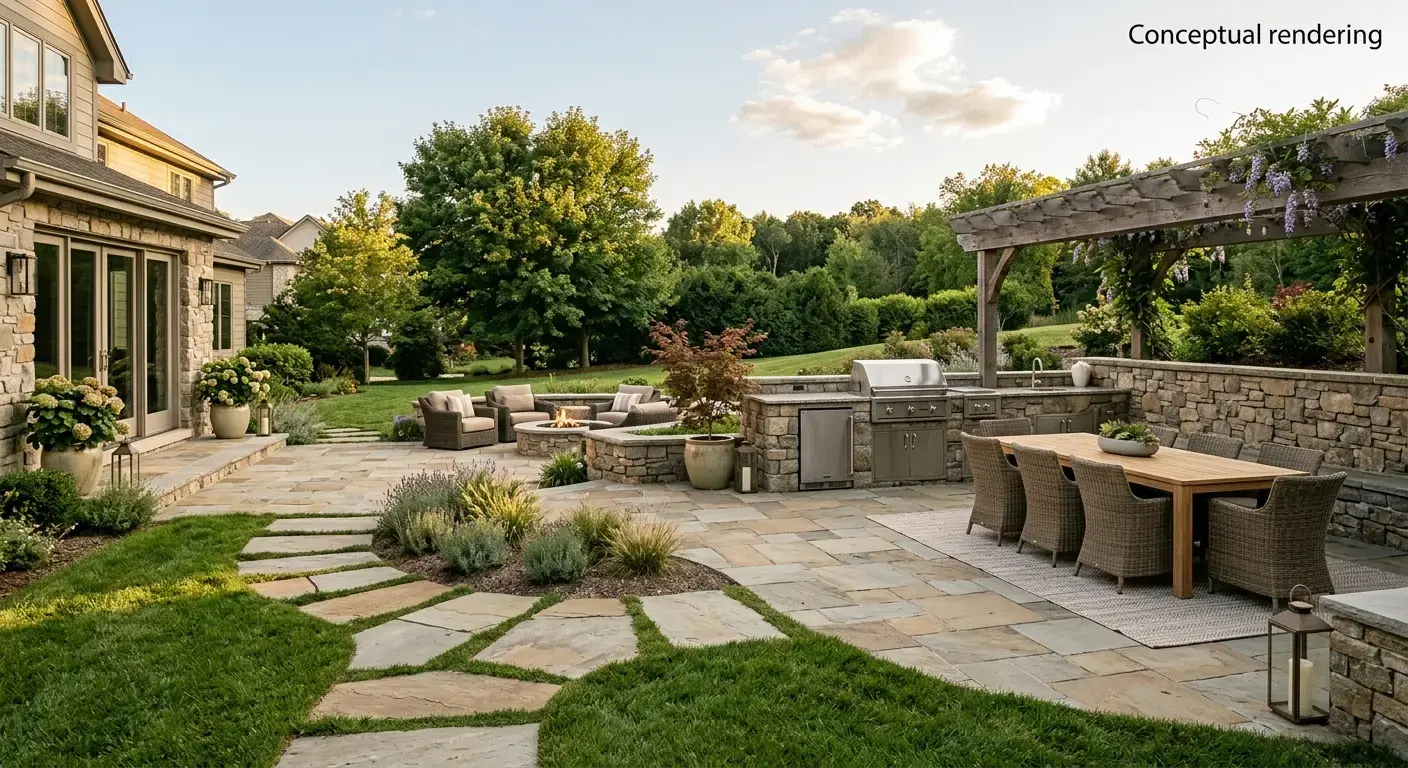
Over-improving for the neighborhood. A large outdoor kitchen, multiple patio levels, and a full stone pool surround can push a home's total investment past what buyers in that area will pay. Appraisals lean on nearby sales, so a home that is far more finished than its neighbors may not recover the difference. Keeping material costs in proportion to the home helps, and our overstock sale lists close-out materials that can stretch the budget on larger projects.
Poor drainage and base preparation. Hardscape that slopes toward the house or sends runoff toward the foundation creates a problem a home inspector is likely to flag. Pavers set on a thin or poorly compacted base can settle and heave within a few seasons. Fixing these issues usually means lifting and resetting the surface.
Style that clashes with the home. A material or color that fights with the roof, siding, or architecture can make an outdoor space feel like an afterthought. Buyers may mentally price in the cost of tearing it out.
Too much hardscape, too little yard. Families with children or pets often want some open lawn or planted area. Covering an entire backyard in pavers can narrow the pool of interested buyers.
Highly personal features. Unusual colors, custom mosaics, or very specific themed designs appeal to fewer people. Neutral, well-proportioned designs tend to suit the broadest range of buyers.
If resale is a near-term goal, keep the scope proportional to the home, prioritize drainage and condition, and choose materials that fit the house and the climate.
Conclusion
Hardscaping can increase home value, especially when the project is a patio, front walkway, or outdoor kitchen sized to the home and built on a sound base. Realtor estimates put several of these projects at or near full cost recovery, and 97 percent of Realtors consider curb appeal important in attracting a buyer. The return depends on fit: the right scope for the neighborhood, a material suited to the climate, and a design that matches the house.
If you are weighing materials for a patio, walkway, pool deck, or outdoor kitchen, our team can help you compare pavers and exterior stone side by side and choose options that fit both the project and the regional climate. Visit one of our showrooms in Sacramento, Reno, Minden, or Fernley to see materials in person and talk through what will work for your home.
Note: Some images on this page may be conceptual renderings created to illustrate design possibilities and may not depict actual installations.
Frequently Asked Questions
Yes, a patio usually adds value. The 2023 Remodeling Impact Report from NAR and NALP estimated that a new concrete paver patio recovers about 95 percent of its cost at sale. The actual return depends on the patio's size, condition, and how well it fits the home.
Outdoor kitchens and overall landscape upgrades built around a flagstone front walkway ranked highest among hardscape projects in the 2023 NAR and NALP report, each with an estimated 100 percent cost recovery. New patios followed closely at about 95 percent.
Pavers offer more color and pattern options than a plain poured slab, and their joints help them avoid the visible cracking that slabs can develop. Individual pavers can also be replaced. Whether that translates into a higher sale price depends on the local market and the condition of the surface.
Both can support resale value. Natural stone offers quarry-made variation and texture, while porcelain pavers have water absorption of 0.5 percent or less and generally need no sealing. The better choice is the one that suits the home's style, the climate, and the level of upkeep a buyer expects.
It can in some cases. Poor drainage, settling or cracked surfaces, a style that clashes with the house, or over-improving for the neighborhood can all reduce the return. Covering an entire yard in hardscape may also turn away buyers who want lawn or planted space.