AT A GLANCE
- Hardscaping usually adds value, though not always dollar for dollar.
- A new patio recoups about 95% of its cost at resale.
- An outdoor kitchen recoups about 100% of its cost at resale.
- 86% of home buyers want a patio.
- Granite, quartzite, travertine, and porcelain suit outdoor use.
- Granite absorbs no more than 0.40% water under ASTM C615.
- Porcelain absorbs 0.5% water or less under ANSI A137.1.
- Honed and leathered finishes may offer more traction on walkways than polished.
IN THIS POST
- What Is Hardscaping?
- How Much Value Does Hardscaping Add?
- Which Hardscaping Adds the Most Value?
- Does a Patio Add Value to a Home?
- What Are the Benefits of Hardscaping?
- What Stone Is Best for Outdoor Use?
- Can Hardscaping Decrease Home Value?
- See Exterior Stone in Person
- Frequently Asked Questions
- Sources
Yes, hardscaping usually adds value to a home, though not always dollar for dollar. In a 2023 national survey of real estate agents, a new patio was estimated to recover about 95 percent of its cost at resale, and projects that make a yard more usable, like patios and outdoor kitchens, recovered more of their cost than pricier features like pools.
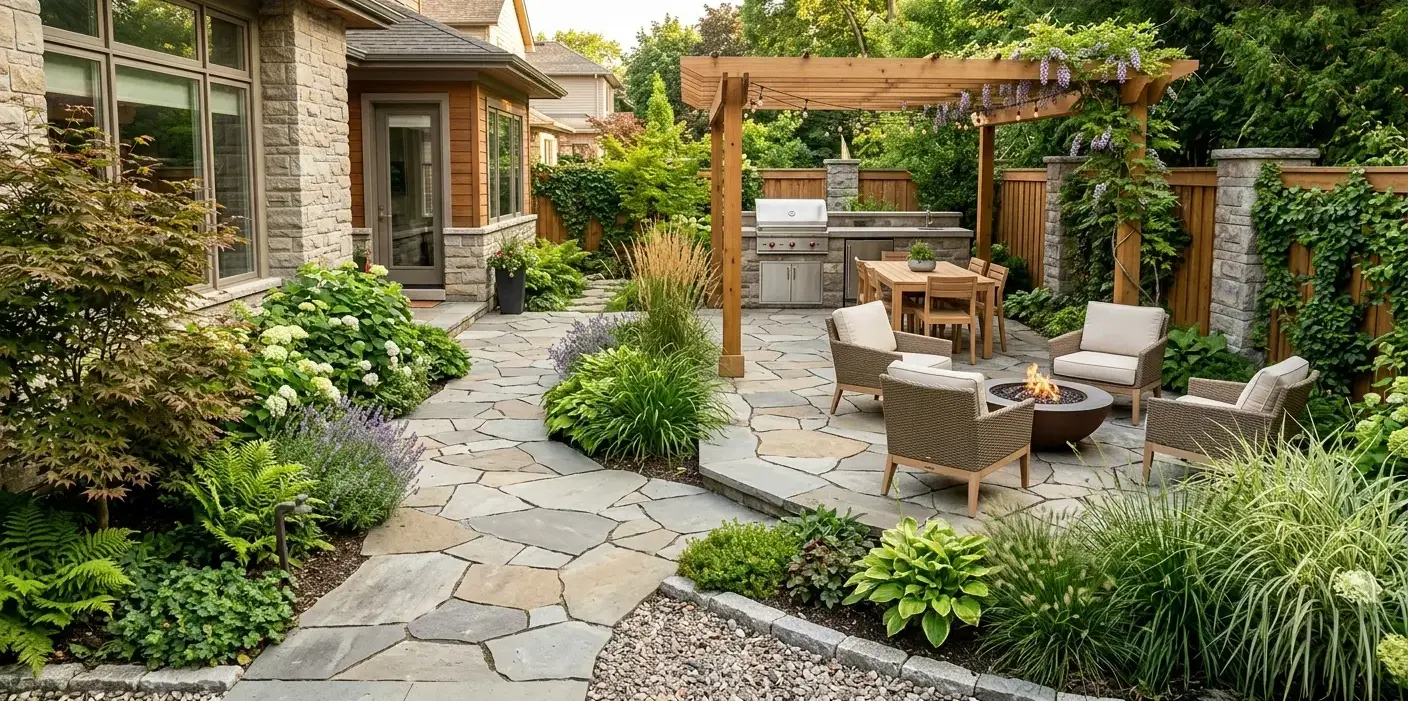
Hardscaping is the permanent, non-living part of a yard, such as patios, walkways, steps, retaining walls, and outdoor kitchens, built from natural stone, porcelain, concrete, or brick. How much value it adds depends on the project design, quality of materials, location, age and condition of the home, and homeowner preferences.
Material also affects how long that value lasts. Stone that absorbs little water generally holds up better outdoors, and ASTM C1528 is a dedicated guide for selecting dimension stone for exterior use.
What Is Hardscaping?
Hardscaping is the permanent, non-living part of a yard, such as patios, walkways, and retaining walls. It differs from softscaping, which covers living elements like lawns, trees, and planting beds, and most well-designed yards use both.
Common hardscape features include:
- Patios and pool decks
- Walkways, garden paths, and stepping stones
- Front steps and entry landings
- Retaining walls and seat walls
- Outdoor kitchens and bar counters
- Fire pits and outdoor fireplaces
Materials range from poured concrete and concrete pavers to natural stone (granite, quartzite, travertine, slate) and flagstone, as well as porcelain pavers. Each has a different look, cost, and performance profile outdoors, which we cover further down.
How Much Value Does Hardscaping Add?
Hardscaping usually returns most of its cost at resale rather than more than its cost. In a national report on outdoor projects, a new patio was estimated to recover about 95 percent of its cost.
That report combined cost estimates from landscape professionals with real estate agents’ estimates of how much of each cost a homeowner could recover when selling. The patio figure was based on an estimated $10,500 project cost and $10,000 in estimated value recovered. Hardscaping adds value in a second way, too: through how much more the owners enjoy and use the home while they live there.
Curb appeal is a large part of why. Among real estate agents surveyed, 97 percent said curb appeal is important in attracting a buyer, and 98 percent said it is important to a potential buyer. A clean, well-built entry walkway or front patio is one of the first things a buyer sees.
The same report also notes that actual cost recovery is influenced by project design, quality of materials, location, age and condition of the home, and homeowner preferences. In other words, the figures above are national estimates for representative projects, not a guarantee for any single home.
Which Hardscaping Adds the Most Value?
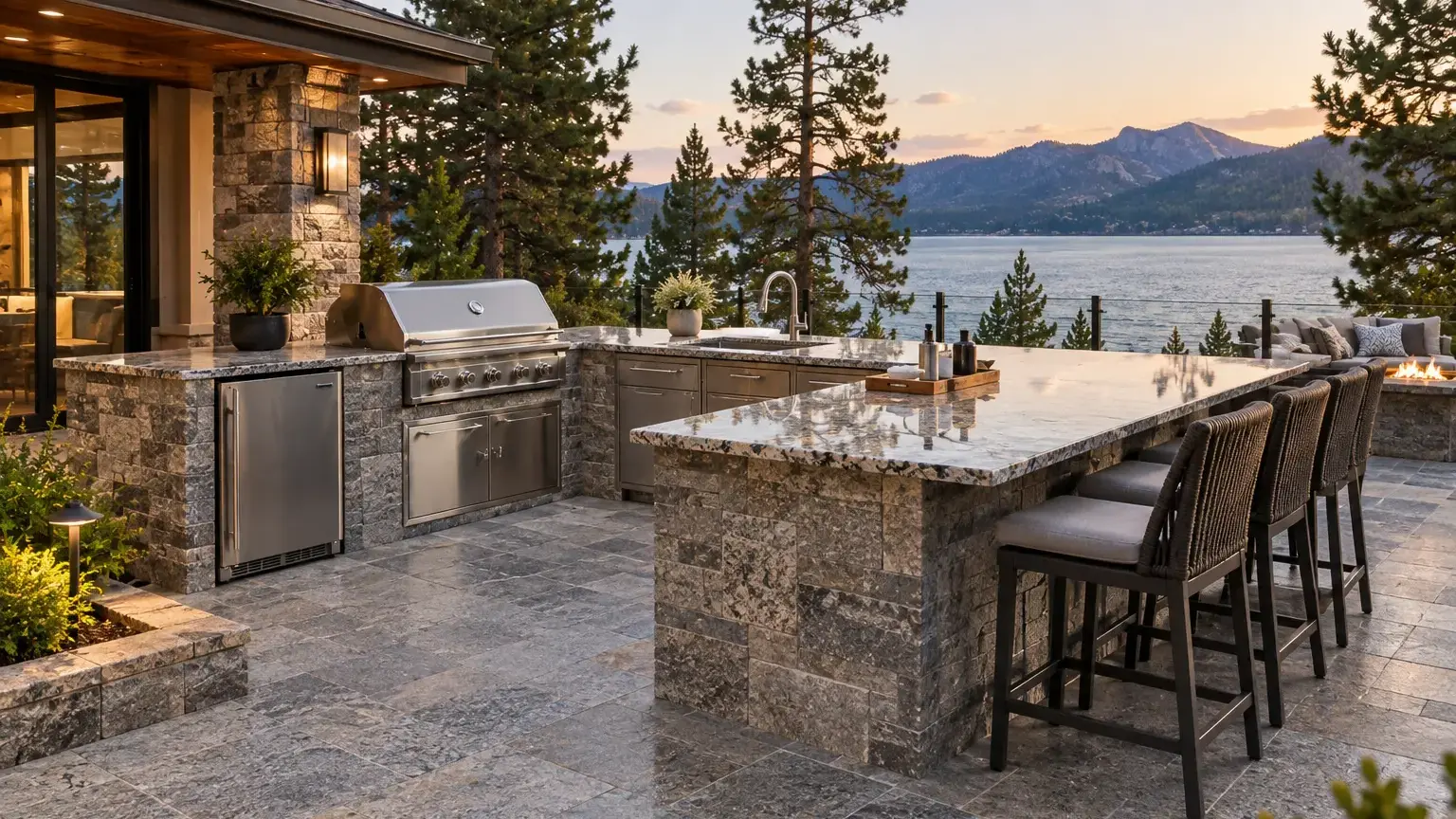
Outdoor kitchens and patios add the most value among larger hardscaping projects, each recovering close to its full cost at resale. Pools and fire features recover only a little over half of theirs.
Outdoor project | Typical cost (2023) | Estimated cost recovery |
Outdoor kitchen | $15,000 | About 100% |
New patio | $10,500 | About 95% |
Fire feature | $9,000 | About 56% |
In-ground pool | $90,000 | About 56% |
The numbers above come from the same 2023 report. An outdoor kitchen had about 100 percent cost recovery, while the in-ground pool, fire features, and landscape lighting had the lowest cost recovery, in the 56 to 59 percent range. That said, owners rated every project highly for enjoyment, with the highest scores going to an in-ground pool, landscape lighting, and a new patio.
A few details are worth keeping in mind. The report’s representative patio was a concrete paver patio, and its outdoor kitchen used a concrete countertop with veneered masonry stone. Projects built with other materials, such as the natural stone and porcelain hardscape materials we carry, may cost more up front and recover a different share. Routine upkeep matters too: standard lawn care service, estimated at $415, had the highest cost recovery at 217 percent, which suggests buyers reward a yard that looks cared for, not just one with new features.
Does a Patio Add Value to a Home?
Yes. A patio adds value to a home largely because buyers want one: it is one of the two features home buyers want most, tied with a laundry room. In a national buyer preference study, a patio was rated essential or desirable by 86 percent of buyers.
Other outdoor features on the most-wanted list included exterior lighting (82 percent), a front porch (81 percent), and landscaping (80 percent). This is based on a national survey of more than 3,000 recent and prospective home buyers.
For sellers, this means a usable patio or a defined outdoor seating area can help a listing meet expectations rather than fall short of them. For owners who plan to stay, it signals that the space is likely to remain appealing when they eventually sell.
What Are the Benefits of Hardscaping?
The main benefits of hardscaping, beyond resale value, are less lawn watering, a noncombustible buffer around the house in wildfire-prone areas, and more usable outdoor living space.
Water use. Outdoor water use accounts for more than 30 percent of total household water use on average, and can be as much as 60 percent in arid regions. Replacing part of a thirsty lawn with a patio or path reduces the area that needs irrigation, which can lower water bills over time, especially in dry climates.
Wildfire safety. Wildfire researchers recommend installing 5 feet of hardscape around the home, using hard groundcover such as gravel, pavers, river rocks, steppingstones, or concrete. The reason is that embers can travel miles ahead of a fire front and collect at the base of exterior walls, where anything combustible acts as fuel. Stone and porcelain are both noncombustible, so a stone walkway or patio along the house can serve this purpose while still looking finished.
Daily use. After completing an outdoor project, 68 percent of owners reported a greater desire to be in their homes, and 60 percent reported increased enjoyment of their home. That kind of value doesn’t show up on an appraisal, but it is often the main reason people build a patio in the first place.
What Stone Is Best for Outdoor Use?
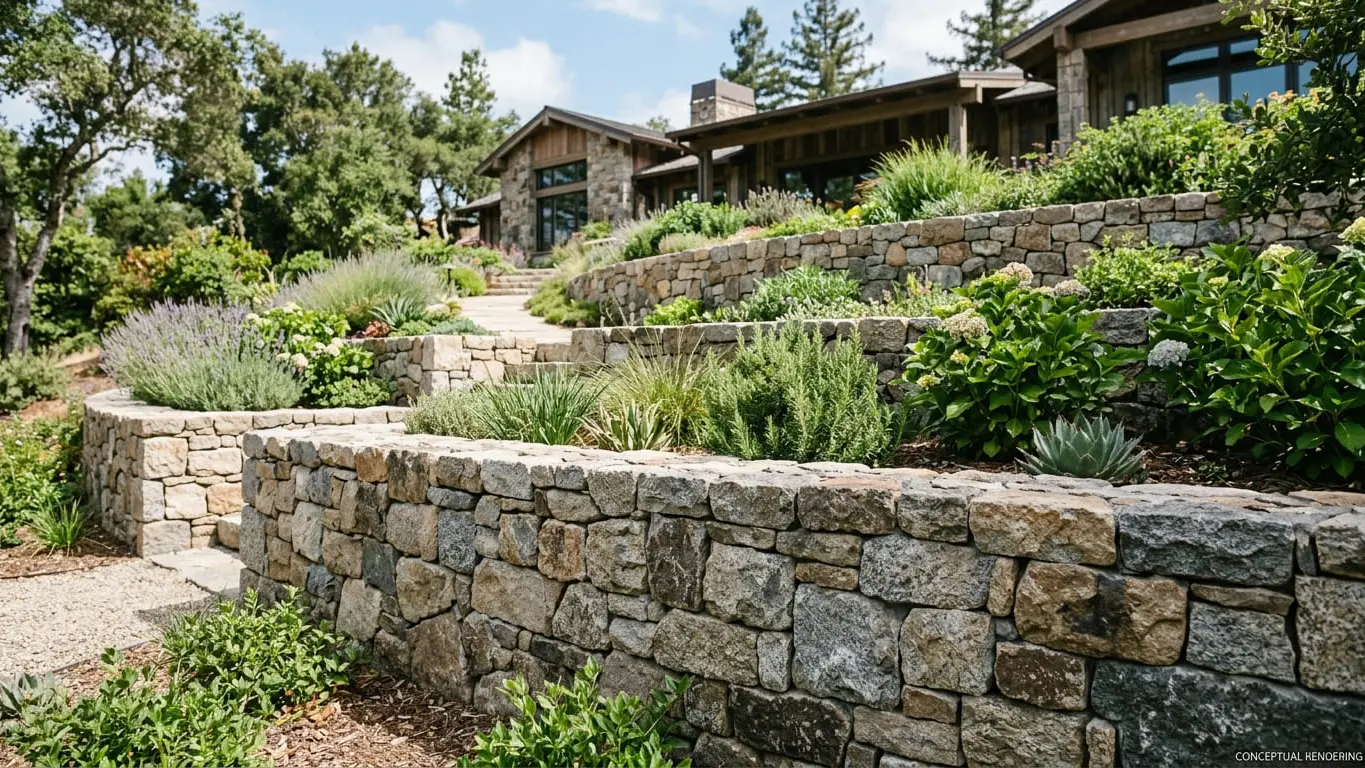
The best stones for outdoor use are durable materials suited to exterior conditions, such as granite, quartzite, exterior-grade travertine, and porcelain. Low water absorption is one key factor. Marble is generally better suited to interiors.
Low absorption matters because a stone that readily absorbs water may be more susceptible to damage in freezing weather and more prone to staining. The dimension stone industry has a dedicated guide for selecting dimension stone for exterior use, ASTM C1528, alongside separate material specifications for granite (ASTM C615), quartz-based stone (ASTM C616), and travertine (ASTM C1527). Those specifications set water absorption limits by stone type: granite allows a maximum of 0.40 percent absorption by weight, and quartzite allows up to 1 percent.
Porcelain is defined by low absorption as well. Under ANSI A137.1:2022, porcelain tile is a ceramic tile with a water absorption of 0.5% or less.
Here is how the stone slabs we carry are rated for outdoor use, which can help you narrow down a stone and finish before you request a slab quote:
- Granite: rated for outdoor use and UV resistant. Finishes include polished, leathered, and specialty.
- Quartzite: rated for outdoor use and UV resistant, available in polished, honed, leathered, and specialty finishes.
- Travertine: rated for outdoor use, in all four finishes; confirm freeze-thaw suitability for the specific stone.
- Porcelain: rated for outdoor use, available in polished, honed, and specialty finishes.
- Marble: suited to interiors and not rated for outdoor use in our product chart.
Finish also affects traction. Non-polished finishes like leathered and honed may provide more traction than polished ones on walkways and pool decks, but check each product’s slip-resistance data for wet areas.
Can Hardscaping Decrease Home Value?
Yes. Hardscaping can decrease home value when it doesn’t suit the home, is poorly built, covers more of the yard than buyers want, or isn’t maintained. A few common situations:
- Over-improving for the neighborhood. A very elaborate outdoor kitchen on a modest home may not recover its cost if nearby homes sell at much lower prices.
- Choosing the wrong material for the climate. Stone with higher absorption may wear or stain sooner, especially in places with frequent freezing.
- Poor workmanship. Uneven surfaces, settling, or pooling water can turn a feature into a repair item on a buyer’s inspection list. Installation quality is worth discussing in detail with any contractor you hire.
- Removing too much green space. Buyers still value landscaping. A balance of hardscape and planted areas tends to appeal to more people than a yard that is almost entirely paved.
- Letting it go. A stained, cracked, or moss-covered patio can do more harm to a first impression than having no patio at all.
Upkeep depends partly on the stone’s mineral makeup. Calcareous stone, made mainly of calcium carbonate, is sensitive to acidic solutions, while siliceous stone made of minerals like quartz and feldspar is generally resistant to most acids. That’s why travertine needs gentler cleaners than granite or quartzite. For outdoor pool and patio areas, a simple routine is to flush with clear water and use a mild bleach solution to remove algae or moss.
The safest approach is to treat hardscaping as part of the whole property: sized to how you’ll use it, built from materials suited to your climate, and maintained like any other part of the home.
See Exterior Stone in Person
You can see natural stone and porcelain rated for outdoor use, including granite, quartzite, travertine, porcelain, and pavers, at our showrooms in Reno, Minden, Fernley, and Sacramento. If you’re planning a patio, walkway, outdoor kitchen, or other hardscape project, seeing exterior stone in person makes it easier to compare color, texture, and finish. Free design consultations are available, and our team can walk you through which materials suit the space you have in mind.
Frequently Asked Questions
In national estimates, a new patio recovered about 95 percent of its cost at resale. A natural stone patio usually costs more than a basic paver patio, so its share of recovered cost may differ, but patios remain one of the features buyers want most.
Neither is better on its own. Hardscaping adds lasting, low-water surfaces like patios and walkways, while planted areas add softness and are still valued by buyers, so a balance of both tends to appeal to the most people.
Both can work well outdoors. Natural stone offers unique, one-of-a-kind patterns, while porcelain offers very low absorption and a consistent look. The best choice depends on your climate, the style of your home, and how much upkeep you prefer.
It usually reduces mowing and watering, since hard surfaces replace some lawn area. Stone and porcelain still need occasional sweeping and cleaning, and some natural stones benefit from periodic sealing.
Marble is generally better suited to interiors. It is calcium-based, so it reacts to acids, and it is not rated for outdoor use in our product chart. Granite, quartzite, travertine, and porcelain are better options for exterior areas.
Sources
- ANSI, Porcelain Ceramic Tile: ANSI A137.1 Definition | https://blog.ansi.org/ansi/porcelain-ceramic-tile-ansi-a137-1-astm-definition/
- Natural Stone Institute, ASTM International Standards (ASTM C615, C616, C1527, C1528) | https://www.naturalstoneinstitute.org/stoneprofessionals/astm/
- Natural Stone Institute, The Importance of Testing When Specifying Natural Stone | https://continuingeducation.bnpmedia.com/architect/courses/natural-stone-institute/the-importance-of-testing-when-specifying-natural-stone/5
- Natural Stone Institute, Care & Cleaning of Natural Stone | https://www.naturalstoneinstitute.org/consumers/care/
- National Association of REALTORS, 2023 Remodeling Impact Report: Outdoor Features | https://www.nar.realtor/research-and-statistics/research-reports/remodeling-impact-report-outdoor-features
- National Association of REALTORS, 5 Outdoor Projects That Pay Off the Most | https://www.nar.realtor/news/real-estate-news/home-and-design/5-outdoor-projects-that-pay-off-the-most
- National Association of Landscape Professionals, Report: Remodeling These Outdoor Features Bring Customers Significant ROI | https://blog.landscapeprofessionals.org/report-remodeling-these-outdoor-features-bring-customers-significant-roi/
- National Association of Home Builders (Eye On Housing), Outdoor Features & a Laundry Room Among Most Wanted Features | https://eyeonhousing.org/2024/04/outdoor-features-a-laundry-room-among-most-wanted-features/
- U.S. EPA WaterSense, Statistics and Facts | https://www.epa.gov/watersense/statistics-and-facts
- Insurance Institute for Business & Home Safety, Create a Wildfire-Resistant Yard with Defensible Space | https://ibhs.org/wildfirereadyhomedefensiblespace/
Note: Some images on this page may be conceptual renderings created to illustrate design possibilities and may not depict actual installations.