AT A GLANCE
- Exterior stone can crack, but the stone itself is rarely the cause.
- Most cracks come from a weak base, poor drainage, freeze-thaw cycles, heavy loads, tree roots, rigid joints, or deicing salts.
- Dense, low-absorption stones like granite and quartzite resist cracking best where winters bring regular freezing.
- A well-compacted, well-drained base and stone thick enough for its use prevent most cracking.
- A cracked paver can often be replaced, but the cause should be fixed first.
IN THIS POST
- Does Exterior Stone Crack Easily?
- What Causes Exterior Stone to Crack?
- Which Exterior Stones Resist Cracking Best?
- How Can You Prevent Exterior Stone From Cracking?
- Can Cracked Exterior Stone Be Repaired?
- Frequently Asked Questions
- Sources
Yes, exterior stone can crack, but the stone itself is rarely the cause. Natural stones such as granite, quartzite, travertine, limestone, slate, and sandstone are very strong under compression. Most cracks in stone patios, walkways, driveways, and pool decks come from conditions under or around the stone: a poorly compacted base, poor drainage, freeze-thaw cycles, heavy loads, tree roots, rigid joints, or deicing salts.
Dense, low-absorption stones like granite and quartzite resist cracking best, especially where winters bring regular freezing. Most cracking can be prevented with a well-compacted, well-drained base, stone thick enough for how the area will be used, flexible joints, and gentle winter care. Below, we explain the seven most common causes of cracked exterior stone, which stones hold up best outdoors, how to prevent cracking, and when a cracked paver can be repaired.
Does Exterior Stone Crack Easily?
No. Exterior stone does not crack easily under normal foot traffic. Dense stones like granite and quartzite can carry far more weight than a typical patio will ever see. What stone does not handle well is uneven support. A paver resting on a solid, level base spreads its load evenly. The same paver sitting over a void, a soft spot, or a low corner acts like a small bridge, and bridges tend to break in the middle.
That is why cracks so often show up in clusters. If several pavers in one area are cracked, rocking, or sitting lower than their neighbors, the base below them has usually moved. A single cracked stone in an otherwise flat patio is more likely tied to something specific, such as a dropped object, a natural weak line in that piece, or a concentrated load like a heavy planter or grill leg.
It also helps to know that not every line in a stone is a crack. Flaking (called spalling) and natural fissures can look like cracks at first glance, but they have different causes, which we cover in the sections below.

What Causes Exterior Stone to Crack?
Exterior stone usually cracks because of movement, water, or weight. The seven causes below account for most cracking in patios, walkways, and other hardscape.
A Weak or Poorly Compacted Base
The base is the layer of compacted gravel, and sometimes concrete, that sits under your stone. It is the most common source of cracking. When the base is too thin, laid over soft soil, or not compacted properly, it settles unevenly over time. Stones above those low spots lose support and crack under load.
Clay soil deserves special mention. Clay swells when wet and shrinks when dry, which can lift and drop pavers through the seasons. In areas with clay-heavy soil, including parts of the Sacramento Valley, base design matters even more.
Freeze-Thaw Cycles
Water expands by about 9 percent when it freezes. When porous stone absorbs water and that water freezes, it pushes outward from inside the stone. One freeze rarely causes damage, but repeated cycles over many winters can open small cracks and cause the surface to flake. Moisture in the soil and base can also freeze and lift pavers unevenly, a process called frost heave.
This is a bigger concern at higher elevations and in places with cold nights, such as the Reno area and Carson Valley, where temperatures regularly swing above and below freezing in winter. Wet cold is much harder on stone than dry cold.
Heavy Loads and Stone That Is Too Thin
Stone thickness should match how the surface will be used. Pavers sized for a patio may do fine under foot traffic and furniture but crack under a car, a delivery truck, or a loaded trailer. Driveways need thicker stone, a deeper base, or both. Concentrated weight matters too. A heavy planter, hot tub, or outdoor kitchen island set on thin pavers can crack them even when the rest of the patio is fine.
Tree Roots
Roots grow wider every year, and a tree planted close to a patio or path can lift and crack stone over time. Large roots can also pull moisture from the soil under pavers, which can lead to uneven settling, especially in clay soil. The closer and larger the tree, the higher the risk.
Rigid Joints and Thermal Movement
Stone expands slightly in heat and contracts in cold. In mortar-set installations, where stone is bonded to a concrete slab, that movement needs somewhere to go. Without movement joints, stress builds up and can crack the stone or the mortar. Rigid joints also crack as the ground shifts, and those cracks let water get underneath, which starts the cycle of base damage and freeze-thaw stress.
Heat is a factor even in milder climates. Sacramento-area summers regularly reach the triple digits, so thermal movement matters there even though freezing is rare.
Deicing Salts
Rock salt and other deicers help with ice, but they can harm natural stone. Salt solutions soak into the pores, and as the water evaporates, salt crystals form and grow inside the stone. Over time this can cause flaking and weaken the surface. Salt also keeps stone wetter through winter, which adds to freeze-thaw stress.
Natural Fissures and Impact
Natural stone forms in the earth over long periods, and some pieces contain fissures, veins, or layers that are weaker than the rest of the stone. A fissure is not automatically a defect, and many remain stable without ever opening up. But a piece with a pronounced weak line is more likely to split there under heavy load or freeze-thaw stress. Dropped tools, equipment, and metal snow shovels striking an edge can also chip or crack stone, especially at corners.
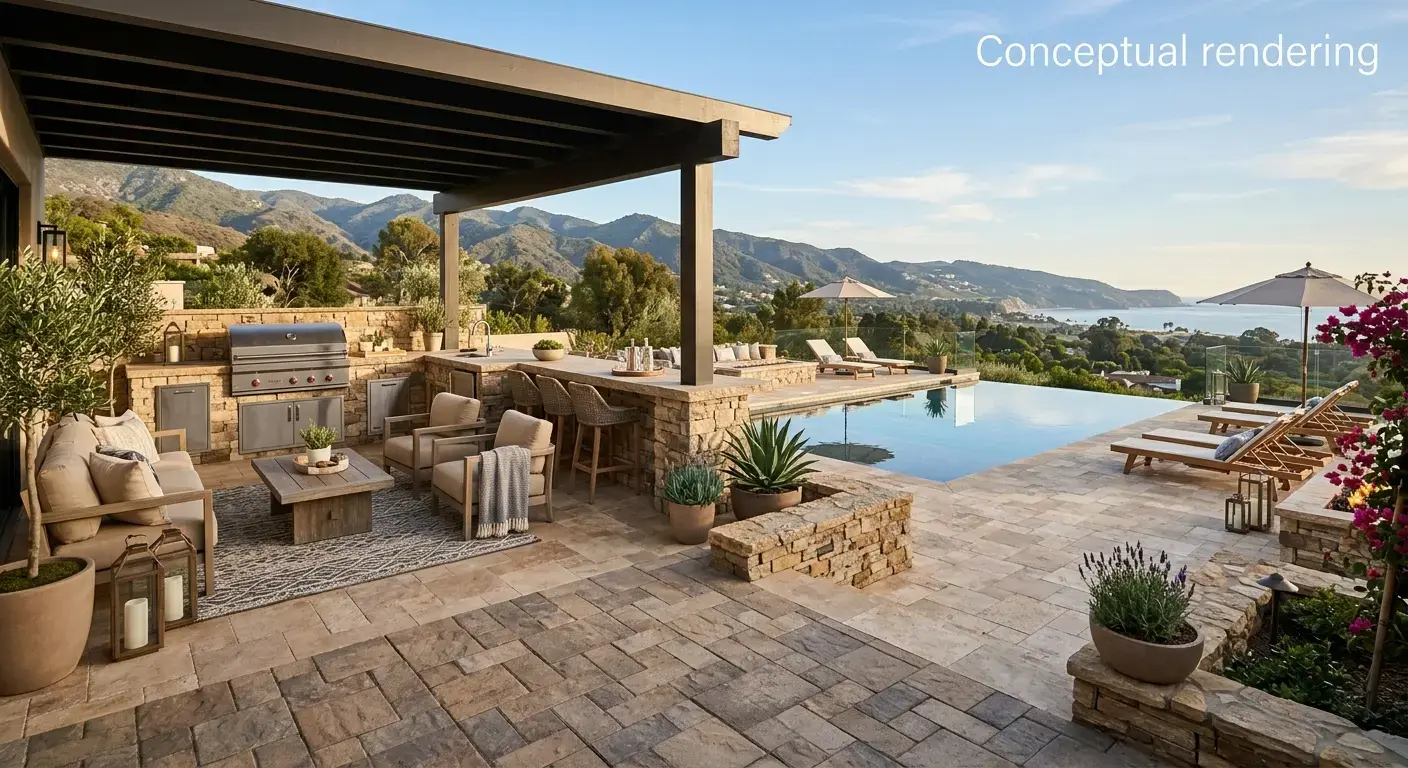
Which Exterior Stones Resist Cracking Best?
The stones that resist cracking best are dense and absorb little water. Granite and quartzite lead the list because their tight crystal structure keeps most water out, which limits freeze-thaw and salt damage. Softer, more porous stones can still work outdoors, but they are better matched to milder climates.
Stone | Water absorption | Freeze-thaw performance | What to watch |
Granite | Low | Strong | Polished faces get slippery; a flamed (also called thermal) finish is common outdoors |
Quartzite | Low | Strong | Confirm it is true quartzite and not a softer stone sold under the name |
Pennsylvania bluestone (a dense sandstone) | Low to moderate | Good | Quality varies by quarry and layer |
Slate | Low | Good to variable | Some slates split apart in thin layers |
Travertine | Moderate | Fair | Natural holes can hold water; better suited to mild winters |
Limestone | Moderate to high | Fair | Softer and more sensitive to salts |
Porcelain pavers (not natural stone) | Very low | Strong | Needs full, even support to avoid cracking under point loads |
Climate should guide the choice. In hot areas with few hard freezes, travertine and limestone can perform well on patios and pool decks. Where winters bring regular freezing, granite, quartzite, and dense Pennsylvania bluestone are safer choices. Our pavers and exterior stone collection includes pool coping, stacked stone, and pavers in small to large formats, so you can compare options for your climate in one place.
Thickness matters as much as stone type. A dense stone cut too thin for its job can still crack, while a moderately porous stone at the right thickness, set on a good base, can perform well on a patio. If you are not sure which stone or thickness fits your project, you can book a free design consultation and walk through the options with our team.
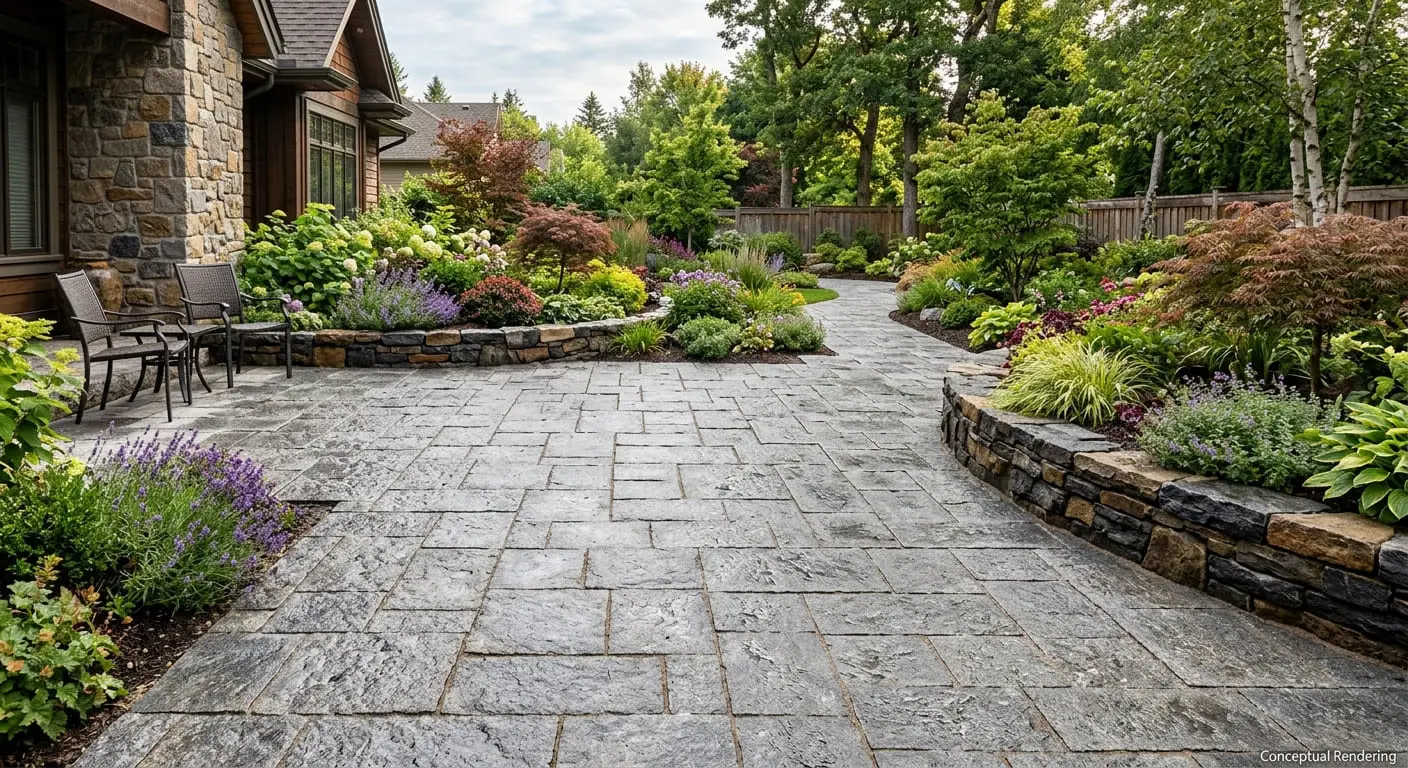
How Can You Prevent Exterior Stone From Cracking?
The best way to prevent exterior stone from cracking is to give it even support, keep water moving away from it, and match the stone to the load and climate. These steps cover both the planning stage and everyday care.
- Start with the right base. Ask your contractor how deep the compacted base will be, what material they plan to use, and how they will handle clay or soft soil. This step does more to prevent cracking than any other.
- Plan for drainage. Hardscape should slope slightly away from the house, and water should never pool on or under the stone. Point downspouts and sprinklers away from paved areas.
- Match thickness to use. Choose thicker stone and a deeper base for driveways or any area that will carry vehicles.
- Choose stone for your climate. In areas with regular winter freezes, favor dense, low-absorption stones like granite and quartzite. Seeing stones in person at one of our local showrooms makes it easier to compare density, finish, and thickness side by side.
- Keep joints working. On sand-set pavers, keep joints filled so stones lock together and do not rock. On mortar-set stone, ask your contractor about movement joints.
- Consider sealing porous stone. A penetrating sealer can reduce how much water and salt porous stone absorbs. It will not make stone crack-proof, and dense stones may not need it.
- Be gentle in winter. Use plastic shovels rather than metal-edged ones, apply deicers sparingly, choose products labeled safe for natural stone, and use sand when you only need traction.
- Spread heavy loads and give trees room. Set heavy planters and fixtures on pads or feet that spread their weight, and leave a planted buffer between large trees and hardscape.
- Fix small problems early. Reset a rocking paver or refill washed-out joints before a minor issue turns into a cracked stone.
Contractors and designers sourcing stone for hardscape projects can apply for a trade account to get trade pricing, a dedicated rep, and job-site delivery.
Can Cracked Exterior Stone Be Repaired?
Often, yes, depending on the type of crack and how the stone was set. On sand-set patios and walkways, a cracked paver can usually be lifted out and replaced without disturbing the rest of the surface. That is one reason we suggest ordering a few extra pieces with any exterior stone project, since natural stone varies from lot to lot and an exact match later can be hard to find. Extra pieces add to the upfront cost, so if you are working within a budget, you can browse our overstock sale for discounted materials.
Mortar-set stone takes more work. Replacing one piece means removing the old mortar and setting the new stone, and if the cracking came from a failing concrete slab underneath, the slab needs attention first.
Before replacing anything, find the cause. If cracks come from base settlement, roots, or poor drainage, a new stone in the same spot will likely crack again. A stable hairline crack that is not letting water in may only need watching. Small chips and surface flaking can sometimes be patched with stone repair products, though the color match is rarely perfect.
Conclusion
Exterior stone can crack, but rarely without a reason. In most cases, the cause sits below the surface or comes from the conditions around it: a base that settled, water with nowhere to go, repeated freezing, a load the stone was not sized for, or roots pushing up from below. The stone itself is usually the strongest part of the whole system.
That means most cracking is preventable. Choosing a dense, low-absorption stone for your climate, matching thickness to how the area will be used, and working with a contractor who builds a solid, well-drained base will do more to protect your patio, walkway, or driveway than anything else. A little care in winter and quick attention to small problems take care of the rest.
If you are planning a new hardscape project or replacing stone that has failed, we are glad to help you compare options in person. Our team can show you how different stones look and feel, talk through finishes and thickness for the way you plan to use the space, and help you narrow down what fits your climate. Visit any of our showrooms in Sacramento, Reno, Minden, or Fernley to see our exterior stone selection up close.
Note: Some images on this page may be conceptual renderings created to illustrate design possibilities and may not depict actual installations.
Frequently Asked Questions
An occasional crack over many years is not unusual, especially in natural stone with fissures or in areas with freeze-thaw cycles. Widespread cracking, or cracks that appear in the first few years, usually points to a base, drainage, or load problem rather than the stone.
Not necessarily. Dense stones like granite and quartzite are very strong, while softer, porous stones can be more vulnerable to freeze-thaw and salt damage. Both depend on a solid, well-drained base, and sand-set pavers of either type tend to crack less than a single poured concrete slab because the joints allow small movements.
Heat alone rarely cracks stone, but it does make stone expand. In mortar-set installations without movement joints, that expansion can build stress over time and lead to cracks in the stone or the mortar.
Sealing will not stop cracks caused by base settlement, heavy loads, or roots. It can help porous stones absorb less water and salt, which may reduce freeze-thaw and salt damage over time. Dense stones like granite often need little or no sealing for this purpose.
If the crack is stable and the stone is not loose, rocking, or creating a trip hazard, it can usually wait. Replace it sooner if pieces are shifting or water is getting under the surface. Either way, find out what caused the crack first so the new stone does not crack in the same spot.
SOURCES
- U.S. Geological Survey, “Water Density”: ice is about 9 percent less dense than liquid water, which is why freezing water expands inside porous stone. https://www.usgs.gov/water-science-school/science/water-density
- Coldspring, “Why Did My Paver Project Fail?”: how poor drainage, freeze-thaw cycles, and a failing base under mortar-set granite pavers led to cracking. https://coldspringusa.com/why-did-my-paver-project-fail/
- Total Landscape Care, “Hardscaping: Dealing with Frost Heave Damage”: what causes frost heave, why clay and poorly drained soils are more vulnerable, and how base depth and drainage reduce damage. https://www.totallandscapecare.com/business/article/15041895/hardscaping-how-to-deal-with-frost-heave-damage
- New York Landmarks Conservancy, “Technical Tips: Icy Stoops and Sidewalks”: why repeated deicer use damages porous stone, and why using deicers sparingly and mixing them with sand helps. https://nylandmarks.org/news/technical-tips-icy-stoops-and-sidewalks/