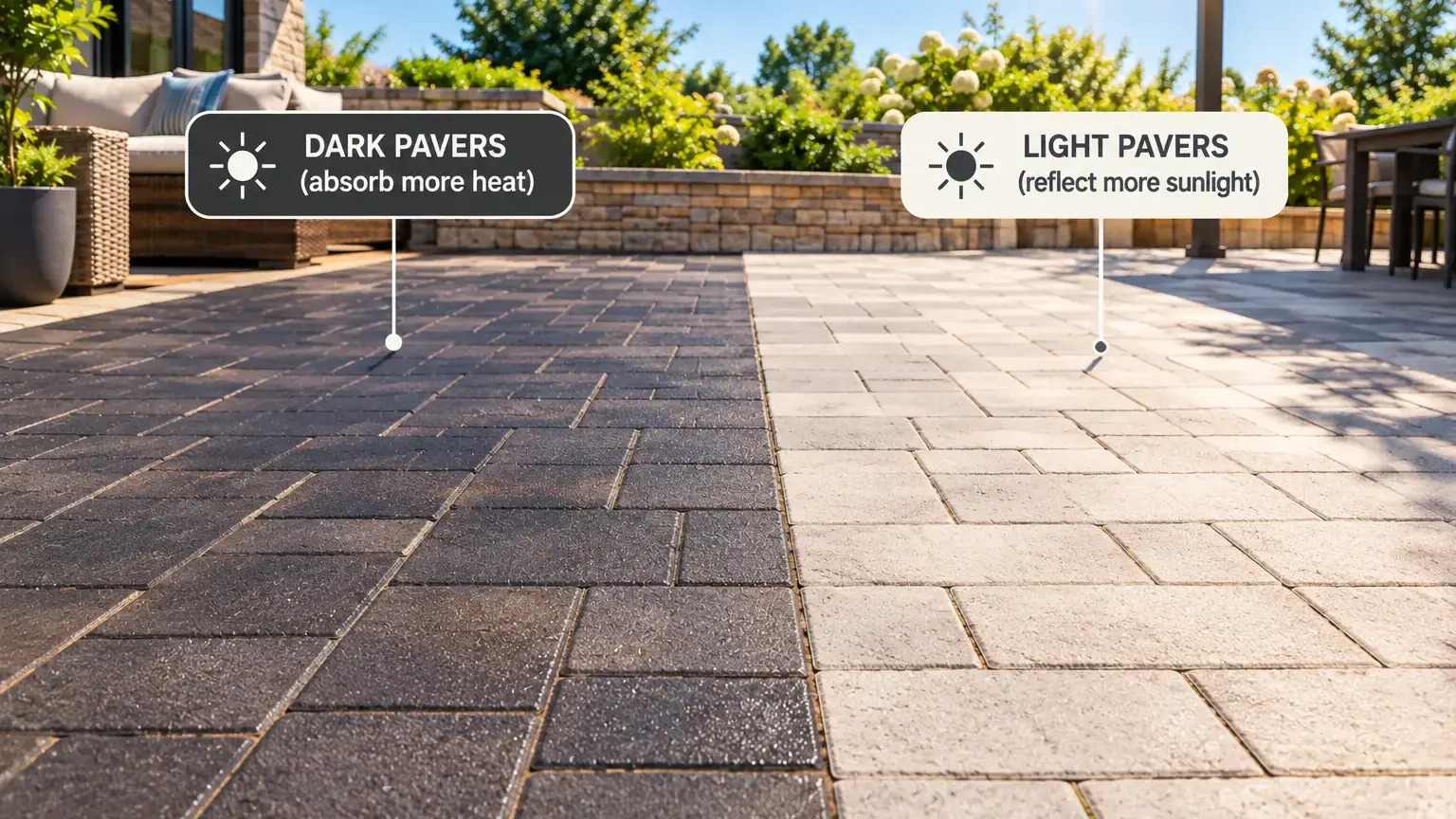
Yes, pavers can get too hot to walk on barefoot in direct summer sun, especially dark-colored pavers on hot afternoons. How hot they get depends mainly on color, hours of direct sun, time of day, and air temperature. Light-colored pavers generally stay cooler because they reflect more sunlight and absorb less heat.
Solar reflectance is the share of sunlight a surface reflects instead of absorbing. According to the ASTM E1918 standard, which covers field measurement of solar reflectance on horizontal and low-sloped surfaces, it is an important factor in how hot a sunlit surface becomes. Natural stone and porcelain pavers respond to sunlight in similar ways, so color, finish, and shade usually matter more than the material itself. This guide covers why pavers heat up, how hot outdoor surfaces can get, how common stones compare, and practical ways to keep a patio or pool deck comfortable for people and pets.
Why Outdoor Surfaces Heat Up in the Sun
Any hard surface in direct sunlight absorbs part of that energy and converts it into heat. How much it absorbs depends largely on its color. Researchers studying urban heat have found that dark pavements absorb 80 to 95 percent of the sunlight that reaches them. The same research group shared thermal imaging of a road with light and dark sections, where the lighter section measured about 30°F (17°C) cooler than the darker one.
That same principle applies to a backyard patio. Three factors work together:
- Color and reflectance. Lighter surfaces reflect more sunlight, and darker surfaces absorb more of it.
- Hours of direct sun. A surface in full sun from late morning through the afternoon has far more time to build up heat than one shaded by a tree, a pergola, or the house itself.
- Density and heat storage. Dense materials can absorb heat during the day and release it slowly, so a surface may stay warm into the early evening after the sun has moved.
These factors explain why temperatures measured on real outdoor surfaces can climb far above the air temperature.
How Hot Can Outdoor Surfaces Get?
The most detailed temperature data comes from studies of roads, sidewalks, and parking lots, not residential patios. Still, it shows how much hotter a sunlit surface can get than the air around it. One pilot study in Arizona comparing conventional and reflective paving found that asphalt reached surface temperatures up to 152°F at midday, while reflective "cool" pavements stayed 10 to 16°F cooler. The same source notes that there is currently no official standard or labeling program for cool paving materials, so a product described as "cool" is not referring to a certified rating.
Most stone and porcelain pavers are lighter in color than fresh asphalt, so they often run cooler. They are not immune to heat, though. A dark paver in full sun during a heat wave can still get too hot to stand on comfortably, and in the hottest conditions, discomfort can turn into injury.
When Hot Surfaces Become a Burn Risk
In very hot climates, sunlit ground surfaces can cause real harm. A review of five years of pavement burn cases found that most cases occurred when the air temperature was 95°F or higher, and the risk rose sharply above 105°F. The authors noted that on a 111°F day, pavement in direct sun can reach about 147°F, hot enough to cause second-degree burns within seconds.
These figures describe pavement in a desert climate rather than any specific product, but they show how quickly a sunlit surface can become dangerous. Children, older adults, and anyone with limited mobility face greater risk because they may not be able to move off a hot surface quickly. Pets face a similar risk, often with less warning.
Hot Surfaces and Pets
Pets are always barefoot, so surface temperature matters for them every time they go outside. Veterinary guidance notes that ground surfaces can be as much as 40 to 60 degrees hotter than the air, and that on an 86°F sunny day, asphalt can reach about 135°F. A quick way to check any surface, including a patio, is the seven-second test using the back of your hand. If you cannot comfortably keep your hand in place for seven seconds, the surface is likely too hot for paws.
For households with dogs, a shaded resting spot, a grassy or mulched area, and shaded paths help keep summer outdoor time comfortable.
Why a Surface Can Feel Hotter Than It Is
Temperature is only part of what bare feet notice. Two surfaces at the same temperature can feel very different, because heat moves between skin and a surface at a rate that depends on the material's thermal properties. Stone and porcelain conduct heat more readily than wood, so a hot stone surface passes heat to your skin more quickly and can feel hotter on contact. Wood and many composite materials conduct heat more slowly, so they can feel less hot even at a similar temperature.
The same effect works in reverse. In shade or on a mild day, the property that makes hot stone feel hotter can make cool stone feel pleasantly cool to the touch, which is part of its appeal for shaded patios and covered outdoor rooms. This is why the choice of stone, its color, and its finish all shape how an outdoor space feels.
Does the Type of Stone Make a Difference?
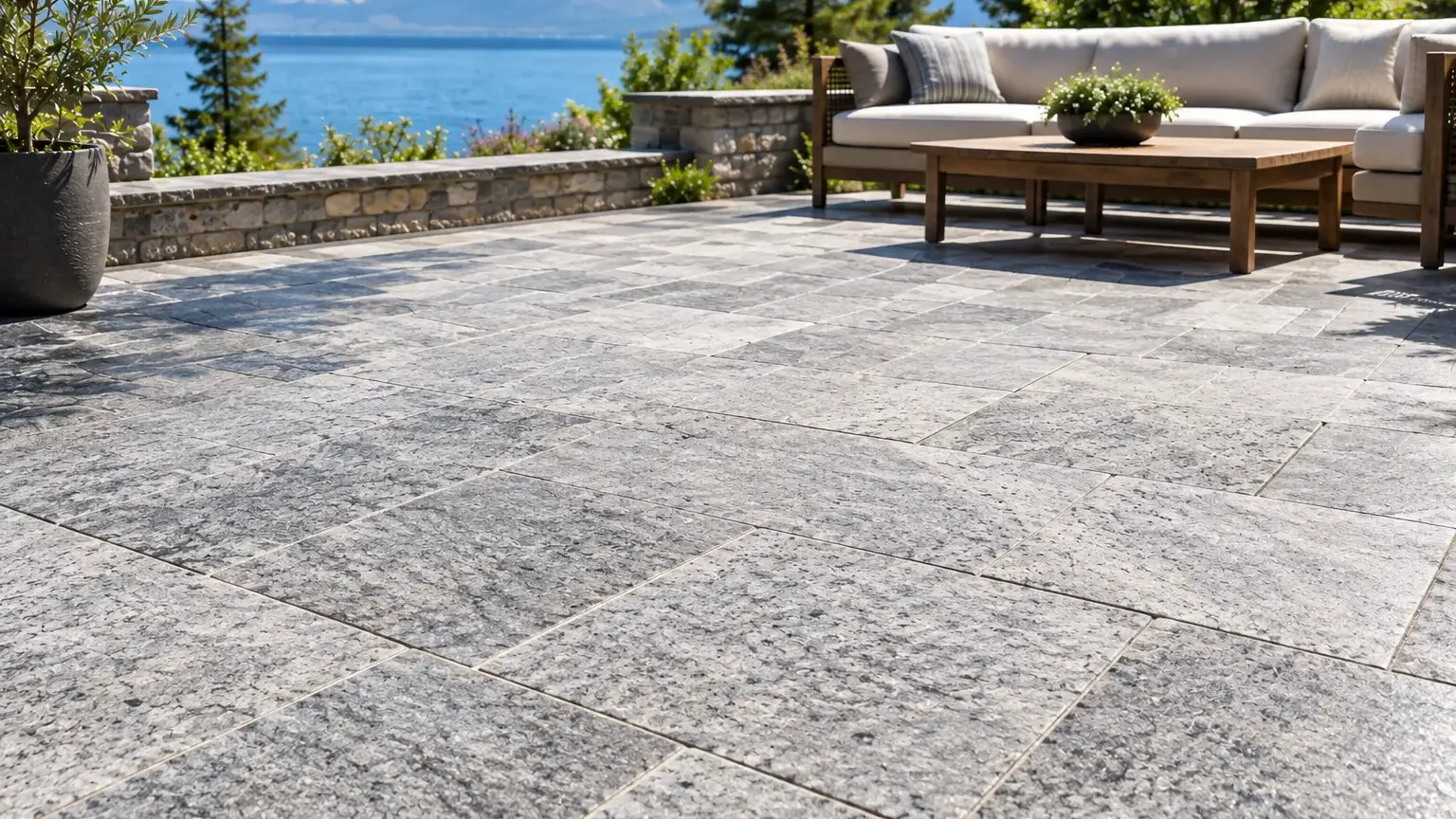
Stone type matters, but mostly because of the range of colors each stone typically comes in:
- Granite ranges from pale gray and white to deep charcoal and black, so color choice matters even within the same stone type.
- Quartzite often comes in light tones such as white, cream, and soft gray, which can suit sun-exposed patios.
- Travertine comes in ivory, beige, gold, silver, and darker walnut tones. It is often described as comfortable underfoot, a reputation usually credited to its light coloring and textured surface. A walnut travertine will still absorb more heat than an ivory one.
- Limestone and sandstone often come in light, warm tones, which can help them stay more comfortable in the sun than darker stones.
- Slate, bluestone, and basalt lean toward darker grays, blues, and blacks. They are valued for texture and character, but their darker colors mean they are likely to absorb more heat in direct sun.
Beyond color, a stone's makeup affects how it holds up outdoors. The Natural Stone Institute groups stones into two broad families. Calcareous stones, such as limestone, marble, and travertine, are commonly used in interiors or in exterior settings where conditions are relatively controlled. Siliceous stones, such as granite, basalt, quartzite, and sandstone, are generally harder and more resistant to abrasion and chemicals. The same source explains how climate and exposure affect natural stone paving. In hot climates, prolonged sun exposure and thermal expansion can affect color and movement joints. In freeze-thaw climates, moisture can enter the stone and expand when frozen, which may lead to cracking or surface wear.
Because outdoor conditions vary, choosing the right stone starts with understanding the material and how it will be used. For slab projects, request a slab quote to discuss the right material for the application. You can also shop local to explore stone options available in your area.
Natural Stone and Porcelain in the Heat
For anyone considering porcelain as an alternative to natural stone, the same principles apply. Outdoor porcelain is commonly made in 2 cm or 3 cm thicknesses for exterior use. It responds to sunlight much like natural stone, and there is no reliable evidence that one is consistently cooler than the other. A stone-look porcelain in pale sand or light gray will generally stay more comfortable than charcoal or dark wood-look porcelain in the same spot.
Porcelain's main practical difference is low water absorption. According to the ANSI A137.1 standard, a tile must have water absorption of 0.5 percent or less to be classified as porcelain, and industry groups explain how water absorption testing determines whether a tile qualifies as porcelain. That property affects staining and moisture resistance more than heat.
How Finish and Texture Play a Role
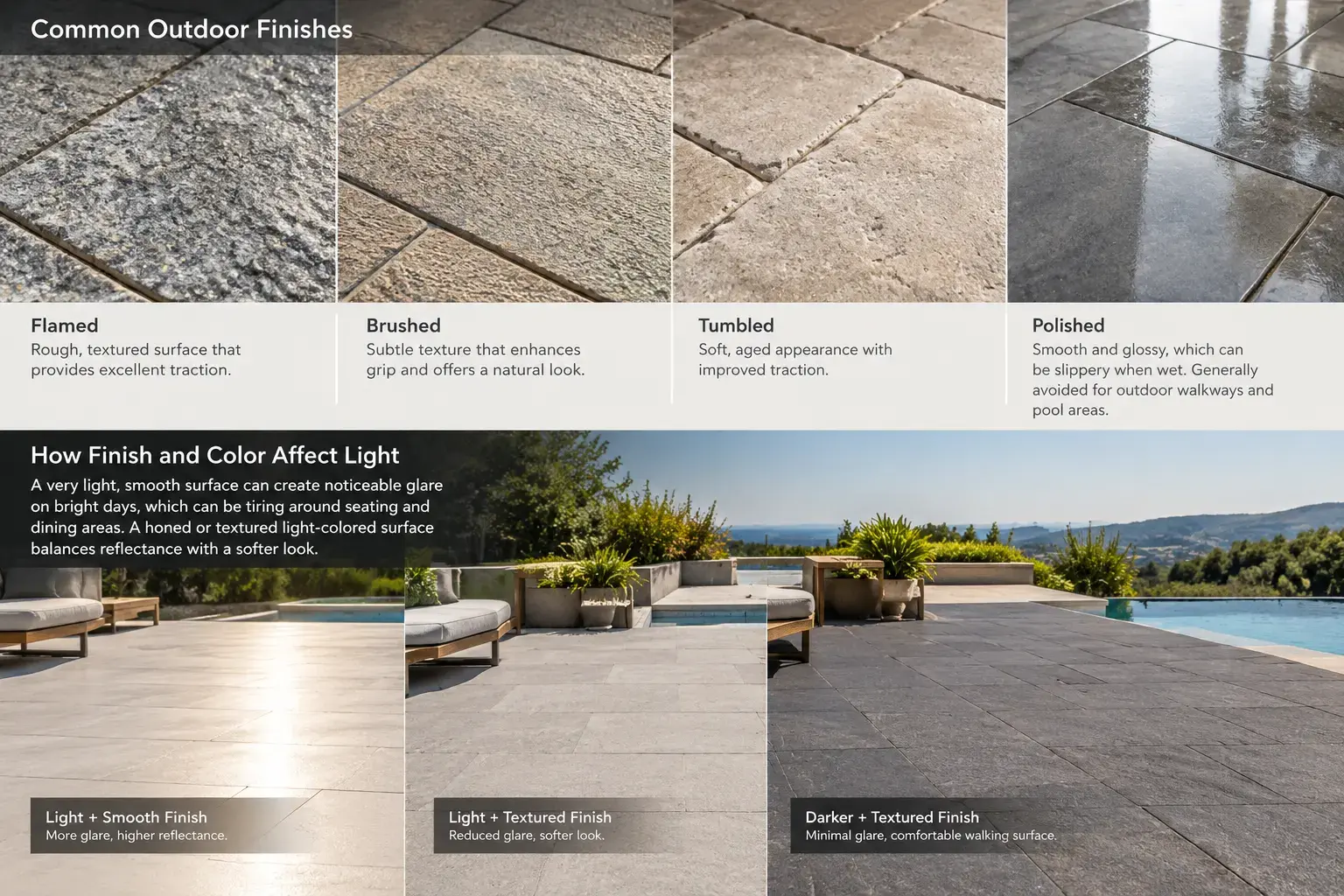
Once the material and color are chosen, finish is the next decision, and it affects safety as much as comfort. Textured finishes such as flamed, brushed, or tumbled surfaces are common outdoors because they offer better traction. Polished finishes are generally avoided on outdoor walking surfaces, especially around pools, because they can become slippery when wet.
Finish also changes how light leaves the surface. A very light, smooth surface can create noticeable glare on bright days, which can be tiring around seating and dining areas. A honed or textured light-colored surface can balance reflectance with a softer look.
Practical Ways to Keep Outdoor Surfaces Comfortable
Material choices set the baseline, but design decisions and everyday habits make a noticeable difference on hot days:
- Add shade where people gather. Pergolas, shade sails, umbrellas, and trees keep surfaces much closer to air temperature than full sun allows.
- Place colors according to sun exposure. If you like darker stone, consider using it for borders, accents, or shaded areas, and keep lighter tones where the afternoon sun hits hardest.
- Judge colors in daylight. Colors can look different under indoor lighting than outdoors, so viewing options in natural light gives a truer sense of how light or dark they are.
- Keep light surfaces clean. Research on pavements shows that new cement concrete reflects roughly 30 to 50 percent of sunlight, dropping to about 20 to 35 percent as it darkens with stains and wear. Light-colored stone and porcelain can lose some reflectance the same way, so regular cleaning helps them stay light.
- Rinse with water before use. Evaporation cools a surface, which is why some pavement cooling strategies rely on encouraging it. In strong sun, the effect is short-lived.
- Plan around peak heat. Sunlit surfaces tend to be hottest from late morning through the afternoon, so early mornings and evenings are usually more comfortable for bare feet.
- Put rugs or mats on main routes. An outdoor rug from the door to the pool or lawn gives bare feet a cooler path.
- Keep sandals nearby. A pair by the back door or pool gate is a simple safeguard, especially for children.
Conclusion
Pavers can become uncomfortably hot in summer sun, and in extreme heat they can become unsafe, but much of that outcome is decided at the design stage. A light tone in the sunniest areas, a textured finish where surfaces get wet, and shade where people spend time address most of the problem before it starts. Once the space is in use, keeping surfaces clean and checking them before barefoot use helps them stay comfortable season after season.
If you are comparing natural stone and porcelain for an outdoor project, you can review colors and finishes in person during a free design consultation at Nova Tile and Stone's showrooms in Reno, Minden, Fernley, and Sacramento.
Frequently Asked Questions
There is no single number, since temperature depends on color, sun exposure, and air temperature. Field studies have measured asphalt at up to 152°F. Lighter pavers typically run cooler, while dark pavers in full sun on very hot days can reach temperatures that cause burns.
White, ivory, cream, pale sand, and light gray generally stay cooler than charcoal, dark brown, or black. This applies within every material, whether granite, travertine, or porcelain.
They can be. Light-toned pavers with a textured, slip-resistant finish are a common choice for pool decks, especially when paired with shade near lounge areas.
Hold the back of your hand flat on the surface for seven seconds. If that is uncomfortable, the surface is likely too hot for bare feet or paws.
They can stay warm into the early evening because dense materials release stored heat gradually. Shaded areas and lighter colors usually cool down sooner.
Note: Some images on this page may be conceptual renderings created to illustrate design possibilities and may not depict actual installations.