Courtyard stone choices come down to three conditions inside the walls: heat, shade, and drainage. Light-colored travertine and porcelain pavers tend to stay cooler underfoot than dark stone in sun-trapped courtyards. Porcelain pavers absorb 0.5% water or less under ANSI A137.1, which suits shaded courtyards where surfaces stay damp. Granite and quartzite pavers have low porosity and rate roughly 6 to 7 on the Mohs hardness scale. Travertine, limestone, and sandstone flagstone are more porous and are commonly sealed for outdoor use. Large-format pavers, such as 24x24 inches, reduce joint lines and make a small courtyard appear more open.
In this guide, we cover courtyard stone and paver options, layout and pattern ideas, color choices for sunny and shaded spaces, and planning notes for drainage, plantings, and focal features.
How a Courtyard Differs from an Open Patio
A courtyard is defined by its walls. Those walls might be the house itself, a garage, a garden wall, or a combination of all three. That enclosure changes the conditions your hardscape has to work with.
Here are the main differences we see homeowners plan around:
- Retained heat. Stucco, stone, and masonry walls absorb sun during the day and release that heat into the space. A south- or west-facing courtyard can stay warmer well into the evening.
- Uneven light. Walls cast shade that moves through the day. One corner may get full afternoon sun while another stays shaded year-round, which affects moisture, moss growth, and how colors read.
- Limited airflow. Enclosed spaces dry out more slowly after rain or watering. Surfaces in shaded areas can stay damp longer than surfaces in an open yard.
- Contained runoff. Water has fewer places to go. Grading and drainage need attention from the start, since rain can't simply sheet off into a lawn.
- Close viewing distance. In a courtyard, you see the hardscape up close and from inside the house. Joint lines, color variation, and edge details are more noticeable than they would be across a large backyard.
Because of these factors, a material that works on an open patio may need a different finish, color, or layout in a courtyard. Planning around the specific conditions of your space narrows the options quickly. A free design consultation can help you match materials to those conditions before you commit.
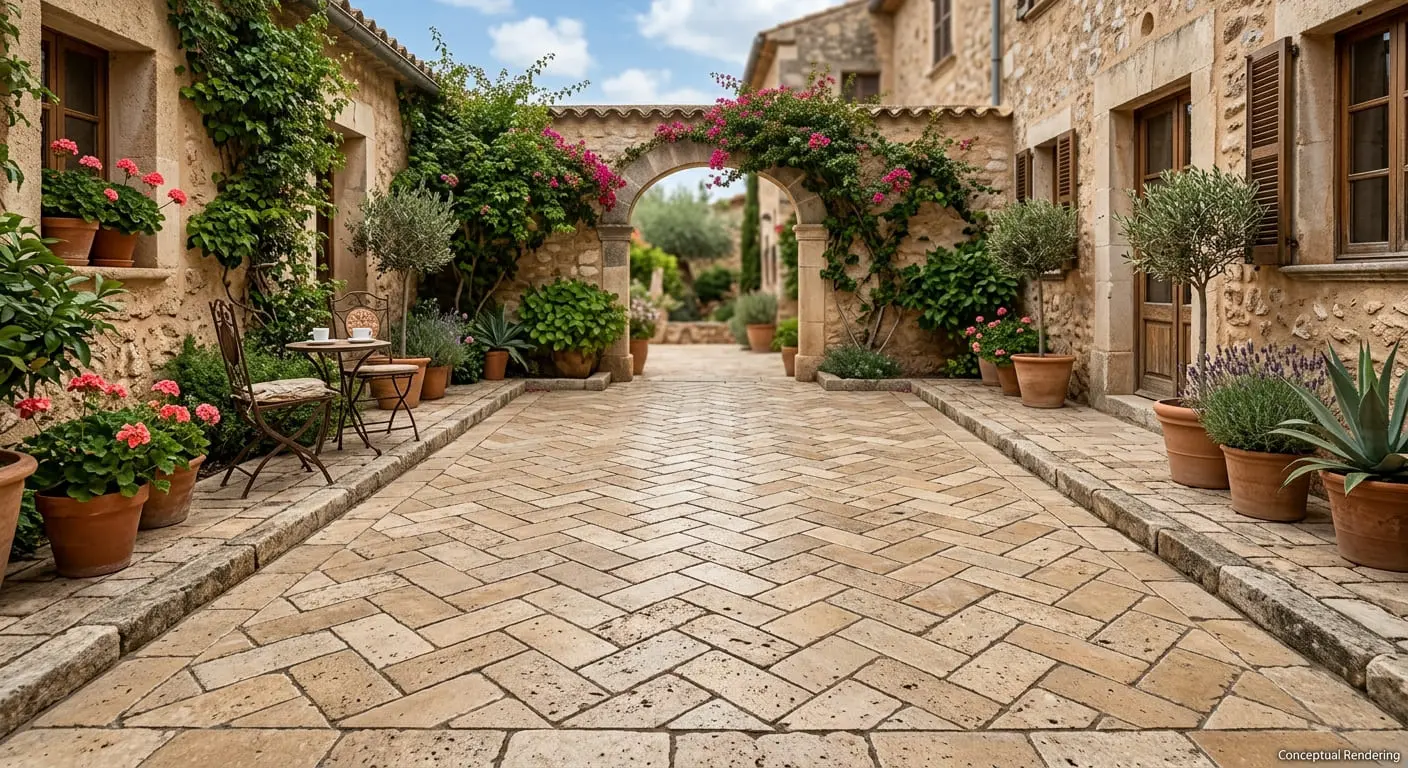
Stone and Paver Materials for Courtyards
Most courtyard surfaces come from a handful of material families. Each has its own surface temperature, texture, and maintenance needs.
Travertine Pavers
Travertine is a form of limestone deposited by mineral springs, and unfilled travertine shows natural voids on its surface. Tumbled and brushed finishes add texture underfoot. Light travertine tones such as ivory and beige tend to stay cooler to the touch than darker stone, which matters in a courtyard that holds afternoon heat. Travertine is commonly sealed outdoors to reduce staining from leaves, planters, and spilled drinks.
Porcelain Pavers
Outdoor porcelain pavers are typically 2cm (about 3/4 inch) thick. ANSI A137.1 defines porcelain tile as having a water absorption rate of 0.5% or less when tested under ASTM C373, so porcelain takes on very little moisture in shaded corners that stay damp. Porcelain pavers come in looks that mimic wood, limestone, slate, and concrete, which makes them easier to coordinate with interior flooring. For outdoor use, a textured or matte finish is more common than a polished one.
Flagstone
Flagstone is a general term for flat, split stone such as sandstone, quartzite, and slate. Irregular flagstone creates an organic, garden-style look with varied joint widths. Cut or pattern flagstone produces a more uniform, formal surface. The natural cleft texture of flagstone adds grip underfoot, though some pieces have more surface variation than others.
Natural Stone Pavers: Granite, Limestone, and Quartzite
Granite and quartzite are dense, low-porosity stones that rate roughly 6 to 7 on the Mohs hardness scale. Flamed and brushed finishes add texture for wet conditions. Limestone pavers have a lower-contrast, even look that suits Mediterranean and contemporary courtyards. Limestone is more absorbent than granite or quartzite and is typically sealed for outdoor use.
We carry a range of pavers and exterior stone, and seeing samples in person helps you judge texture and color in the light conditions of your own space.
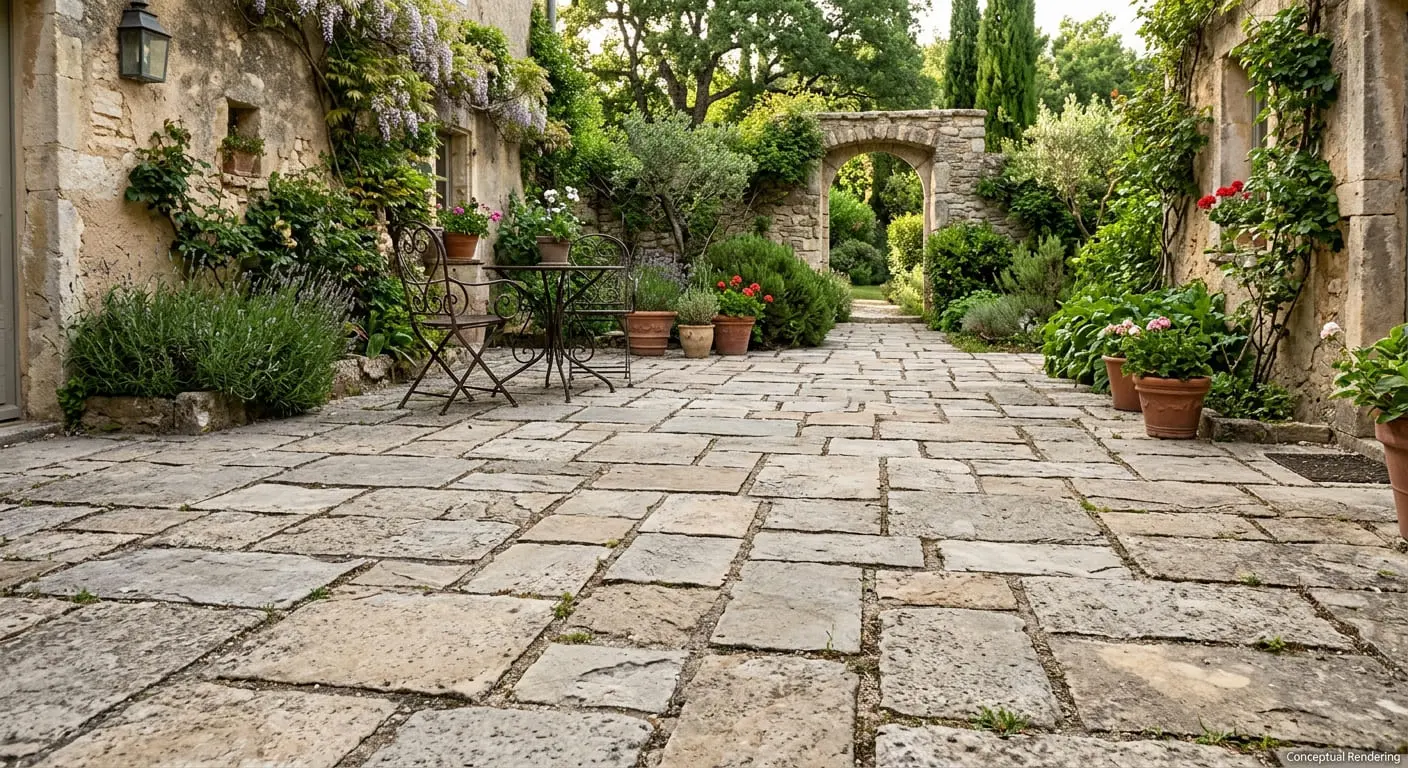
Layout and Pattern Ideas for Enclosed Spaces
The layout of a courtyard affects how large it feels, how people move through it, and how it connects to the rooms around it. A few approaches come up often.
Large-format pavers for small courtyards. Fewer joint lines make a compact space read as more open. Formats such as 24x24 or 24x48 inches reduce visual clutter, especially in porcelain or cut limestone.
Running bond and linear layouts. Laying rectangular pavers in a running bond can draw the eye toward a focal point, such as a fountain, a doorway, or a garden wall. Orienting the long side of each paver across a narrow courtyard can make it feel wider.
Versailles and French patterns. Multi-size patterns combine squares and rectangles in a repeating set. They suit traditional, Spanish, and Mediterranean homes, and they pair well with travertine and limestone.
Herringbone and basketweave. These patterns add texture and movement. They fit smaller zones, such as a reading nook or a path between planting beds, where a busy pattern won't overwhelm the space.
Borders and inlays. A contrasting border along the walls frames the courtyard and gives the field pattern a defined edge. An inlay or medallion at the center can mark a seating area or fire feature.
Zoning with materials. Changing material or pattern between areas helps define how each part of the courtyard is used. A smooth porcelain surface under a dining table can transition to flagstone stepping stones through a planting area.
Matching the interior threshold. When the courtyard opens directly off a living room or kitchen, carrying a similar color or format from inside to outside creates visual continuity. Porcelain makes this easier, since many collections offer matching indoor tile and 2cm outdoor pavers.
Borders, inlays, and multi-material zones can increase the amount of material a courtyard needs. Before you finalize your layout, you can check our overstock sale for discounted materials.
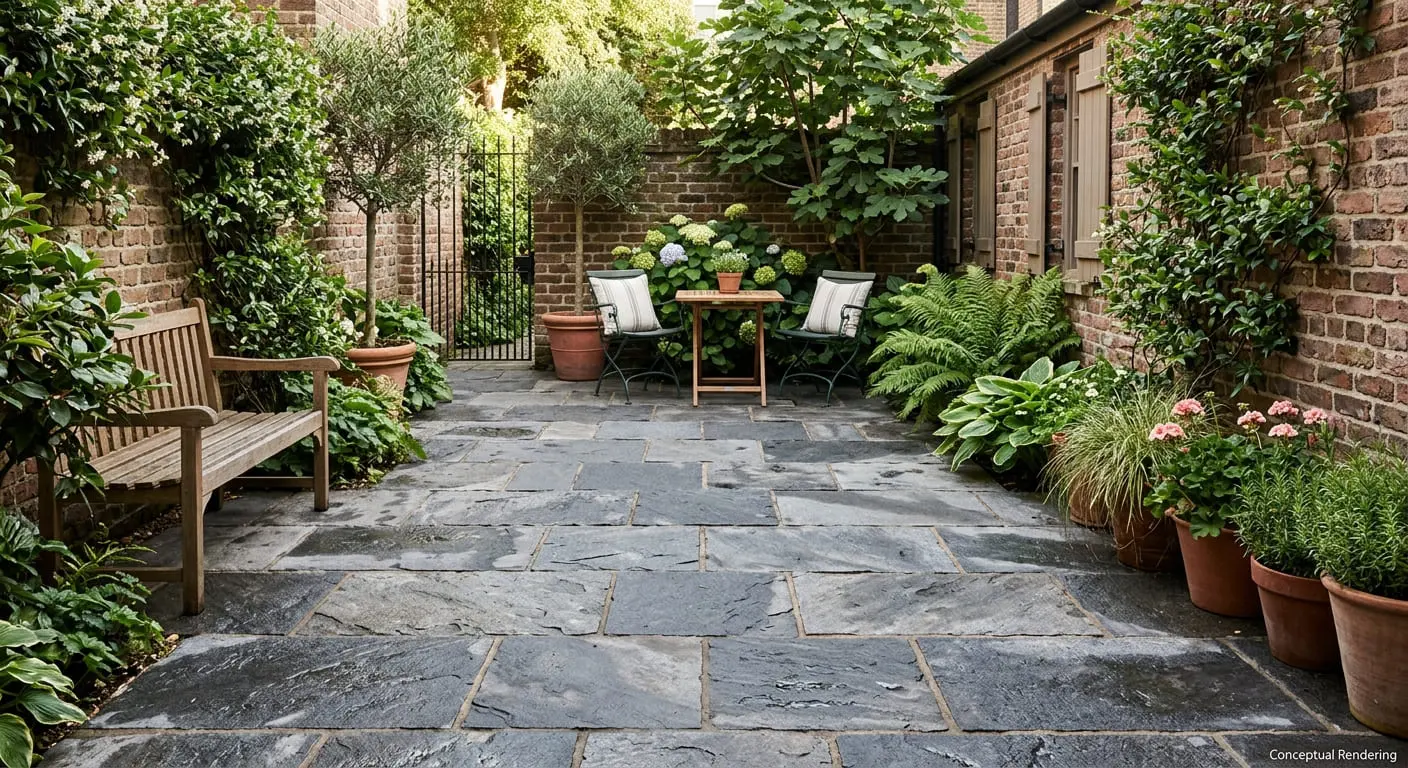
Color, Light, and Heat in a Walled Space
Color choices carry more weight in a courtyard than in an open yard. The walls, the amount of sun, and the view from inside all influence how a stone color reads.
Sun-trapped courtyards. In a courtyard with full afternoon exposure, lighter stone reflects more sunlight and generally stays cooler underfoot than dark stone. Ivory travertine, light limestone, and pale porcelain are common choices for pool-adjacent or barefoot areas. The tradeoff is glare, and a honed, tumbled, or textured finish helps soften reflected light.
Shaded courtyards. In a courtyard that sits in shade most of the day, very dark stone can make the space feel smaller and cooler in tone. Mid-tone grays, warm beiges, and blended colors tend to keep a shaded space feeling balanced. Light colors in deep shade can also show moss, algae, and water marks more easily, while a mid-tone with natural variation makes those marks less visible.
Coordinating with walls. The courtyard walls act as a large backdrop. Pairing warm stone with warm stucco or brick creates a cohesive look, while a cooler gray paver against white walls produces a more contemporary feel. Viewing samples in daylight at one of our local showrooms and comparing them with photos of your walls shows how the two interact.
Viewing from indoors. Many courtyards are seen through windows and glass doors, so consider how the stone looks from inside in the morning and evening. Interior lighting and window tint can shift how warm or cool a stone appears.
Evening lighting. Wall-mounted fixtures and low path lights graze across textured stone and highlight its surface. Tumbled travertine, split-face accents, and cleft flagstone show more depth under low-angle light than smooth surfaces do.
Drainage, Plantings, and Features
A courtyard hardscape works alongside the other elements in the space. Planning for water, plants, and focal features early keeps the surface from becoming an afterthought.
Planning for Water
Since walls contain runoff, the hardscape needs a clear path for water to leave. Common approaches include sloping the surface toward a drain, using channel drains along walls or thresholds, and choosing permeable pavers or wider gravel-filled joints in planted areas. From a material standpoint, low-absorption options such as porcelain and dense granite take on less water in shaded zones that dry slowly. Your hardscape contractor or landscape designer can confirm grading and drainage requirements for your site. Contractors and designers working on courtyard projects can apply for a trade account to access trade pricing and job-site delivery.
Working with Plantings
Planting beds, trees, and containers soften the stone and bring color into an enclosed space. A few material notes apply here:
- Leave space around tree trunks with gravel or open joints rather than running pavers tight to the base.
- Use a contrasting edge, such as a row of cobbles or a stone border, where pavers meet soil to keep the line defined.
- Place large planters on feet or saucers to reduce rust rings and water staining on light stone.
- Consider how fallen leaves, flowers, and fruit might stain porous stone, and plan sealing accordingly.
Focal Features
Many courtyards center on a single feature. A fountain, fire pit, built-in bench, or specimen tree gives the eye a place to land. Stone can tie that feature to the floor surface. Stacked stone or ledger panels on a fountain wall, matching coping on a raised planter, or a stone cap on a seat wall all repeat the paving material at a different height.
Covered areas also play a role. A pergola, a roof overhang, or a shade sail changes how much sun reaches the floor. A smoother surface can work in covered sections, while open areas exposed to rain may call for more texture.
Bringing Your Courtyard Plan Together
A courtyard hardscape starts with the conditions inside the walls: how much sun reaches the floor, where water collects, and how the space connects to the rooms around it. From there, material, finish, color, and layout choices follow more easily. Light travertine or light-colored porcelain can keep a sunny courtyard cooler underfoot, while mid-tone stone with texture suits shaded corners. Large formats open up small spaces, and borders, inlays, and material changes help define seating, dining, and planting zones.
Before deciding, consider how each option will look against your walls, in your light, and from inside the house. A stone can read differently at noon than it does at dusk, so keep in mind the time of day you use the space most.
When you're ready to compare pavers and exterior stone side by side, visit one of our showrooms in Sacramento, Reno, Minden, or Fernley. We offer free design consultations, and our team can walk you through material options, finishes, and formats so you can plan a courtyard that fits your home and the way you use the space.
Note: Some images on this page may be conceptual renderings created to illustrate design possibilities and may not depict actual installations.
Frequently Asked Questions
Lighter stones such as ivory travertine, pale limestone, and light porcelain pavers reflect more sunlight and generally stay cooler underfoot than darker stone. A tumbled, honed, or textured finish helps reduce glare in a bright, walled space.
Yes. Outdoor porcelain pavers are typically 2cm thick and have a water absorption rate of 0.5% or less, which helps in shaded areas that stay damp. Many porcelain collections also offer matching indoor tile for a continuous look from the house to the courtyard.
Larger formats, such as 24x24 or 24x48 inches, create fewer joint lines and can make a small courtyard feel more open. Smaller pavers in herringbone or basketweave patterns fit accent areas without crowding the whole space.
Mid-tone grays, warm beiges, and blended stone colors keep a shaded courtyard from feeling heavy. Very light stone can show moss and water marks in constant shade, while very dark stone can make the space feel smaller.
Porous stones such as travertine, limestone, and sandstone flagstone are commonly sealed outdoors to reduce staining from leaves, planters, and spills. Porcelain pavers have very low absorption and generally do not need sealing. Follow the sealer manufacturer's guidance for reapplication timing.