Why Pavers Feel Cooler in Some Hot Climates Than Others
Pavers that stay cooler underfoot in hot climates typically combine a lighter color with a dense, UV-stable material such as granite, quartzite, or porcelain. Darker tones and more porous surfaces tend to absorb and hold more heat during peak sun exposure.
Patio comfort depends on more than shade structures and seating layout. Surface temperature affects bare feet, pets, and furniture placement across long summer afternoons in desert and high-elevation climates. Heat-resistant paver materials for patios and walkways give homeowners a practical starting point before committing to a layout.
Northern Nevada and Northern California each see long stretches of intense summer sun, and higher elevations can intensify UV exposure even when air temperatures stay moderate. Selecting an exterior surface suited to that combination helps a patio or walkway stay usable through the hottest part of the day.
Material density, finish texture, and color depth each influence how a paved surface behaves in direct sun. The sections below compare common exterior stone options so homeowners and design professionals can weigh comfort, durability, and appearance before narrowing a paving stone selection for a specific site.
Key Advantages of Heat-Managing Paving Stone
Heat-resistant paver materials for patios and walkways share a handful of traits that affect comfort, safety, and long-term performance. Reviewing these traits before narrowing a material list makes it easier to compare granite, quartzite, travertine, and porcelain on equal terms.
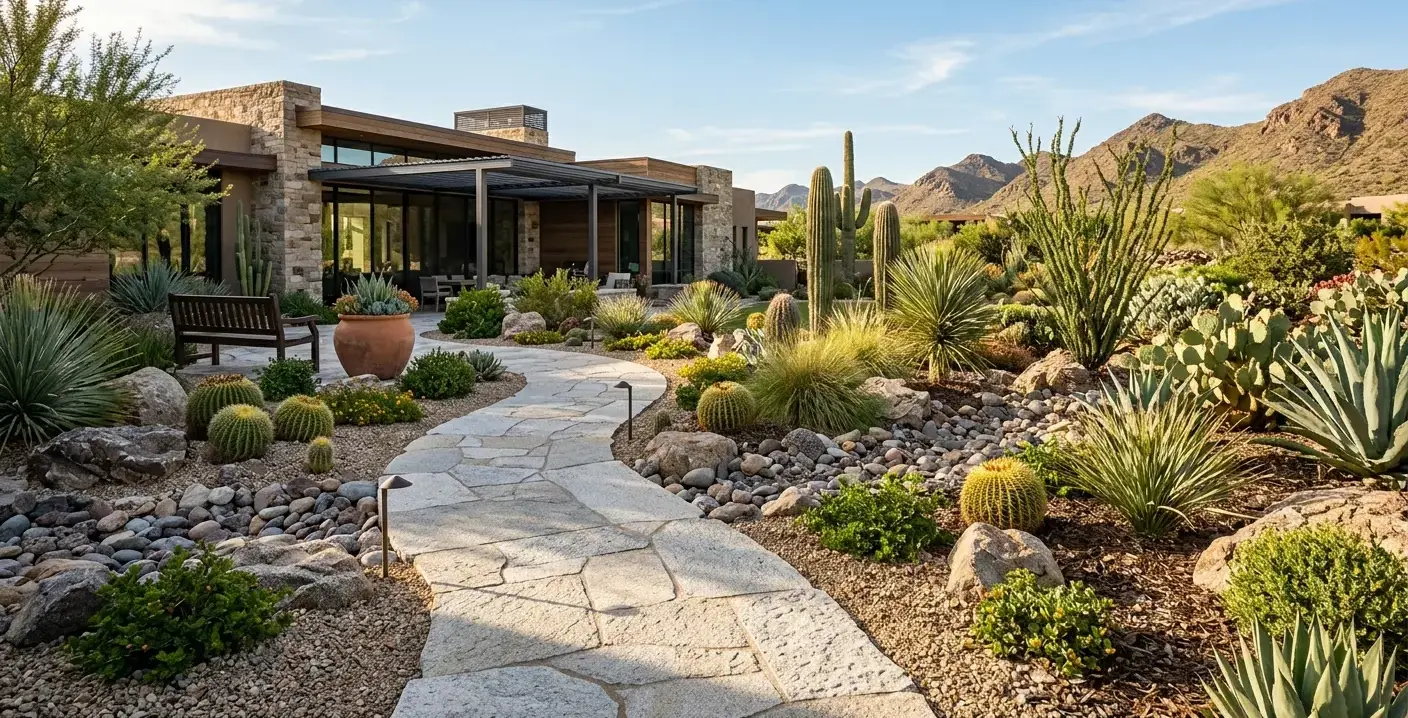 Conceptual rendering
- Lighter material tones tend to reflect more solar heat than dark finishes, though exact surface temperature still depends on density and texture.
- Matte or textured finishes reduce slip risk in wet areas; industry guidance such as the ANSI-reported NFSI B101.3 standard recommends higher-friction surfaces for pool decks and walkways.
- Granite, quartzite, and porcelain fall into the confirmed UV-resistant material group, making them common choices for uncovered patios.
- Travertine is generally suited to open-air outdoor use, though confirming a specific product's manufacturer UV rating is recommended before a full-sun installation.
- Honed and leathered finishes often read cooler to the eye and can reduce glare compared with high-gloss polished surfaces.
- Sealing needs vary by material; dense engineered options like porcelain typically need little to no sealing, while natural stone options such as granite and travertine need periodic sealing to maintain performance.
Color affects surface heat largely through light reflection. A lighter finish reflects more of the sun's energy away from the surface, while a darker finish absorbs more of that energy and converts it into heat at the surface. The same principle explains why light-colored exterior walls and roofing tend to run cooler than dark ones in similar conditions.
The comparison below summarizes how these four materials generally perform across heat tendency, UV category, and sealing needs. Exact results still vary by finish, color depth, and the specific product line.
Material | Heat Retention Tendency | UV Category | Outdoor Suitability | Sealing Needed |
Granite | Lower in light tones, higher in dark tones | Confirmed UV-resistant | Outdoor, floor, wall, countertop | Yes |
Quartzite | Lower in light tones, higher in dark tones | Confirmed UV-resistant | Outdoor, floor, wall, countertop | Yes |
Travertine | Moderate; confirm product-specific UV rating | Not in confirmed UV-resistant group | Generally outdoor-suitable | Yes |
Porcelain | Lower in light tones, higher in dark tones | Confirmed UV-resistant | Outdoor, floor, wall | Minimal to none |
Granite and quartzite typically lead for uncovered, high-sun locations thanks to their confirmed UV-resistant status, while travertine and porcelain each bring different strengths in color warmth and low maintenance.
Where Cool-Touch Patio Pavers Perform Best Around the Home
Outdoor living spaces across Northern Nevada and Northern California deal with intense summer sun, rapid temperature swings, and heavy foot traffic near pools. Matching material and color to each zone keeps patios comfortable through peak afternoon heat.
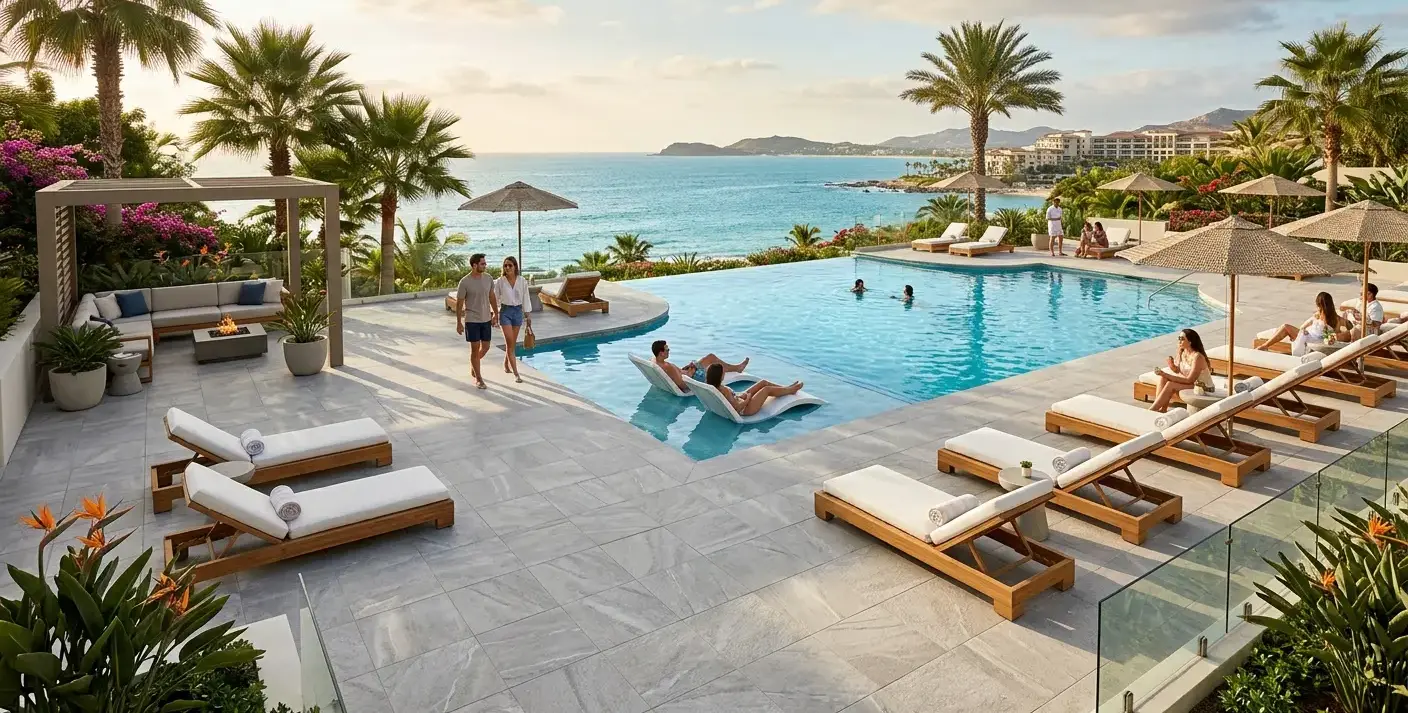 Conceptual rendering
Pool Decks and Walkways
Pool decks see bare feet, splashing water, and long sun exposure in the same afternoon. A textured granite or quartzite surface in a mid to light tone balances traction and heat comfort better than a dark, polished finish.
General traction benchmarks, such as the wet-surface guidance covered under the NFSI B101.3 standard, outline why textured finishes are favored in pool-adjacent areas. Confirming a product's tested traction rating with a design consultant is recommended before finalizing a pool deck surface.
Visit the Fernley showroom to compare textured finish samples firsthand.
Patios and Outdoor Kitchens
Dining areas and outdoor kitchens often sit in full sun for several hours each day. Lighter granite or porcelain tones paired with a honed or leathered finish tend to stay more comfortable underfoot than deep charcoal or black surfaces during peak heat.
Travertine's warm, variegated coloring also suits sun-heavy patios once a specific product's outdoor rating has been confirmed.
Visit the Reno showroom to view travertine and granite paving options side by side.
Entryways, Courtyards, and Design-Forward Spaces
Architects and designers increasingly treat exterior paving as a visible design element rather than a purely functional surface. Trade events such as the International Surface Event highlight emerging stone finishes and color trends for outdoor applications, offering useful reference points when planning a courtyard or entry sequence that balances aesthetics with heat performance.
Color consistency between a walkway, a pool deck, and a covered patio area can make a property feel more intentional from the street to the backyard. A design consultant can help confirm which tones and finishes work well together across multiple zones.
Light Tones vs. Dark Tones: Advantages and Disadvantages
Light Tones
- Advantages: tend to feel cooler underfoot in direct sun; show less visible heat haze; pair well with bright, modern exteriors.
- Disadvantages: show dirt and staining more visibly; can reflect more glare in bright sun; may need more frequent cleaning in high-traffic zones.
Dark Tones
- Advantages: hide staining and wear more effectively; create strong visual contrast against light stucco or siding.
- Disadvantages: tend to retain more surface heat in direct sun; can feel less comfortable for bare feet near pools at midday.
5 Steps to Choosing Cool-Touch Patio Pavers
- Assess sun exposure across the patio, walkway, or pool deck area throughout the day.
- Prioritize lighter tones such as ivory, beige, or light gray over deep charcoal or black for surfaces in direct sun.
- Match material to location, reserving granite, quartzite, travertine, and porcelain for exterior use while keeping marble and dolomite indoors.
- Choose a textured or honed finish over high-gloss polish near pools, showers, and walkways.
- Confirm product-specific UV rating, sealing needs, and traction data with a design consultant before ordering.
For further reading beyond material selection, a general paving reference such as this installation guide is available from a third-party resource. Nova Tile and Stone focuses on supplying exterior stone materials rather than installation work.
Expert Guidance for Exterior Stone Paving Decisions
Commission-free design consultants can walk through material, color, and finish trade-offs for a specific site before an order is placed. Comparing physical samples under natural light often reveals heat and color differences that photos alone do not show.
Bringing a few photos of the intended patio, pool, or walkway area to a showroom visit makes it easier for a consultant to suggest tones and finishes that suit both the climate and the surrounding landscaping.
Visit the Minden showroom to see travertine and quartzite samples under natural light.
Visit the Sacramento showroom for a broader selection of porcelain and granite exterior paving.
Arranged delivery assistance is available once a paving stone selection is finalized, helping move material from showroom to job site without added guesswork. Scheduling a one-on-one consultation remains the most direct way to compare samples and confirm product specifications for a specific project.
Book a consultation with a design consultant to review climate, color, and material options in detail.
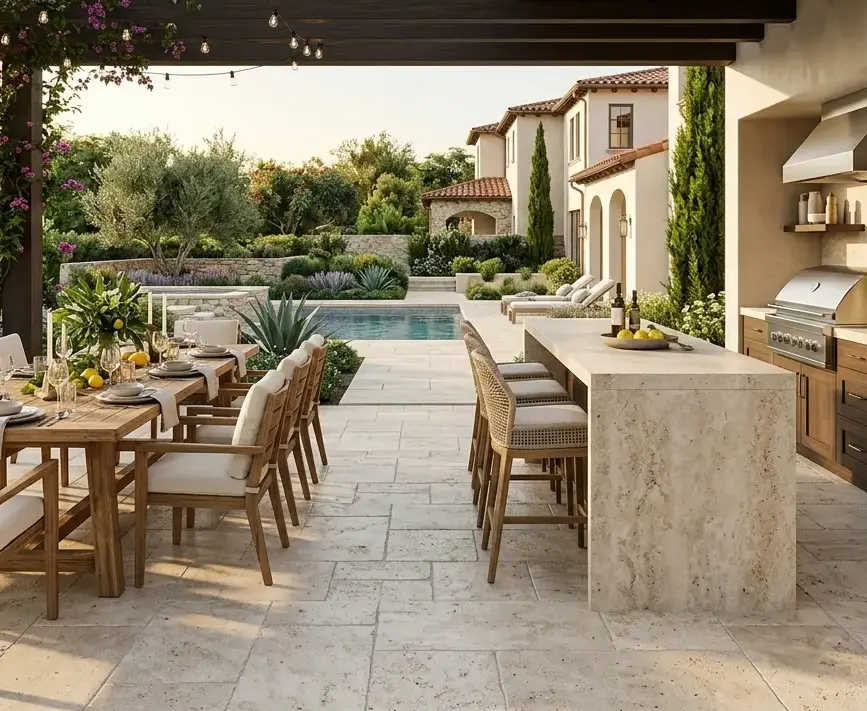 Conceptual rendering
Conclusion
Cool-touch pavers perform best when climate, color, and material line up before a project moves forward. Lighter tones paired with granite, quartzite, travertine, or porcelain tend to feel more comfortable underfoot through long summer afternoons, while finish texture and sealing needs still vary by product. Reviewing a few material samples side by side, ideally in direct sunlight, often clarifies which option fits a specific layout and climate best. Browse Nova's stone selection to compare exterior stone options firsthand, and bring measurements or photos of the planned paving area to make the most of a showroom visit.
Frequently Asked Questions
Lighter colors and denser, UV-stable materials such as granite, quartzite, or porcelain tend to retain less surface heat than dark, porous options. Finish texture and the specific product's UV rating also affect how a paving stone performs in direct sun.
Travertine is generally suited to outdoor use and is not limited to shaded areas. Confirming the specific product's manufacturer UV rating is still recommended before installing it in a full-sun location.
Dark, polished surfaces tend to absorb more solar heat than lighter, textured finishes, which can make them feel hotter underfoot during peak sun. Exact surface temperature still depends on material density, finish, and regional climate.
Granite, quartzite, and travertine typically need periodic sealing to maintain performance outdoors, while porcelain generally needs little to no sealing. Cleaning spills promptly and avoiding abrasive cleaners helps preserve appearance across all these materials.
Nova Tile and Stone supplies exterior stone and paving materials only and installation falls outside that scope. A design consultant can help confirm material, color, and finish selections before a project moves forward.
Explore Outdoor Stone Options With Nova Tile and Stone
Working through slab or tile options for a full exterior is easier with a materials specialist who can walk through sun exposure, finish, and format questions specific to your project.
SACRAMENTO
6100 Warehouse Way, Sacramento, CA 95826
 Google Maps
Store hours this week:
- Mon. - Fri.: 7:30 am - 5:00 pm
- Sat. - Sun.: Closed
MINDEN
2548 Business Pkwy, Minden, NV 89423
Store hours this week:
- Mon. - Fri.: 7:30 am - 6:00 pm
- Sat.: 9:00 am - 3:00 pm
- Sun.: Closed
RENO
12835 Old Virginia Rd Suite 24, Reno, NV 89521
Store hours this week:
- Mon. - Fri.: 7:30 am - 6:00 pm
- Sat.: 9:00 am - 3:00 pm
- Sun.: Closed
FERNLEY
1855 US Highway 95A North, Fernley, NV 89408
Store hours this week:
- Mon. - Fri.: 7:30 am - 4:00 pm
- Sat. - Sun.: Closed
Bringing a few photos of the house exterior, along with rough measurements for walls, columns, or patio area, helps a showroom visit move faster.