Concrete vs Stone Pavers: A Quick Overview
Choosing between concrete vs stone pavers shapes how a patio, walkway, or driveway performs for years to come. Both options serve outdoor spaces well, yet each brings distinct trade-offs in appearance and texture. This paving materials comparison looks at durability, design flexibility, and climate performance side by side, so the decision feels less like guesswork. Long-term care habits also factor heavily into the outcome.
In short: stone pavers typically offer greater density and natural variation, while concrete pavers offer more shape and color consistency across a wider range of pattern options.Both materials benefit from routine care to preserve their appearance over time, since neither one avoids wear entirely. The right choice depends on the specific project, sun exposure, and the design goals in mind.
Homeowners across Northern Nevada and Northern California weigh these factors differently depending on seasonal temperature swings, sun exposure, and how a surface gets used day to day.
Top Benefits of Paver Surfaces for Outdoor Spaces
Paver surfaces, whether concrete or natural stone, bring several practical advantages to exterior spaces. Both materials distribute weight across individual units rather than one continuous slab, which can help surfaces manage minor shifts in soil without widespread cracking.
Individual units also allow spot replacement without disturbing an entire surface, and drainage between joints can reduce standing water in many layouts. This modular structure is part of why pavers remain a popular choice for exterior stone projects.
Which pavers last longer: concrete or stone? The honest answer depends heavily on climate, sealing habits, and the specific stone or mix selected, so a general rule rarely applies evenly across every project.
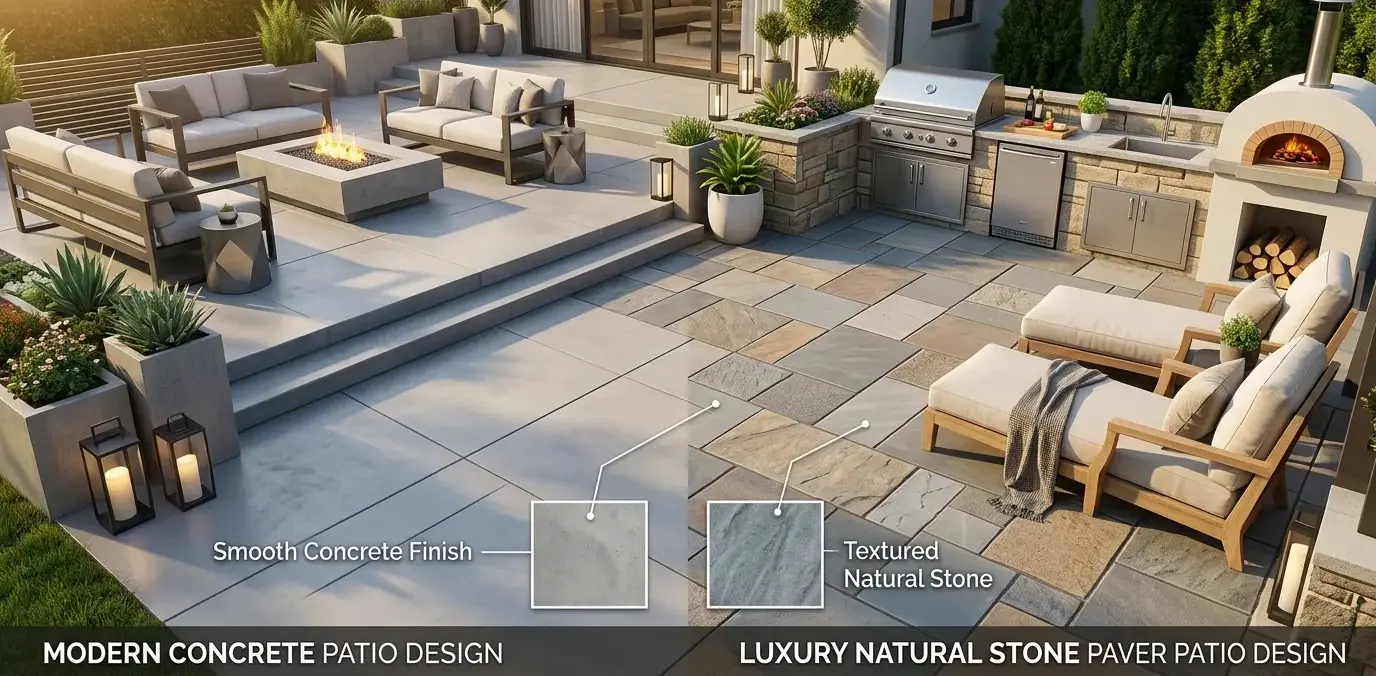 Conceptual rendering
Key benefits include:
- Distributed weight-bearing units that can flex with minor ground movement
- A wide range of colors, textures, and pattern layouts to choose from
- Spot repair potential for individual units rather than full surface replacement
- Joint drainage that can reduce surface pooling in certain layouts
- Long-term durability when paired with proper sealing and routine care
- Design versatility across patios, walkways, driveways, and pool surrounds
Pattern layout also plays a role in how a finished surface reads visually, since herringbone, running bond, and basket-weave arrangements each create a different sense of scale within the same footprint.
Natural stone options such as granite and travertine are generally suited to outdoor use, though UV and sun-exposure ratings vary by specific product. Confirm exact ratings with a specialist rather than assuming uniform performance across every stone type available.
Where Do Concrete and Stone Pavers Perform Best?
Every exterior space calls for its own approach within a broader paving materials comparison, from a shaded walkway to a sun-exposed driveway. The notes below outline where each material tends to perform well, along with regional climate context worth factoring into any final decision.
Patios and Walkways
Patio surfaces benefit from materials that hold their finish under regular foot traffic and outdoor furniture. Stone pavers bring natural texture variation from unit to unit, while concrete units offer more uniform color matching across a full layout.
Walkways see similar considerations, though narrower surfaces can highlight pattern repetition more than open patio areas. Textured or tumbled finishes may add traction, though every surface should still be treated carefully when wet.
Shade patterns from nearby trees or structures can also influence which finish holds its appearance best over multiple seasons in a given yard.
Driveways and Pool Decks
Driveways face vehicle weight and repeated exposure to temperature swings, so material density and finish choice affect long-term appearance. Heavier-use surfaces benefit from a finish matched to expected traffic levels rather than a purely decorative pattern.
Vehicle traffic near entry points may benefit from a slightly different finish than open parking areas, depending on how often the surface sees consistent wear. Pool decks call for finishes that manage moisture well, since standing water and sun exposure are near constant.
A qualified specialist can confirm which stone finishes suit a given pool surround, since sun and moisture tolerance vary by product and finish.
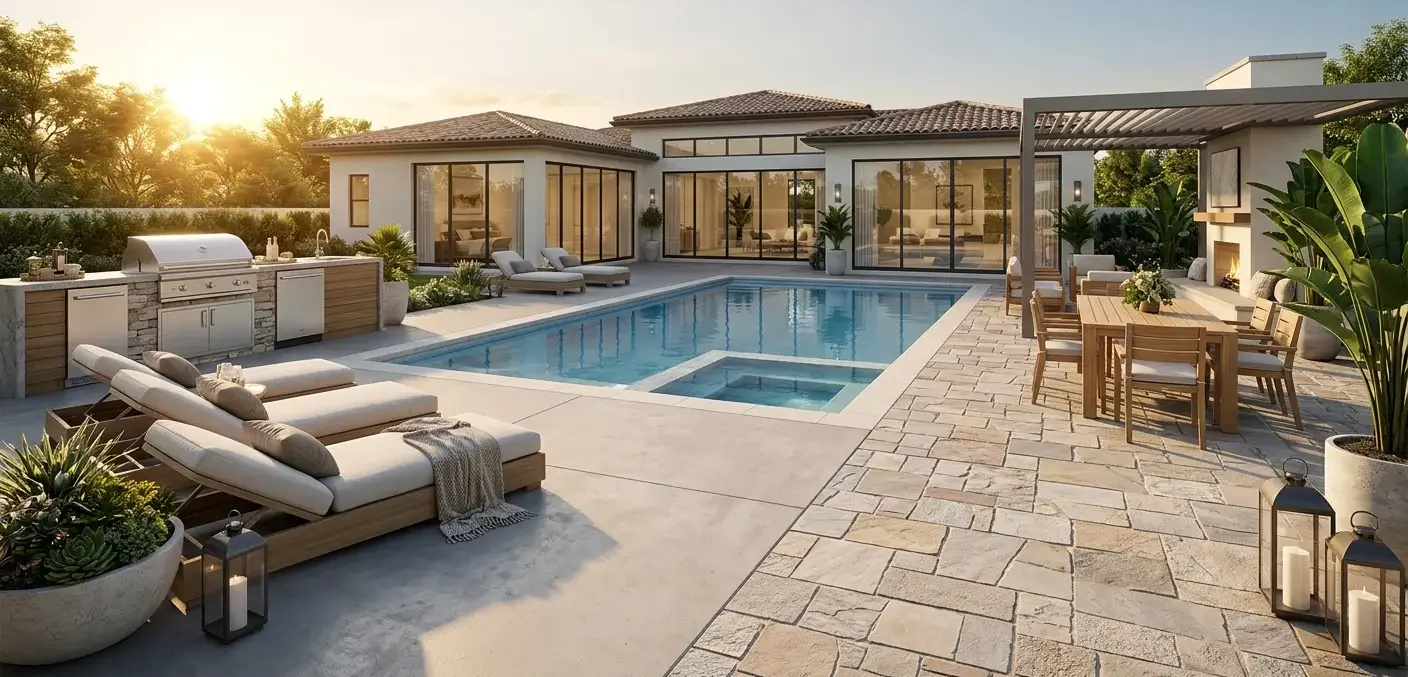 Conceptual rendering
Climate Considerations Across the Region
Northern Nevada and Northern California each bring distinct seasonal patterns, from high-desert temperature swings to milder valley conditions further west. Local climate knowledge pairs well with general paving materials research when narrowing down a final material.
Residents near the Fernley showroom often ask about temperature swings between summer heat and winter frost. The Reno showroom serves a similar high-desert climate with notable day-to-night temperature shifts.
Further south, the Minden showroom supports projects across the Carson Valley region. The Sacramento showroom serves a milder climate with different sun-exposure patterns than the high desert.
Interlocking concrete pavers are covered by ASTM C936, a specification for solid concrete interlocking paving units, while the Natural Stone Institute’s exterior applications course compares how natural stone and manmade materials perform outdoors.
Concrete vs Stone Pavers: Side-by-Side Comparison
Attribute | Concrete Pavers | Stone Pavers |
Material Origin | Manufactured, engineered mix | Quarried natural stone |
Color Range | Wide, manufactured consistency | Natural variation by batch |
Sealing Needs | Often benefits from periodic sealing | Typically requires periodic sealing |
Surface Texture | Smooth to textured finishes available | Textured, tumbled, or polished options |
Climate Adaptability | Performs across many climates with care | Performance varies by stone type and finish |
Long-Term Appearance | Consistent with routine maintenance | Distinctive character that can evolve with age |
Concrete Pavers: Advantages and Considerations Advantages: consistent color batches, wide pattern variety, broad availability of shapes and sizes. Considerations: can wear differently than natural stone over time; finish choice affects long-term look.
Stone Pavers: Advantages and Considerations Advantages: natural texture and color variation, distinctive high-end character, suited to many outdoor uses when the right stone is selected. Considerations: natural variation means color matching across large areas takes more planning; sealing schedules matter for long-term appearance.
Expert Guidance for Your Paver Project
Selecting between concrete and stone options benefits from specialist input, particularly when a project spans multiple design zones around a property.
Nova Tile and Stone specialists can help compare finish options, textures, and suitability notes based on the exact application in mind.
Many stone and paver orders also qualify for shipping arrangement to Nova showroom locations, which simplifies comparing finishes side by side before settling on a final design direction.
Comparing finishes in person, rather than through photos alone, often clarifies subtle texture and color differences that are difficult to judge on a screen
A 5-Step Approach to Choosing the Right Paver Material
- Assess Sun and Climate Exposure: Note how much direct sun, shade, and seasonal temperature swing the area receives before narrowing material options.
- Define the Traffic Pattern: Consider whether the surface handles foot traffic, vehicles, or furniture weight, since usage affects finish choice.
- Compare Texture and Color Goals: Decide whether a uniform manufactured look or natural stone variation fits the overall design vision.
- Review Long-Term Care Expectations: Factor in sealing schedules and routine cleaning before finalizing a material choice.
- Confirm Specifications With a Specialist: Speak with a Nova specialist to confirm the exact rating and finish suited to the project.
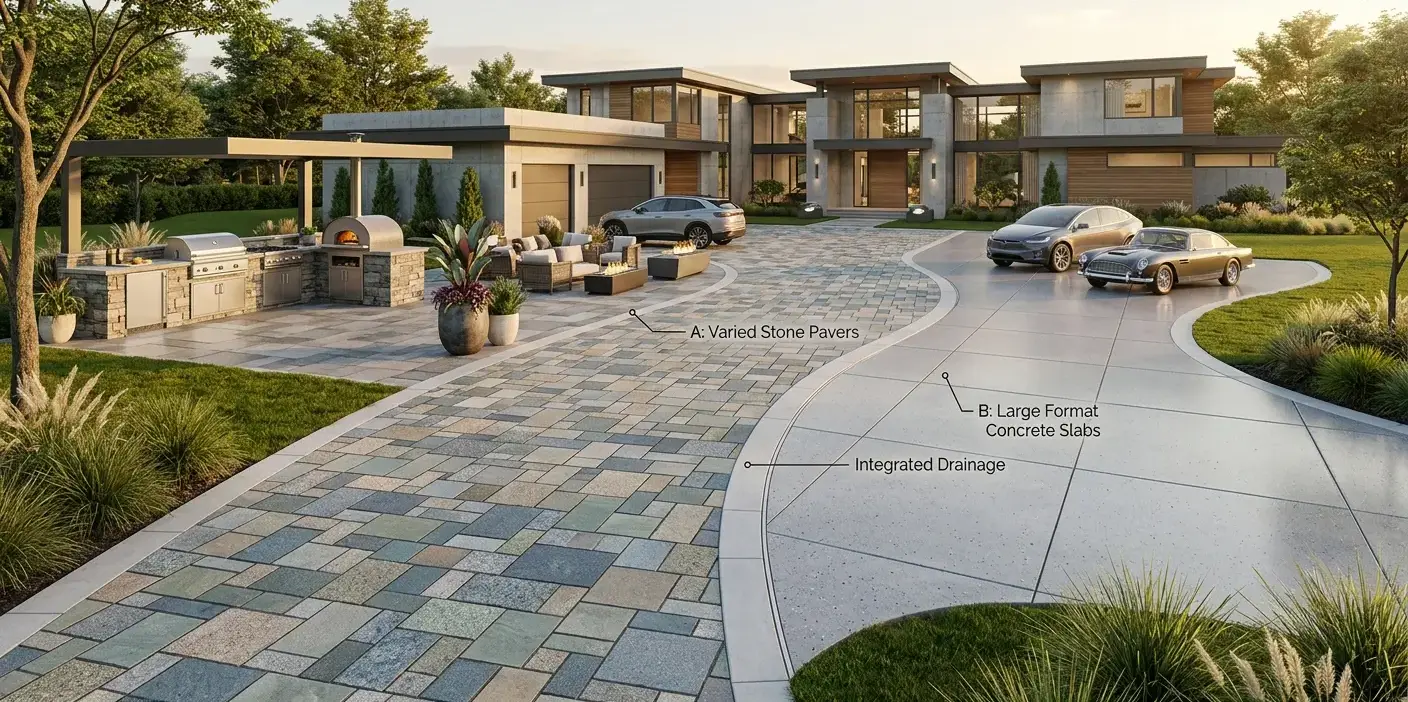 Conceptual rendering
General upkeep also plays a role in how a surface looks years down the line.
This paver sealing guide outlines routine sealing intervals for various stone types. Separately, this paver cleaning guide walks through safe methods for removing everyday debris without abrasive tools.
Ready to compare finishes side by side? Schedule a free consultation to walk through paver options suited to a specific outdoor project.
Conclusion
Concrete vs stone pavers ultimately comes down to climate exposure, traffic patterns, and the visual character wanted for a patio, walkway, or driveway. Both materials can perform well for years when paired with routine sealing and cleaning habits suited to the specific product. Regional patterns across Fernley, Reno, Minden, and Sacramento can also influence which material holds up best in a specific setting. Browse the full range of natural stone options on the slabs page to compare textures and finishes before making a final decision.
Frequently Asked Questions
Longevity depends on the specific stone or concrete mix, the climate, and how consistently sealing and cleaning are performed. Dense natural stone can last many years with proper care, and quality concrete pavers can also perform well long-term when maintained consistently.
Durability in cold climates depends on the exact stone or concrete mix and how well the material handles freeze-thaw cycles. A specialist can confirm which specific products are best suited to colder regional conditions.
Most natural stone options benefit from periodic sealing to help protect against staining and moisture absorption over time. Sealing frequency depends on the stone type, finish, and how the surface is used.
Many concrete paver lines are designed with texture and color patterns that resemble natural stone. The overall look still differs somewhat from genuine stone, since natural material carries unique variation batch to batch.
Driveway suitability depends on the specific material density, finish, and expected vehicle weight. A specialist consultation can confirm which stone or concrete option is rated for higher-traffic driveway applications.
Visit Nova Showrooms Now!
Book your free consultation today!
FERNLEY
1855 US Highway 95A North, Fernley, NV 89408
 Google Maps
Store hours this week:
- Mon. - Fri.: 7:30 am - 4:00 pm
- Sat. - Sun.: Closed
RENO
12835 Old Virginia Rd Suite 24, Reno, NV 89521
Store hours this week:
- Mon. - Fri.: 7:30 am - 6:00 pm
- Sat.: 9:00 am - 3:00 pm
- Sun.: Closed
MINDEN
2548 Business Pkwy, Minden, NV 89423
Store hours this week:
- Mon. - Fri.: 7:30 am - 6:00 pm
- Sat.: 9:00 am - 3:00 pm
- Sun.: Closed
SACRAMENTO
6100 Warehouse Way, Sacramento, CA 95826
Store hours this week:
- Mon. - Fri.: 7:30 am - 5:00 pm
- Sat. - Sun.: Closed