The most common hardscape mistakes are choosing pavers or stone for looks instead of function, overlooking drainage and slope, and building on a thin or poorly compacted base. Other frequent errors include ignoring climate and freeze-thaw risk, forgetting surface heat and slip resistance, sizing patios and walkways incorrectly, mismatching materials to the home, mixing too many materials, underestimating maintenance, ordering too little material, and skipping local permit and HOA rules. Nearly all of these happen during planning and material selection, before the first paver is set, which makes them preventable.
Hardscape is the non-living, built part of a landscape: patios, walkways, driveways, retaining walls, steps, and pool decks made from concrete pavers, natural stone, porcelain pavers, concrete, and gravel. Because hardscape is expensive to remove and rebuild, a small planning error can become a costly problem, such as water pooling against a foundation or pavers shifting under vehicle weight. Below, we break down 11 common hardscape mistakes and what to do instead.
1. Choosing Materials for Looks Alone
A paver or stone that looks appealing on a display board may not suit the job you have in mind. Each hardscape area has different demands. A driveway carries the weight of vehicles, a pool deck sees bare feet and splashing water, and a garden path may only get light foot traffic.
Before falling for a color, ask what the surface needs to do. Driveways typically call for thicker pavers rated for vehicle loads, commonly 80 mm compared with the 60 mm pavers often used on patios. Pool surrounds benefit from textured, slip-resistant finishes. Busy patios need a surface that resists staining from grease, leaves, and spilled drinks. Start with function, then narrow your choices by style. Our pavers and exterior stone selection usually includes several options that check both boxes.
2. Ignoring Your Climate
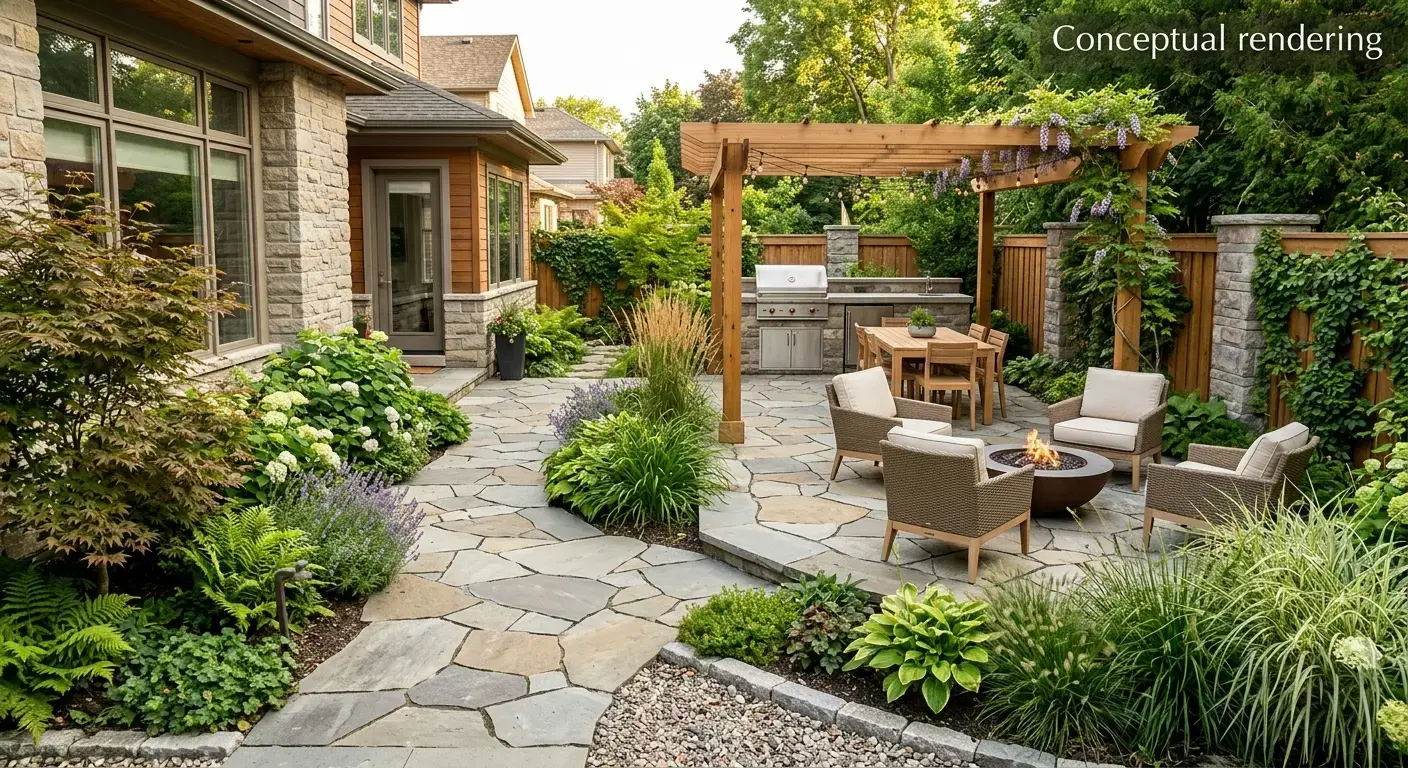
Weather has a direct effect on how hardscape performs. In regions with hot, dry summers and cold winter nights, like much of Northern California and Northern Nevada, materials go through repeated expansion and contraction, and at higher elevations, freeze-thaw cycles. Porous stones and low-density products can absorb water. When that water freezes, it expands and can cause cracking or surface flaking, known as spalling.
Look for materials with low water absorption and a track record in climates like yours. Dense natural stones such as granite and many quartzites, along with porcelain pavers, tend to handle freeze-thaw conditions well. Softer, more porous stones can still work, but they may need sealing and more attention over time. If you’re unsure how a stone will behave, ask about its absorption rate and where it’s commonly used outdoors.
3. Forgetting About Heat and Slip Resistance
Two of the most overlooked comfort issues are surface temperature and traction. Dark pavers and stone absorb more sunlight and can get uncomfortably hot by mid-afternoon in summer, especially on west-facing patios and pool decks. Lighter colors reflect more heat and generally stay cooler underfoot, which is one reason light-toned travertine is a popular pool-deck choice.
Slip resistance matters just as much. Polished finishes, and to a lesser degree honed ones, can become slick when wet, which is a real concern around pools, outdoor showers, steps, and shaded areas where moisture lingers. Tumbled, flamed, and textured finishes offer better grip. For porcelain pavers, ask about the slip resistance rating, often listed as a DCOF value, before choosing one for wet areas. Comparing finishes side by side at one of our showroom locations makes differences in texture and grip easier to judge than photos do.
4. Overlooking Drainage and Slope
Water has to go somewhere. A patio or walkway built perfectly flat, or sloped toward the house, can lead to standing puddles, icy patches in winter, and moisture problems near your foundation. Hardscape surfaces are typically pitched slightly away from the home so rain runs off rather than pooling. A common standard is about 1/4 inch of fall per foot, or a 2 percent grade, and many building codes require at least that slope for hard surfaces within 10 feet of a foundation.
Also think about where that runoff ends up. Large hard surfaces send more water into nearby beds, lawns, or a neighbor’s yard. Permeable pavers, gravel joints, and planting areas can help water soak into the ground instead of running off. Discuss drainage with your contractor or landscape designer early, because it’s much easier to plan for than to fix afterward.
5. Underestimating What’s Underneath
The surface you see is only part of a hardscape project. Pavers and stone depend on a properly prepared, compacted base below them. When the base is too thin, poorly compacted, or built on soft soil, the result is sinking, shifting, uneven joints, and trip hazards, sometimes within the first year or two.
Base requirements vary with soil type, climate, and what the surface will carry. A driveway needs a deeper base than a garden path. Because this part of the job is buried once the project is finished, it’s also the easiest place for corners to be cut. When comparing contractor quotes, ask how deep the base will be, what material will be used, and how it will be compacted. A lower bid sometimes reflects less work below the surface. If you’re a contractor or landscape designer sourcing pavers and stone for these projects, you can apply for a trade account to access trade pricing and job-site delivery.
6. Getting the Scale Wrong
A patio that looks spacious on paper can feel cramped once the furniture arrives. One of the most common hardscape regrets is building a space too small for how you actually use it. Before settling on dimensions, measure the furniture you plan to use and leave room to walk around it. Chairs need space to pull back from a dining table, and lounge areas need clear paths between seats.
Walkways have the same issue. A narrow path forces people to walk single file. Many designers recommend a main walkway about 4 to 5 feet wide so two people can walk side by side, while secondary garden paths can be narrower. Scale works the other way too: an oversized patio can overwhelm a modest home or small yard. Mark out the planned area with string or a garden hose and live with it for a few days before deciding.
7. Not Matching the Hardscape to Your Home
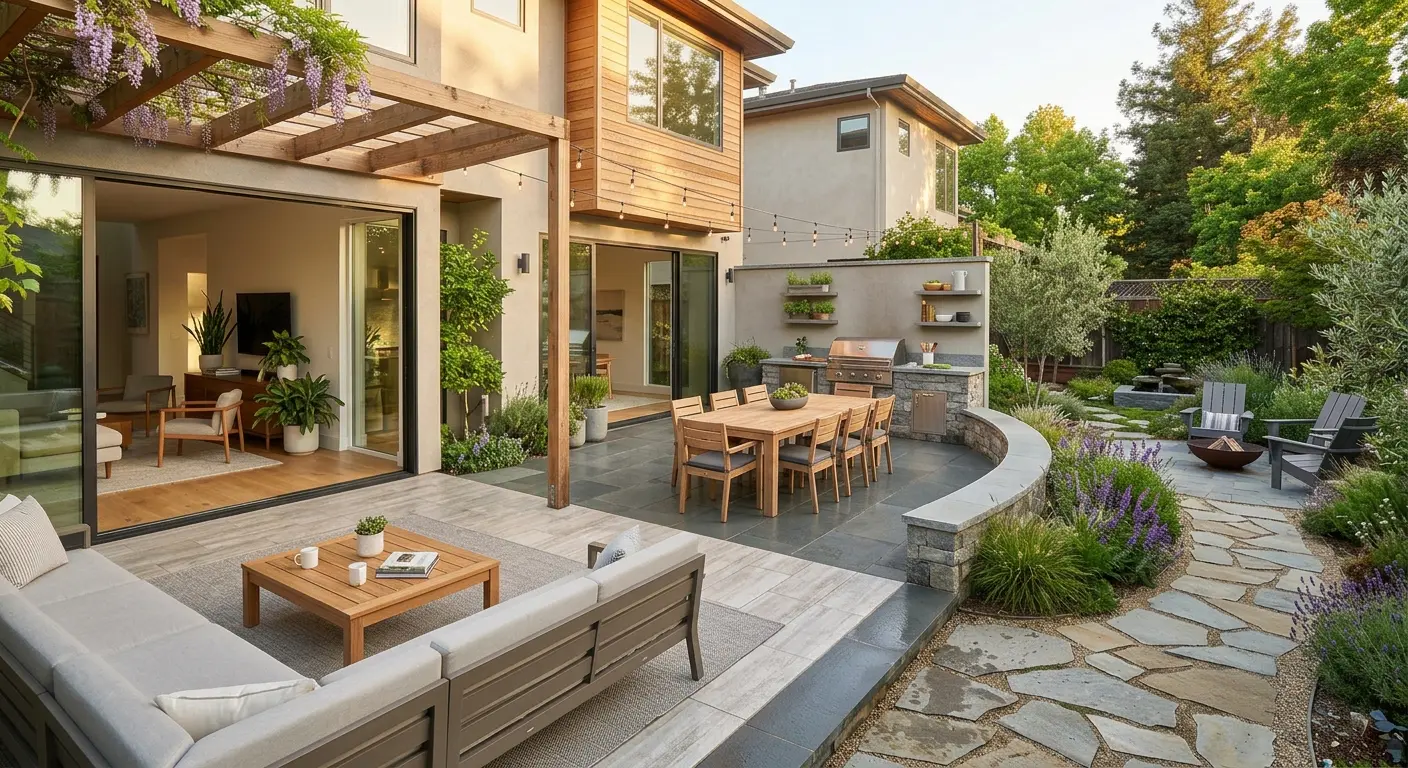
Hardscape should feel like it belongs with the house. A rustic tumbled stone may look out of place next to a sleek modern home, and a crisp, uniform paver can feel off beside a Craftsman or Spanish-style exterior. Look at your home’s roofline, siding, trim, and any existing stone or brick, then choose hardscape colors and textures that echo or complement them.
Undertones matter outside as much as they do indoors. Warm stones with tan, gold, and rust tones pair naturally with earthy exteriors, while gray and charcoal tones suit cooler palettes. Viewing materials in natural outdoor light, next to photos of your home, gives you a much clearer sense of the match than a screen. Bringing those photos, along with rough measurements, to a free design consultation helps our team suggest colors and textures that suit your exterior.
8. Mixing Too Many Materials
Combining materials can add interest, such as a natural stone border framing a paver patio. But too many colors, shapes, and textures in one space quickly start to look busy. A good rule of thumb is to limit a single area to two or three complementary materials and repeat them throughout the yard for consistency.
The same goes for the overall amount of hardscape. Paving over too much of the yard can make the space feel harsh, increase heat around the home, and send more runoff toward drains. Balancing hard surfaces with planting beds, trees, and lawn keeps the yard comfortable and balanced.
9. Underestimating Maintenance
Every hardscape material needs some care, but the amount varies widely. Concrete pavers may need joint sand topped off now and then, plus periodic resealing if they were sealed. Natural stone such as travertine, limestone, and some sandstones may benefit from sealing to resist stains, while denser materials like porcelain pavers need very little beyond regular cleaning.
New concrete pavers can also develop efflorescence, a white, powdery film caused by natural salts rising to the surface. It’s common, usually harmless, and often fades over time, but it surprises many homeowners. Weeds in joints, moss in shaded areas, and leaf stains are other everyday issues. Be honest about how much upkeep you want to take on, and choose a material that fits that level of attention.
10. Ordering Too Little Material
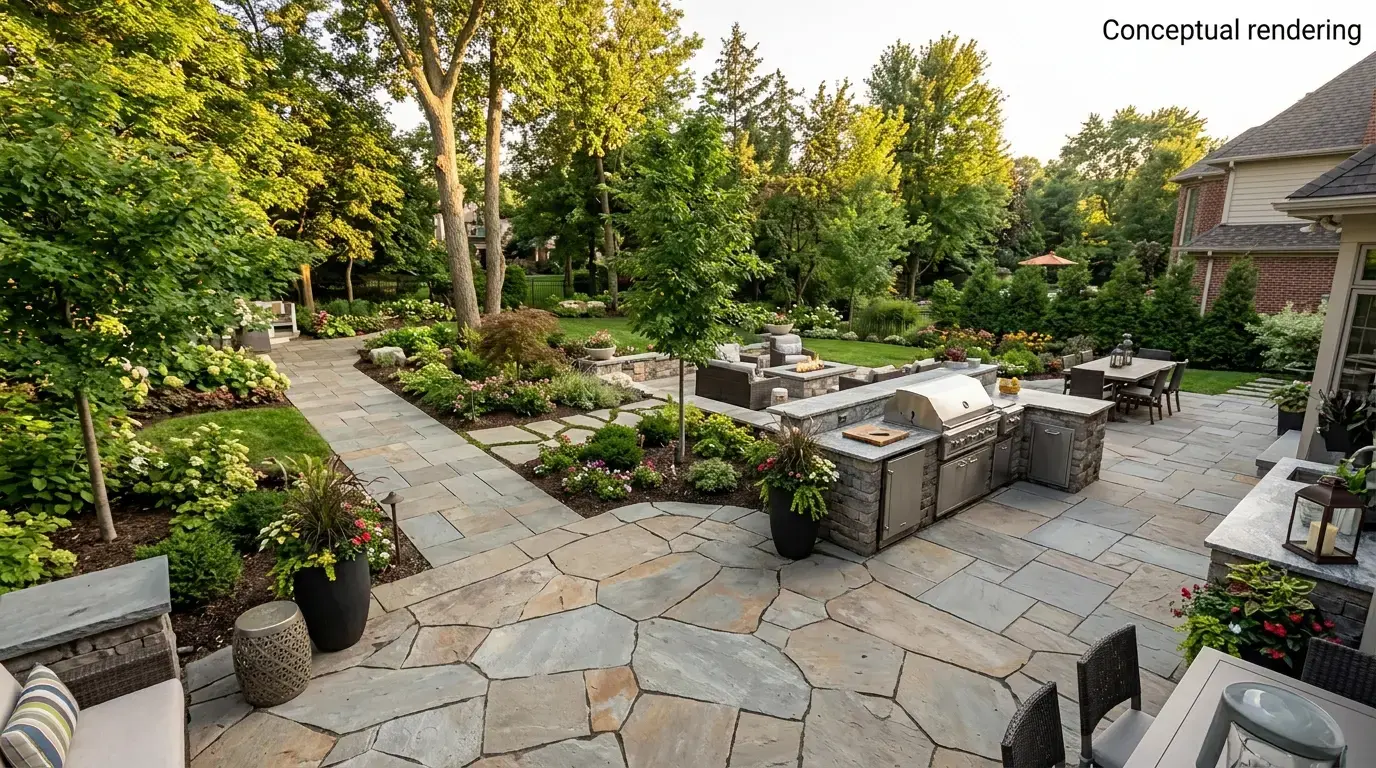
Running short partway through a project causes delays, and it can also cause a visible mismatch. Pavers are produced in batches, and natural stone varies from one quarry block to the next, so material ordered weeks later may not match what’s already in place. Color and texture differences that seem small in a showroom become obvious across a finished patio.
Most contractors recommend ordering extra material, commonly around 5 to 10 percent above the measured area to cover cuts and breakage, and sometimes up to 15 percent for layouts with more waste, such as herringbone patterns or curves. It’s also a good idea to keep a few spare pieces after the project. If a paver cracks or stains years later, you’ll have a matching replacement on hand. If you’re shopping our overstock sale, confirm the full quantity you need before buying, since close-out materials are often available in limited amounts and all sales are final.
11. Skipping Local Rules and Permits
Many cities and HOAs have rules that affect hardscape projects. Some limit how much of a lot can be covered by impervious surfaces, set height limits on retaining walls before engineering or a permit is required, or regulate driveway width and placement. HOAs may also have approved color palettes or material lists for front yards.
Checking these rules before you buy materials can save you from redoing work or facing fines. Contact your local building department and review your HOA guidelines early in the planning stage.
Conclusion
Most hardscape mistakes come down to decisions made too quickly: choosing a stone for its color without considering heat or traction, skipping drainage planning, or ordering too little material. Taking the time to match each material to its purpose, your climate, and your home helps you avoid costly corrections later.
Seeing materials in person is one of the best ways to avoid surprises. At our showrooms in Sacramento, Reno, Minden, and Fernley, our team can walk you through paver and natural stone options side by side, talk through how each one handles sun, moisture, and foot traffic, and help you narrow down a selection that fits your space and style. Visit us when you’re ready to start planning your outdoor project.
Note: Some images on this page may be conceptual renderings created to illustrate design possibilities and may not depict actual installations.
Frequently Asked Questions
The biggest mistake is poor planning, especially around drainage and base preparation. These hidden elements determine whether pavers and stone stay level and dry over time, and they’re the hardest problems to fix once a project is finished.
Light-colored materials generally stay cooler underfoot. Travertine and light-toned porcelain pavers are popular for pool decks and sunny patios because they reflect more heat than dark concrete or stone.
A common recommendation is about 5 to 10 percent beyond the measured area, and sometimes up to 15 percent for intricate patterns or curved layouts. Extra pieces also give you matching replacements if a paver needs to be swapped out later.
No. Porous natural stones such as travertine and limestone often benefit from sealing, while dense materials like porcelain pavers generally need only routine cleaning. The right approach depends on the material and how the area is used.
That white film is usually efflorescence, natural salts that move to the surface as moisture evaporates. It’s common on new concrete pavers and typically fades over time, and specialized cleaners can help if it persists.