Granite, quartzite, travertine, and porcelain are the stone options best suited for outdoor kitchens and fireplaces, since all four are rated for exterior use, fireplace applications, and everyday weather exposure. Not every stone or engineered surface is suited for full outdoor exposure, since some materials can fade, crack, or degrade under sustained sun and heat, which is why material selection matters more here than it does indoors.
Choosing between the four recommended options comes down to how the space will be used. Quartzite tends to hold up best on a countertop or food prep surface due to its hardness and scratch resistance. Granite performs similarly well and offers a slightly different finish range. Travertine brings a warmer, more textured look and works well for fireplace surrounds and vertical surfaces, though it needs more consistent sealing than the others. Porcelain, as an engineered option, offers strong consistency and low maintenance for those who prefer a more uniform look. This guide breaks down each option in more detail, along with how climate factors like freeze-thaw cycling, UV exposure, and heat near a grill or firebox affect the choice.
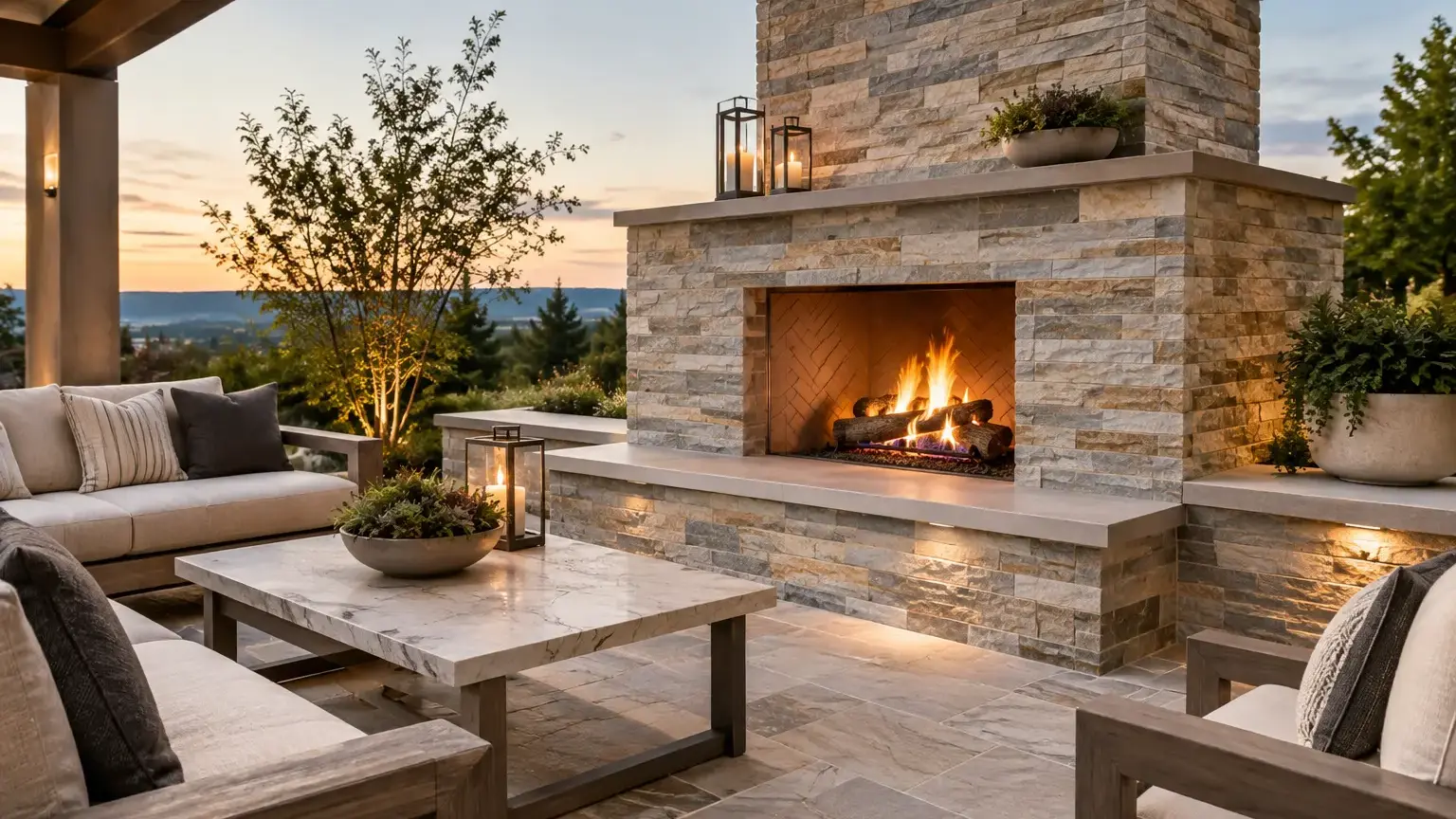
Why Stone Choice Matters Outdoors
Exterior stone deals with a mix of conditions that indoor stone never has to face. In many climates, summers bring intense sun and heat, while winters bring repeated freezing and thawing. That freeze-thaw cycle is one of the biggest long-term stressors on exterior stone. Water gets into small pores and fissures, expands as it freezes, and gradually widens those openings over repeated cycles. The natural stone industry has been developing a new freeze-thaw test standard for cold-climate conditions, since resistance to these cycles varies significantly by stone type. That variation is the reason material selection matters so much more outdoors than it does inside a climate-controlled kitchen.
Add in direct flame or high heat from a grill at the kitchen, radiant heat from a fireplace, and ongoing UV exposure, and the list of things a stone needs to resist gets longer. The right choice depends on where the stone sits in the space and what it will be exposed to most often.
Climate Performance Factors
Beyond freeze-thaw exposure, a few other practical details are worth keeping in mind when planning around climate.
Color plays a role that finish alone doesn't cover. Darker stone tends to absorb and hold more heat in direct sun, which can make a surface uncomfortably hot to the touch near a kitchen work area, while lighter colors and honed finishes generally stay cooler and show less water spotting. This lines up with general guidance on natural stone's UV resistance, where natural stone is described as UV resistant, low in porosity, and resistant to scratches and stains.
Coverage matters too. A stone in a fully exposed, unshaded location works harder against sun and rain than one under a pergola or roof overhang, so a partially covered kitchen or fireplace area has more material flexibility than one with no protection at all.
Watch for early warning signs rather than waiting for visible damage. Small surface pitting, hairline cracking, or a chalky, faded patch are usually the first indicators that a stone or finish is struggling against its climate, and catching those early makes it easier to address with sealing or a design adjustment before the damage spreads.
Natural Stone Options
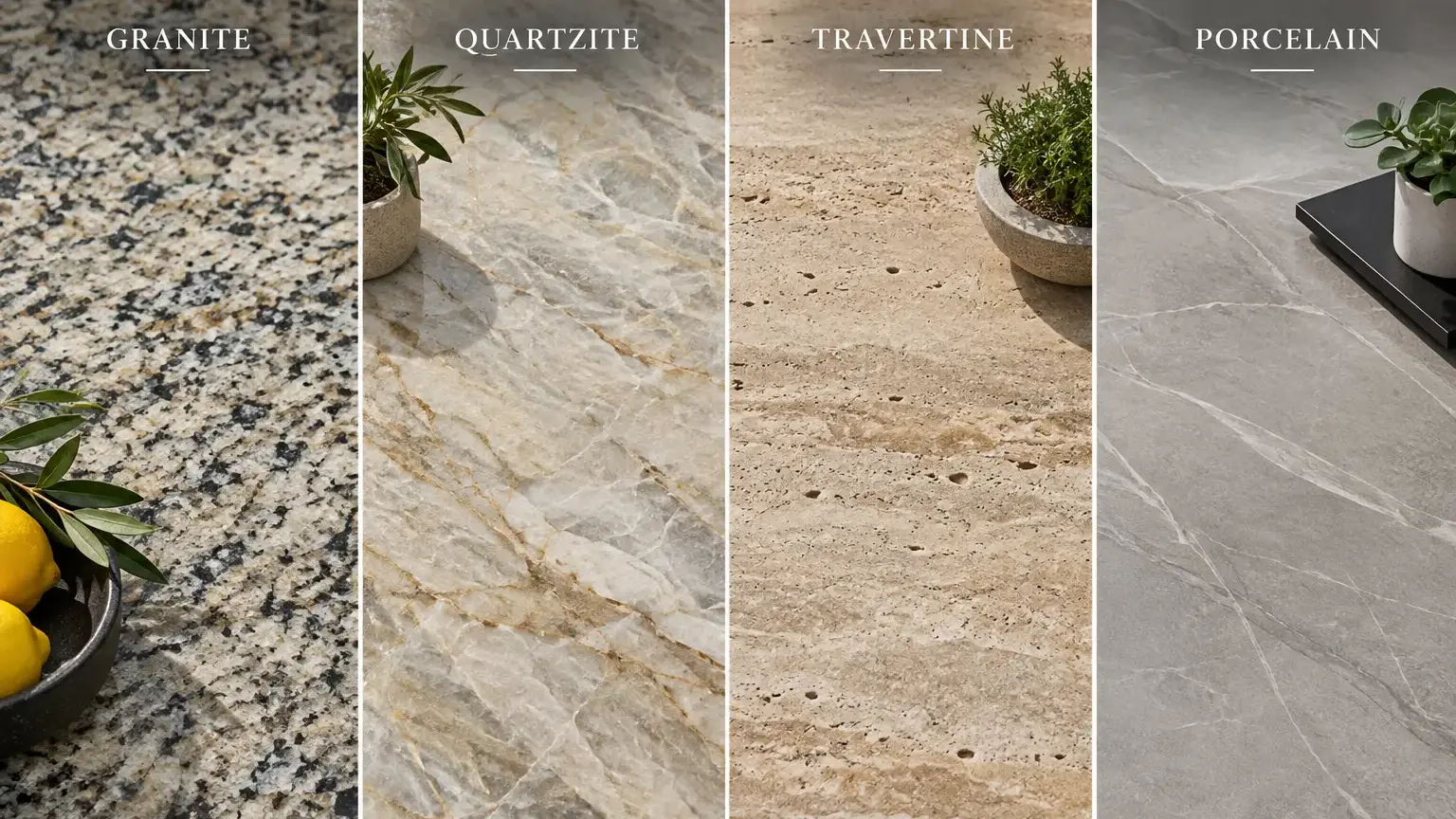
Granite is a strong choice for outdoor kitchens and fireplaces. It's available in polished, leathered, and specialty finishes, and it's rated for outdoor use, fireplace applications, floors, and walls, along with UV resistance. It's one of the harder natural stones used for countertops, which is part of why it holds up so well against scratching and everyday wear in exterior settings.
Quartzite is another dependable option for exterior applications. It's available in polished, honed, leathered, and specialty finishes and is rated for outdoor use, fireplace applications, floors, and walls, along with UV resistance. It's also known for holding up well to scratching and everyday wear, which matters on a surface used for food prep.
Travertine is worth considering as well. It comes in the same four finishes as quartzite (polished, honed, leathered, and specialty) and is rated for outdoor use, fireplace applications, floors, and walls. It tends to bring a warmer, more textured look than granite or quartzite, which can suit a more rustic or traditional outdoor design.
To explore available options, browse our slabs inventory, or request a slab quote when you're ready to discuss a specific project.
Engineered Stone Options
Porcelain is the engineered option worth considering for exterior use. It's available in all four finishes (polished, honed, leathered, and specialty) and is rated for outdoor use, fireplace applications, floors, and walls. Since it's manufactured rather than quarried, it offers a high degree of consistency in color and pattern from piece to piece, along with low porosity and minimal upkeep compared to some natural stone options. Its UV stability and resistance to freeze-thaw damage are well documented among outdoor countertop materials, making it a solid choice for anyone who wants a uniform, predictable look across a large surface area without sacrificing exterior durability.
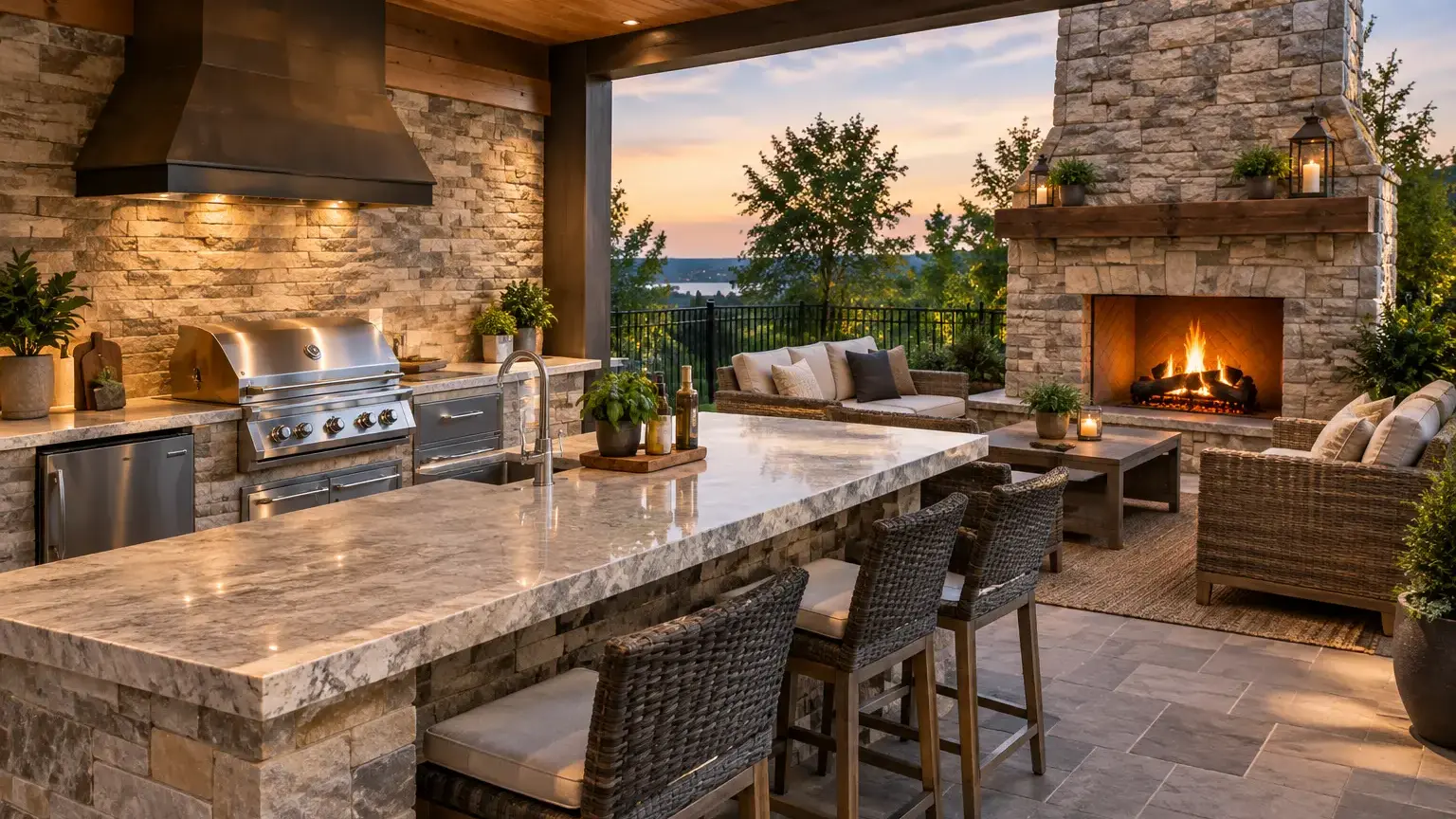
Matching Stone to the Application
Slab surfaces for outdoor kitchen work areas. This is the highest-use zone in the space, where heat, moisture, and food contact all happen regularly. Granite and quartzite both perform well here given their heat and scratch resistance, and porcelain is also a strong fit given its low porosity and consistency. Travertine can also work, though its more porous, textured surface benefits from more consistent sealing in a food prep zone.
Vertical surfaces: fireplace surrounds and kitchen facades. These areas see less direct wear than a work surface but more radiant heat exposure near a firebox. All four options handle this well, though a rougher, more textured finish can help disguise soot or smoke residue near an open flame better than a glossy one.
Finish selection by zone. A polished finish looks striking but can show wear, water spots, and glare more readily in direct outdoor light. A honed or leathered finish tends to hide daily wear better and often suits a food prep surface, while a polished or specialty finish can be reserved for a fireplace facade or accent area where it is seen more than touched.
Design choices in this space also come down to matching stone to the surrounding architecture. A stone that reads sleek and modern in one home can feel out of place next to a more rustic or traditional exterior, so it is worth looking at the whole outdoor space, not just the fireplace or kitchen in isolation, before settling on a finish.
Maintenance and Longevity
Maintenance needs vary by material. Granite and quartzite generally need periodic sealing to maintain their stain resistance outdoors, along with routine cleaning using a mild soap and water. Resealing frequency depends on the stone's porosity and finish, and general resealing intervals for granite typically range from 1 to 5 years depending on those factors. Travertine's more porous, textured surface typically needs more attentive, consistent sealing to guard against staining and moisture absorption. Porcelain, being non-porous, generally requires the least ongoing maintenance of the four, needing only routine cleaning rather than periodic sealing.
Anyone weighing options in person is welcome to schedule a design consultation to look at samples and finishes side by side. Note that Nova Tile and Stone's sample program applies to tile rather than slab material, so slab selections are best reviewed in the showroom.
Conclusion
Choosing stone for an outdoor kitchen or fireplace comes down to matching material and finish to how the space will actually be used and what it will be exposed to over time. Granite, quartzite, travertine, and porcelain each offer strong performance for heat, UV, and freeze-thaw resistance in exterior settings, and each brings a different look and maintenance profile depending on the design direction.
Seeing these finishes in person often makes the decision easier, especially when comparing how a leathered granite reads next to a honed travertine under natural light. Nova Tile and Stone has four showroom locations to help with this decision in person: Reno, Minden, Fernley, and Sacramento.
Frequently Asked Questions
Granite and quartzite are generally the strongest natural stone options for an outdoor kitchen work surface in a climate with cold winters and intense summer sun. Both are rated for outdoor use and UV resistance, and both handle heat and freeze-thaw cycling better than more porous stones.
Yes, travertine is rated for outdoor use, floors, walls, and fireplace applications. It has a warmer, more textured look than granite or quartzite, which can suit a more rustic exterior design, though it benefits from consistent sealing given its porosity.
Yes, porcelain is rated for outdoor use, fireplace applications, floors, and walls. As an engineered material, it offers strong consistency in appearance along with low porosity, which means less ongoing sealing compared to natural stone options.
Both are natural stones rated for outdoor use, fireplace applications, and UV resistance. Quartzite is available in an additional honed finish alongside polished, leathered, and specialty, while granite offers polished, leathered, and specialty. The choice often comes down to finish preference and the overall look of the space.
Most natural stone used outdoors benefits from periodic sealing to maintain stain resistance, especially in a climate with heavy sun and seasonal moisture. Porcelain, being non-porous, generally needs the least sealing of the options covered here.
Note: Some images on this page may be conceptual renderings created to illustrate design possibilities and may not depict actual installations.