AT A GLANCE
- Stacked stone is thin stone laid in tight rows.
- Formats include panels and individual pieces.
- Profiles include split-face, 3D, and honed.
- Weight: natural 15 to 29 lb/sq ft, manufactured 8 to 15.
- Quartzite and granite suit outdoor columns.
- L-shaped corners wrap column edges.
- Keep stone 4 in. above soil, 2 in. above paving.
IN THIS POST
- What is stacked stone veneer?
- Is natural or manufactured stacked stone better for columns?
- What is the best stacked stone for outdoor columns?
- How do you plan stacked stone for columns and pillars?
- Is stacked stone a good choice for porch bases?
- How do you clean and maintain outdoor stacked stone?
- Planning your stacked stone project
- Frequently Asked Questions
- Sources
Stacked stone is a thin stone veneer made of narrow strips set in tight horizontal rows, and it suits columns, pillars, and porch bases when the stone is dense, absorbs little water, and is finished with proper corner pieces and caps. It comes in two forms: natural stone cut from quarried rock such as quartzite, granite, or slate, and manufactured stone cast from lightweight concrete. Thin natural stone typically weighs about 15 to 29 pounds per square foot, while manufactured stone typically weighs about 8 to 15. For outdoor use, water absorption is a key measure; according to the ASTM C615 standard, granite dimension stone may absorb no more than 0.40 percent water by weight.
Choosing the right stacked stone for a column or porch base comes down to four factors: the material, how the stone handles moisture and freeze-thaw cycles, how L-shaped corner pieces wrap each edge, and how the base is kept clear of soil and splash water. The sections below cover each factor in that order, followed by simple care tips for outdoor stone.
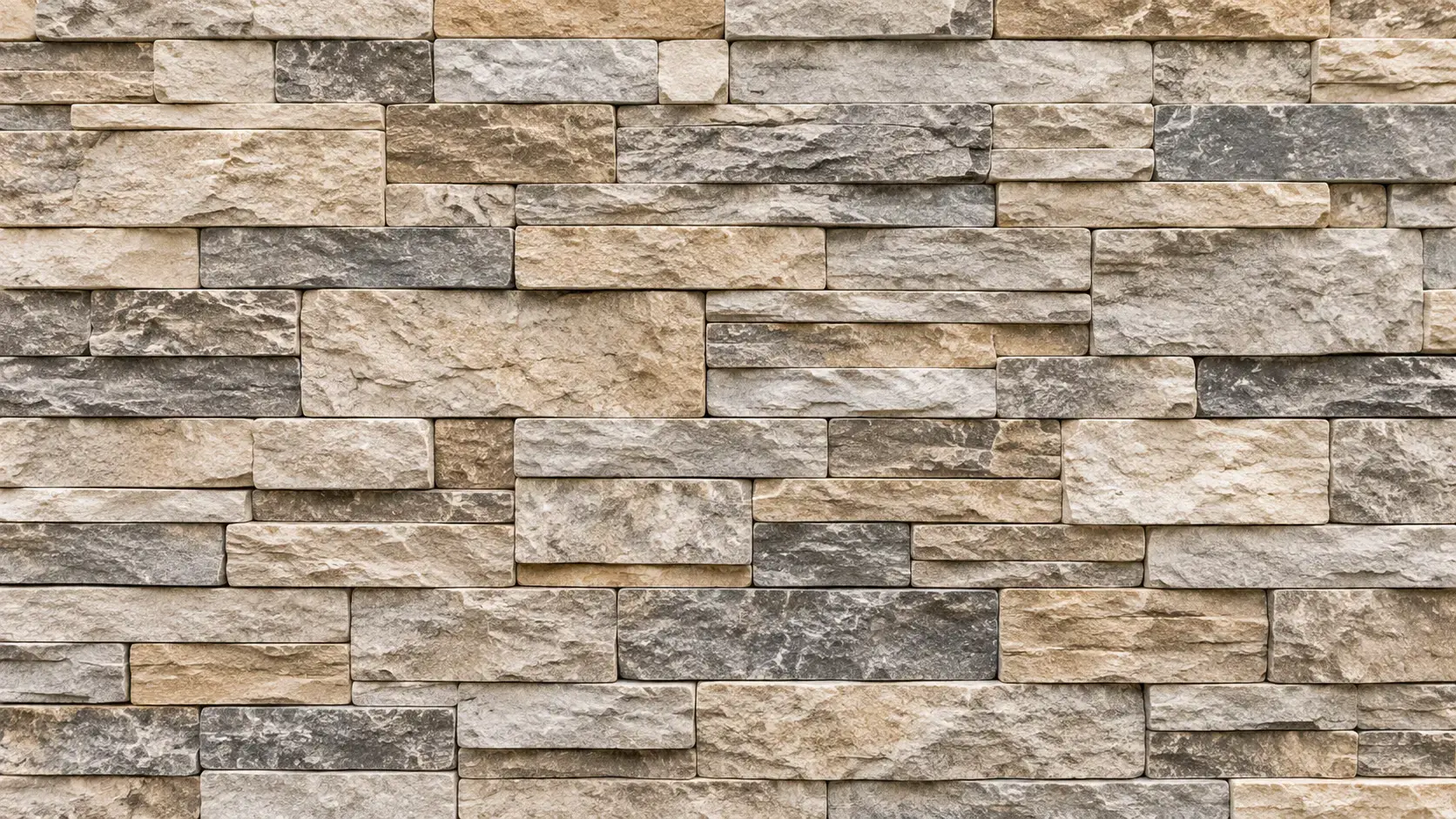
What Is Stacked Stone Veneer?
Stacked stone veneer is a thin, non-structural facing of stone strips adhered over a solid backing to give columns, pillars, and walls the look of dry-stacked stone. Because adhered veneer is not load-bearing, it can be applied over concrete, concrete block, or wood and steel framing, which is what allows it to wrap a framed porch column or a concrete pillar.
Both natural and manufactured stacked stone are sold in two formats. Individual units are set one piece at a time, usually with visible mortar joints around each stone. Panelized units are strips of stone pre-assembled into rectangular panels, often with staggered ends that lock into the next panel so the seams are hard to spot. Panelized products are installed with small, thin joints to keep the dry-stacked look, and those joints still matter for movement, bond, and moisture resistance.
For columns and pillars, panels are popular because they cover area quickly and keep the courses straight, while individual stones give more control over the pattern.
Is Natural or Manufactured Stacked Stone Better for Columns?
Neither is better for every column. Natural stacked stone offers one-of-a-kind color and texture, while manufactured stone is lighter, so the right choice depends on what the column can support and the look you want. The differences come down to weight, appearance, and how each bonds to the backing.
Weight is the most practical difference, since thin natural stone can weigh roughly twice as much per square foot as manufactured stone. On a porch column wrapped on four sides, that difference adds up, so the column structure and backing should be checked for the material you choose.
Appearance is the second factor. Because natural stone is quarried, color and texture shift from strip to strip, and no two panels match exactly. Manufactured stone is cast in molds, so very large surfaces can show repeating shapes if pieces are not mixed well.
The backs differ too. Natural stone panels often have smooth backs, while cast units are roughened during manufacturing to grip mortar. That is why installers match the setting mortar to the product, so it helps to know whether the stacked stone you pick from Nova Tile and Stone is natural or manufactured before work begins.
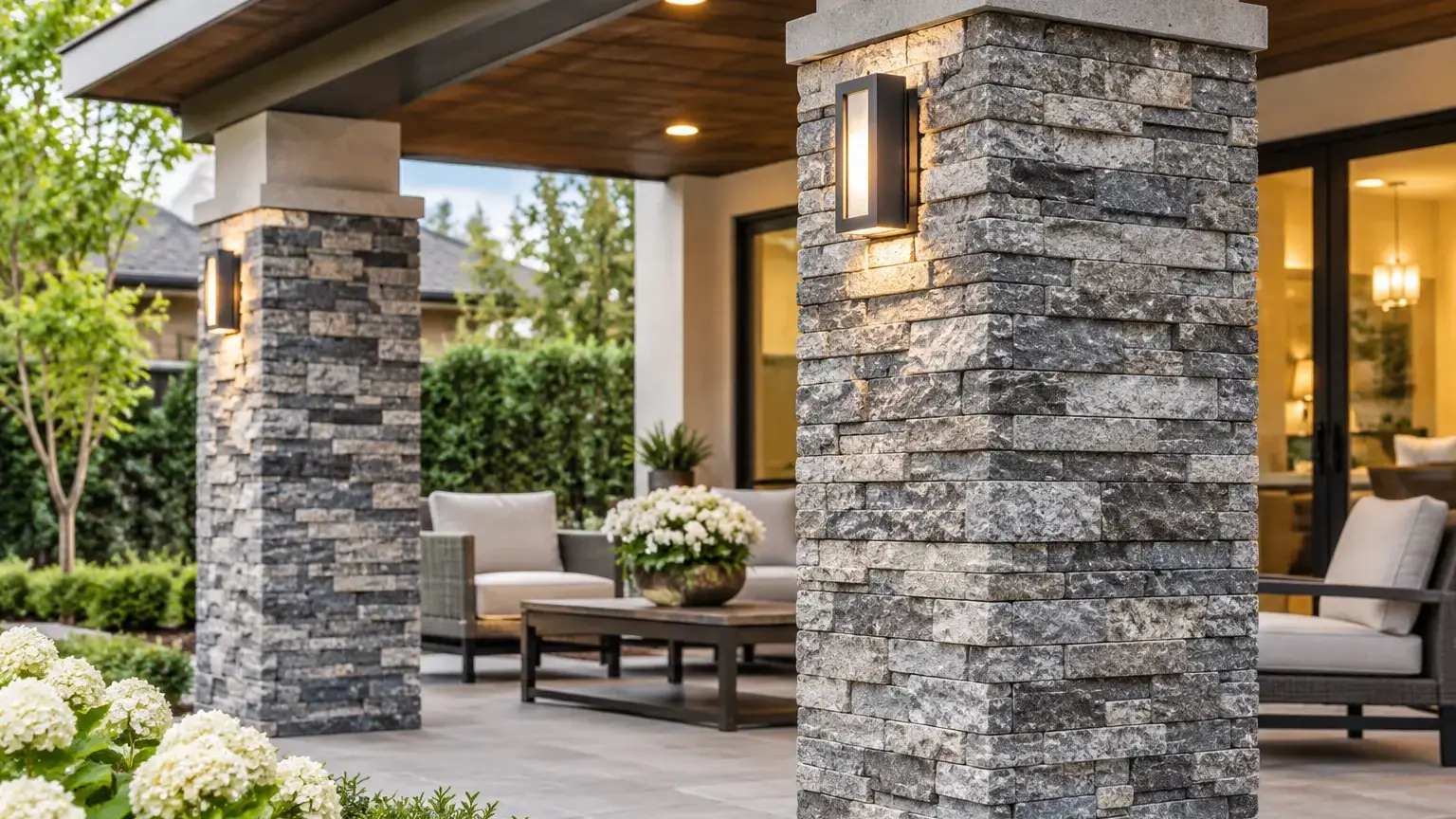
What Is the Best Stacked Stone for Outdoor Columns?
Dense natural stones with low water absorption, such as quartzite and granite, are generally the strongest choices for outdoor columns and porch bases. Softer or more porous stones, such as marble, are better suited to indoor or sheltered spots, so check each product's outdoor rating before you choose.
Freeze-thaw cycles are the main reason water absorption matters on exterior columns and porch bases. Water expands by roughly 10 percent when it freezes, so a porous stone that soaks up moisture is more exposed to damage in cold climates.
Technical guidance on adhered exterior stone describes high-absorption stones as the weakest choices for outdoor work, particularly when the stone is bonded directly to a structure.
For columns that face full sun all day, check that the product is rated for outdoor use and sun exposure. Slate and sandstone also appear in stacked stone panels; for either one, check the water absorption figure on the product's technical data sheet before planning an outdoor installation. To compare outdoor-rated stones in person, you can visit our local Nova Tile and Stone showrooms or book a free design consultation to talk through which options suit your climate.
How Do You Plan Stacked Stone for Columns and Pillars?
To plan stacked stone for a column or pillar, start with the corner pieces, then match the course height, profile, and shape to the structure, and measure every face and corner before ordering. Most stacked stone lines include L-shaped corner pieces with one long return and one short return, which make a thin veneer read as solid stone from every side.
The corners should not all point the same way. A step-by-step guide to staggering corner pieces places each course's corner piece on the opposite side of the corner from the one below it and varies panel lengths so joints do not line up across the wall. On a narrow pillar, that alternation is what keeps vertical seams from lining up into an obvious zipper down the face.
Beyond the corners, a few choices help the stone suit the structure:
- Course height: Thin, tightly packed strips suit slim columns; taller, chunkier courses suit wide pillars and gate posts.
- Profile depth: Split-face and 3D panels with deep relief cast strong shadows, which read well from the street. Flatter, honed profiles look calmer up close, such as on a covered porch.
- Shape: Panels fit square and rectangular columns easily. Round or tapered columns usually call for individual pieces or a product made for curves.
- Top and bottom: Settle the cap and the bottom edge before ordering; the next section explains why both matter outdoors.
To estimate, measure the height and width of every face, then count the outside corners by their height in linear feet, since corner pieces are usually sold that way. Subtract the corner coverage from the flat area, and allow a little extra for cuts and for picking the best-looking pieces.
Is Stacked Stone a Good Choice for Porch Bases?
Yes, stacked stone can work well on a porch base as long as it is kept clear of soil and paving, capped to shed water, and protected from constant splashing. Porch bases sit in the wettest zone of the house, so moisture control matters as much as the stone itself. Rain splashes up from the ground, sprinklers hit the lower courses, and snow piles against the base in winter.
The most common recommendation is to keep the stone off the dirt. Manufactured stone guidance on veneer clearances calls for at least 4 inches between the veneer and soil on framed walls, and at least 2 inches above paved surfaces such as patios and driveways, with some reductions for walking surfaces on the same foundation. On framed porch walls, that bottom edge is also where a weep screed lets water that gets behind the veneer drain out.
A few other details help a porch base age well:
- Caps with an overhang: A stone cap that projects past the face of the veneer sheds water off the top course instead of down into it.
- Sprinklers and downspouts: Aim them away from the stone so the lower courses are not soaked day after day.
- De-icing salt and pool chemicals: Both can discolor or damage manufactured stone, so use them sparingly near the base.
- Steps and kick zones: Stair risers and spots where shoes scuff the surface are poor places for veneer, especially textured profiles.
Many porch designs run stacked stone only on the lower section as a wainscot, with siding above. That keeps the stone where it adds visual weight and lets a cap or trim piece finish the top edge cleanly.
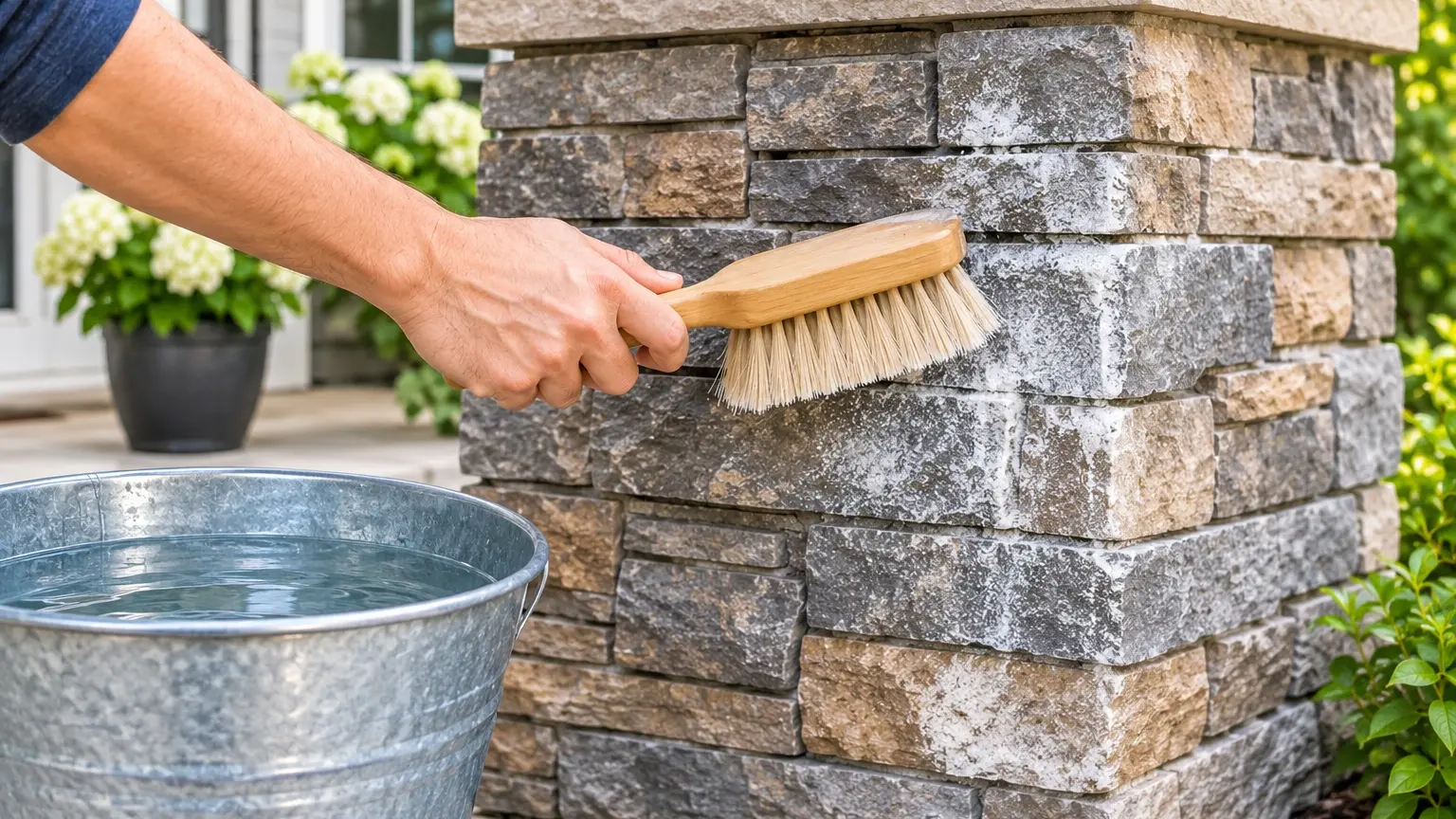
How Do You Clean and Maintain Outdoor Stacked Stone?
Clean outdoor stacked stone gently with a soft brush and plain water for everyday dirt, and fix any moisture source before treating white deposits. The ledges between courses collect dust, pollen, and leaves, so a light brushing every so often keeps them clear.
The issue homeowners most often notice on columns and porch bases is efflorescence, a white powdery film on the stone or joints. Guidance on how efflorescence forms explains that water moving through the wall dissolves salts and leaves them at the surface as it dries. It shows up more often in cool, damp weather and on shaded sides of a house, and it is a sign that moisture is getting into the assembly.
A few habits keep cleaning from causing new problems:
Find the water first: Fix the moisture source, such as a leaking gutter or soil piled against the base, or the deposits will keep returning.
Start gentle: Fresh, powdery deposits usually come off with a soft, dry brush. On natural stone, avoid rinsing efflorescence with water, since water only makes the powder disappear for a while.
Skip the pressure washer and acid: High-pressure water and acid cleaners can drive more salts into the wall and leave stains that are harder to remove.
Check before sealing: If you are considering a sealer, follow the stone maker's care guide and try it on a small, hidden area first, since some sealers change the color.
Planning Your Stacked Stone Project
Stacked stone on columns, pillars, and porch bases is easiest to judge in person, where you can see how the light catches each profile and how corner pieces wrap an edge. At Nova Tile and Stone, we carry natural stone and exterior stone, and our team can walk you through colors, textures, and panel styles at our showrooms in Reno, Minden and Sacramento.
If you are still weighing natural against manufactured stone, or trying to match stone to your siding and roof, book a free design consultation with our team. Bring photos of your porch, rough measurements of each column face, and notes on sun exposure, and we can help you narrow the options before you finalize your plans with your contractor.
Frequently Asked Questions
No. Adhered stone is set over a prepared backing, typically sheathing, water-resistive barrier, metal lath, and a mortar scratch coat on framed columns. Clean, rough concrete or concrete block can sometimes accept stone more directly.
Yes. Stacked stone is also used on interior columns, fireplace surrounds, and accent walls. Indoors, moisture and freeze-thaw are less of a concern, so softer stones such as marble become options.
Often, yes. For veneer that rises more than about 10 feet above grade, industry guidance suggests having the system designed by a local engineer, since a stone that comes loose at that height poses a greater risk.
Often, yes. Powdery deposits that appear in the first weeks after installation are usually water soluble and tend to wash away with weathering. Hard, crusty deposits that build up over months or years are a different type and usually need a cleaner made for that purpose.
The two names are often used interchangeably. Both describe thin, rectangular strips of stone set in tight horizontal courses, though some product lines use "ledgestone" for profiles with more depth and shadow between the strips.
Sources
- ASTM International, ASTM C615/C615M Standard Specification for Granite Dimension Stone (absorption by weight, max 0.40%) | https://store.astm.org/c0615_c0615m-23.html
- Natural Stone Institute, Care & Cleaning of Natural Stone | https://www.naturalstoneinstitute.org/consumers/care/
- Concrete Masonry & Hardscapes Association, Key Installation Checkpoints for Manufactured Stone Veneer (MSV-TEC-001-14) | https://www.cmha.org/resource/msv-tec-001/
- Mason Contractors Association of America, Understanding Efflorescence | https://masoncontractors.org/technical-talks/understanding-efflorescence
- Masonry Magazine (Mason Contractors Association of America), Navigating Adhered Masonry Veneer | https://www.masonrymagazine.com/navigating-adhered-masonry-veneer
- Construction Canada, The Thin Alternative to Traditional Masonry (written by the executive director of the Alberta Masonry Council) | https://www.constructioncanada.net/the-thin-alternative-to-traditional-masonry/
- Stone World, Adhered Exterior Stone Veneers | https://www.stoneworld.com/articles/83648-adhered-exterior-stone-veneers
- This Old House, How To Clad a Wall in Stone | https://www.thisoldhouse.com/masonry/how-to-clad-a-wall-in-stone
Note: Some images on this page may be conceptual renderings created to illustrate design possibilities and may not depict actual installations.