The best ledger stone material depends on what it has to withstand: pool surrounds and freestanding columns need UV-resistant stone like granite or quartzite since both face constant sun exposure, while retaining walls can use travertine as well since drainage from the soil behind them matters more than sun resistance.
Pool surrounds face constant chlorinated water and splash-back, retaining walls face pressure and moisture from the soil behind them, and freestanding columns get hit by sun and rain on every face at once. Ledger stone can work for all three, but the material behind that stacked look needs to match which of those three problems it is actually solving.
None of these applications are close cousins the way they might look in a product photo. A wall tucked against a shaded slope and a column standing alone in full sun are two different jobs wearing the same stacked finish, and picking one material for both because the surface texture looks the same is how a project starts looking uneven within a few years.
Granite, quartzite, travertine, and porcelain are all listed with specialty finish and cut options, which is what makes a ledger panel format possible across all four materials in the first place. The question is not whether a given stone comes as ledger stone, it is whether that specific stone belongs on a pool wall, a retaining wall, or a column.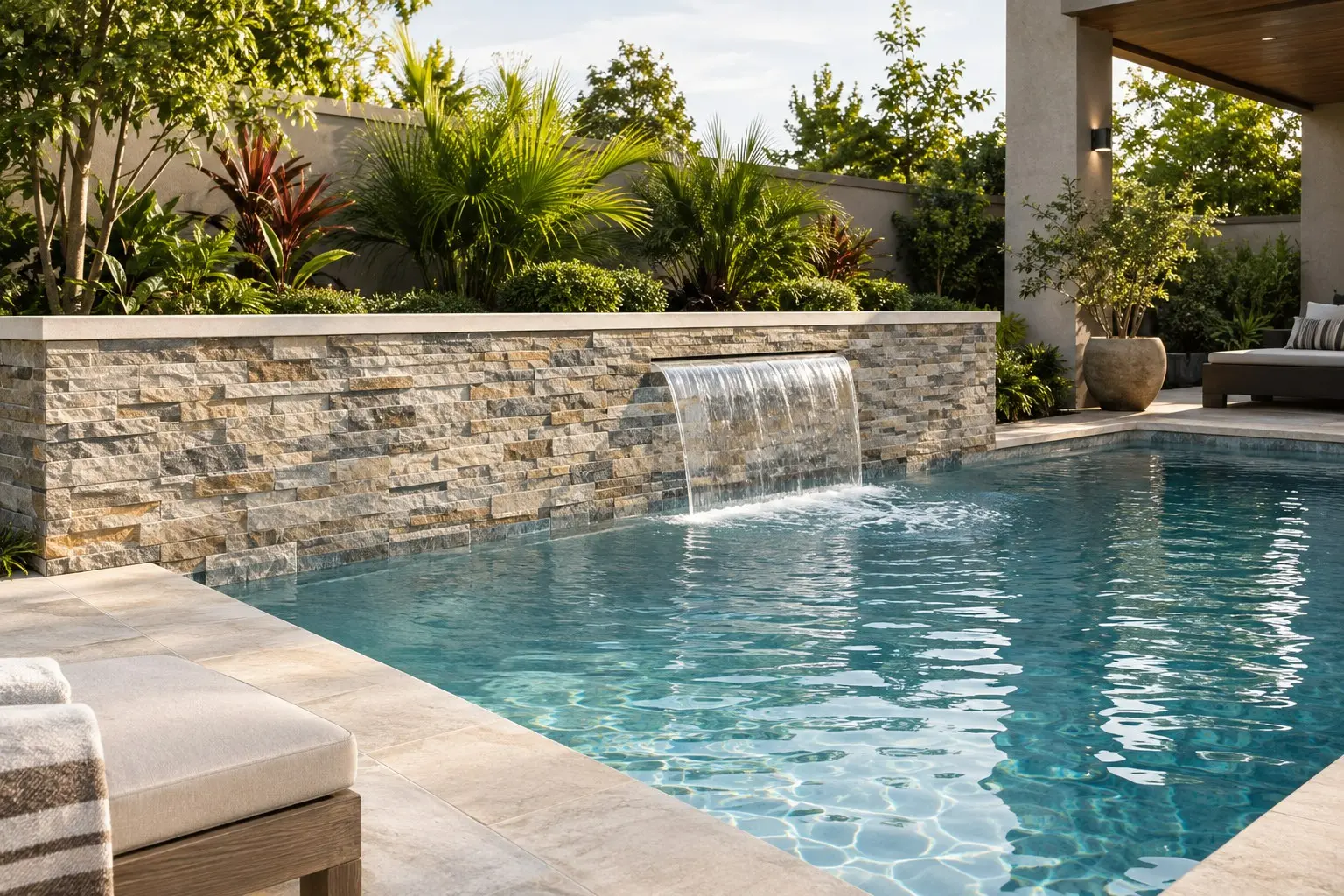
Pool Surrounds Face Water More Than Weather
A pool surround gets wet constantly, not occasionally, splashed water, pool chemicals, and humidity sit against the stone in a way a regular exterior wall never experiences. The Natural Stone Institute singles out pool, patio, and hot tub areas specifically in its own care guidance, recommending a flush with clear water and a mild bleach solution to clear algae or moss, a routine a standard exterior wall rarely needs.
Granite and quartzite are both rated for outdoor wall use and UV resistant, which matters here since a ledger panel wrapped around a pool wall sits in reflected sun for most of the day. Travertine is also rated for outdoor wall use, but it is not marked UV resistant, so a lighter travertine ledger panel near a pool is more likely to shift in tone over the years than granite or quartzite in the same spot.
Porcelain is also rated for outdoor wall use and UV resistant, and its manufactured consistency gives a pool surround one uniform tone from panel to panel, an option worth considering for anyone who wants the stacked look without the natural variation that comes with quarried granite or quartzite.
If the pool deck itself uses a matching stone for coping, checking the current slab inventory for that same material keeps the poolside look consistent instead of introducing a second, unrelated stone into the same view. Once that match is confirmed, requesting a slab quote for the coping keeps the two purchases moving on the same timeline instead of two separate ones.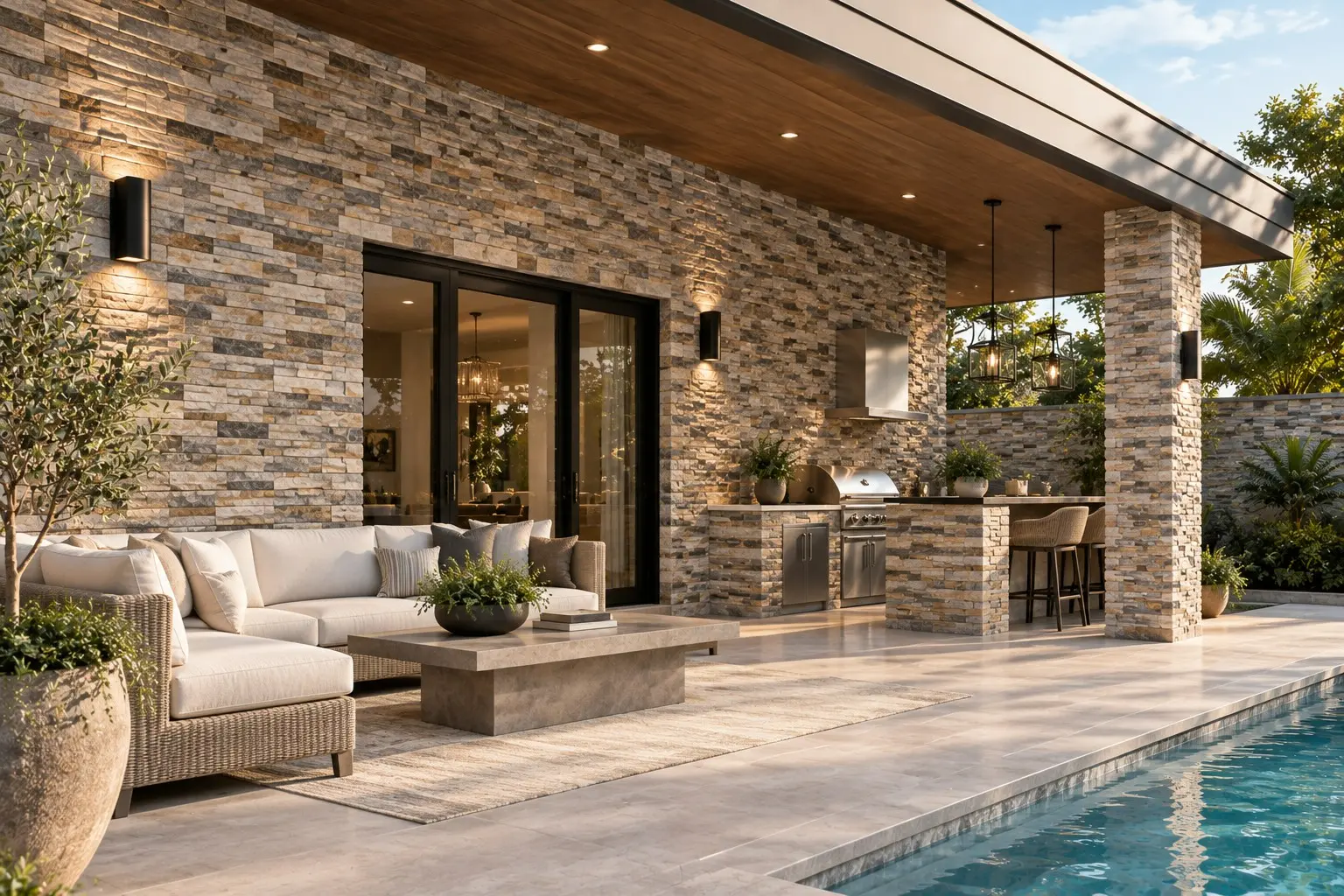
Retaining Walls Deal With Pressure From Behind, Not Weather From the Front
A retaining wall holds back soil, and that soil carries moisture with nowhere to go but through or around whatever is stacked against it. The stress here comes from behind the panel, not from what falls on it, which is the opposite problem a pool surround or a column faces.
Granite, quartzite, and travertine are all rated for outdoor wall use, so the material choice on a retaining wall comes down less to sun resistance and more to how well the wall itself is set up to drain. This is one of the few outdoor applications where travertine's missing UV rating matters less, a retaining wall tucked into a slope or partially shaded by landscaping does not take the same sustained sun a freestanding column does, so the fading risk that rules travertine out elsewhere carries less weight here.
Sealing matters more on a retaining wall than it does on a column with nothing behind it to hold moisture against the stone. The Natural Stone Institute notes that a penetrating sealer does not actually make stone stain proof, it acts more like a repellent that makes the surface more resistant, which is worth knowing before assuming a sealed retaining wall panel is fully protected from moisture working against it from the soil side.
Granite and quartzite ledger panels, part of the same pavers and exterior stone lineup Nova Tile and Stone carries, are both available in a leathered or honed finish, which reads less polished and suits a wall meant to blend into a slope or garden setting better than a glossy finish would.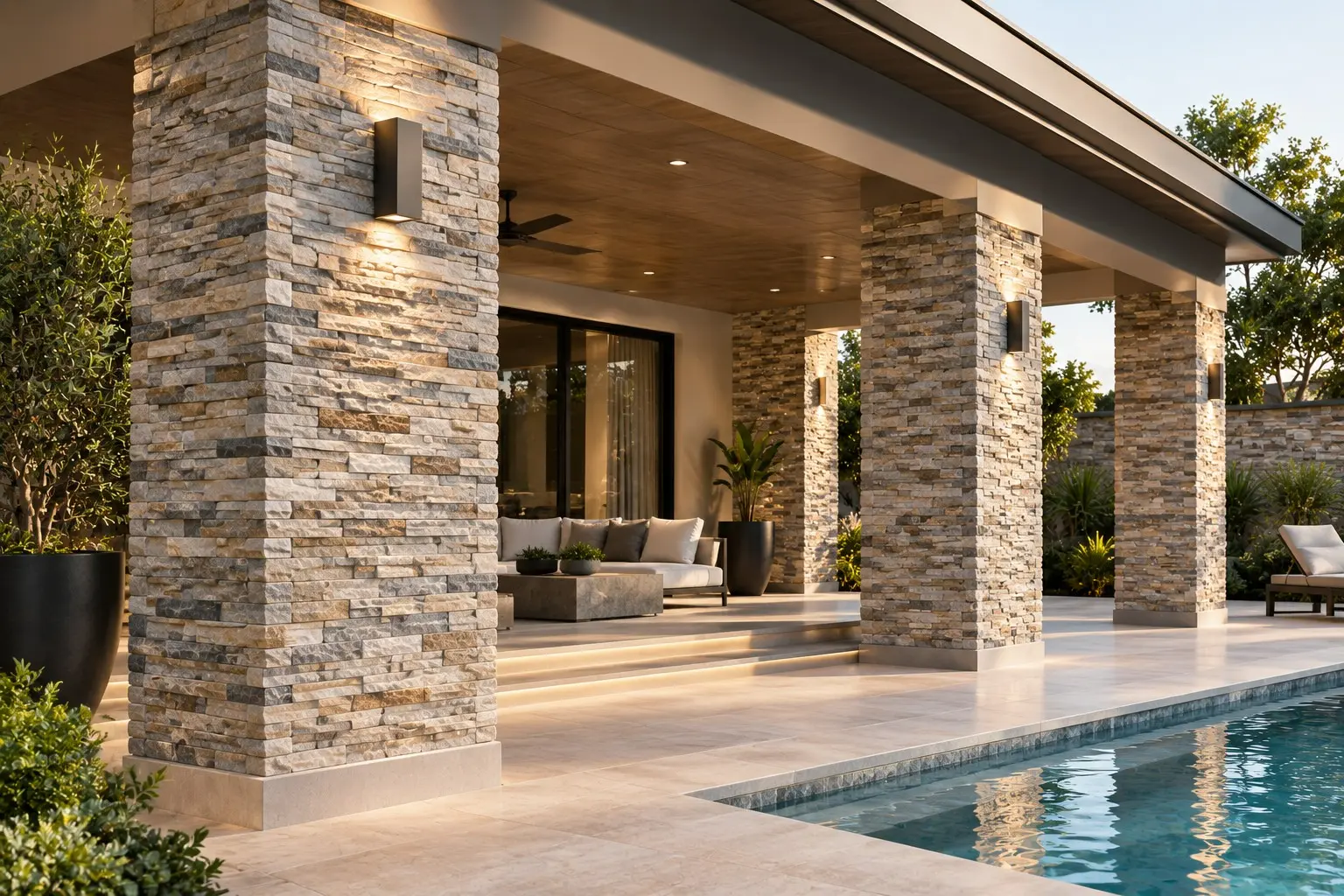
Columns and Pillars Get No Shelter At All
A column standing alone does not get the partial protection a wall built against a house or a slope gets, every face takes direct sun and rain since there is no adjacent structure to block any of it.
That full exposure is exactly why UV resistance matters most on a column. Granite and quartzite are both rated for outdoor wall use and UV resistant, so a column clad in either one holds its color on every face rather than just the side that happens to stay shaded. Travertine can still be used structurally, but the same fading risk that carries less weight on a partially shaded retaining wall applies at its fullest on a column with nothing blocking any side of it.
A column also has less mass behind the veneer than a full wall does, a structural detail worth flagging when specifying the project, even though the finished stacked look reads the same as it would on a wall.
Columns show up in different spots around a property, gate entry pillars and freestanding pergola support posts both get clad in the same stacked material, and each one stands just as exposed as a taller column despite differing in scale. Browsing ledger stone design ideas on Houzz is a reasonable way to see how these smaller column applications actually look finished before picking a material for one.
Maintenance And Cleaning Differ By Application Too
The Natural Stone Institute's cleaning guidance separates stone into calcareous types, which are sensitive to acidic cleaners, and siliceous types like granite and quartzite, which hold up better against most household acids, though harsh chemicals still are not recommended for either. That distinction matters more once a stone is picked, since the wrong cleaner can dull a finish regardless of how well the stone itself performs outdoors.
Pool areas call for the algae-focused routine already mentioned, a retaining wall benefits more from occasional debris removal since standing water against the face is less of a factor, and a column exposed on every side tends to collect more wind-blown dust than a sheltered wall simply because more of its surface faces open air.
Seeing the Actual Stone Before Deciding
A photo, whether it is a product shot or a Houzz inspiration image, cannot show how a stone reads in direct sun or against chlorinated water spray the way standing in front of it can. Walking the floor in Reno, Sacramento, Minden, or Fernley is the only way to see how a specific granite or quartzite panel looks in full light rather than under a showroom's even lighting, which matters more for a column or pool surround than it does for a shaded retaining wall. Find the nearest location to plan a visit.
Conclusion
A pool surround, a retaining wall, and a column are three different exposure problems before they are three design choices, and the ledger stone that solves one does not automatically solve the others.
A free design consultation with Nova Tile and Stone is the direct way to walk through which stone actually fits a specific pool wall, retaining structure, or column, not a generic ledger stone recommendation. Bring a photo or a rough measurement of the space in question, since the amount of direct sun a column actually gets in a specific backyard is not something a general guide can account for.
Note: Some images on this page may be conceptual renderings created to illustrate design possibilities and may not depict actual installations.
Frequently Asked Questions
Yes, if the material behind the panel is suited to it. Granite and quartzite are both rated for outdoor wall use and UV resistant, and the Natural Stone Institute recommends a simple clear-water flush with a mild bleach solution for algae in pool and patio areas, a routine that keeps ledger stone performing well in that environment.
The stress is different even when the look is the same. A retaining wall deals with moisture pressure from the soil behind it, while a column takes direct sun and rain on every face with no adjacent structure to block any of it, which is why UV resistance matters more for a column than for a shaded retaining wall.
It works, with one caveat. Travertine is rated for outdoor wall use but is not marked UV resistant, so it holds up better on a shaded or partially sheltered wall, like a retaining wall tucked into a slope, than it does on a column or pool surround that sits in full sun all day.
A column stands alone, so every face is exposed to direct sun and rain instead of just one side. A wall built against a house or a slope gets partial shelter on at least one side, which is why the same material can perform differently depending on which of the two it is used on.
Seeing the stone in direct sunlight, not just under even showroom lighting, shows how a panel will actually look on a pool surround or column. A free design consultation can walk through which specific stone fits a particular pool wall, retaining structure, or column.