At a Glance
- Porcelain works outdoors on walls, facades, fireplace surrounds, patios, and pool surrounds.
- It absorbs 0.5% water or less and won’t burn or melt near flame.
- Use thinner slabs for walls and thicker slabs for walking surfaces (6, 12, or 20 mm).
- Underfoot, choose a slab rated for wet outdoor areas and skip polished finishes.
- Confirm frost resistance for the specific product.
In This Post
- What Makes a Porcelain Slab Different?
- Where Do Porcelain Slabs Work Outdoors?
- Which Slab Thickness Fits Each Outdoor Surface?
- Will Porcelain Handle Freezing Winters and Strong Sun?
- Is Porcelain Slippery Outdoors?
- Choosing a Look for Outdoor Porcelain
- Caring for Porcelain Outdoors
- What to Ask Before You Choose a Porcelain Slab
- For Designers and Contractors
- See Porcelain Slabs in Person
- Conclusion
- Frequently Asked Questions
Yes, you can use porcelain outside. Porcelain slabs work on exterior walls and facades, outdoor fireplace surrounds, patios, and pool surrounds, because porcelain absorbs 0.5 percent of water or less by industry definition, will not burn or melt near flame, and comes in large slabs that cover outdoor areas with few seams.
For the best results, match each surface to the right slab. Wall slabs and walking-surface slabs usually differ in thickness, and any slab underfoot should be rated for wet outdoor areas, with frost resistance confirmed for the specific product.
Our Infinity Surfaces porcelain slabs are made in Italy, suited to indoor or outdoor use, and available through all four Nova Tile and Stone showrooms, so you can compare outdoor-ready looks side by side.
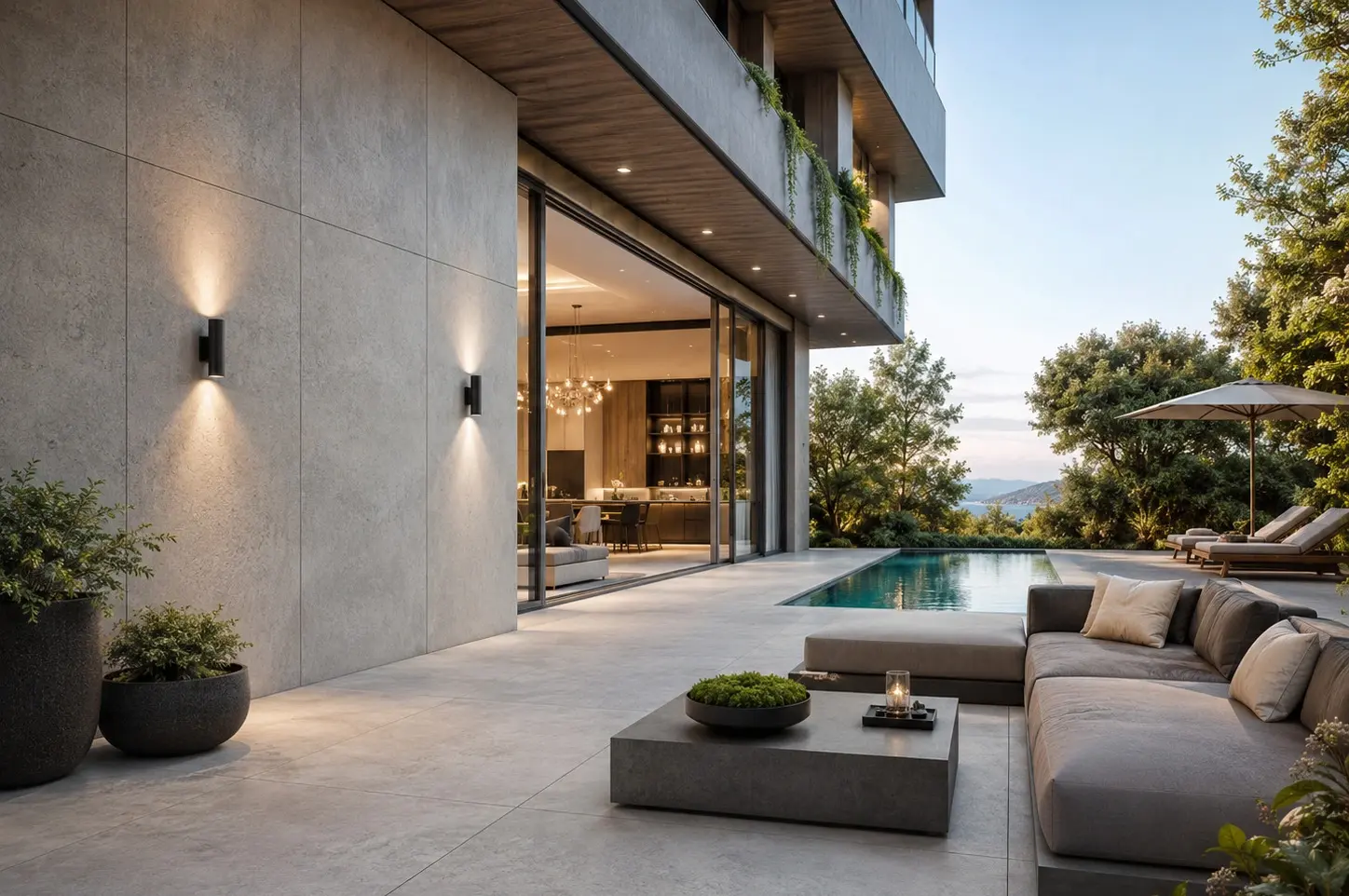
What Makes a Porcelain Slab Different?
Porcelain is defined by how little water it takes in. The Tile Council of North America’s page on porcelain certification explains that, by industry definition, porcelain absorbs 0.5 percent of water or less, and that manufacturers can have their products independently tested to prove it.
A slab is simply porcelain made very large. The Tile Council’s listing for the industry standard for porcelain slabs describes slabs as pieces one square meter in area or larger. Our Infinity Surfaces slabs measure 160 by 320 centimeters, about 5.2 by 10.5 feet.
That size is what sets slabs apart. A large slab can cover a wall or a long stretch of patio with far fewer joints, so the surface reads as one continuous piece of stone-look material. On a 20-foot patio wall, that means four slabs set side by side instead of dozens of individual tiles.
Where Do Porcelain Slabs Work Outdoors?
Exterior walls and facades are a natural starting point. Our Infinity Surfaces page lists facades and feature walls among the places these slabs can go, and large slabs suit a modern entry or a privacy wall around a patio. At a front door, a few large slabs can cover the wall around the entry so it reads as one clean, continuous surface from the street.
Outdoor fireplace surrounds are another strong fit. Why Tile, the Tile Council’s consumer site, notes in its guide to outdoor surfaces that porcelain and other ceramic materials will not burn or melt in contact with flame.
Patios and covered outdoor rooms are the third. Why Tile’s guide also points out that using the same or a similar material inside and out creates continuity, which large porcelain slabs are well suited to deliver.
Pool surrounds are another option, as long as the walking surface carries a suitable rating for wet areas. Why Tile’s guide notes that these materials resist fading from pool chemicals and strong sun. On a pool deck, that wet-area rating matters more than the look, so settle it before you narrow down colors.
Porcelain slabs can also dress the outside of an outdoor kitchen, wrapping the island base or lining the floor around the cooking area. For the counter itself, ask our team which surface we recommend, since food prep counters have their own requirements.
Which Slab Thickness Fits Each Outdoor Surface?
Our Infinity Surfaces slabs come in 6, 12, and 20 mm thicknesses, and the right one depends on the job. The industry standard for porcelain slabs, ANSI A137.3, sets separate strength requirements by thickness, including one for slabs 20 mm and thicker.
The Tile Council’s listing also notes that a companion standard, ANSI A108.20, covers exterior installation of these slabs. In our experience, thinner slabs suit outdoor walls and cladding, while thicker slabs are the ones to consider for surfaces people walk on.
Bring your plans when you shop, and ask which thickness suits each surface. When a pattern comes in more than one thickness, a facade in 6 mm and a patio in 20 mm can share the same look while each surface gets the thickness it needs.
Will Porcelain Handle Freezing Winters and Strong Sun?
Low water absorption is porcelain’s main advantage in cold weather. The Tile Council’s FAQ on porcelain vs. non-porcelain explains that because porcelain absorbs so little water, it is usually frost resistant, though not always, so the manufacturer’s literature is the place to confirm it for a specific product.
Sun is the other half of outdoor life. Why Tile’s outdoor guide notes that porcelain and other ceramic surfaces resist fading in strong sun. Performance can still vary by color and finish, so confirm it for the slab you choose.
The Tile Council’s FAQ also notes that glazed porcelain is usually a little easier to clean than unglazed porcelain, so ask which type a slab is if easy cleaning matters for your project.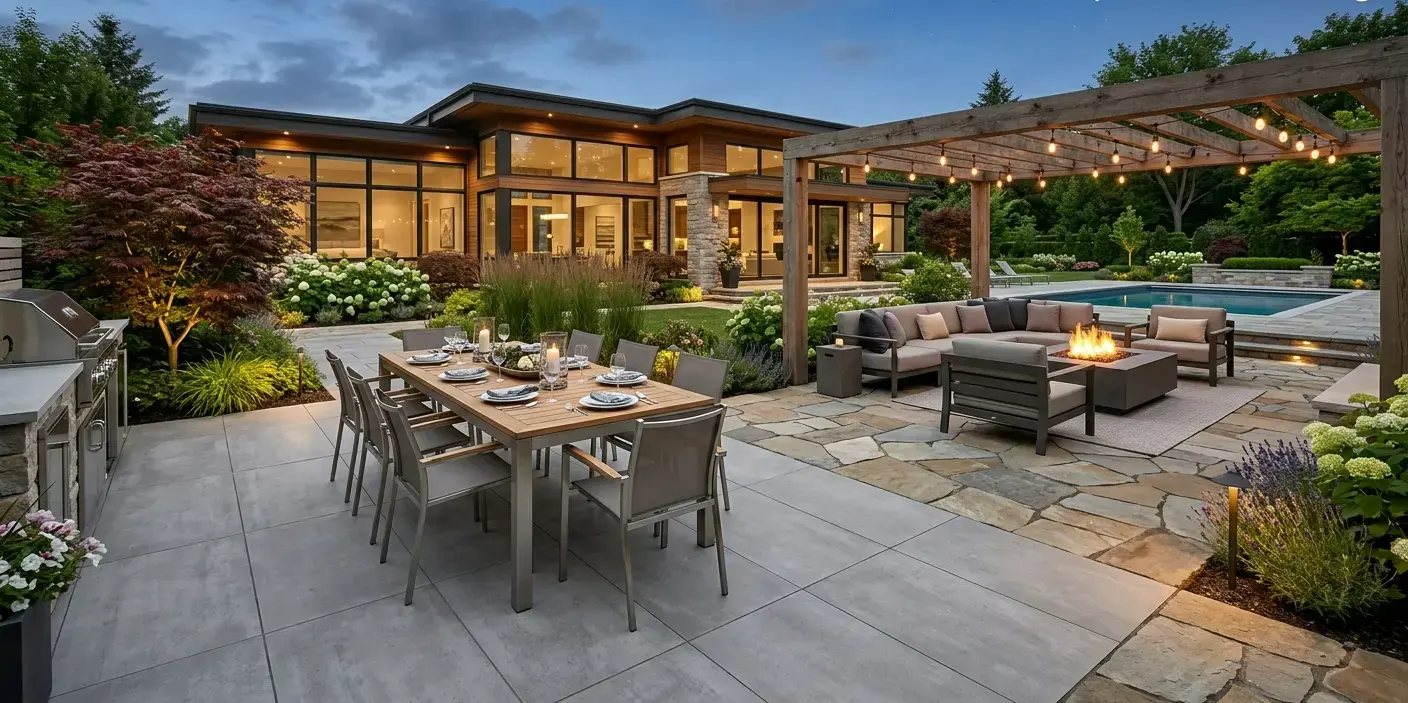
Is Porcelain Slippery Outdoors?
Slip resistance depends on the surface, not just the material. The Tile Council’s page on slip resistance testing explains that an industry standard measures how slip resistant a hard floor is and sorts products into categories based on where they can be used.
For any porcelain that will be walked on outside, ask whether it is rated for wet outdoor areas. Why Tile’s guide also notes that slip-resistant options are available for outdoor wet conditions, such as walkways and patios.
Avoid polished finishes on patios, pool decks, and walkways. Glossy, polished slabs make the most impact on walls, fireplace faces, and island fronts, where their reflection and veining show best.
Choosing a Look for Outdoor Porcelain
Porcelain’s biggest draw is its range of looks. Our recent Infinity Surfaces arrivals include Magellano, with warm beige tones and rust accents, as well as marble-look slabs such as Calacatta Magnifico.
Outdoors, warm stone looks pair easily with wood, plants, and desert landscaping, while bright marble looks suit modern exteriors and covered patios. Because the same slab can be used inside and out, you can match a patio wall to the kitchen or living room it opens onto.
If one slab will run from an indoor room out to a patio, choose it with both spaces in mind, since a pattern can read differently in daylight than under indoor lighting. Seeing the full slab in person is the best way to judge how it will look across a large wall.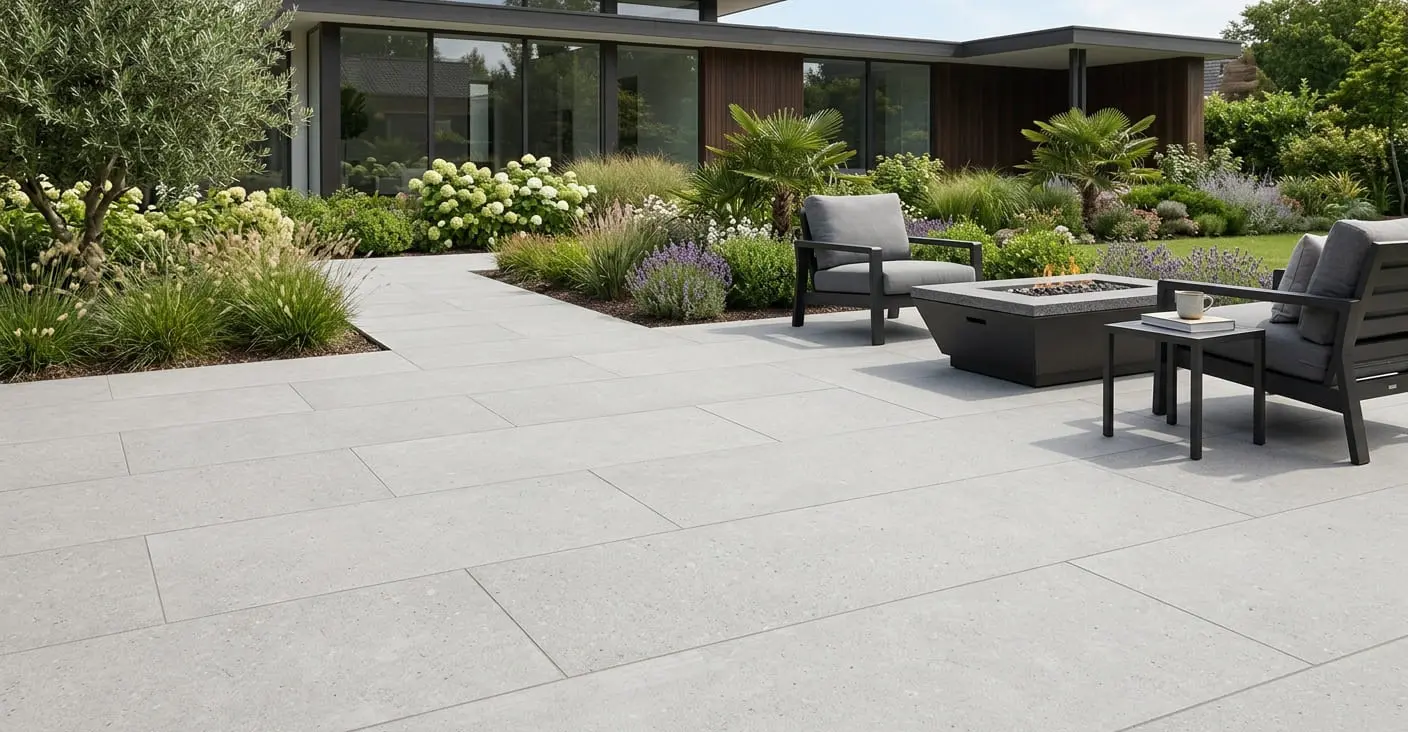
Caring for Porcelain Outdoors
Routine care is simple. Why Tile’s guide notes that wiping with water is usually all that is needed for routine cleaning, without harsh chemicals that could run off into nearby plants.
Our Infinity Surfaces page describes these slabs as non-porous, so they do not need sealing. Regular rinsing still helps, especially on patios that collect dust, leaves, and spring pollen.
What to Ask Before You Choose a Porcelain Slab
A few questions help match the right slab to each outdoor surface. Ask whether the product is rated for exterior use in its intended area, as the Tile Council advises checking the manufacturer’s area of use for any specific product.
Ask too about frost resistance, slip resistance for walking surfaces, whether the slab is glazed or unglazed, and which thickness suits each part of your project. With those answers in hand, you can narrow down the look you want with confidence.
For Designers and Contractors
Large porcelain slabs make the most sense when the layout is planned around their size. A trade account adds job-site delivery across Northern Nevada and Northern California, along with slab holds, a dedicated rep, and commercial estimating with material takeoffs.
Once the wall, patio, or fireplace dimensions are set, a slab quote request helps line up the right number of slabs in the right thickness.
See Porcelain Slabs in Person
Browse our live slab inventory to see what is on hand, and explore our full range of surfaces online. When you are ready to compare looks side by side, bring your measurements and photos of the space to a free design consultation, where you can see how a pattern reads at full size.
Conclusion
Porcelain slabs can bring a clean, consistent look to outdoor walls, fireplaces, and patios, as long as each surface gets the right thickness, rating, and finish. Our team at Nova Tile and Stone can help you plan it at any of our showrooms in Reno, Minden and Sacramento.
Note: Some images on this page may be conceptual renderings created to illustrate design possibilities and may not depict actual installations.
Frequently Asked Questions
Yes. Porcelain slabs rated for exterior use can go on outdoor walls, facades, fireplace surrounds, and patios. Choose the thickness and surface to suit each area, and confirm the product’s outdoor rating.
Porcelain absorbs very little water, so it is usually frost resistant, though not always. Check the manufacturer’s information to confirm frost resistance for the specific slab you choose.
It depends on the surface. Ask whether a slab is rated for wet outdoor areas, and keep polished porcelain to walls and other vertical surfaces.
Our Infinity Surfaces page describes the slabs as non-porous, so sealing is not needed. Regular rinsing with water still keeps the surface looking its best.
It depends on the surface. We generally suggest thinner slabs for outdoor walls and cladding and thicker slabs for patios and other walking surfaces.