The best exterior stones for climates with hot summers and freezing winters are granite, quartzite, and porcelain pavers, because industry standards hold all three to 1 percent water absorption or less, which helps them resist freeze-thaw damage. Dense, higher-grade travertine is also commonly used for pool decks and sunny patios, since its light color stays cool underfoot, but it needs more care where winters bring hard freezes.
Water absorption is the most important factor for cold-weather performance. ASTM C615 caps granite at 0.40 percent, ANSI A137.1 caps porcelain at 0.5 percent, and ASTM C616 caps quartzite at 1 percent. For safety and comfort, textured finishes such as flamed, tumbled, or natural cleft add grip on wet or icy surfaces, and lighter colors reflect more summer heat.
In this guide, we compare granite, quartzite, porcelain, and travertine across freeze-thaw performance, summer comfort, upkeep, and appearance, and explain which material fits pool decks, patios, walkways, and driveways.
Why Seasonal Extremes Are Hard on Outdoor Stone
Every outdoor surface expands in heat and contracts in cold. In a mild climate, that movement is small and gradual. In a region where summer afternoons pass 100°F and winter nights fall into the teens, stone goes through much larger swings, sometimes within a single day.
The biggest winter risk is the freeze-thaw cycle. When water soaks into the pores of a stone and then freezes, it expands by roughly 9 percent. That expansion pushes outward from inside the material. One cycle rarely causes visible damage, but dozens of cycles each winter can lead to surface flaking (called spalling), hairline cracks, and loosened pieces. The more water a stone absorbs, the more vulnerable it is.
Summer brings a different set of challenges. Dark stone in direct sun can become uncomfortably hot to walk on, which matters most around pools and outdoor living areas. Strong UV exposure can also wear down some sealers and resin fillers over time.
What to Look For in Exterior Stone for Extreme Climates
Four properties do most of the work when you compare materials for a hot-and-cold climate.
Water absorption. Absorption is measured as a percentage of a material's weight, and industry standards set a maximum for each material type. Lower numbers mean less water inside the material to freeze.
Density and compressive strength. Denser materials resist cracking under the stress of expanding ice and heavy foot traffic. Density and absorption usually go hand in hand.
Surface finish. Polished stone becomes slippery when wet or icy, so outdoor surfaces typically use textured finishes. Flamed (thermal), bush-hammered, tumbled, sandblasted, and natural cleft finishes all add grip. A textured finish is one of the most important safety choices for any walkway or pool area that sees frost.
Color. Lighter colors reflect more sunlight and stay cooler to the touch. Darker stones absorb more heat, which makes them less comfortable in full summer sun. For most patios and pool decks in hot-summer regions, lighter and mid-tone colors are the more comfortable choice.
Granite
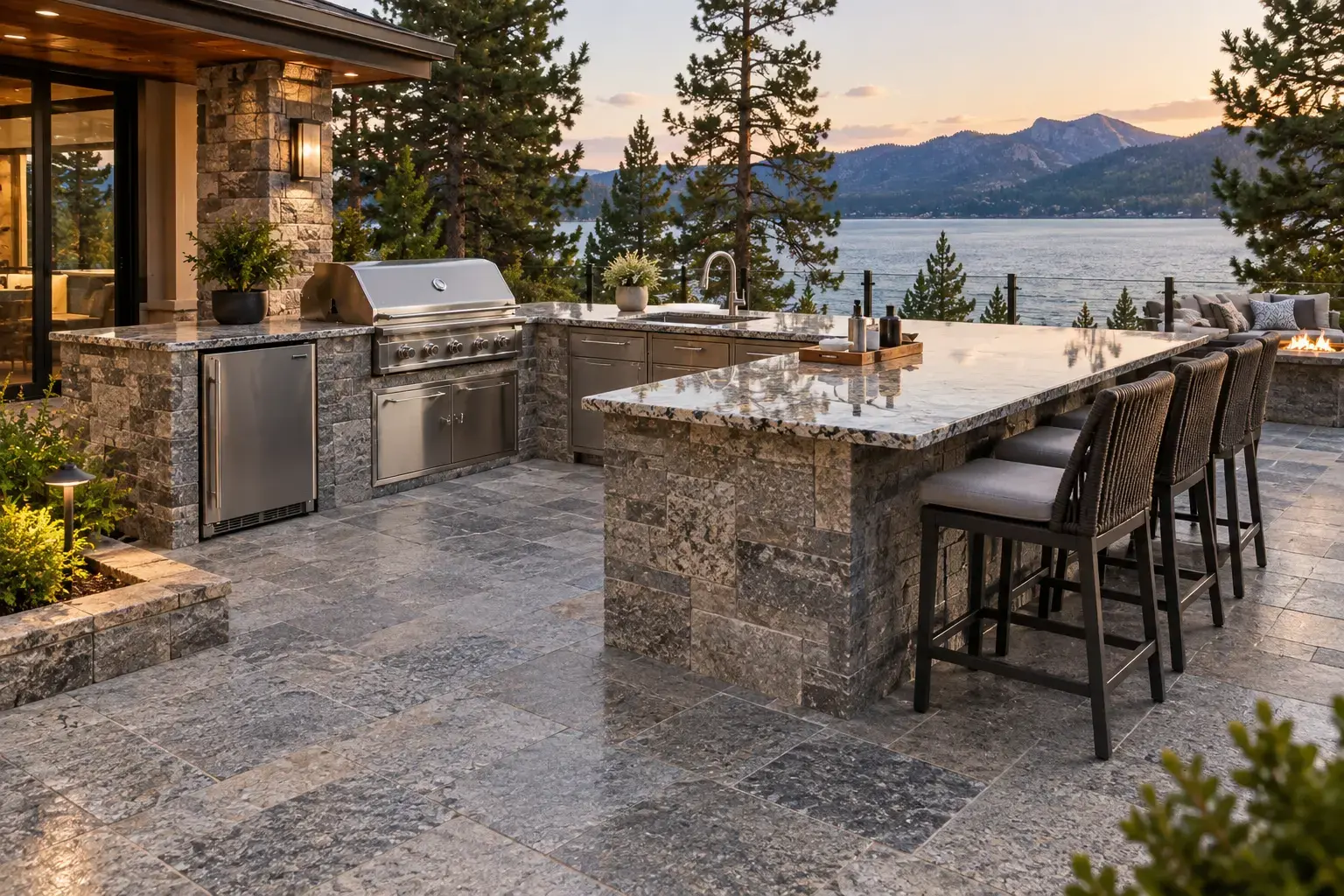
Granite is well suited to climates with both heat and hard freezes. It is an igneous stone that formed from cooled magma, which gives it a dense, interlocking crystal structure and very low absorption. That low absorption helps granite resist freeze-thaw damage, and its hardness helps it resist chipping from snow shovels and foot traffic.
For outdoor use, granite is usually given a flamed or bush-hammered finish for traction. These textured finishes also soften the stone's color slightly, so an exterior piece can look a shade lighter and more muted than the same granite polished for a kitchen. Color range is wide, from light grays and whites to deep charcoal and black.
Because granite's color range runs so dark, color choice matters more than with most outdoor materials. In full sun, the lighter granites stay reasonably comfortable underfoot, while black and dark gray granites can get quite hot by mid-afternoon. Dark granite is often a better fit for steps, entries, and shaded walkways, where its winter performance counts and summer heat is less of a concern.
Quartzite
Quartzite is a metamorphic stone formed when sandstone is subjected to heat and pressure. The quartz grains fuse together, producing a hard, dense material. Under ASTM C616, quartzite is held to a maximum absorption of 1 percent, which places it among the lower-absorption natural stones, an advantage in freeze-thaw conditions.
Many exterior quartzites come in light, warm, or silvery tones, which helps with summer comfort. Some varieties have a natural cleft surface with built-in texture. Because quartzite is so hard, it also resists abrasion from foot traffic and outdoor grit.
One caution applies here. Some stones sold under the name quartzite are actually dolomite or marble, which are softer and more absorbent. For an outdoor project in a freeze-thaw climate, it is worth confirming that the stone you are considering is true quartzite. Pressing an edge of the stone against a piece of glass is one common check, since true quartzite will scratch the glass and softer stones will not.
Porcelain Pavers
Porcelain pavers are not natural stone, but they are a common alternative to it for outdoor paving. Porcelain is made from refined clay fired at very high temperatures, and to meet the ANSI A137.1 definition of porcelain, it must absorb 0.5 percent water or less. That very low absorption limits how much water can freeze inside the material.
Outdoor porcelain pavers are typically 2 cm (about 3/4 inch) thick and designed for exterior use, with textured surfaces for slip resistance. They are produced in looks that resemble travertine, limestone, slate, and wood. Because porcelain absorbs so little water, the pavers themselves generally do not need sealing, which reduces seasonal upkeep. Some pavers are colored through the body while others carry the design on the surface, so it is worth asking which type you are looking at.
Not every porcelain tile is meant for outdoor paving. Tiles made for interior floors may be thinner or smoother than an outdoor surface needs. When comparing options, look for products the manufacturer rates for exterior use and check their slip-resistance information for wet conditions.
Travertine
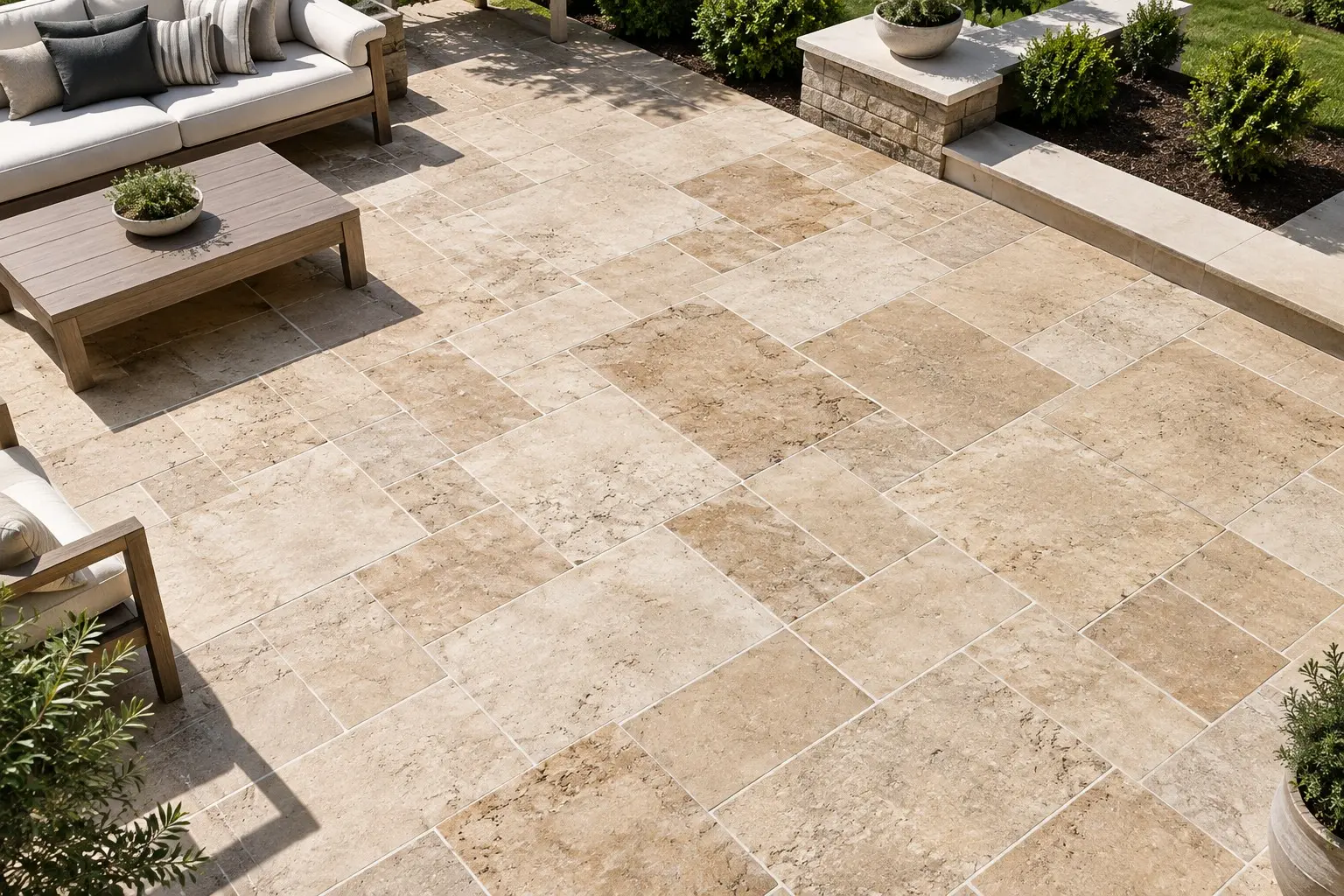
Travertine is a form of limestone deposited by mineral springs. It is widely used for pool decks in hot climates because its light color and porous texture keep it comfortable underfoot, and tumbled or unfilled finishes provide good grip when wet.
The same porosity that helps in summer is the main concern in winter. Travertine has natural voids and a higher absorption rate than granite or quartzite, which makes it more vulnerable to freeze-thaw damage. Grade matters here. Lower grades with many large holes are generally not recommended where freeze-thaw cycles are common, while denser, higher grades with fewer surface holes hold up much better. Comparing grades in person at one of our showroom locations makes those differences easy to see. In regions with frequent hard freezes, many homeowners choose these denser pavers, make sure water drains away from the surface quickly, and some add a breathable penetrating sealer to reduce water absorption.
Filled travertine uses resin or cement in the voids, and some resin fills can break down with long UV exposure, which is one reason many outdoor travertine pavers are tumbled or left unfilled. Because travertine is calcium-based, it is also sensitive to acids and to some de-icing chemicals, which is worth keeping in mind for snowy months.
How the Four Compare
Looking at the four side by side makes the tradeoffs easier to see as you narrow down your pavers and exterior stone options.
Freeze-thaw performance. Porcelain, granite, and quartzite all offer a wide margin because of their low absorption. Travertine can perform well, but it depends much more on grade, drainage, and care.
Summer comfort. Light travertine is widely considered one of the coolest surfaces underfoot. Light porcelain, quartzite, and granite also stay far more comfortable than darker colors, while dark granite and dark porcelain run hottest in full sun.
Upkeep. Porcelain needs the least attention, since the pavers generally do not require sealing. Granite and quartzite need little beyond routine cleaning, and some quartzites may benefit from sealing. Travertine asks for the most seasonal attention in cold climates.
Look. Granite, quartzite, and travertine each carry natural variation in color and pattern from piece to piece. Porcelain offers a more consistent look, including designs that imitate natural stone and wood.
Matching Stone to the Way You Use the Space
The right material often depends on where it goes. If you're weighing options for a specific area, you can book a free design consultation to talk through materials, finishes, and colors with our team.
Pool decks. Comfort and grip come first. Light travertine, light quartzite, and light porcelain pavers are the most common choices. In colder regions, porcelain and quartzite offer more freeze-thaw margin than travertine.
Sunny patios. Light to mid-tone granite, quartzite, and porcelain balance summer comfort with winter performance, and dense, higher-grade travertine works well where drainage is good.
Walkways, steps, and entries. These areas often see the most snow and ice. Granite, quartzite, and porcelain with textured finishes are common options, and darker tones are less of a concern if the area is shaded.
Driveways. Vehicle loads call for thicker materials. Granite, porcelain, or natural stone products specifically rated for vehicular use are typical choices. Contractors, designers, and architects sourcing exterior materials for multiple projects can apply for a trade account.
Caring for Exterior Stone Through the Seasons
A few general habits help any outdoor surface handle hot and cold seasons.
Keep water moving. Standing water is the main source of freeze-thaw damage. Clear drains and gaps of leaves and debris before winter.
Consider sealing where appropriate. Penetrating sealers reduce how much water porous stones like travertine absorb, and some quartzites benefit as well. Dense granite and porcelain often need little or no sealing. Always follow the sealer manufacturer's guidance for your specific material.
Be careful with de-icers. Rock salt (sodium chloride) can damage many natural stones, and calcium-based travertine is especially sensitive. Sand for traction and de-icers labeled as safe for natural stone are gentler alternatives.
Use the right snow tools. Plastic shovels and rubber-edged blades are less likely to scratch or chip stone than metal edges.
Clean in spring. Rinse away winter grit and salt residue before summer heat sets in.
Conclusion
The best exterior stone for hot summers and freezing winters combines low water absorption, a textured finish, and a color that stays comfortable in the sun. Granite, quartzite, and porcelain pavers absorb less water than travertine, and dense, higher-grade travertine is a common choice for pool decks and sunny patios when it is matched to the setting and given a bit of seasonal care. Where each material goes, from a sunny pool deck to a shaded front step, matters just as much as the material itself. If you're comparing outdoor options, seeing them side by side can make the differences easier to judge. Visit one of our showrooms in Sacramento, Reno, Minden, or Fernley, and our team can walk you through pavers and exterior stone suited to your climate, your style, and the way you use your outdoor space.
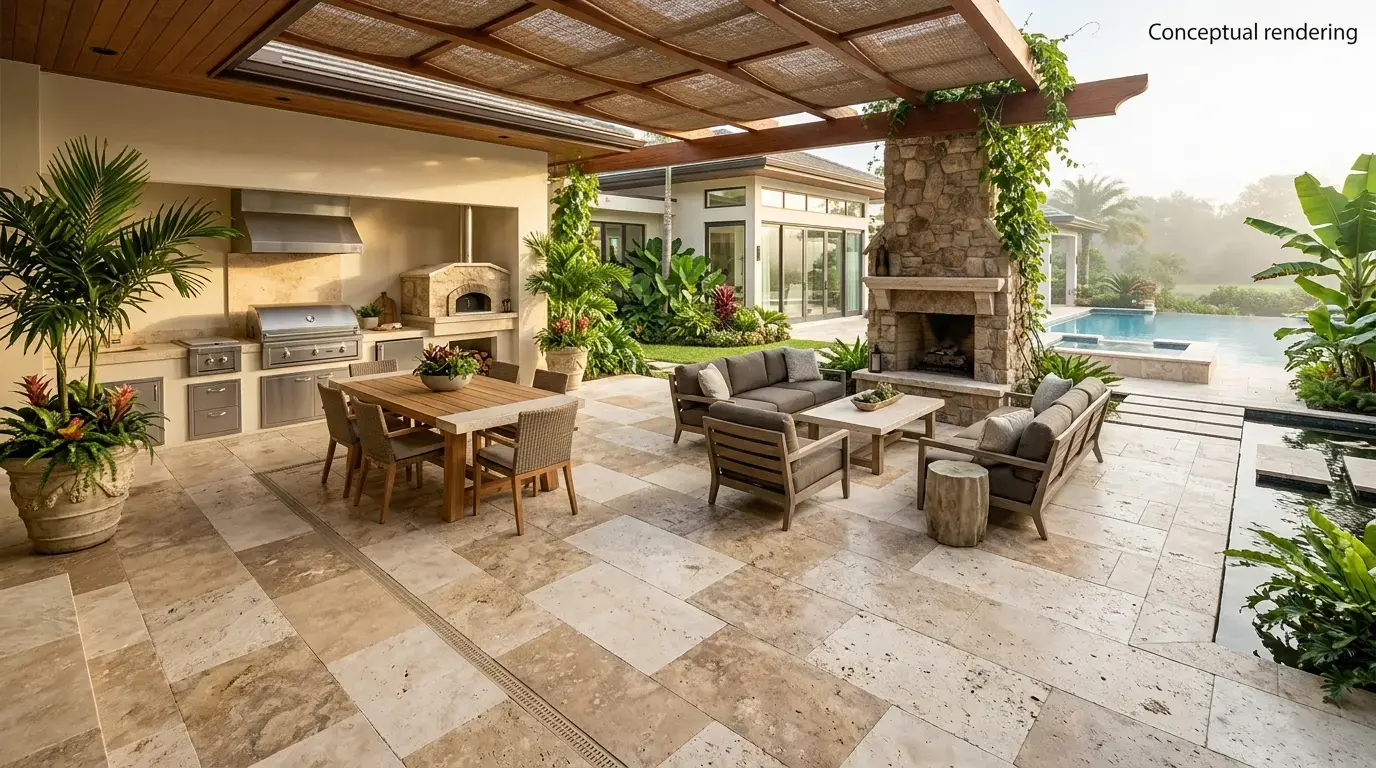
Note: Some images on this page may be conceptual renderings created to illustrate design possibilities and may not depict actual installations.
Frequently Asked Questions
Of the most common exterior options, porcelain pavers, granite, and quartzite have the lowest water absorption, which limits freeze-thaw damage. Porcelain absorbs 0.5 percent or less, granite is held to 0.40 percent or less under ASTM C615, and quartzite is held to 1 percent or less under ASTM C616.
Travertine can be used in cold climates, but it needs more care than denser stones. Its natural porosity lets it absorb more water, which raises the risk of freeze-thaw damage. Choosing a dense, higher-grade travertine with fewer surface holes and making sure water drains away quickly help reduce that risk.
Light-colored surfaces stay the coolest. Light travertine, pale quartzite, light granite, and light porcelain pavers reflect more sunlight than dark granite or dark porcelain, which makes them common choices for pool decks and sunny patios.
Rock salt can damage natural stone, and travertine is especially sensitive because it is calcium-based. Sand for traction or de-icing products labeled as safe for natural stone are gentler options for winter use.
It depends on the material. Travertine often benefits from a breathable penetrating sealer that reduces water absorption, and some quartzites may as well. Dense granite and porcelain pavers typically need little or no sealing. Always follow the sealer manufacturer's recommendations for your specific material.