At a Glance
- Travertine pavers are natural limestone pavers, usually about 1.25 inches thick.
- They cost more than concrete pavers and fall in a similar range to porcelain pavers.
- Light colors stay cooler underfoot than darker concrete or brick.
- Tumbled, unfilled finishes offer better grip around pools.
- Plan on resealing about every two to five years.
- Freezing climates call for dense stone, good drainage, and stone-safe deicers.
In This Post
- What Are Travertine Pavers?
- How Much Do Travertine Pavers Cost Compared to Other Options?
- What Are You Really Paying For With Travertine?
- Do Travertine Pavers Stay Cool Around a Pool?
- How Do Travertine Pavers Handle Heat and Freezing Weather?
- What Upkeep Do Travertine Pavers Need?
- When Are Travertine Pavers Not Worth It?
- Conclusion
- Frequently Asked Questions
- Sources
Yes, travertine pavers are worth the price for most homeowners who want a natural stone patio, pool deck, or walkway and are willing to seal it periodically. Travertine pavers are outdoor pavers, usually about 1.25 inches thick, cut from travertine, a type of limestone formed around mineral springs. They typically cost about $2 to $8 per square foot for material and $15 to $27 per square foot installed, which is more than concrete pavers and in a similar range to porcelain pavers. In return, travertine stays cooler underfoot than darker concrete, offers good traction in tumbled finishes, and can be replaced one paver at a time. The main tradeoffs are resealing every two to five years and extra care in freezing climates or areas that use deicing salt.
What Are Travertine Pavers?
Travertine pavers are natural stone units cut from travertine, a sedimentary stone made mostly of calcium carbonate that forms where mineral-rich spring water deposits layers over time. Escaping gas and decaying plant material during that process leave the small holes and pits travertine is known for. Much of the travertine sold in the United States comes from quarries in Turkey, Mexico, Italy, and Peru.
Outdoor travertine pavers are usually cut thicker than indoor tile, with 1.25 inches (about 3 cm) a common standard thickness. You will see them in a few main finishes:
- Tumbled: edges and surface are softened in a tumbling process, giving a worn, old-world look and a textured surface with good grip.
- Honed: ground to a smooth, matte surface with a cleaner, more contemporary feel.
- Brushed: lightly textured with wire brushes, landing somewhere between tumbled and honed.
Pavers are also sold filled or unfilled. Filled travertine has its natural holes packed with a cementitious or resin filler, while unfilled travertine leaves them open. Outdoors, unfilled tumbled travertine is common because the textured surface adds traction and there is no filler to work loose with weather exposure. The open pores do collect more dirt and moisture, so unfilled stone benefits from thorough sealing.
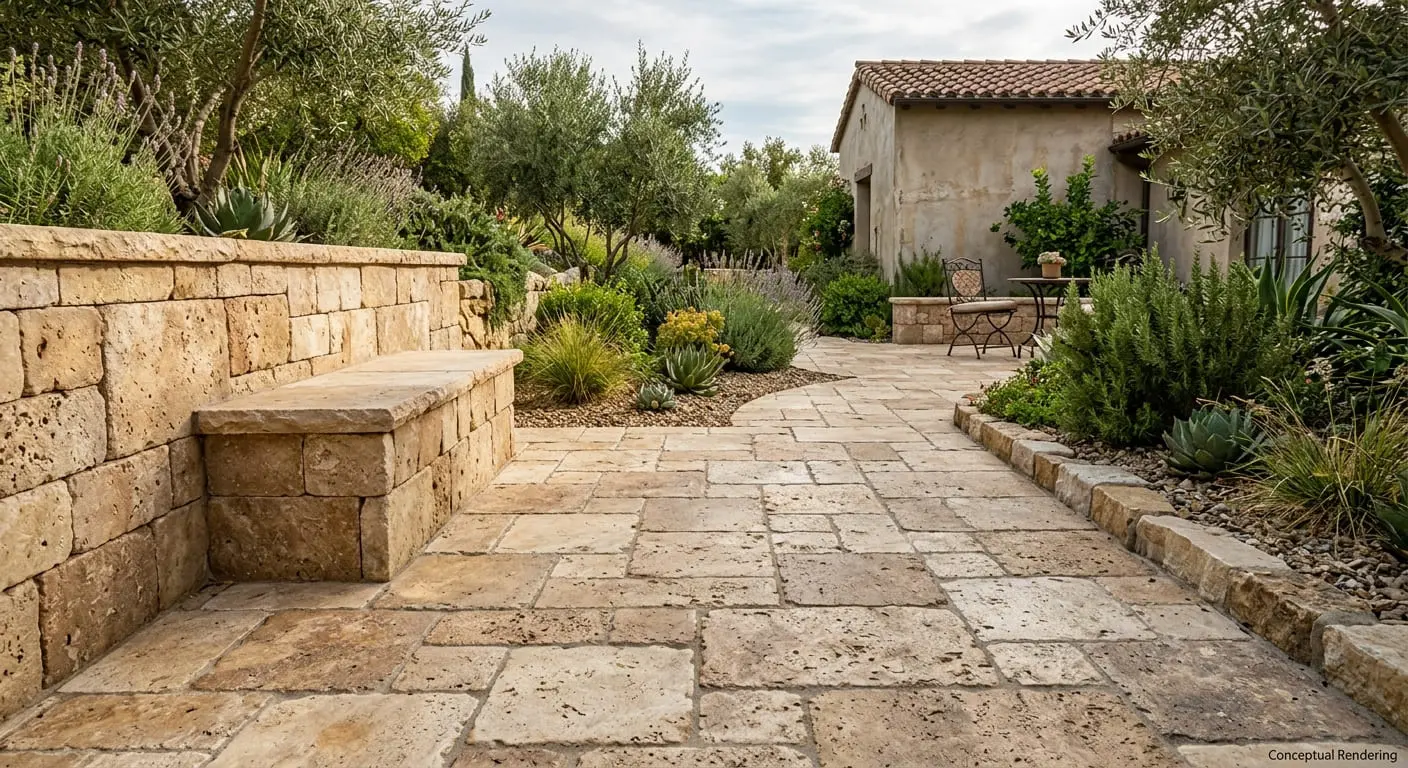
How Much Do Travertine Pavers Cost Compared to Other Options?
Travertine pavers usually cost more than concrete pavers and plain poured concrete, and they often fall in a similar range to porcelain pavers and other natural stone.
The gap between material and installed cost matters. Labor, excavation, base gravel, bedding sand, edging, and joint sand make up a large share of the total, and those costs apply to almost any paver you choose. That means the price difference between travertine and a less expensive paver is often smaller on the final invoice than it looks on a per-piece price sheet.
Several factors move the number up or down:
- Grade: higher grades have fewer fills, cracks, and color inconsistencies.
- Size and format: larger pavers and French pattern sets can cost more per square foot than standard rectangles.
- Finish: honed and brushed surfaces can carry a different price than tumbled.
- Pattern: complex layouts mean more cutting and more labor.
- Site conditions: slopes, removal of old paving, and poor soil add preparation work.
Cost estimates vary by region, so the most reliable figure will always be a written quote from your installer for your specific space. Seeing the stone in person at one of our local showrooms can also help you narrow down grade and finish before you request that quote.
What Are You Really Paying For With Travertine?
With travertine, you are paying for a quarried natural stone with color and texture that run through the full thickness of each piece, rather than a surface coating or dyed concrete. That has a few practical effects.
Color that stays consistent with wear. Because the color is in the stone itself, scuffs and surface wear do not expose a different color underneath. Concrete pavers, by contrast, can show their aggregate as the surface wears, and pigments can fade over years of sun.
Natural variation. Every travertine paver carries its own banding, tone shifts, and pitting. Some homeowners appreciate that variety, while others prefer the uniform look of porcelain or concrete. It helps to view several pieces from the same lot before deciding and to compare them with other tile and natural stone options.
Individual replacement. Pavers laid over a sand and gravel base can typically be lifted and replaced one at a time if a piece cracks or stains, which is harder with poured concrete.
An established track record. Travertine has been used outdoors for thousands of years, including in Roman construction, so its behavior outside is well understood.
Design flexibility. Travertine pairs naturally with pool coping, steps, and wall caps cut from the same stone, so you can carry one material across a whole outdoor space. Contractors and designers sourcing travertine for client projects can apply for a trade account for trade pricing and job-site delivery.
What you are not paying for is a maintenance-free surface. Travertine is softer and more porous than granite or porcelain, and that tradeoff shows up in the upkeep section below.
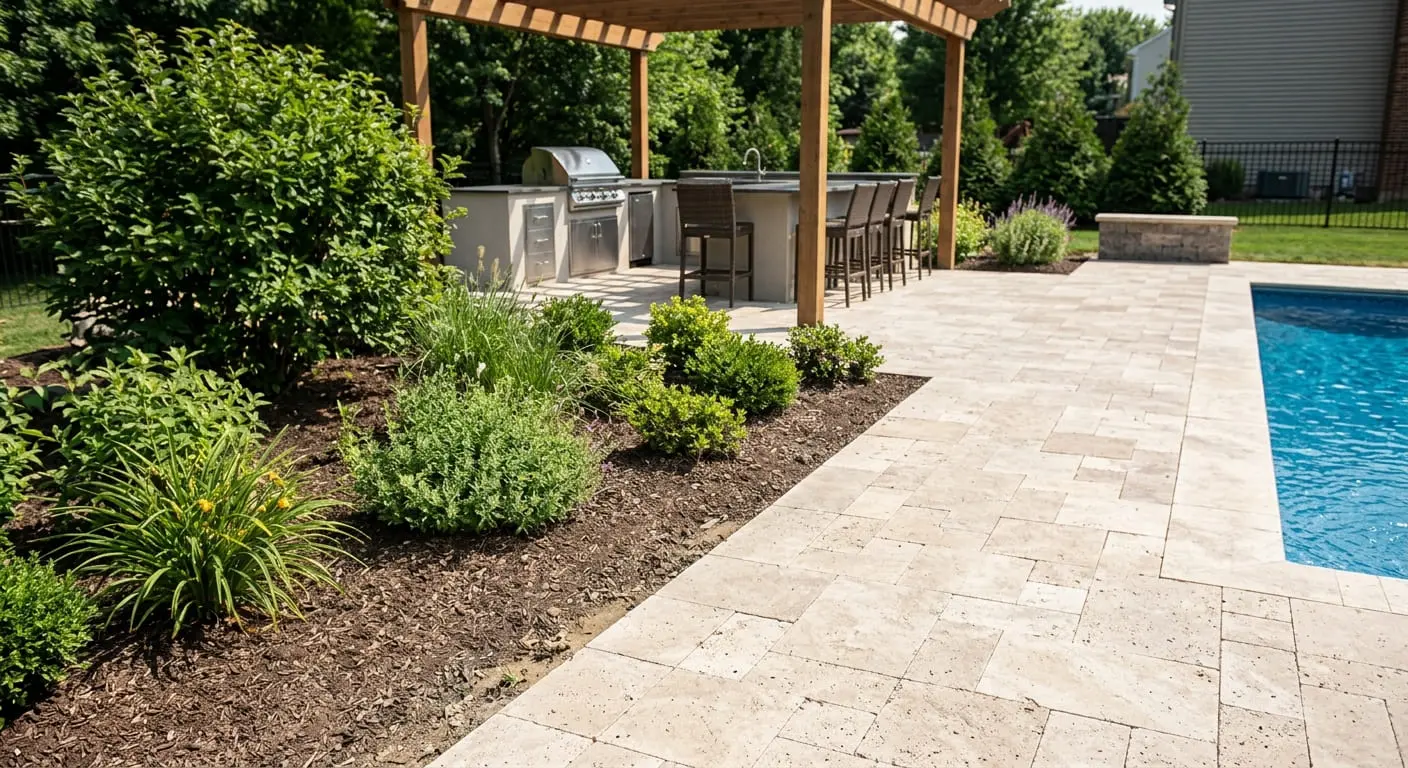
Do Travertine Pavers Stay Cool Around a Pool?
Travertine pavers generally stay cooler underfoot than darker concrete, brick, or dark stone, which is one reason they are often chosen for pool decks. Light colors such as ivory, cream, and beige reflect more sunlight, and the stone’s porous structure is often credited with helping it shed heat faster than dense concrete. On a hot afternoon, that difference can decide whether you walk across the deck barefoot or reach for sandals.
Travertine will still warm up in direct sun, so it is cooler by comparison, not cool to the touch in every condition. Lighter colors perform better than darker ones.
For pool areas, tumbled or brushed unfilled travertine is the usual pick because the textured surface offers better traction when wet than a smooth honed finish. A few other pool-side points are worth knowing:
- Saltwater pools: splash-out can leave salt deposits that contribute to surface wear over time, so rinsing the deck and keeping the stone sealed helps.
- Coping: matching travertine coping gives the pool edge a finished look and keeps the material consistent.
- Drainage: pool decks need a slight slope away from the pool so water does not sit on the stone.
How Do Travertine Pavers Handle Heat and Freezing Weather?
Travertine pavers handle hot, dry summers well and can work in freezing climates, but cold-weather performance depends heavily on stone density, drainage, and sealing. Heat on its own is rarely a problem for travertine. It does not soften or warp in the sun the way some synthetic surfaces can.
Freezing weather is where more care is needed. Because travertine is porous, water can soak into the stone. If that water freezes and expands repeatedly, it can lead to surface flaking (often called spalling) or cracking over time. Several steps lower that risk:
- Choose dense, higher-grade stone. Lower water absorption means less water available to freeze inside the paver.
- Plan for drainage. A well-compacted gravel base and a slight surface slope keep water from pooling on or under the pavers.
- Seal with a breathable, penetrating sealer. A good impregnating sealer slows water absorption while still letting moisture escape.
- Avoid harsh deicers. Many deicing salts and chemicals can damage calcium-based stone. Sand or a stone-safe ice melt is a gentler choice.
In mountain and high-desert areas with frequent overnight freezes, ask about the specific stone’s water absorption and freeze-thaw suitability before you buy, or book a free design consultation to talk through your options with our team. Travertine is used successfully in many cold climates, but it asks for more attention there than granite, porcelain, or concrete pavers.
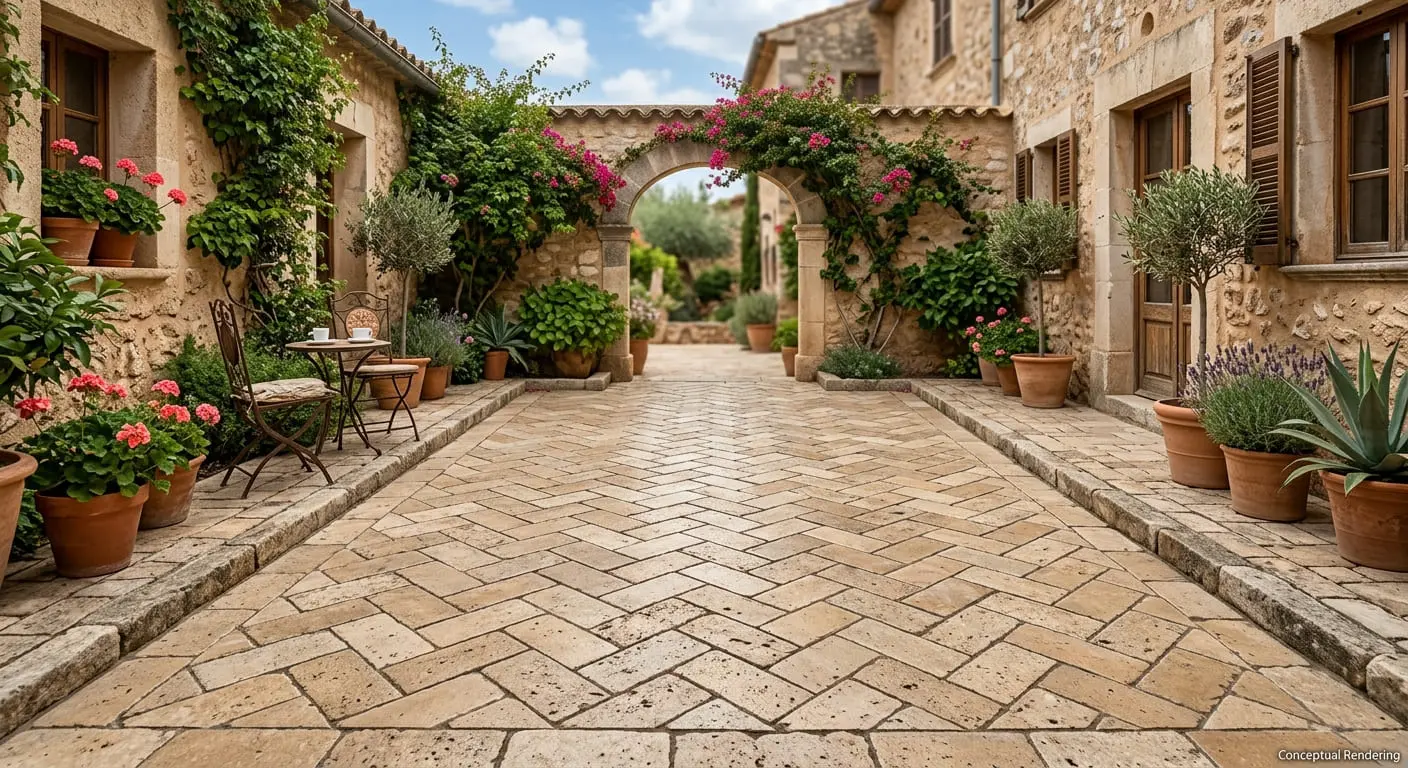
What Upkeep Do Travertine Pavers Need?
Travertine pavers need regular sweeping, occasional washing with a pH-neutral cleaner, and resealing, commonly every two to five years depending on sun, traffic, weather, and the sealer used. The routine is simple, and skipping it is a common reason travertine looks worn sooner than expected.
A basic care routine looks like this:
- Sweep or blow off debris so leaves and dirt do not stain or trap moisture.
- Wash with water and a pH-neutral stone cleaner. Avoid vinegar, lemon-based cleaners, and other acidic products, which can etch calcium carbonate, and skip bleach or other harsh chemicals that can break down the sealer.
- Use a pressure washer carefully, if at all. High pressure close to the surface can erode softer stone and blast out joint sand.
- Wipe up spills promptly. Wine, citrus, soda, and grease are the usual culprits around outdoor kitchens and dining areas.
- Reseal on schedule. A simple test is to sprinkle water on the surface. If it darkens the stone quickly instead of beading, it is likely time to reseal.
- Refresh joint sand as needed to keep pavers locked in place and discourage weeds.
Over time, tumbled travertine develops a softer, weathered patina that some homeowners prefer. New small pits can also appear as wear exposes voids just below the surface, which is normal and part of the material’s character.
When Are Travertine Pavers Not Worth It?
Travertine may not be the best value if your budget is tight, you want a near-zero maintenance surface, or the area sees heavy deicing salt every winter. In those cases, concrete pavers cost less up front, and porcelain pavers absorb very little water and resist stains and etching better. If budget is the main concern, our overstock sale is also worth browsing for discounted materials.
Travertine can also be a weaker fit for:
- Driveways with heavy vehicles, unless the pavers are rated and laid for that load.
- Shaded, damp areas that stay wet and grow moss or algae.
- Outdoor kitchens with constant grease and acidic spills, unless you are prepared to seal and clean diligently.
If you like the look but these concerns apply, a travertine-look porcelain paver is worth comparing side by side.
Conclusion
For most homeowners, travertine pavers are worth the price when the goal is a natural stone patio, pool deck, or walkway that feels comfortable underfoot and develops a weathered look over time. The extra cost over concrete pavers buys you natural stone with color through the full thickness, individual replaceability, and a surface that stays cooler in the sun. In return, you take on regular sealing, gentle cleaning, and extra planning in freezing climates. If those tradeoffs suit how you live, travertine is a good fit. If not, porcelain or concrete pavers may be the better match. Our team is happy to talk through travertine and other paver options with you at our showrooms in Sacramento, Reno, Minden, and Fernley, so you can compare materials in person before you decide.
Note: Some images on this page may be conceptual renderings created to illustrate design possibilities and may not depict actual installations.
Frequently Asked Questions
Yes, travertine pavers usually cost more than concrete pavers for material. Because labor and base preparation make up a large share of any paver project, the difference in total installed cost is often smaller than the material price gap suggests.
Tumbled and brushed travertine pavers offer good traction when wet because of their textured surface, which is why they are common on pool decks. Honed travertine is smoother and offers less grip when wet, so if you prefer that look around a pool, ask about the stone’s slip resistance before you choose it.
Sealing is not strictly required, but it is strongly recommended outdoors. A penetrating sealer slows water and stain absorption, and resealing is commonly recommended every two to five years depending on sun exposure, traffic, weather, and the sealer used.
Unfilled travertine is the more common outdoor choice, especially around pools, because the open pores add texture and grip, and there is no filler to work loose over time. It is more porous, so thorough sealing matters. Filled travertine has a smoother, more uniform look, though the filler can loosen over time outdoors.
They can if water soaks into the stone and freezes repeatedly. Choosing dense, higher-grade pavers, building in good drainage, sealing on schedule, and avoiding harsh deicing salts all lower the risk of cracking or surface flaking.
Sources
- Travertine, Wikipedia: https://en.wikipedia.org/wiki/Travertine
- How Much Do Travertine Pavers Cost?, Angi: https://angi.com/articles/travertine-pavers-cost.htm
- Surface Showdown: Which Is Better, Filled or Unfilled Travertine?, MARBLELIFE: https://marblelife.com/posts/surface-showdown-which-is-better-filled-or-unfilled-travertine
- Effects of Deicing Chemicals in Natural Stone, Natural Stone Institute: https://www.naturalstoneinstitute.org/events/calendar-of-events/effects-of-deicing-chemicals-in-natural-stone
- Stone Durability and Travertine Paving Considerations (140 Broadway), NYC Landmarks Preservation Commission: https://www.nyc.gov/assets/lpc/downloads/pdf/presentation-materials/20190205/140-Broadway.pdf