Yes, pavers are a good choice around a pool. A paver deck is made of individual pieces, so a stained or chipped paver can be lifted out and replaced on its own instead of patching the whole surface. Pool pavers work best when those pieces are made from an outdoor-rated material: granite, quartzite, travertine, or porcelain.
Pool decks face tougher conditions than most outdoor surfaces. Pool restoration owner Chris Papes, quoted in a Use Natural Stone article on poolside surfaces, ranks swimming environments among the harshest anywhere because of the chemicals and constant exposure. That is why the material inside each paver matters as much as the way the deck is built.
Our recommendation for homeowners planning a new or replacement pool deck is to decide on pavers first, then choose an outdoor-rated stone or porcelain from our tile and stone selection. Marble, dolomite, and quartz are not suited to outdoor use, so they stay off the deck.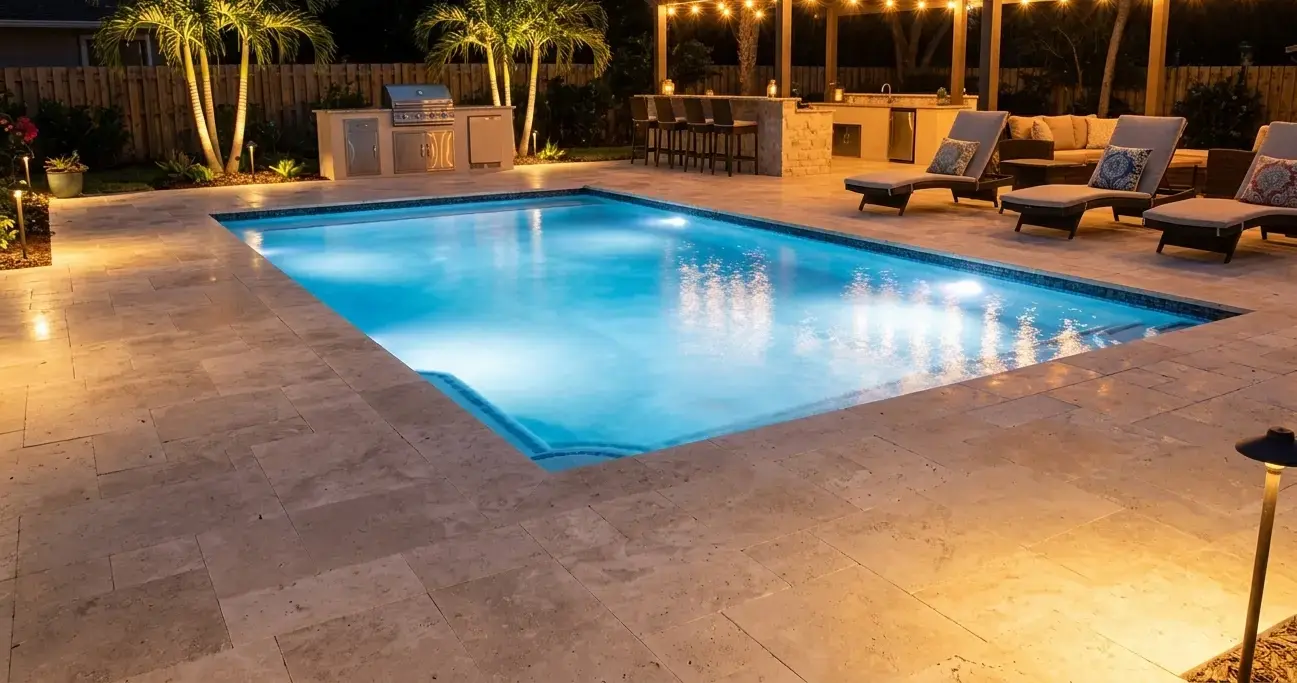
Why a Deck Made of Pieces Suits Pool Life
Pavers can be repaired one piece at a time, and the paving industry has documented how. A technical bulletin from the Interlocking Concrete Pavement Institute compares pavers to a zipper, because a section can be lifted out and put back in place using the same pieces.
The same bulletin notes that, unlike poured concrete or asphalt, a paver surface can be opened and closed without jackhammers. It also leaves no patched-over scar afterward. That guidance was written for interlocking concrete pavers, but stone pavers share the advantage. Pool designer Paolo Benedetti told Use Natural Stone that natural stone can be repaired. Stone and porcelain pavers laid as separate units can also be lifted and replaced the same way.
Around a pool, that flexibility pays off in everyday ways. A dropped tool chips one paver, a spill marks another, or a repair underneath means lifting a strip of the deck. With pavers, each of those is a local fix.
Our advice is to order a few extra pieces along with the deck and store them, so a spare is on hand the day one needs swapping.
Separate pieces also give you design control. Small pavers suit curved pool shapes and tight walkways, while larger pieces make an open deck feel calmer, and our selection runs from small to large format so the size can follow the layout.
Coping: The Piece That Finishes the Water’s Edge
Coping is the part of a paver deck built specifically for pools. It is the run of edge pieces capping the pool wall, and it gets more hands-on contact than the rest of the deck: swimmers grab it, sit on it, and climb out over it.
That same Use Natural Stone feature names the deck, the surround, and the coping as the three places natural stone belongs around a pool. We’d go a step further and choose the coping before the field pavers, since the edge is the part everyone touches first.
Pool coping is part of our exterior stone selection, right alongside the pavers themselves. Natural stone coping is strong, but edges and corners require extra care, so look for coping with a softened or rounded edge wherever people sit.
Some pool plans include a piece that individual pavers can’t cover, like a long spa ledge or a wall cap in one continuous run. For those, our live slab inventory photographs every bundle on our floor, and you can request a quote on a specific bundle once you find a match.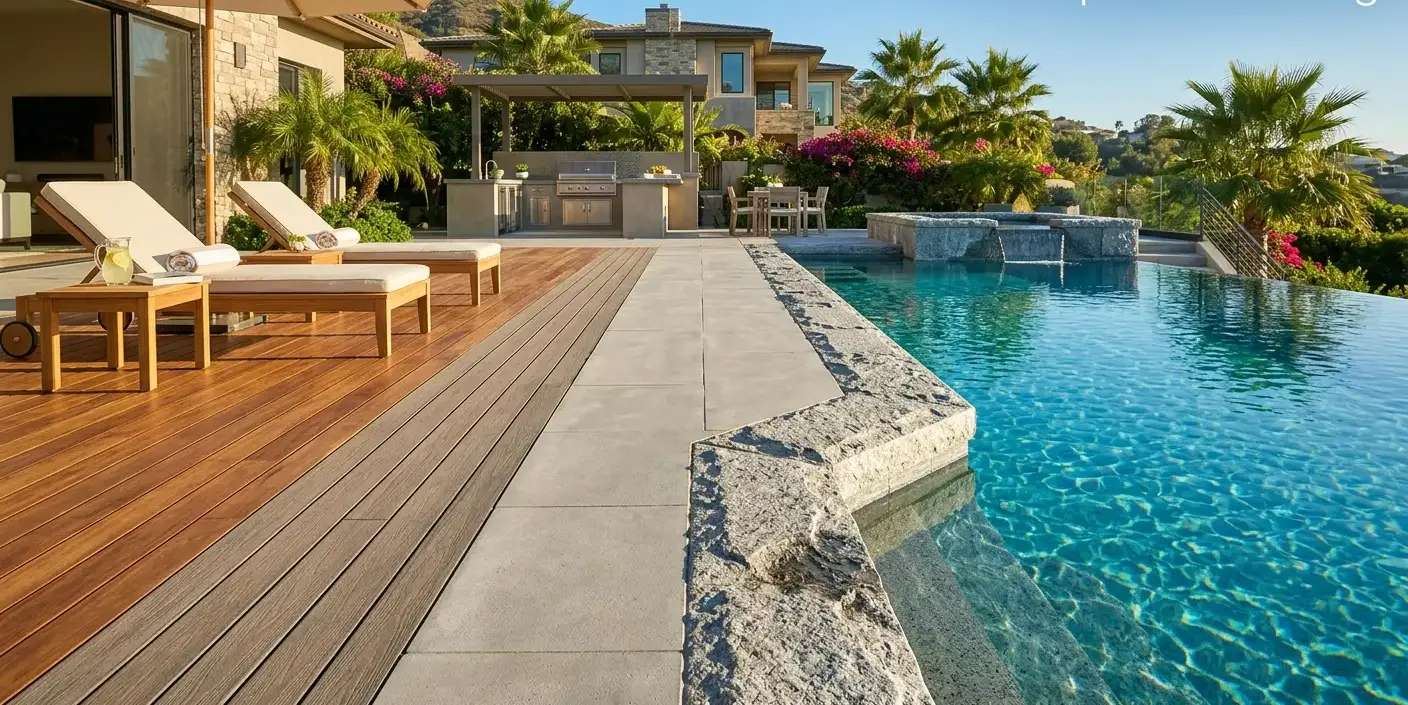
Which of Our Materials Work in Paver Form
Pavers only perform as well as the material they’re made from. In our lineup, four materials are rated for outdoor use: granite, quartzite, travertine, and porcelain.
Granite and Quartzite
Landscape designer Jan Johnsen, who has designed pool surrounds for 30 years, told Use Natural Stone that granite and quartzite are her preferred poolside stones. “They’re durable and don’t retain heat,” she said. Both are a good fit for exterior pool pavers and coping.
Granite is UV resistant, though performance may vary by color and finish. UV resistance is about keeping color from fading, not about surface temperature, so it matters most for a deck that sits in full afternoon sun.
Travertine
Travertine is a classic pool stone and a good fit for outdoor use, with honed, leathered, and specialty finishes to choose from. Every true travertine contains small voids left by gases trapped as the stone formed, a trait a Natural Stone Institute handout on travertine voids treats as normal rather than a defect. Plan on sealing as part of owning it, and Papes recommends cleaning and resealing poolside stone every three to four years.
Porcelain
Porcelain brings predictability to a paver deck. Under the industry definition described in ASTM’s Standardization News, a tile counts as porcelain only if its water absorption tests at 0.5 percent or less, and the Porcelain Tile Certification Agency (PTCA) certifies products against that line.
Porcelain is UV resistant, but performance may vary by color and finish. It also comes in looks that suit a pool, including travertine look, limestone look, and wood look, so you can get a natural-stone style with the consistency of an engineered surface.
Slip and Heat: Choose the Finish With the Stone
Grip and comfort underfoot depend on the finish as much as the stone. Granite, quartzite, travertine, and porcelain all come in honed and leathered finishes, and we’d pick one of those for any surface people walk on wet, saving polished finishes for vertical or covered spots.
For heat, Johnsen’s point that granite and quartzite don’t retain heat is worth weighing wherever people walk barefoot. When you compare options in person, ask how each finish feels underfoot, not just how it looks.
What Stays Off the Deck
Marble and dolomite are beautiful indoors, but we don’t recommend either one for outdoor use. Benedetti also told Use Natural Stone that soft marble breaks down quickly once salt and pool chemicals reach it. Quartz isn’t suited to outdoor use either.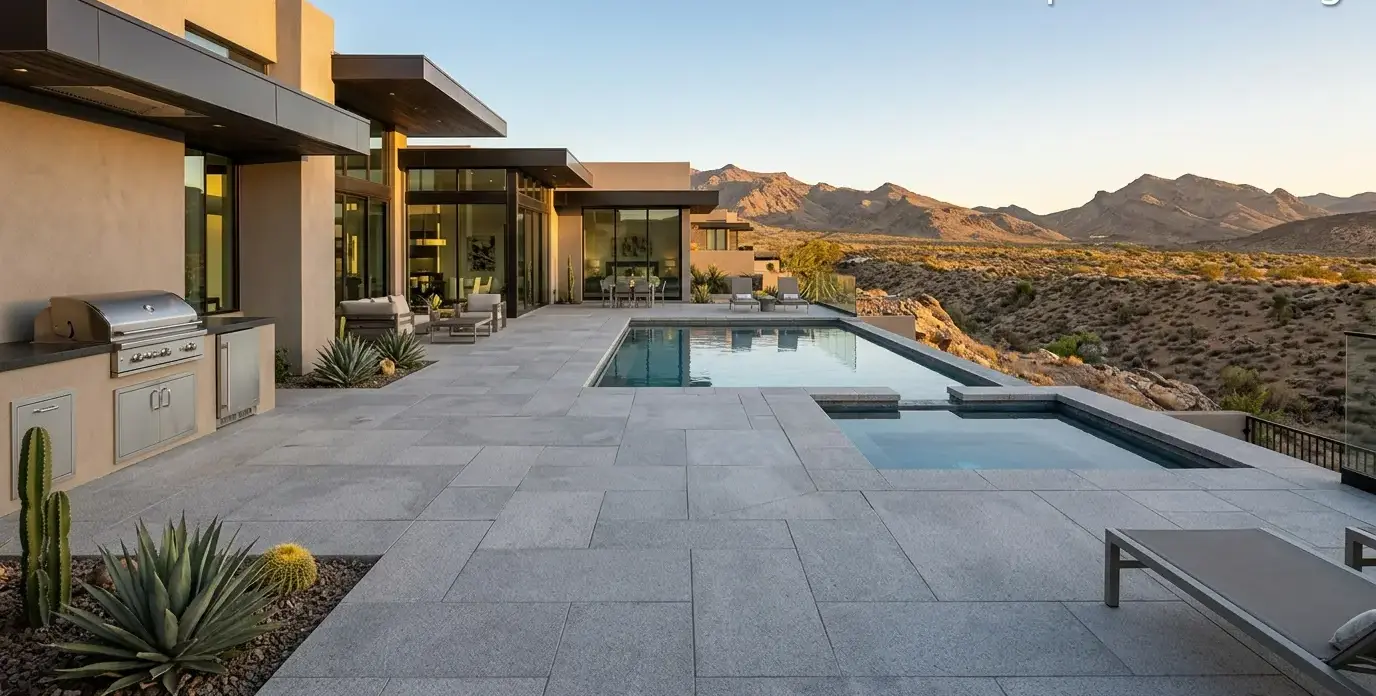
Match the Paver to How Your Pool Gets Used
Pavers can suit very different pools, so we’d let daily use break any tie between materials. Here’s how we’d decide for three common setups.
A busy family pool sees dropped toys, wet feet, and nonstop traffic all summer. Porcelain is our pick here. Its color stays consistent from piece to piece, which keeps a busy deck looking uniform. Tile consultant Ryan Fasan told Pro Builder that porcelain is often the best choice for exterior tile, since many ceramic tiles can’t pass freeze-thaw testing.
A quiet lap pool or a modern design pool rewards a calmer surface. Larger format pavers in granite or quartzite cut down the number of joints you see across the deck, and either stone is a good fit for outdoor use.
A saltwater pool puts chemistry front and center. Benedetti’s warning about soft marble is the reason we steer saltwater owners toward our outdoor-rated stones and porcelain only, and toward a sealing plan for travertine from day one.
If your pool blends these uses, start with the one that happens most often. A deck that suits your busiest week will handle the quiet ones too.
Conclusion
Johnsen’s best advice in that feature is to see stone in real life before choosing, because everyone reacts to it differently. A photo can’t show how a honed travertine or a leathered granite feels underfoot.
That’s why we’d start at a showroom. At Nova Tile and Stone, you can visit the showroom closest to you to compare outdoor stone and porcelain in person, then bring home tile samples of any porcelain you like to see it beside your own pool.
If you want help putting the deck, coping, and surrounding stone together, a free design consultation is the next step, so bring your pool’s measurements or a rough sketch. Our team works from plans, inspiration photos, or just an idea.
Pool builders and contractors are welcome at that consultation too, so bring the plans for the full deck and we’ll help coordinate the pavers and coping for the job.
Note: Some images on this page may be conceptual renderings created to illustrate design possibilities and may not depict actual installations.
Frequently Asked Questions
For repairs, pavers have a clear edge. A section of pavers can be lifted out and put back in place using the same pieces, while a poured surface typically has to be broken up and patched. The right outdoor-rated material still matters just as much.
Yes, and that is the biggest advantage of pavers around a pool. Keep a few spare pavers from your original order so a replacement piece is ready when you need one.
No. Coping is the edge piece that caps the pool wall, while pavers cover the deck around it. Both come in individual pieces, and coping deserves its own decision because it is the part swimmers touch most.
Yes, porcelain is a good fit for outdoor pool areas. True porcelain absorbs 0.5 percent water or less, and it is UV resistant, but performance may vary by color and finish.
It depends on the stone type. One pool restoration specialist recommends cleaning and resealing poolside stone every three to four years, so ask about the needs of the specific stone you choose.