At a Glance
- Ledger stone looks high-end when the material, color, texture, panel layout, and surrounding finishes work together.
- Natural slate, quartzite, marble, and travertine show natural variation, while manufactured stone is lighter and often lower in cost.
- Restrained palettes in soft white, warm gray, or charcoal read calmer than multi-color blends.
- Split-face texture suits fireplaces and feature walls, while honed or low-relief panels are easier to clean on backsplashes.
- Random-length strips, matching L-shaped corner pieces, and wall grazing lighting help a ledger wall look custom.
In This Post
- Is Natural Stone Ledger Better Than Manufactured Stone?
- Which Ledger Stone Colors Look the Most Expensive?
- Should Ledger Stone Be Split-Face, Honed, or Natural Cleft?
- Does Panel Size and Layout Change How Ledger Stone Looks?
- How Do You Make Ledger Stone Fit the Rest of the Room?
- Conclusion
- Frequently Asked Questions
- Sources
Ledger stone looks high-end when five choices work together: natural stone material, a restrained color palette, a texture matched to the space, panels that hide their seams, and finishes that tie it to the rest of the room. Ledger stone, also called stacked stone, is made of thin strips of natural or manufactured stone arranged in horizontal layers and commonly sold as panels around 6 by 24 inches. It is used on fireplace surrounds, accent walls, kitchen backsplashes, and exterior facades.
The details that separate a high-end wall from a builder-grade one are specific. Natural slate, quartzite, marble, and travertine show natural variation that cast stone is designed to imitate. Neutral tones like soft white, warm gray, and charcoal read calmer than multi-color blends. Split-face texture suits fireplaces, while honed panels suit backsplashes. Random-length strips and matching L-shaped corner pieces hide the panel pattern, and wall grazing lighting brings out the stone’s shadows.
Below, we break down each of the five factors and what to look for when comparing ledger options.
1. Is Natural Stone Ledger Better Than Manufactured Stone?
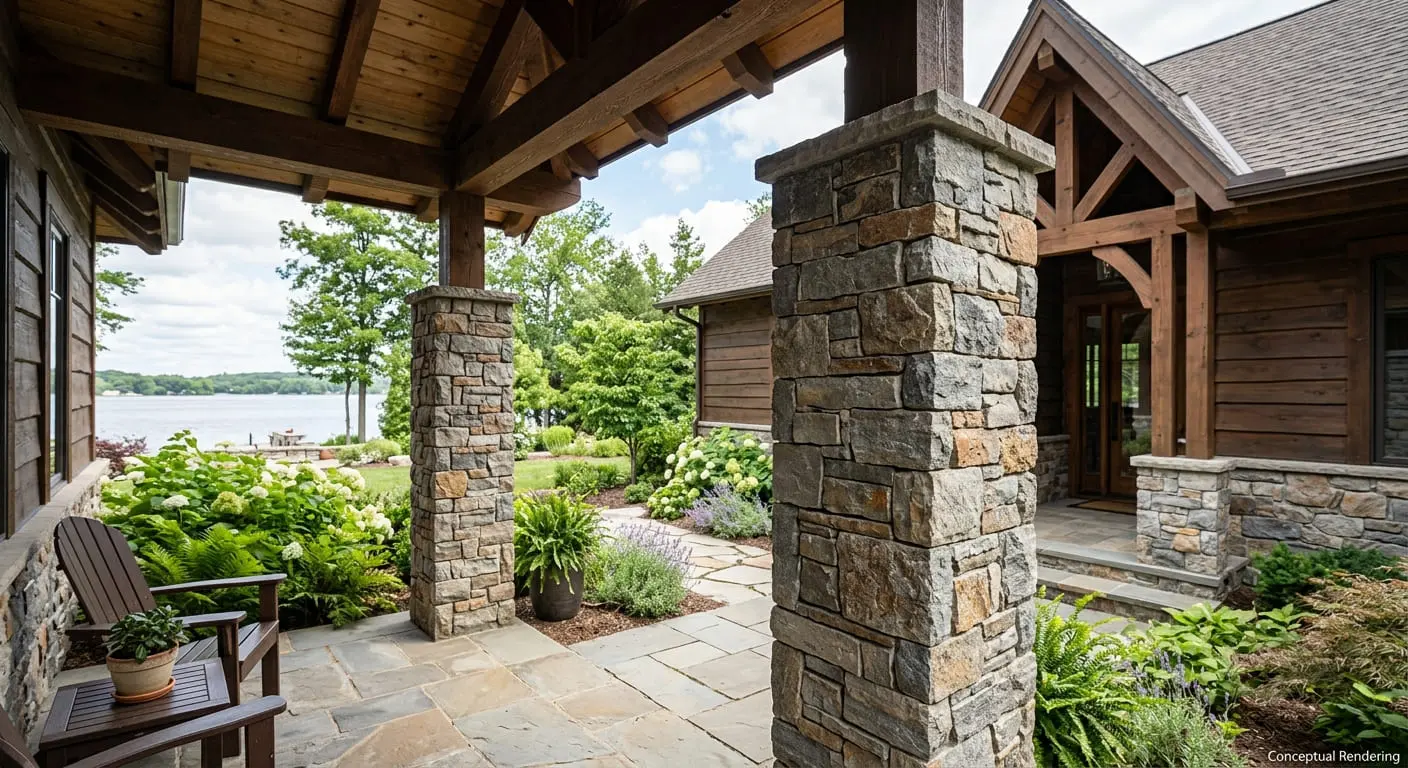
For a high-end look, natural stone ledger usually has the edge, because its variation comes from the stone itself rather than a mold. The material is the first decision, and it shapes every choice that follows.
Natural stone ledger panels are made from quarried stone such as slate, quartzite, marble, travertine, and limestone. The stone is split or cut into thin strips, then bonded together, often on a mesh or other backing, to form a panel. Manufactured stone, often called cultured or faux stone, is typically cast from cement, aggregates, and pigments in molds shaped from real stone.
Here is why natural stone tends to read as more upscale:
- Real variation. Each strip carries its own mineral pattern, sheen, and edge, so panels differ from one to the next. Molded products repeat shapes, and on a large wall the same “stone” can appear several times.
- Color through the material. Natural stone’s color comes from its minerals, not a coating, so a chip shows more stone rather than concrete. On many manufactured products, color is applied as a surface layer, so a chip can expose the gray concrete underneath.
- Character by stone type. Slate brings layered, often darker tones. Quartzite ranges from golden tones to gray and black, and some varieties carry a subtle shimmer. Marble tends to read as more refined, especially in white and gray varieties. Travertine adds warmth and a softer, pitted texture.
Manufactured stone has real advantages too. It is lighter, more uniform from box to box, and often lower in cost, which can matter for large exterior areas. If you choose it, look for products with many mold variations, so repetition is harder to spot, and color mixed through the material rather than applied only to the surface. When budget is part of the decision, it is also worth browsing our overstock sale for discounted materials before you choose.
2. Which Ledger Stone Colors Look the Most Expensive?
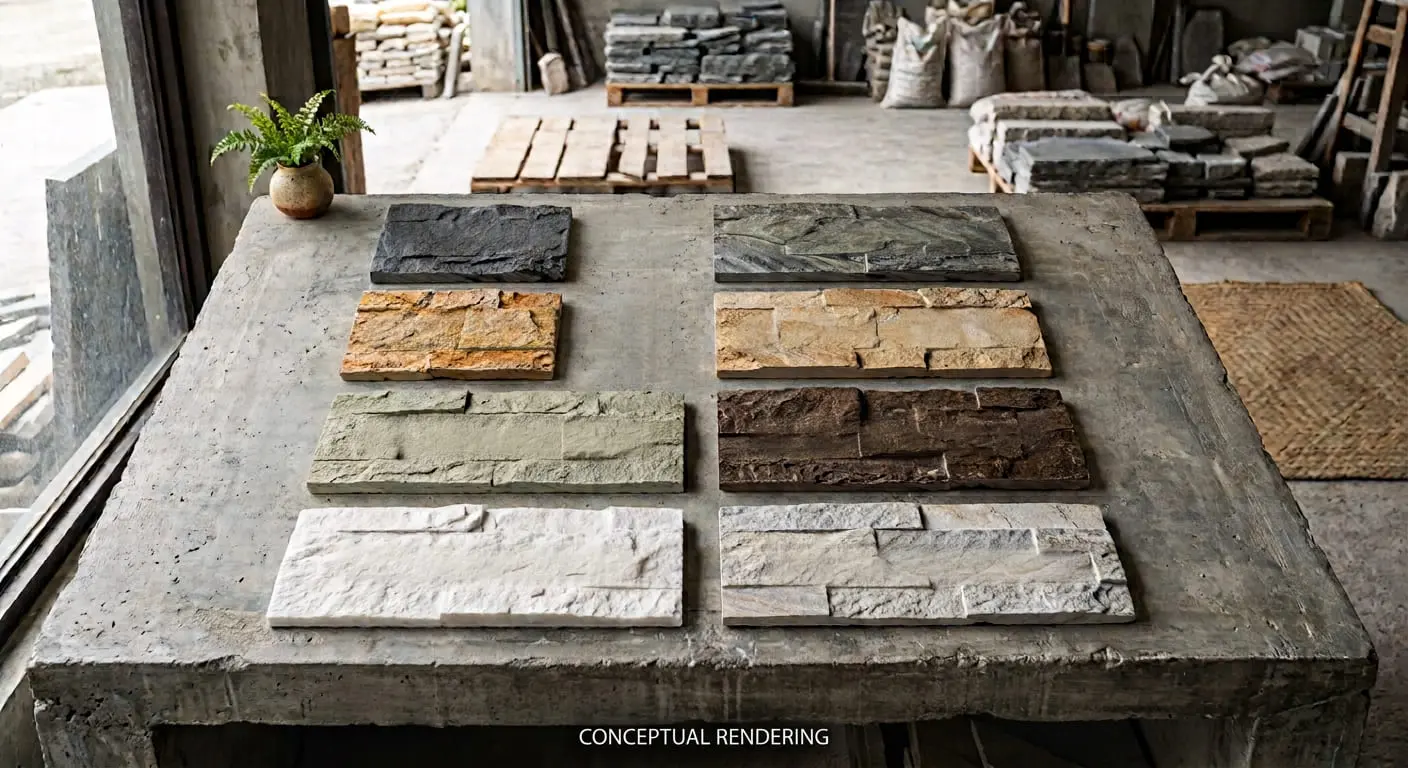
Restrained palettes look the most expensive: one or two closely related tones read as calm and custom. Soft whites, warm grays, charcoal, and honey-beige neutrals are reliable choices because they let the texture carry the design.
Multi-color blends that mix rust, gold, gray, and black in every panel can look busy across a full wall. If you love a blend, choose one where the colors stay in the same temperature family, all warm or all cool.
A few practical checks help when comparing colors:
- Look at more than one panel. Natural stone varies by quarry lot. A single display panel may not show the full range, so ask to see several panels laid out together at one of our local showrooms.
- Check undertones. Hold the stone next to your flooring, cabinet, or countertop samples. A gray stone with green undertones can clash with warm wood, even when both look neutral alone. Bringing those samples to a free design consultation makes the comparison easier.
- View it in your light. North-facing rooms make stone look cooler, while warm bulbs and afternoon sun pull out golds and beiges. Photos of your room at different times of day help you compare panels against the light they will actually sit in.
Consistency matters as much as the color itself. When the whole surface shares a steady tone with gentle variation, the eye reads it as one deliberate material rather than a patchwork.
3. Should Ledger Stone Be Split-Face, Honed, or Natural Cleft?
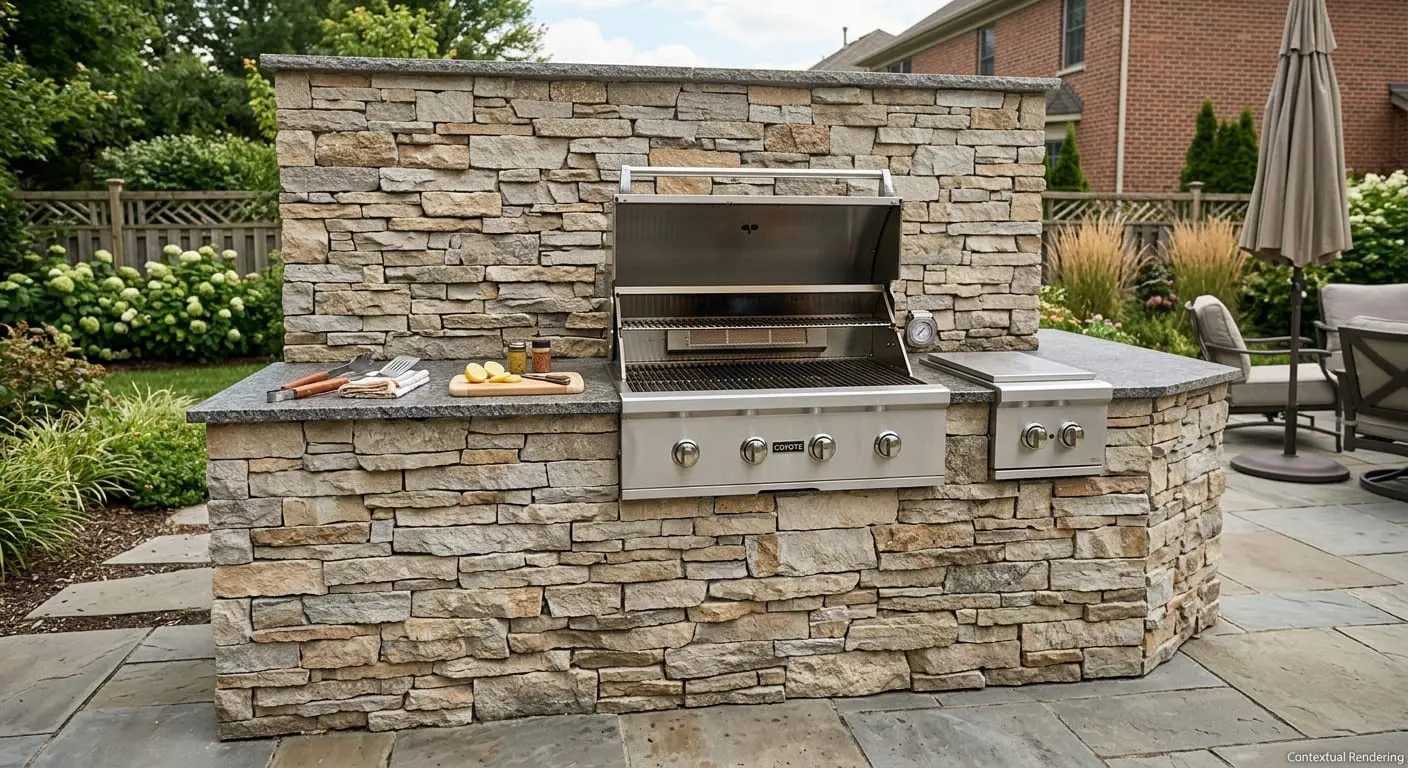
The right finish depends on where the stone goes: deeper relief suits surfaces seen from a distance, while flatter faces suit areas that need regular cleaning. Matching texture to the space is what makes ledger stone look intentional.
The most common ledger finishes are:
- Split-face. The stone is broken rather than cut, leaving a rough, irregular face with deep relief.
- Natural cleft. The surface follows the stone’s natural layers, common with slate and quartzite.
- Honed or smooth. The face is ground flat to a matte finish for a cleaner, more modern look.
- Mixed-depth or 3D. Strips sit at different depths, so some project farther than others and create strong shadow lines.
Deep texture creates shadows, and shadows give a wall depth. That is why split-face and mixed-depth panels work well on fireplaces, entry walls, and tall feature walls, where people view the surface from across the room.
The same texture can work against you up close. Behind a cooktop or sink, deep crevices collect grease and splashes and are harder to wipe down. A honed or low-relief panel keeps the stone look while making cleanup easier. Smoother finishes also tend to suit bathrooms and modern spaces, where a quieter surface fits the design.
Scale the texture to the room as well. Very deep relief in a small powder room can feel heavy, while a subtle cleft face adds interest without crowding the space. In a large living space, a flat finish can disappear, so more relief often looks better there.
4. Does Panel Size and Layout Change How Ledger Stone Looks?
Yes. Panel design decides whether a finished wall reads as stacked stone or as rows of identical panels. The less visible the panel pattern, the more custom the wall looks.
Many ledger panels measure about 6 by 24 inches, and some lines offer larger formats. Within each panel, the way the strips are arranged makes a big difference:
- Uniform strips create a regular rhythm. On a large wall, the eye can pick out where each panel starts and stops.
- Random-length strips with staggered ends blur the panel edges, so the surface looks like individually stacked stone.
- Thin strips give a fine, linear look that suits modern and transitional spaces.
- Thicker, chunkier strips read as more rustic and work well in mountain, farmhouse, and lodge-style homes.
Corners are one of the most overlooked details. At outside corners, such as the edges of a fireplace or column, the cut ends of flat panels can show. Many ledger lines offer matching L-shaped corner pieces that wrap the corner so the stone appears solid all the way around. When comparing products, check whether your favorite option has matching corners in the same color and finish. Designers and contractors comparing products across several projects can apply for a trade account for trade pricing and job-site delivery.
Finally, think about proportion. A tall two-story fireplace can handle larger panels and bolder strips. A short backsplash between counters and upper cabinets usually looks better with finer strips, since there is less height to show the pattern.
5. How Do You Make Ledger Stone Fit the Rest of the Room?
Ledger stone looks most high-end when it is treated as one focal point and tied to the finishes around it. Even a well-chosen stone can look out of place if it competes with everything around it.
Start with restraint. Ledger stone has strong texture, so one statement surface, such as a fireplace, a single accent wall, or a range backsplash, usually has more impact than stone on several walls. When every wall is textured, nothing stands out.
Next, connect the stone to your other materials:
- Flooring. Pick a stone whose undertone works with your hardwood, LVP, or tile. Warm travertine pairs naturally with honey and white oak tones, while charcoal slate sits well beside gray or ebony floors.
- Countertops and hearths. A smooth, polished surface next to rough stone creates contrast that makes both look deliberate. A stone slab hearth or countertop in a related color ties the room together.
- Wood and metal accents. A wood beam mantel, black steel, or brass fixtures add a second texture that frames the stone.
Lighting is the last piece. Light placed close to the wall and aimed along its face, a technique called wall grazing, pulls out every shadow and ridge in the stone. Light placed farther away and spread evenly across the wall, called wall washing, flattens the texture. If your plan includes recessed or accent lighting, place it so it grazes the stone rather than washing over it head-on.
When the stone, the surrounding finishes, and the light all support each other, the wall looks designed rather than added on.
Conclusion
A high-end ledger stone wall comes down to five connected choices: the right material, a restrained and consistent color, a texture suited to the space, panels and corners that hide the pattern, and a clear connection to the rest of the room. None of these depend on spending the most money. They depend on choosing with the whole space in mind.
The best way to judge ledger stone is in person, where you can see the texture catch the light and compare several panels side by side. You can do that at our showrooms in Sacramento, Reno, Minden, and Fernley, where ledger panels sit alongside the flooring, tile, and slabs you may want to pair with them. Our team can check current stock on a specific stone and help you compare colors, finishes, and panel styles so the finished fireplace, backsplash, or feature wall matches what you have in mind.
Frequently Asked Questions
In most cases, there is no real difference. “Ledger stone,” “stacked stone,” and “ledger panels” are used interchangeably for thin stone strips arranged in horizontal layers. In manufactured stone veneer, though, some brands use “stacked stone” for a tight, uniform profile and “ledgestone” for a more rugged one with stones of varying lengths and depths, so check the product photos rather than relying on the name.
It depends on the product. Natural ledger stone is made from quarried stone such as slate, quartzite, marble, travertine, or limestone. Manufactured ledger stone is cast from cement, aggregates, and pigments to imitate real stone. Porcelain ledger panels made to look like stone are also available. Product descriptions usually state which type you are looking at.
Yes, ledger stone can work as a backsplash, especially as a feature wall or range hood surround. Its ridges can trap grease and splashes, so directly behind a cooktop or sink, a honed or low-relief panel is easier to wipe clean than a deep split-face texture. Natural stone in a kitchen should also be sealed and resealed as the sealer manufacturer recommends. Near a cooktop, also follow the panel manufacturer’s guidance and your appliance’s clearance requirements.
Many natural stone ledger products benefit from sealing, especially more porous stones like travertine, limestone, and some marbles, or stone used in kitchens, bathrooms, and outdoor areas. A sealer helps the surface resist stains and moisture. Requirements vary by stone type, so check the product’s care instructions. For outdoor walls, also confirm the specific panel is rated for exterior use, since sealing alone does not make an interior product suitable outside.
Modern spaces usually suit ledger stone with thin, linear strips, a honed or subtle cleft finish, and a restrained palette such as white, light gray, or charcoal. Pairing it with smooth surfaces like plaster, polished countertops, or black metal keeps the look clean and current.
Sources
- Stone Product Questions, Floor & Decor Help Center: https://www.flooranddecor.com/help-center+product-questions+help-product-stone
- Is Stone Veneer Colored All the Way Through?, Mountain View Stone: https://mountainviewstone.net/blogs/carved-in-stone/is-stone-veneer-colored-all-the-way-through
- How Much Does Stone Veneer Weigh?, Mountain View Stone: https://mountainviewstone.net/blogs/carved-in-stone/how-much-does-stone-veneer-weigh
- All About Stone Veneer, This Old House: https://www.thisoldhouse.com/masonry/all-about-stone-veneer
- Manufactured Stone vs. Natural Stone, Builders Ontario: https://buildersontario.com/manufactured-stone-vs-natural-stone/
- Kitchen Applications Gallery, Norstone: https://www.norstoneusa.com/gallery/application/kitchen/
- Should You Seal Your Natural Stone Backsplash Tile?, MSI: https://msisurfaces.com/blogs/post/2018/07/25/tips-from-the-trade-should-you-seal-your-natural-stone-backsplash-tile.aspx
- Rustic Backsplash Ideas That Survive a Working Kitchen, Block Renovation: https://www.blockrenovation.com/guides/rustic-backsplash-ideas-that-survive-a-real-kitchen
- Wall Washing vs. Wall Grazing, 1000Bulbs: https://blog.1000bulbs.com/home/wall-washing-vs-wall-grazing