Black Quartz Countertop

A black quartz countertop is an engineered stone surface composed of approximately 90–95% natural quartz crystals bound with resin and pigments to achieve a rich, deep finish. Unlike natural stone, black quartz is non-porous, making it highly resistant to staining, scratching, and bacterial growth which is why it consistently ranks among the most sought-after countertop materials for kitchens and bathrooms. 

Its uniform, deep coloring delivers a sleek, contemporary look while requiring far less maintenance than granite or marble. Whether you are remodeling a modern kitchen or elevating a bathroom vanity, a black quartz countertop offers the ideal balance of durability, aesthetics, and long-term value.

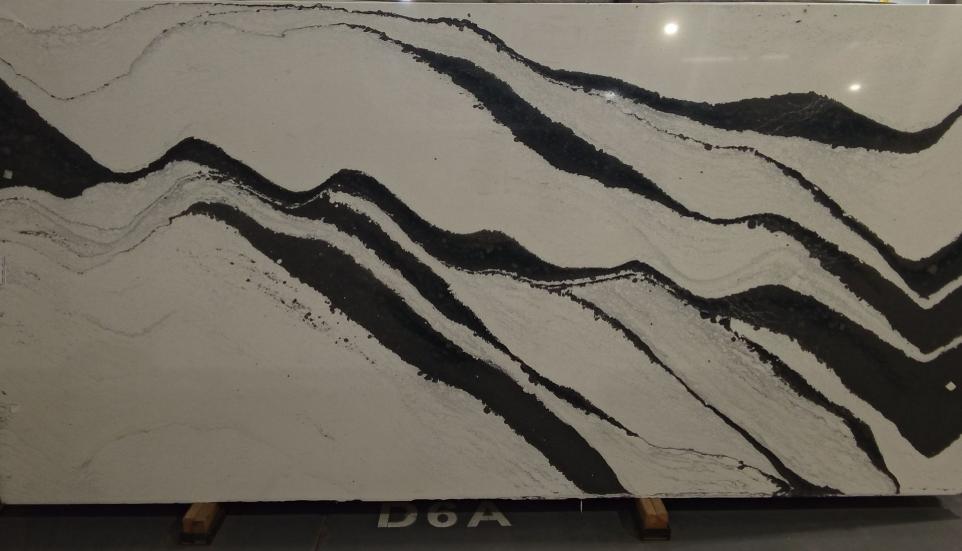
Bentley 
(quartz)


For a refined take on black quartz, the Bentley slab is a stunning example featuring a sophisticated touch of black that adds depth and elegance to any space. Click the button below to explore our full collection of slabs.

White quartz slab with bold black veining

Thickness:  2.0 cm

Finish: Polished

Store Location: Sacramento, CA

Warehouse: D6A.8

The Enduring Appeal of Black Quartz in Modern Interiors

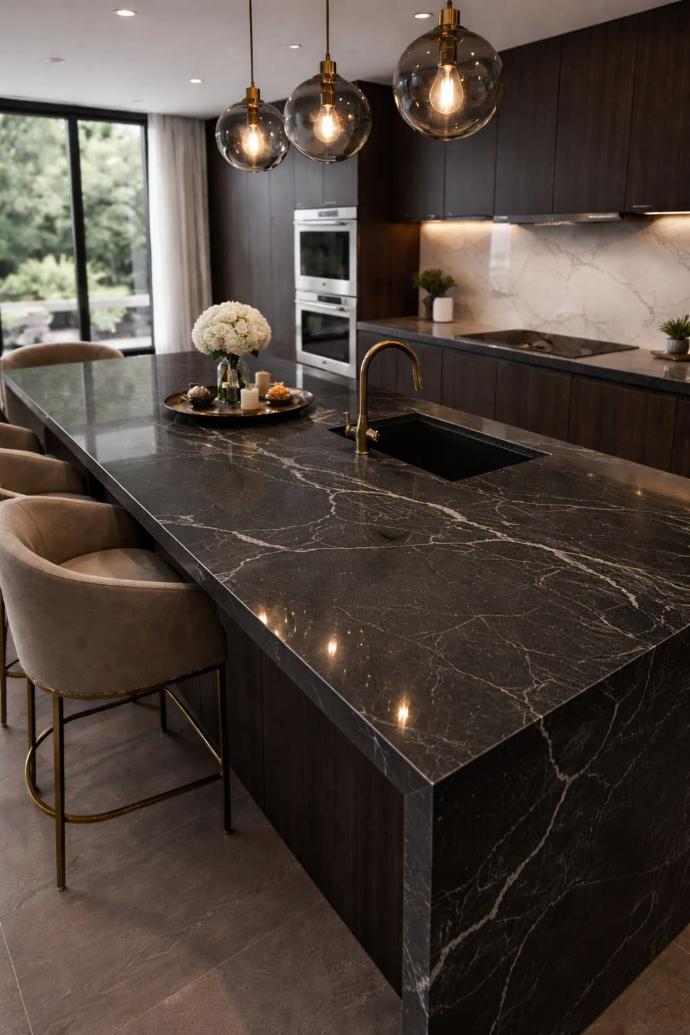
Black quartz countertop kitchen island with white veining and gold faucet

    It have become a defining feature in contemporary interior design, and for good reason. Their bold, dramatic tone creates a striking contrast against light cabinetry, stainless steel appliances, and warm wood finishes, giving any space an elevated, high-end appearance

    Unlike trends that fade quickly, the deep richness of black quartz carries a timeless quality equally at home in minimalist, industrial, and transitional design styles. Beyond aesthetics, the consistent coloring throughout the slab means that chips or minor surface wear are far less visible compared to lighter countertop materials, helping maintain that polished look over years of daily use.

Why Black Quartz Outperforms Other Countertop Materials

When comparing countertop options, black quartz stands out for its exceptional performance characteristics. Because it is an engineered material, each slab is manufactured to precise standards, eliminating the natural inconsistencies that can affect granite or quartzite. 

Its non-porous surface means liquids, oils, and acidic substances such as coffee, wine, and citrus juice cannot penetrate the material making it one of the most hygienic countertop choices available. It also resists heat to a moderate degree, though using trivets is always recommended to preserve the resin binders. For homeowners and designers who want a surface that looks exceptional and holds up to real-life demands, black quartz is a clear frontrunner.

Choosing the Right Black Quartz Countertop for Your Space

Selecting the right black quartz countertop involves considering both finish and thickness. Polished finishes reflect light and enhance the depth of the black tone, making them ideal for kitchens where visual impact is a priority. Honed or matte finishes offer a softer, more understated look that works beautifully in bathrooms and laundry rooms

Slab thickness typically ranges from 2 cm to 3 cm, with 3 cm being the standard for kitchen countertops due to its added strength and visual weight. Edge profiles from simple eased edges to more elaborate ogee or waterfall styles further customize the final look to suit any design vision.

Read our blog to learn more about slabs and find the perfect surface for your space:

Your Dynamic Snippet will be displayed here... This message is displayed because you did not provided both a filter and a template to use.

Frequently Asked Questions

It can withstand moderate heat, but prolonged direct exposure to high temperatures may damage the resin binders. Always use trivets or heat pads when placing hot cookware on the surface.

Quartz rates 7 on the Mohs hardness scale, making it highly scratch-resistant. Using a cutting board is still recommended to preserve the finish over time.

A soft cloth with mild dish soap and warm water is all you need. Avoid abrasive scrubbers or harsh cleaners, and no sealing is required.

On polished surfaces, fingerprints and water spots can be more noticeable. A quick wipe with a damp microfiber cloth easily restores its clean appearance.

Granite requires periodic sealing and may vary across slabs. Engineered quartz offers more consistent coloring, needs no sealing, and delivers superior stain resistance with less upkeep.