Skip to Content
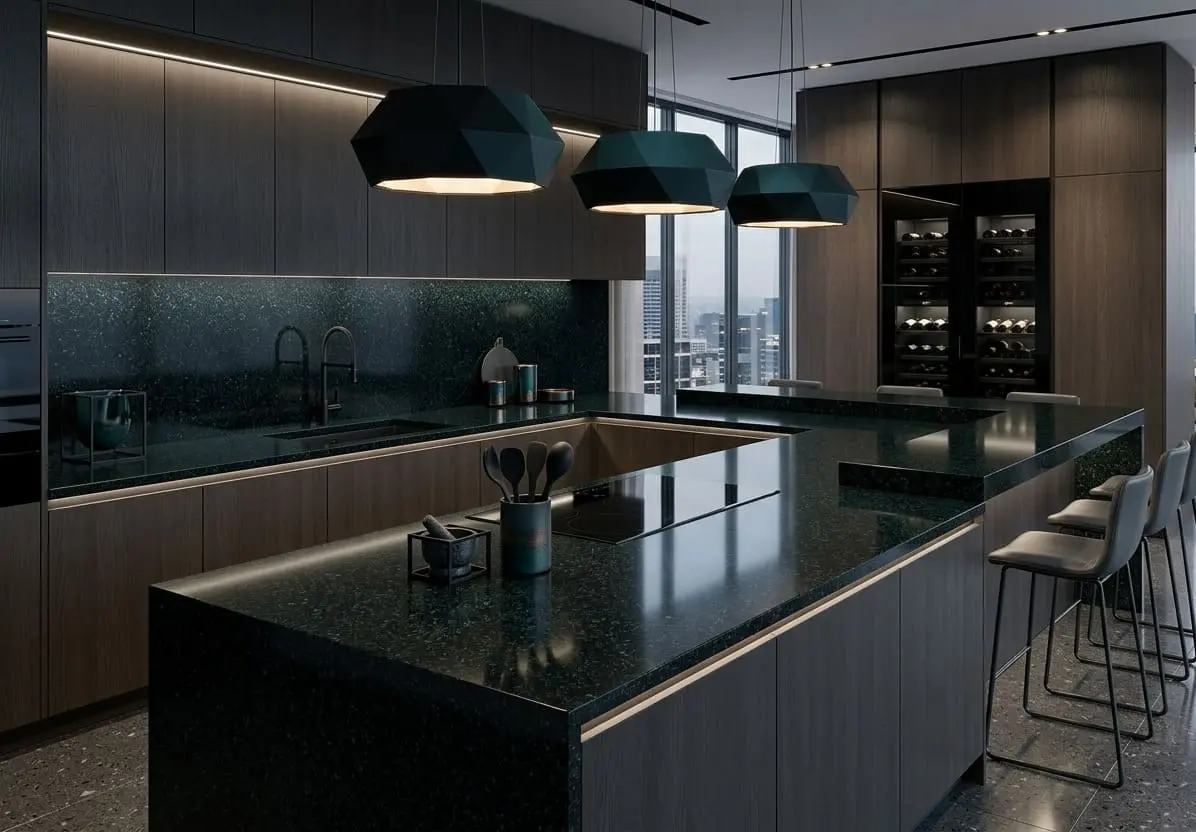
Conceptual rendering of sleek kitchen with jet black granite countertops and island Conceptual rendering

Black Countertop

Natural Stone and Engineered Stone Options for Every Space


Explore Premium Stone Slab Options

Black countertop is a surface slab made from natural stone or engineered stone, used in kitchens, bathrooms, floors, walls, and fireplace surrounds to deliver a bold, sophisticated aesthetic. As one of the most searched countertop materials, black stone slabs are increasingly specified in residential kitchen remodels and commercial interior projects. 


Natural stone options, including black granite, quartzite, marble, and dolomite, tend to be porous and generally benefit from periodic sealing. Engineered options, including quartz composite, porcelain slab, and sintered stone, are manufactured to be dense and low-maintenance, with most offering non-porous surfaces that typically do not require sealing.


Because these two material categories differ in how they look, perform, and are maintained, selecting the right black slab for countertop comes down to where it will be installed, how much upkeep it requires, and the surface finish chosen.

Applications of Black Slabs for Countertops

Before comparing materials, it helps to understand where black slabs are most commonly used and what role it plays in each space.

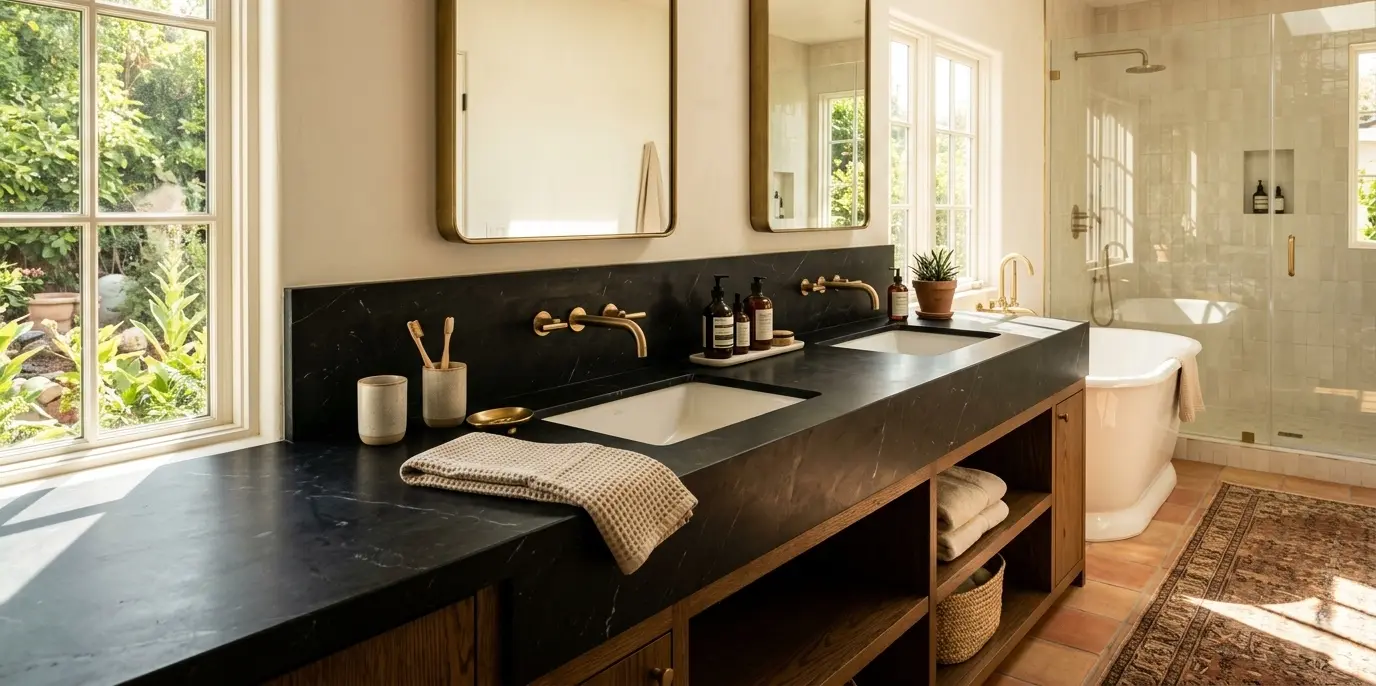
Conceptual rendering of honed deep black marble slab installed as bathroom vanity

Kitchen Design

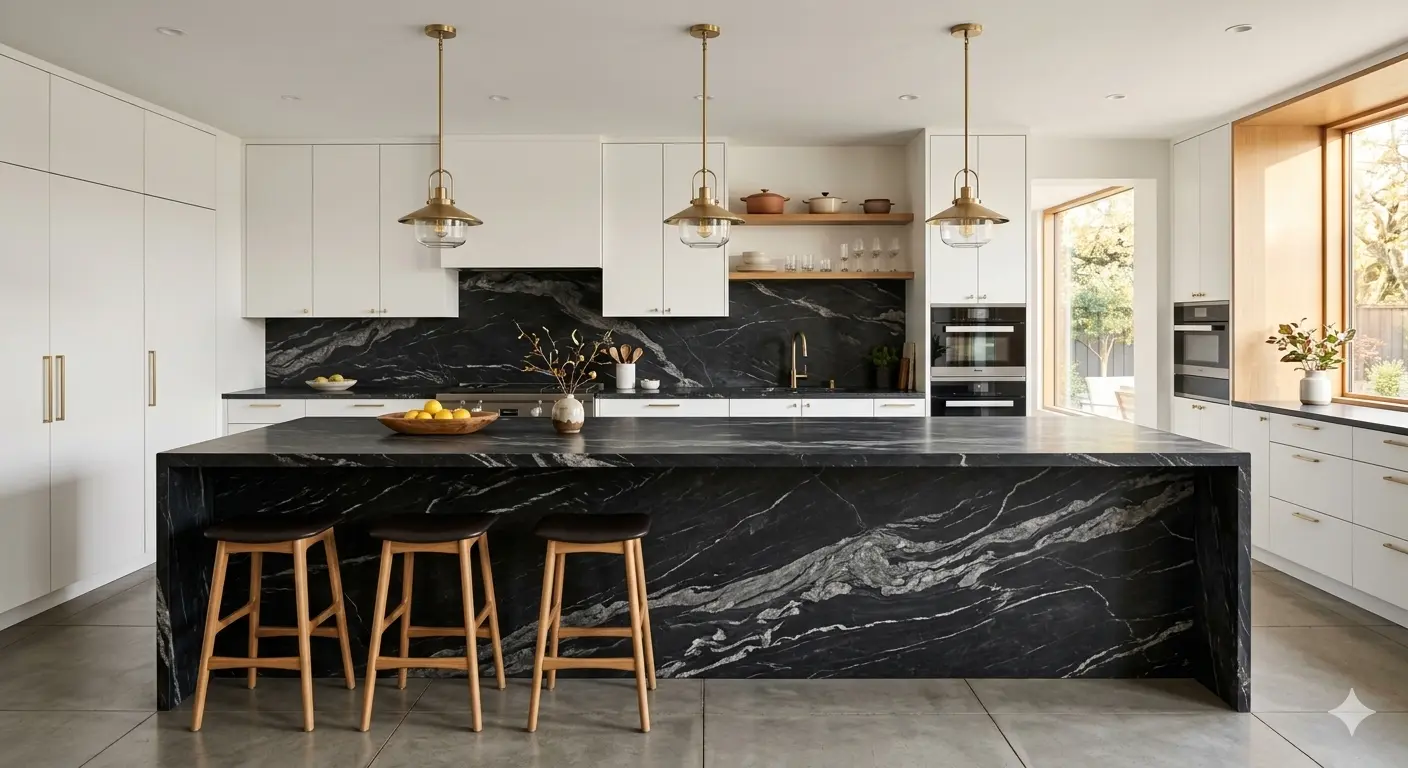
The kitchen is among the most popular spaces for black countertop slabs. Paired with light-colored cabinetry, it can create a high-contrast aesthetic, while dark wood pairings deliver a more dramatic effect. Black quartz and black granite are widely selected for kitchen remodel projects, available in polished, honed, and leathered finishes.

Bathroom Vanity

In bathroom design, this surface can add refinement to vanity areas. It tends to complement brushed metal fixtures and matte finishes, and is often associated with a composed, spa-like atmosphere.

Fireplace Surrounds and Mantels

As a fireplace surround or mantel, this type of slab can create a commanding focal point. Whether used as a full surround or a streamlined shelf, it can bring a refined, architectural quality to living areas.

To explore premium slab options for these applications, visit our website and learn more about sustainability considerations through the Natural Stone Institute’s guide to environmental and health product labels for natural stone.

Performance and Technical Specifications

Understanding how a material performs over time is as important as knowing where it will be used. Performance varies between natural stone and engineered stone, and each is evaluated differently.

Natural Stone Slab for Countertop

Natural stone options, including black granite, quartzite, marble, and dolomite, are quarried directly from the earth. Because each slab forms naturally, its appearance can vary in veining and color depth even within the same stone type.


PEI Rating

Because natural stone is unglazed, a natural stone cannot be tested under the PEI system and receives a PEI NR designation, meaning not rated. Durability is instead evaluated through standards such as the Mohs hardness scale. For specific data, refer to the individual product specification sheet.


Stain Resistance

Natural stone is generally porous, so stain resistance on a black countertop depends on the stone type and slab density. Granite tends to be among the more resistant options, while marble and dolomite are more vulnerable to etching from acidic substances such as vinegar, wine, and citrus. Polished surfaces tend to be more stain-resistant, while honed and leathered finishes may benefit from more frequent countertop sealing.


Slip Resistance

Slip resistance is measured using the Dynamic Coefficient of Friction (DCOF), tested per ANSI A326.3, with a minimum of 0.42 required for interior wet floors. Polished natural stone tends to fall at or below this threshold, while honed and leathered finishes typically offer better traction. Always consult product-specific DCOF data before specifying natural stone for different applications.

Engineered Stone Slab for Countertop

Unlike natural stone, engineered stone slabs are manufactured for consistent color and density. Each engineered slab tends to be more uniform in composition, though some variation may occur depending on the product and manufacturer.


PEI Rating

Glazed porcelain slabs carry PEI classifications indicating suitability for different traffic levels. Unglazed through-body porcelain, sintered stone, and quartz composite do not receive PEI ratings as none have a surface glaze to test. Always confirm the applicable wear rating with your supplier before installation.


Stain Resistance

Fully vitrified porcelain, quartz composite, and sintered stone are generally considered non-porous and known for strong stain resistance, making an engineered black slab practical for high-use environments. Sealing is typically not required, though confirming with the manufacturer is recommended.


Slip Resistance

The same DCOF standard applies to an engineered stone such as black slabs commonly used for countertops. Matte and structured finishes tend to provide better traction than polished surfaces. Always confirm the DCOF rating with your supplier before installation
For additional industry resources and educational events, visit the Natural Stone Institute’s calendar of stone industry events and technical programs, or request project-specific pricing through our slab quote request form for engineered and natural stone materials.

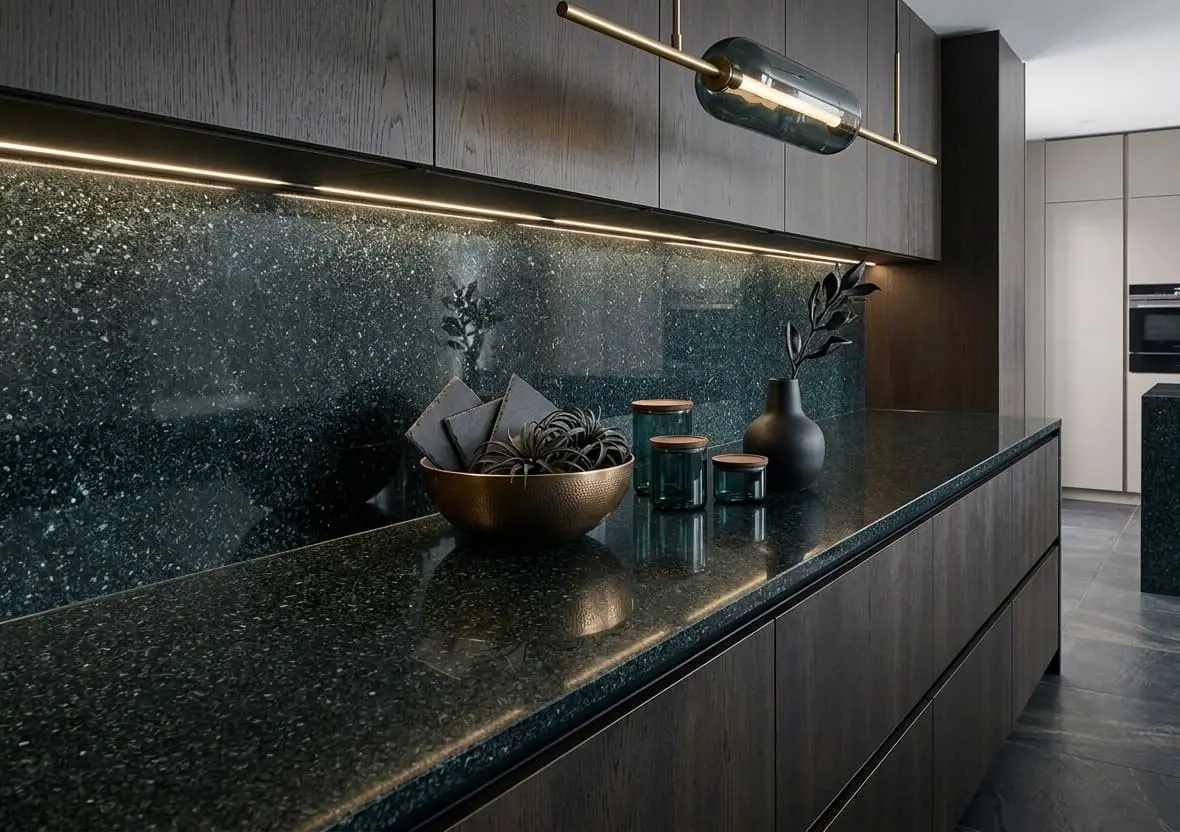
Conceptual rendering of kitchen design with sleek jet black granite countertops and backsplash Conceptual rendering

Care and Maintenance


Keeping a black countertop in good condition requires consistent care, with some variation between natural stone and engineered stone.

  • Daily Cleaning

Use a soft cloth with warm water and a pH-neutral stone cleaner on any black countertop surface. Avoid bleach, harsh chemicals, or acidic solutions, as these can etch natural stone and may dull engineered finishes over time.

  • Preventing Damage

Use cutting boards to reduce the risk of surface scratches, and avoid placing hot cookware directly on natural stone or quartz composite. Use trivets consistently across all material types as a precaution.

  • Spill Management

On natural stone, blot spills promptly rather than wiping to reduce the risk of penetration. Engineered stone is more forgiving, but prompt attention helps preserve the finish.

  • Countertop Sealing

Natural stone black slabs for countertops generally benefit from sealing. Engineered stone options are typically non-porous and do not require sealing, though manufacturer guidance should always be consulted.

Note: Some images on this page may be conceptual renderings created to illustrate design possibilities and may not depict actual installations.

Frequently Asked Questions

Natural stone offers a distinctive appearance per slab but is porous and requires regular sealing. Engineered stone is manufactured for uniformity, is generally non-porous, and needs minimal upkeep. The right choice depends on your design preferences and maintenance commitment.

Black granite and quartzite are popular for their heat resistance and natural character. Black quartz countertops offer strong stain resistance with low maintenance. Sintered stone and porcelain are also well-regarded for high-use or commercial kitchens. The best choice depends on your usage habits and priorities.

Clean regularly with a pH-neutral cleaner and a soft cloth. Use cutting boards and trivets to protect the surface. Natural stone benefits from periodic sealing, while engineered stone options such as quartz and sintered stone are typically non-porous and do not require it.

Not always. Natural stone, unglazed through-body porcelain, and sintered stone receive a PEI NR designation because they have no surface glaze to test. Only glazed porcelain slabs carry PEI classifications. For non-glazed slabs, confirm the applicable wear rating with your supplier.

Granite and quartzite can perform well outdoors with proper sealing, though quartzite porosity varies by slab. Sintered stone and outdoor-rated porcelain are engineered for UV resistance and freeze-thaw conditions. Standard quartz composite is generally not recommended outdoors, as its resin binders may discolor with prolonged sun exposure. Always confirm outdoor suitability with your supplier.

Conceptual rendering of black and gray marble honed island countertop with white cabinetry in modern luxury kitchen Conceptual rendering

Find Your Perfect Black Slab at Nova Tile and Stone


At Nova Tile and Stone, we carry a curated selection of black slabs in both natural stone and engineered stone. Whether you are drawn to the character of black granite and quartzite or the consistent performance of porcelain and sintered stone, our team is here to help you find the right countertop material for your project, including kitchen countertops, bathroom vanity surfaces, floors, walls, and fireplace surrounds.

Ready to elevate your space? Visit our showroom or contact our design consultants today to explore our full collection.