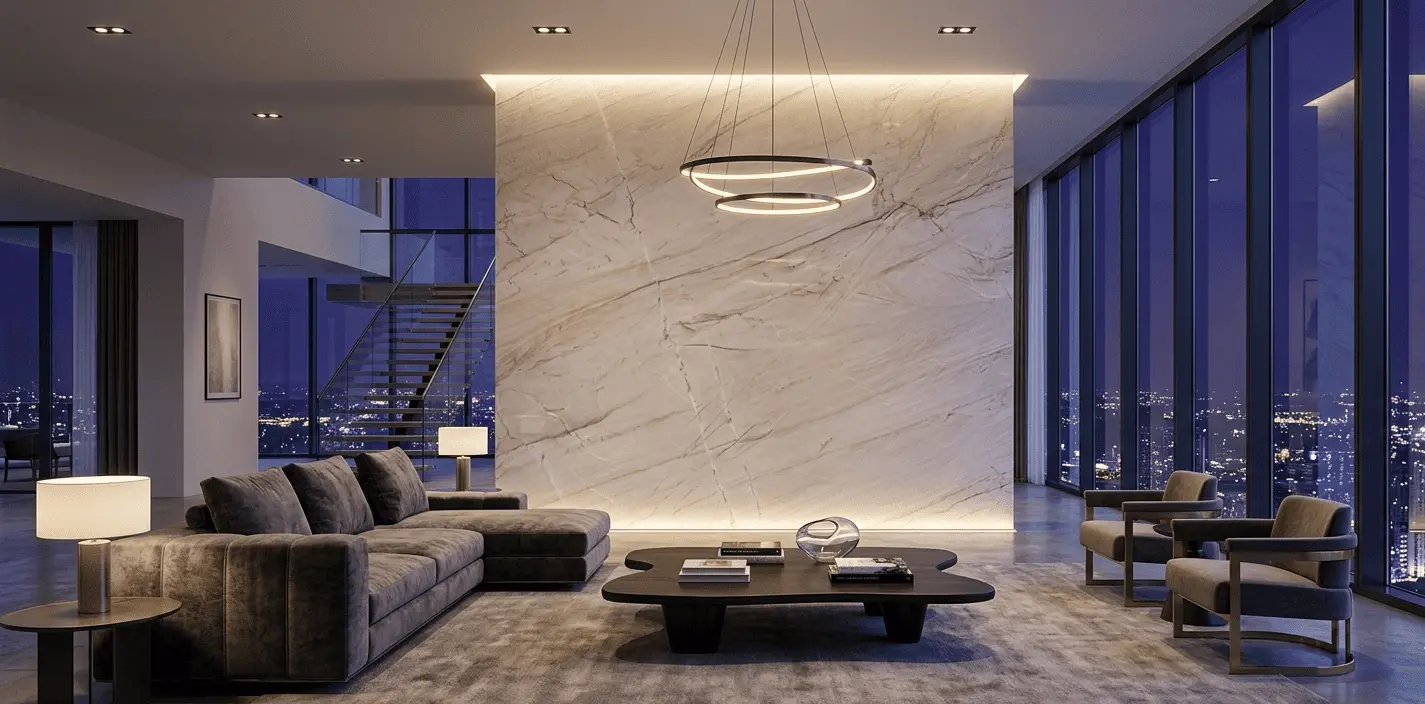
Bianco Superiore Quartzite is a premium natural stone slab quarried in Brazil, classified as a metamorphic quartzite composed of 90–99% interlocking quartz crystals with a Mohs hardness of around 7. It is available from Nova Tile and Stone in four surface finishes (polished, honed, leathered, and specialty) and typically in 2 cm and 3 cm slab thicknesses, suited to both indoor and outdoor wall applications.
Nova Tile and Stone's Offerings Browse Our Slabs
Bianco Superiore quartzite is commonly sourced for feature walls, wall cladding, fireplace surrounds, and exterior façade applications. The stone typically presents a white to off-white base with veining in shades of grey, beige, gold, and occasional charcoal. Natural variation between slabs is expected, with each piece carrying its own distinct pattern and tone. Its dense crystalline structure is associated with good UV resistance, which can help color remain more stable under prolonged sun exposure and reduce the risk of yellowing or fading over time.
The sections below cover the stone's suitability as a feature wall material, where it is commonly applied, the finishes available, how it compares to marble, and the full product specifications.
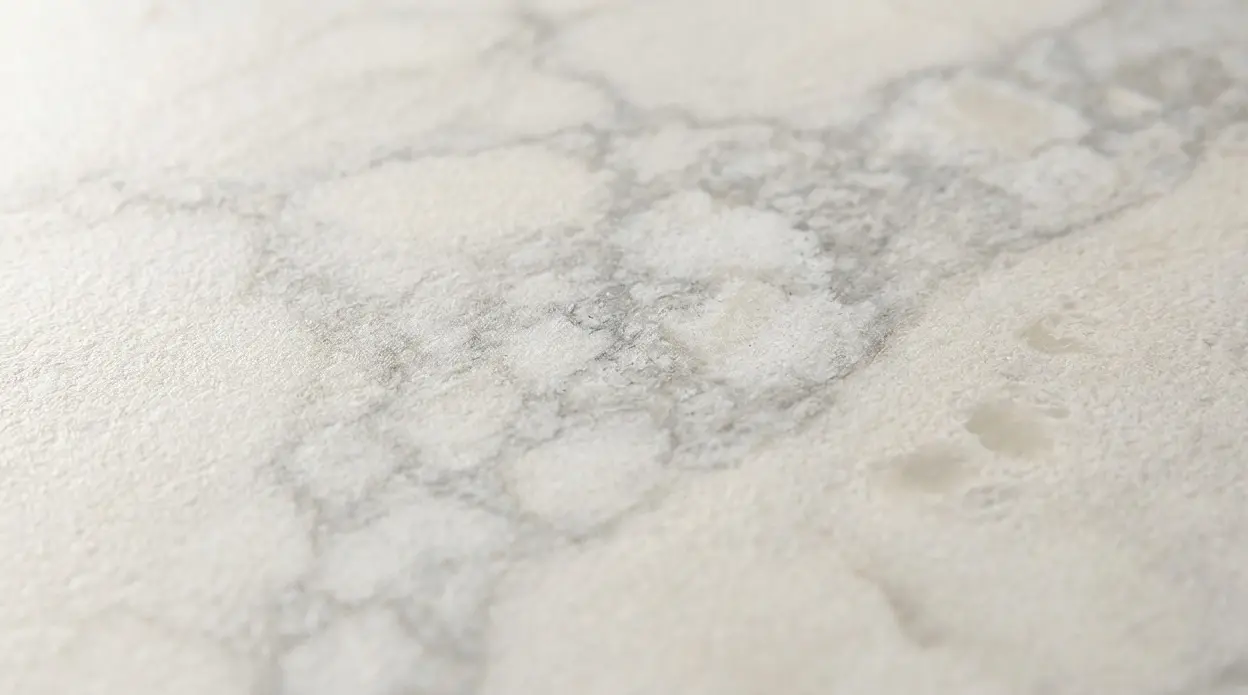
NATURAL STONE
Bianco Superiore Quartzite: Feature Wall Applications
A feature wall benefits from a surface that holds visual presence over time without demanding constant maintenance. Bianco Superiore quartzite offers this through the natural movement of its grey veining across a white base, a quality that each slab expresses differently given the natural variation in tone and pattern. The stone's hardness and density contribute to its suitability as a wall surface that is intended to remain in place for years.
With a Mohs hardness of around 7, this natural stone slab is generally more resistant to surface scratching and wear than marble, and tends to require less upkeep than softer wall stones to maintain its appearance. For both residential feature walls and commercial wall cladding, this makes it a practical, lower-maintenance natural stone choice when properly sealed and maintained.
Beyond its performance characteristics, the range of surfaces in which it can be applied is broad. The next section covers the indoor and outdoor environments where Bianco Superiore quartzite is commonly specified.
STONE CLASSIFICATION
Metamorphic Quartzite
HARDNESS (MOHS)
~7
SLAB THICKNESS
2 cm & 3 cm
ORIGIN
Brazil
UV Resistant
Indoor
Outdoor
Feature Walls
Floors
Facades
Indoor and Outdoor Natural Stone Wall Applications
One reason Bianco Superiore Quartzite is frequently specified for feature wall and cladding projects is its suitability across both interior and exterior environments. Indoors, this natural stone wall cladding slab suits living room feature walls, bathroom wall cladding, kitchen backsplashes, and fireplace surrounds. Its comparatively low porosity can help reduce staining risk and simplify day-to-day maintenance in these settings, particularly when the slab is properly sealed.
Bianco Superiore quartzite is also commonly used for flooring, particularly in projects where the same stone is carried across both walls and floors. Its hardness and surface durability make it suitable for residential and commercial applications, helping create a cohesive and continuous design throughout a space.
For outdoor wall use, the stone's crystalline quartz composition contributes to resistance against weathering, moisture ingress, and UV degradation. When properly selected, sealed, and maintained, Bianco Superiore Quartzite can help retain color and surface condition in high-sunlight environments, including tropical climates where UV exposure is a concern for natural stone surfaces.
How the stone looks and feels in any of these environments will also depend on the surface finish selected, which is covered in the next section.
Polished, Honed, Leathered and Specialty Finishes
Nova Tile and Stone stocks Bianco Superiore quartzite in four surface finishes. Each finish produces a distinct tactile quality and sheen level, and the right choice depends on both the visual intent of the project and the demands of the application environment.
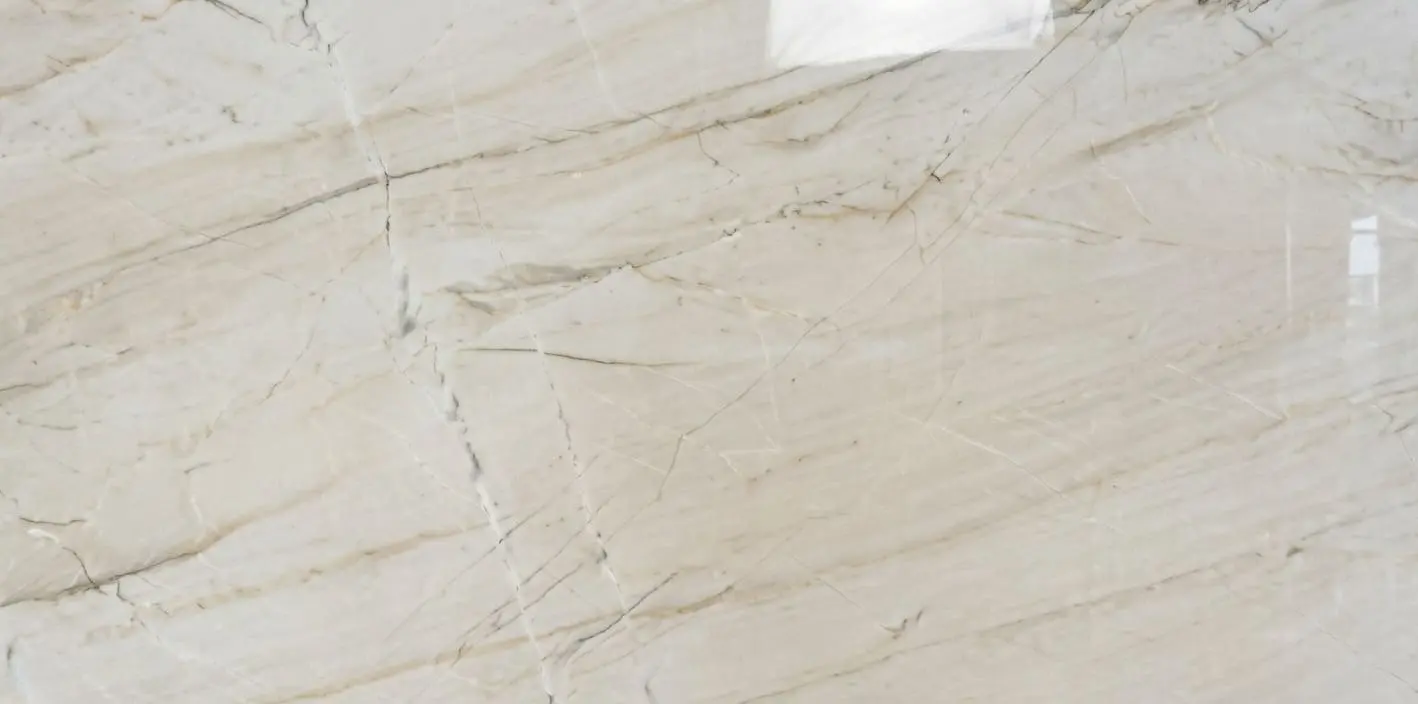
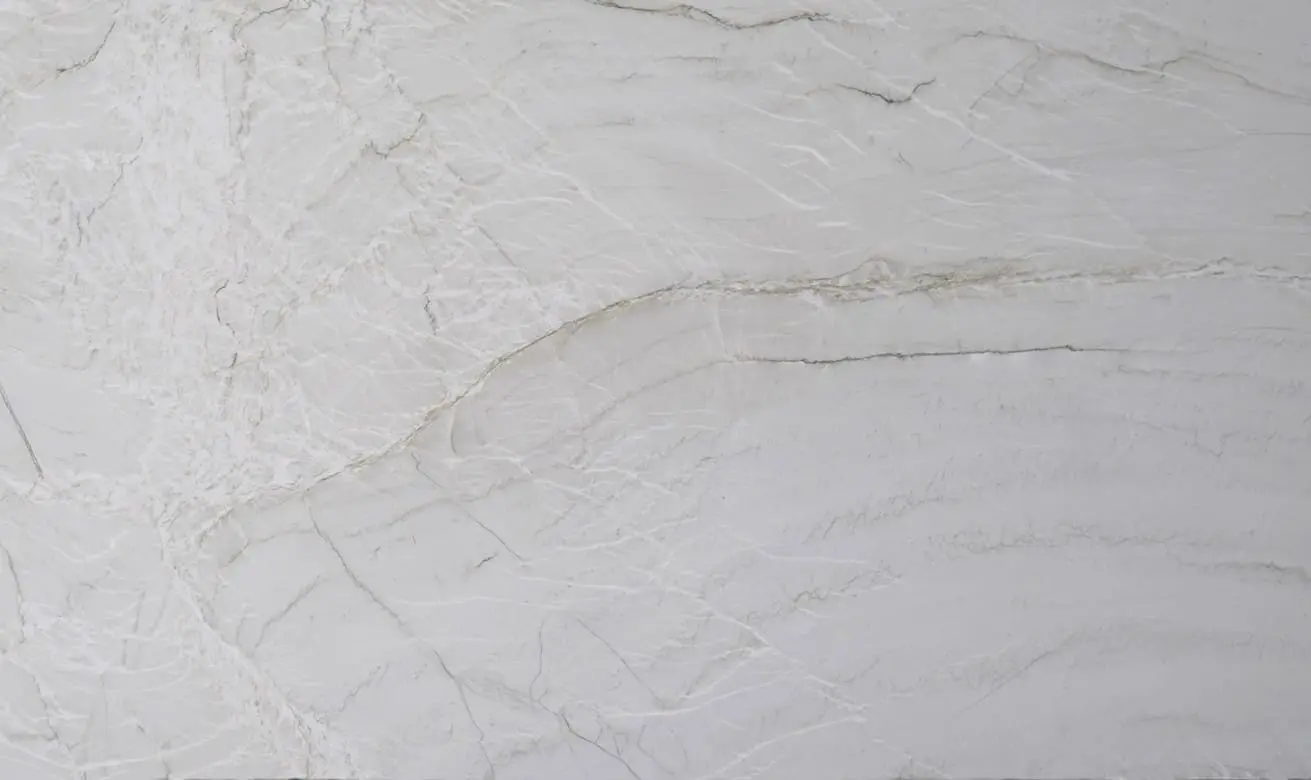
Polished
High-gloss mirror surface that tends to deepen veining contrast and enhance the stone's natural luminosity. The most widely specified finish for indoor feature walls and interior wall cladding.
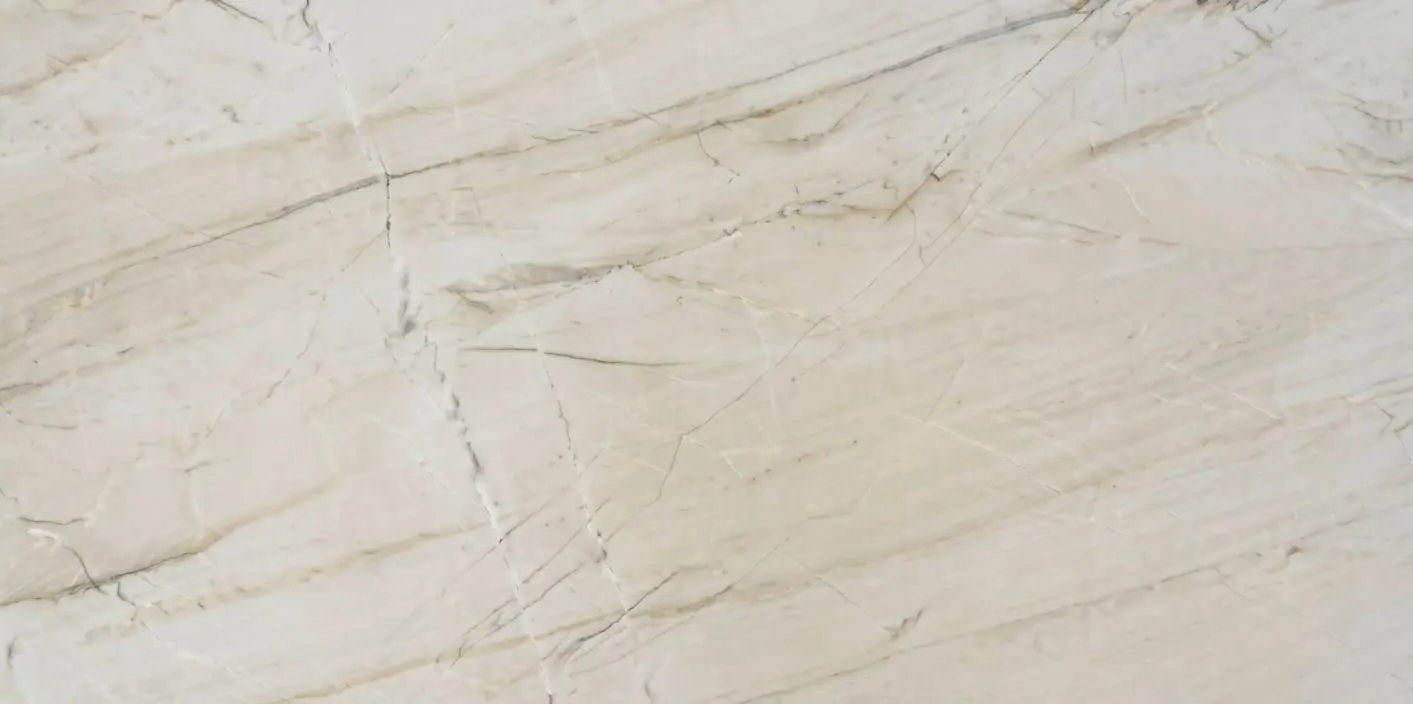
Honed
Smooth, matte finish with no reflective sheen. Can produce a softer, more understated appearance while preserving natural color depth. Well suited to bathroom walls and minimalist interior schemes.
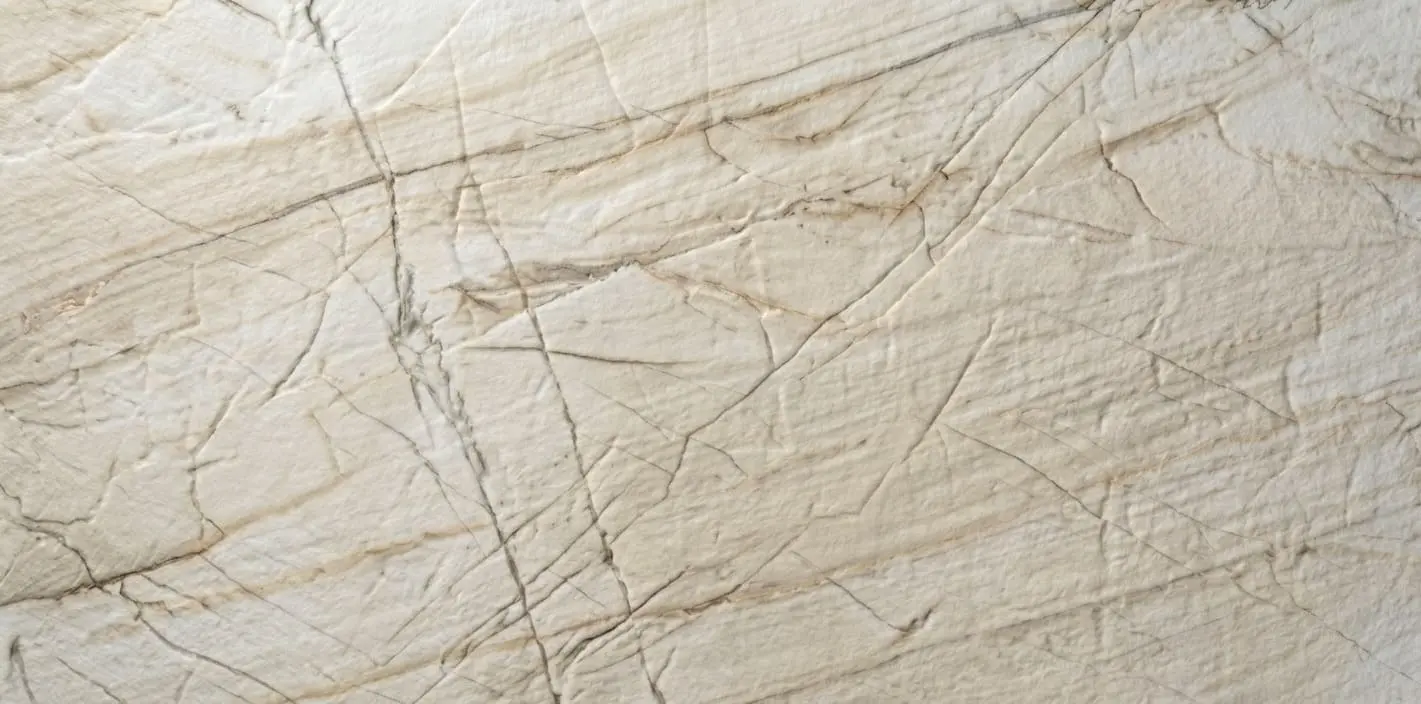
Leathered
Lightly textured, low-sheen surface achieved through brushing. Generally more resistant to fingerprinting and surface marks. Commonly specified for outdoor quartzite cladding and tactile interior applications.
Specialty
Custom surface treatments for project-specific requirements. Contact the Nova Tile and Stone team to discuss options beyond the standard range or schedule a showroom appointment.
Polished Bianco Superiore quartzite is the most common choice for indoor feature walls, as it tends to amplify the visual character of the grey veining under both natural and artificial light. Leathered quartzite is generally preferred for outdoor cladding where a less reflective, more tactile surface suits the architectural context. For buyers who are also considering marble for a similar aesthetic, the next section outlines the key differences between the two materials.
How Quartzite Compares to Marble for Wall Applications
Bianco Superiore quartzite is often evaluated alongside white marble for feature wall and cladding projects due to their similar aesthetics. Both stones share refined, veined appearances, but in practical performance they differ considerably, particularly for applications involving outdoor exposure, wet environments, or surfaces where lower ongoing maintenance is a priority.
At around Mohs 7, quartzite is generally harder than marble, which typically rates between Mohs 3 and 5. This tends to make the quartzite slab more resistant to scratching and surface etching from acidic substances, which are areas where marble is known to be more vulnerable, particularly in outdoor and high-use settings. Quartzite also tends to have lower porosity than marble, which can help reduce staining risk and may lower the frequency of sealing needed over time.
For buyers weighing both materials, Bianco Superiore Quartzite may be a more practical option for projects that span indoor and outdoor environments or where lower long-term maintenance is a key requirement. Full product specifications are provided in the section below.
Bianco Superiore Quartzite Product Specifications
For reference, the following specifications apply to Bianco Superiore quartzite slabs stocked at Nova Tile and Stone. The stone is a metamorphic quartzite quarried in Brazil, composed of 90–99% interlocking quartz crystals. It typically presents a white to off-white base with veining in grey, beige, gold, and occasional charcoal tones. Natural variation between slabs is inherent to the stone, and individual pieces may differ in pattern intensity and tone.
Slabs are typically available in 2 cm and 3 cm thicknesses across four finishes (polished, honed, leathered, and specialty), and are suited to indoor and outdoor use. The stone's dense crystalline structure is associated with good UV resistance, and its porosity is comparatively lower than marble. A penetrating sealer is recommended upon installation, with re-application generally advised every one to three years depending on the application and sealer used. Wet area surfaces such as bathroom wall cladding and pool surrounds typically require more consistent sealing attention than dry interior feature walls.
Suitable applications include feature walls, wall cladding, flooring, fireplace surrounds, exterior façades, kitchen backsplashes, and pool surrounds across both residential and commercial projects.
Note: Some images on this page may be conceptual renderings created to illustrate design possibilities and may not depict actual installations.
Frequently Asked Questions
Bianco Superiore quartzite is a metamorphic natural stone quarried in Brazil. It forms when quartz-rich sandstone is subjected to intense heat and pressure, producing a dense stone composed of 90–99% interlocking quartz crystals with a Mohs hardness of around 7. The stone typically presents a white to off-white base with veining in grey, beige, gold, and occasional charcoal. Natural variation in pattern and veining means individual slabs will differ from one another.
Yes, it is commonly used for outdoor wall cladding and exterior feature walls. The stone's quartz-dominant composition contributes to resistance against UV degradation, moisture ingress, and weathering, which can help it resist color change and surface deterioration in outdoor environments, including high-sunlight and tropical climates. As with any natural stone, proper selection, sealing, and maintenance are important factors in long-term outdoor performance.
A polished quartzite finish produces a high-gloss, reflective surface that tends to deepen veining contrast and enhance natural luminosity, and is the most widely specified finish for indoor feature walls. A honed finish is smooth and matte, offering a softer, less reflective look. A leathered finish is produced through a brushing process that creates a lightly textured, low-sheen surface, which is generally more resistant to fingerprints and marks and is commonly specified for outdoor quartzite cladding and tactile interior applications.
Yes. A penetrating sealer is recommended upon installation and generally re-applied every one to three years, depending on use and the sealer used. Wet area applications such as bathroom wall cladding, pool surrounds, and floors typically require more consistent sealing attention. Dry interior feature walls have a lower sealing requirement, though sealing is still advisable as a long-term protective measure.
Bianco Superiore quartzite is available at Nova Tile and Stone, though thickness options may vary depending on current stock. A 2 cm slab is often preferred for wall cladding and feature wall applications, as it is lighter and may place less load on the wall substrate. A 3 cm thickness may be considered for applications that require additional strength or durability. A stone professional can help determine the most suitable thickness based on the specific wall construction and overall project requirements.