Beige Calacatta Marble
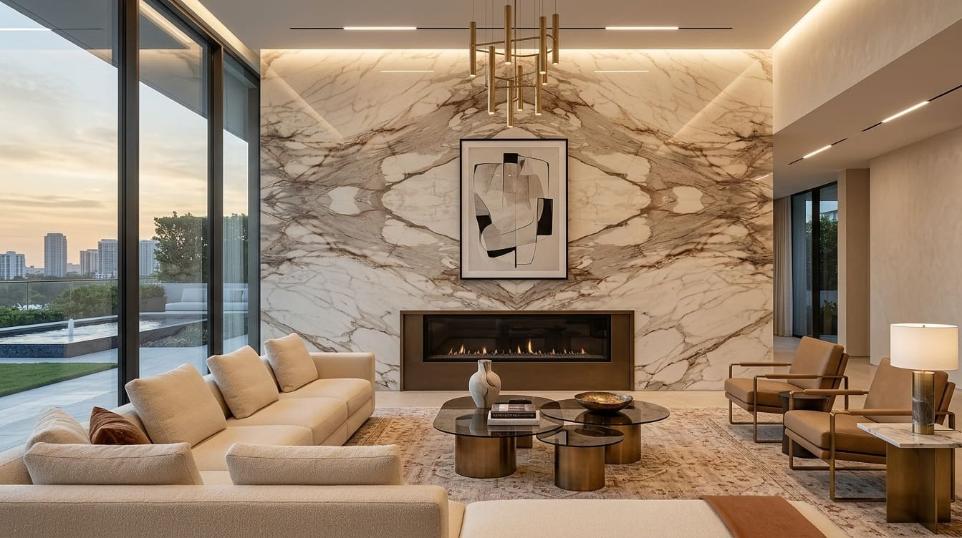
Beige Calacatta marble is a natural calcite-based stone prized for its warm, creamy background and bold, flowing veins in shades of gold, taupe, and soft gray. Quarried from the Apuan Alps of Carrara in northern Italy, it belongs to the Calacatta family, one of the rarest categories of marble in the world. Unlike the bright white of classic Calacatta varieties, the beige variation delivers a softer tone that integrates naturally into a wide range of interior palettes.
What
sets this stone apart is its geological uniqueness. Because veining forms
naturally during the stone's metamorphic development, no two slabs carry the
same pattern. For homeowners and designers seeking a surface that brings
lasting character to an interior without the uniformity of engineered stone,
beige Calacatta marble remains one of the most compelling choices in natural
stone. Understanding what makes it distinctive starts with the stone itself.
What Makes Beige Calacatta Marble Unique
Calacatta marble is a metamorphic rock formed when limestone is subjected to intense heat and pressure deep within the earth, causing its carbonate minerals to recrystallize into a dense, interlocking structure. It is composed primarily of calcite, the calcium carbonate mineral that gives marble its characteristic polish and luster, along with trace amounts of other minerals including graphite, iron oxides, and clay. These trace minerals are responsible for the stone's veining: iron oxides such as limonite produce the gold and brown tones, while graphite produces the gray tones.
In beige Calacatta marble, the combination of these impurities yields a warm, creamy base with flowing veins in gold, taupe, and soft gray. For a lighter complement, Cream Calacatta marble, characterized by a softer white background with delicate beige and gold veining, pairs naturally with the beige variation in multi-surface installations where tonal consistency is the goal.
On the Mohs hardness scale, it rates between 3 and 5. This range reflects variation in trace mineral content across slabs, as calcite itself rates at 3. These physical characteristics, its density, luster, and surface workability, make it well suited for a variety of indoor applications, and it is available in polished, honed, leathered, and specialty finishes to match different design intentions.
Caring for Your Beige Calacatta Marble
Across all of these applications, the stone's long-term performance depends on consistent, gentle maintenance. Following a few straightforward habits will keep the surface looking its best for decades:
Clean daily with a damp cloth and a pH-neutral stone cleaner. Avoid vinegar, lemon-based cleaners, and abrasive formulas, they react with the calcite in the stone and can etch the surface even through a sealer.
Seal regularly based on the installation location, finish type, and level of daily use. Consulting a professional stone installer or supplier will provide the most accurate sealing schedule for a specific application.
Blot spills immediately rather than wiping, particularly wine, coffee, and citrus juice. Wiping spreads the liquid further into the stone and increases the risk of staining.
Use protective pads under heavy objects and avoid dragging anything abrasive across the surface, as marble rates between 3 and 5 on the Mohs scale and can scratch under sustained contact.
Transform Your Space
At Nova Tile and Stone, we carry a curated selection of beige Calacatta marble slabs, sourced for quality, consistency, and natural character. Whether you are planning a wall installation, a statement floor, or a fireplace surround, our team is ready to help you find the right material for your project.
Visit us at any of our four showroom locations, Reno, Sacramento, Minden, and Fernley to view slabs in person, explore finish options, and speak with a design specialist. Seeing the material under real lighting makes all the difference when selecting a stone as nuanced as this.
Frequently Asked Questions
Beige Calacatta marble has a warmer, creamier base tone compared to the bright white background of classic Calacatta varieties. Its veining tends to feature softer combinations of gold, warm gray, and taupe, creating a more understated aesthetic. Both share the same calcite-based composition and structural properties, but the beige variation integrates into a broader range of interior palettes.
This marble is well-suited for interior residential floors with moderate traffic. It rates between 3 and 5 on the Mohs hardness scale, making it appropriate for everyday indoor use with proper care. A honed finish is often recommended for flooring, as it reduces the visibility of surface scratches.
Yes. It is a well-suited choice for fireplace surrounds, mantels, and hearth facings. Its natural veining creates a strong focal point in the room. It should not be used as a direct firebox lining, as sustained intense heat can cause surface stress and discoloration over time. Installation with heat-appropriate backing materials is recommended.
Sealing frequency depends on the installation location, finish type, and level of daily use. Consulting a professional stone installer or supplier will provide the most accurate maintenance guidance for a specific application, as there is no fixed schedule that applies to all installations equally.
Yes. Because it is calcite-based, the stone reacts with acidic substances that can etch the surface even through a sealer. Daily cleaning with a damp cloth and pH-neutral stone cleaner is recommended. Avoid vinegar, lemon-based cleaners, and abrasive products. Spills should be blotted immediately to prevent staining.