Skip to Content

Bathroom Backsplash

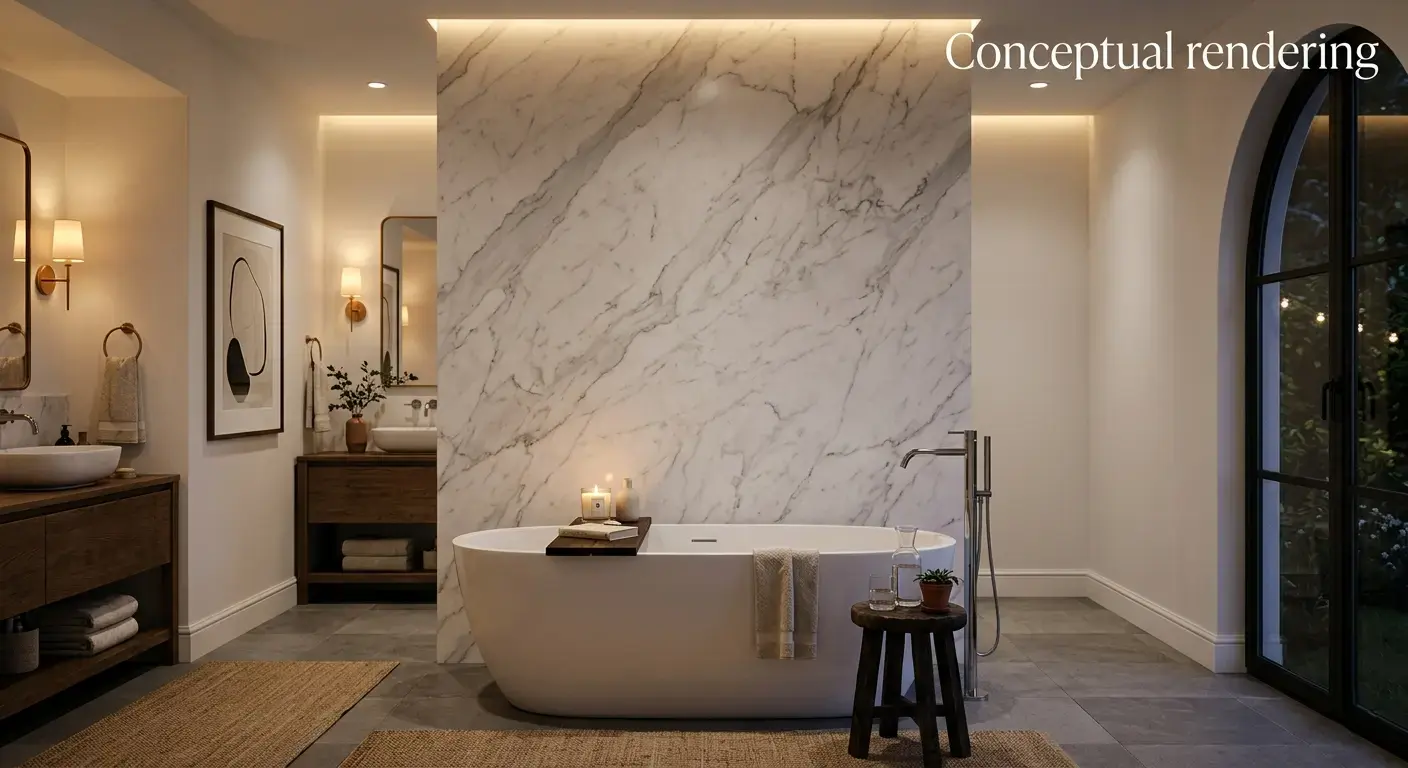
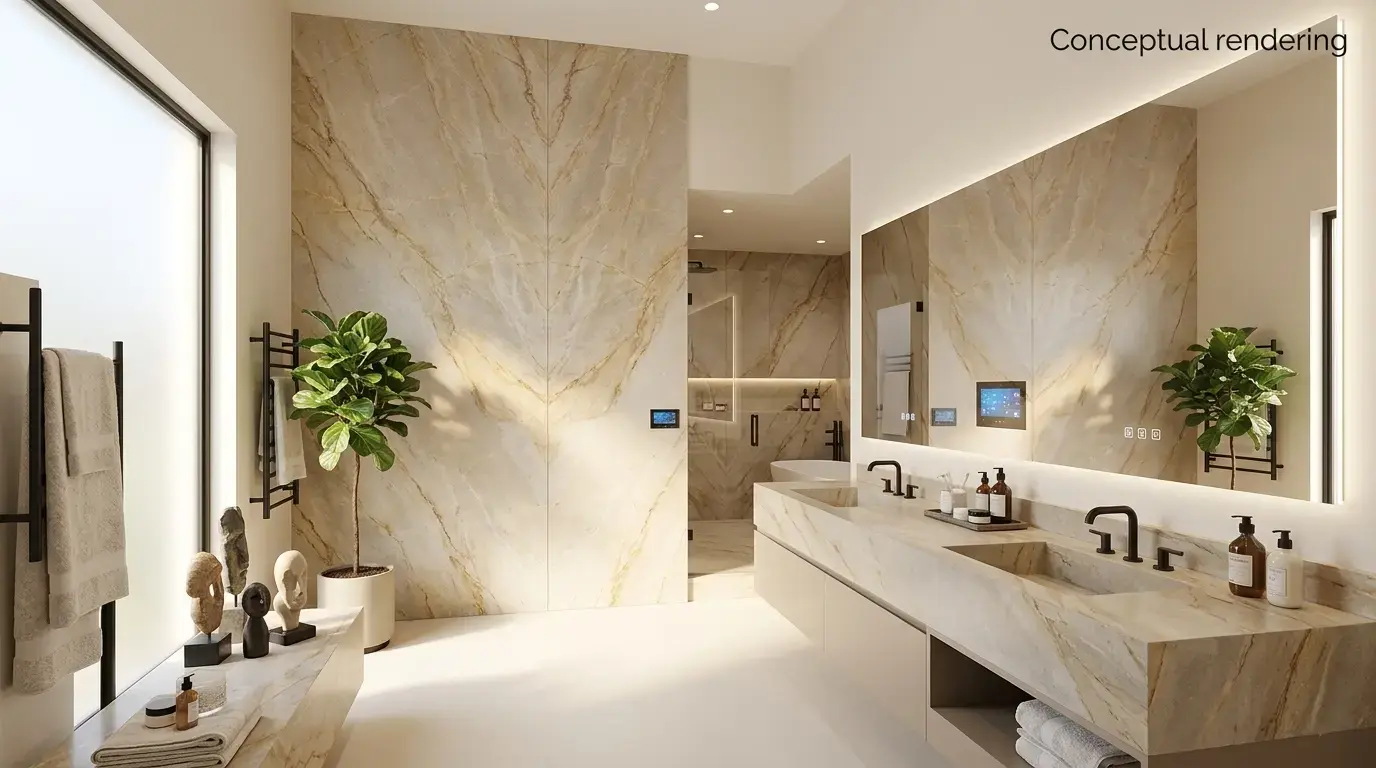
Natural stone slabs produce a continuous surface in a bathroom that differs from tile in one key way: there are no grout lines. When used as a bathroom backsplash, a slab covers the wall behind the vanity or tub as a single piece of cut stone, with no joints between individual units.

We carry natural stone slabs at our Home Design Centers, with locations in Reno, Minden, Sacramento, and Fernley. If you're considering a slab for your bathroom backsplash project, viewing the material in person is the most reliable way to assess color, veining, and finish.

Conceptual rendering of honed qaurtzite in bathroom

    How Slabs Are Used in Bathroom Backsplash Applications

    The bathroom backsplash occupies a water-exposed area, typically behind the sink or along a tub surround. Natural stone slabs are dense, non-porous when properly sealed, and cut to dimension, which means a fabricator can produce a piece sized precisely to your wall.

    Marble, quartzite, and granite are among the most commonly used slab materials in bathroom applications. Each has distinct physical characteristics worth understanding before selecting. If you're drawn to lighter veining and a neutral palette, our Allure quartzite natural stone page covers that material in more detail.

Request A Free Quote

Marble

is a metamorphic rock with visible crystalline veining. It responds well to polishing and is frequently used in bathroom settings for its surface clarity. It requires periodic sealing to maintain resistance to moisture and staining.

Granite

is an igneous rock known for its grain pattern and surface hardness. It is widely used in high-moisture environments and is available in a broad range of colors.

Quartzite

is a naturally occurring metamorphic stone that begins as sandstone and recrystallizes under heat and pressure. It is harder and denser than marble and carries similar veining patterns, often in whites, grays, and warm tones. Quartzite also benefits from sealing in wet areas.

Viewing Slabs in Person

Slab selection is a tactile process. Color, veining direction, finish, and scale all read differently in person than they do in photographs. At our showrooms, you can compare materials side by side and assess how a particular stone works with the other elements in your bathroom.

Our design consultants are available at no charge and are commission-free, so the focus of the conversation is on helping you find the right material for your project. Whether you're working with a contractor or managing the project independently, a free design consultation can help clarify stone selection, fabrication considerations, and finish options.

We maintain live slab inventory across our four Home Design Centers. Because slab availability changes as new material arrives and existing inventory moves, checking current stock in person or through our live slab inventory page gives you an accurate picture of what's available.

Finishing and Fabrication Considerations

The finish on a slab affects both its appearance and its maintenance requirements. A polished finish produces a reflective surface. A honed finish is matte and tends to be more forgiving of surface marks. A leathered finish sits between the two, with a slightly textured feel and a low sheen.

For a bathroom backsplash, finish selection often comes down to the overall aesthetic of the space and how much maintenance the homeowner wants to manage. A fabricator cuts the slab to the dimensions of your backsplash area, finishes the edges, and cuts any necessary openings for plumbing fixtures.

Slab thickness for backsplash applications is typically thinner than countertop material. A fabricator or your design consultant can advise on appropriate thickness for your specific wall and installation conditions.

Read Our Latest Slab Guides:

Your Dynamic Snippet will be displayed here... This message is displayed because you did not provided both a filter and a template to use.

Frequently asked questions

Yes. Natural stone slabs are used in bathroom backsplash applications, most commonly behind vanities and along tub surrounds. The slab is cut to the dimensions of the wall by a fabricator and installed as a continuous surface. Common slab materials for this use include marble, quartzite, and granite.

A slab backsplash uses a single continuous piece of stone, which eliminates grout lines across the surface. A tile backsplash uses individual pieces set in a grid with grout joints between them. Slab installations require professional fabrication and typically involve a higher material cost. Tile installations offer more flexibility in pattern and sizing.

Most natural stone used in wet areas benefits from sealing. Marble and quartzite in particular are porous and can absorb moisture and staining agents without a sealant. Granite varies by type but is generally denser. A stone fabricator or your design consultant can advise on appropriate sealing products and maintenance intervals for the specific material you select.

The choice depends on the look you're after and how much maintenance you're comfortable with. Marble offers veining and a polished surface but requires consistent sealing and care. Quartzite is harder and more resistant to surface wear than marble while carrying similar veining patterns. Granite is dense and durable with a more granular pattern. Viewing samples in person is a reliable way to assess how each material will read in your space.

We maintain a live slab inventory page on our website where you can browse currently available material. Because slab stock changes as new shipments arrive and existing inventory sells, in-person viewing at one of our four Home Design Centers gives you the fullest picture of what's available. Our locations in Reno, Minden, Sacramento, and Fernley all carry slab inventory.

Visiting Our Showrooms

Our four Home Design Centers serve Northern Nevada and Northern California. You can visit us in Reno, Minden, Sacramento, or Fernley to view current slab inventory and speak with a design consultant. For trade professionals, we also offer a trade account program. You can book a free design consultation online before your visit.