Baltic Brown Granite
Character, Durability, and Design Versatility
Baltic brown granite is a natural igneous stone quarried in southeastern Finland, classified as the wiborgite variety of rapakivi granite. The stone formed approximately 1,640 million years ago within the Wiborg batholith, among the largest rapakivi granite formations documented in the world. Its most recognizable visual feature is the rapakivi texture: large, rounded orthoclase feldspar crystals measuring between 15 and 30 mm in diameter, each typically rimmed by a layer of oligoclase, set against a warm brown matrix with flecks of black, amber, and tan.
Baltic brown granite rates between 6 and 7 on the Mohs hardness scale, a range associated with the dense crystalline structure of its primary silicate minerals, making it a durable choice for kitchen countertops, bathroom vanities, flooring, wall cladding, and fireplace surrounds.
Nova Tile and Stone Product Range Explore our Slab Collection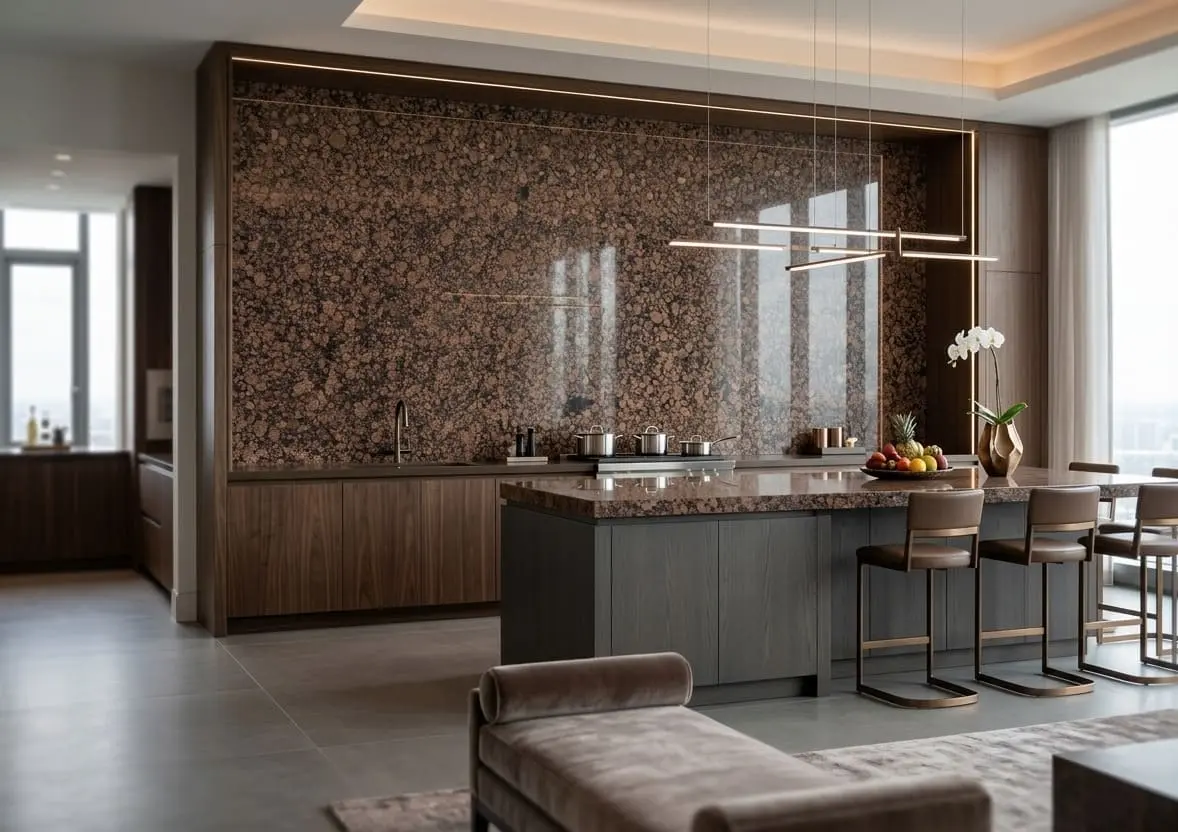
Bold mineral crystal clusters
Distinctive orbicular stone markings
Rich, multi-toned brown patterning
Warm, earth-toned depth
What Makes Finnish Rapakivi Granite Unique
The rapakivi texture characteristic of Baltic brown granite is understood to result from a two-stage crystallization sequence within the cooling magma. During the first stage, large orthoclase feldspar crystals are considered to have formed. As conditions shifted, oligoclase crystallized as a mantle around existing orthoclase crystals, producing the rimmed phenocrysts visible across most slab faces. Not all orthoclase crystals develop a complete oligoclase mantle, so the density and uniformity of the patterning tends to vary naturally across the surface.
This behavior is generally considered uncommon outside of rapakivi granite formations and is rarely found in most other brown granites commercially. Because the Wiborg batholith covers a large area and Baltic brown is quarried from multiple sites within it, feldspar crystal size, rim thickness, and ground color can shift between blocks, and how that variation reads on a finished slab depends largely on the surface finish applied.
Finish Options and Surface Character
Baltic brown granite slabs are available in four finishes: polished, honed, leathered, and specialty.
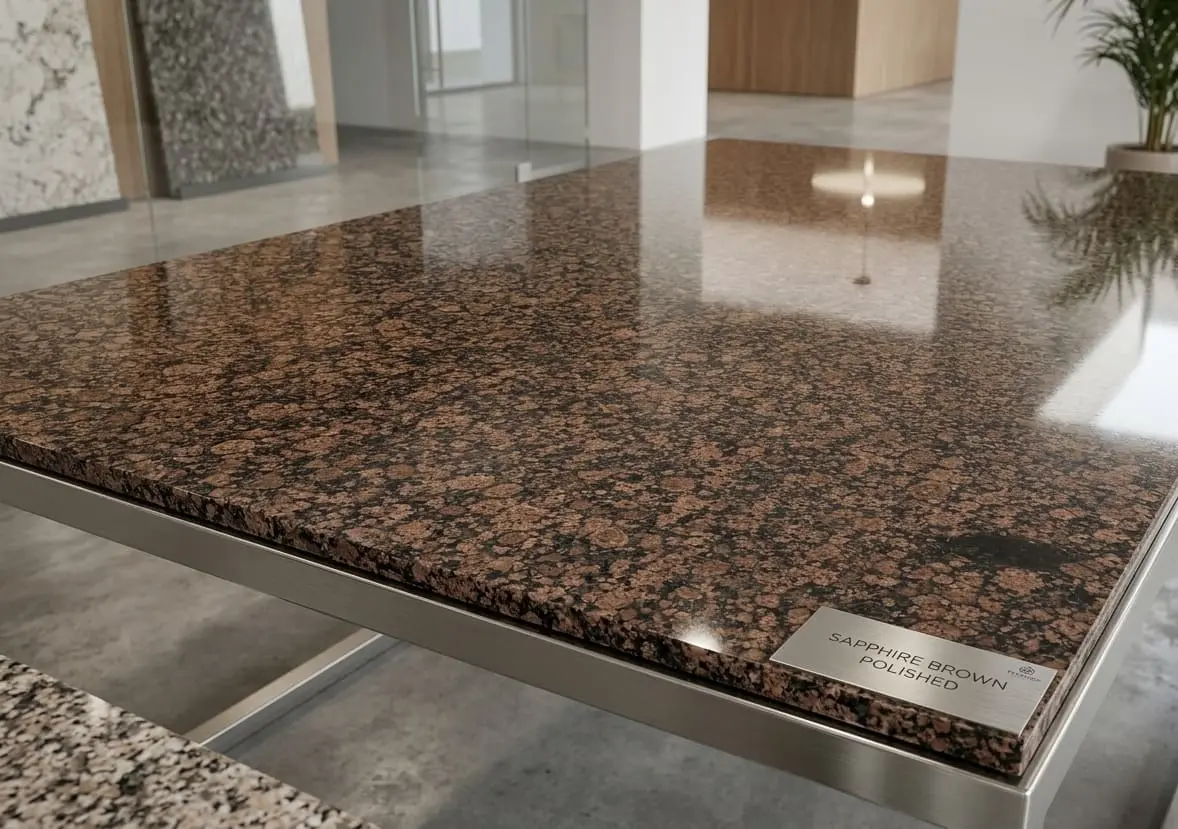
Polished Finish
Polished typically produces a high-gloss surface that enhance contrast between the orthoclase phenocrysts and the darker matrix, bringing the rapakivi patterning into clearer definition.
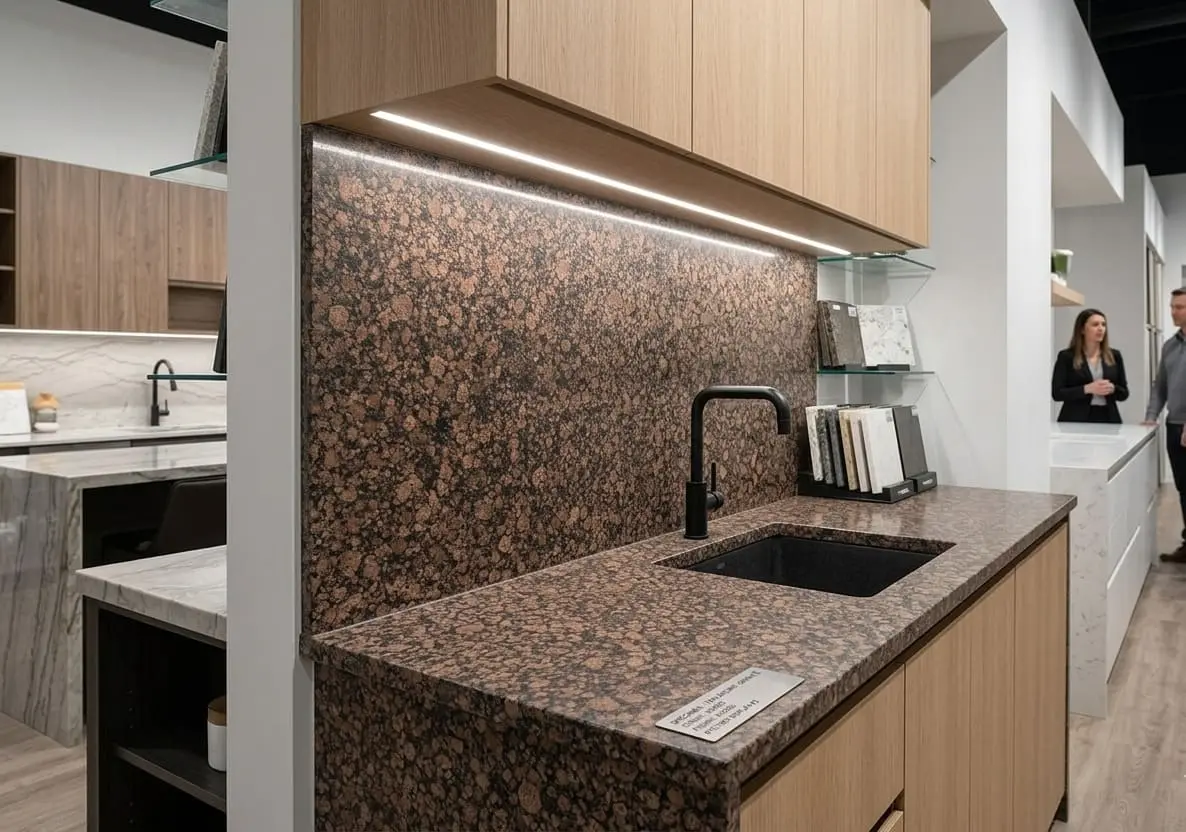
Honed Finish
Honed is known to reduce the reflective layer, delivering a smooth matte surface that softens pattern contrast.
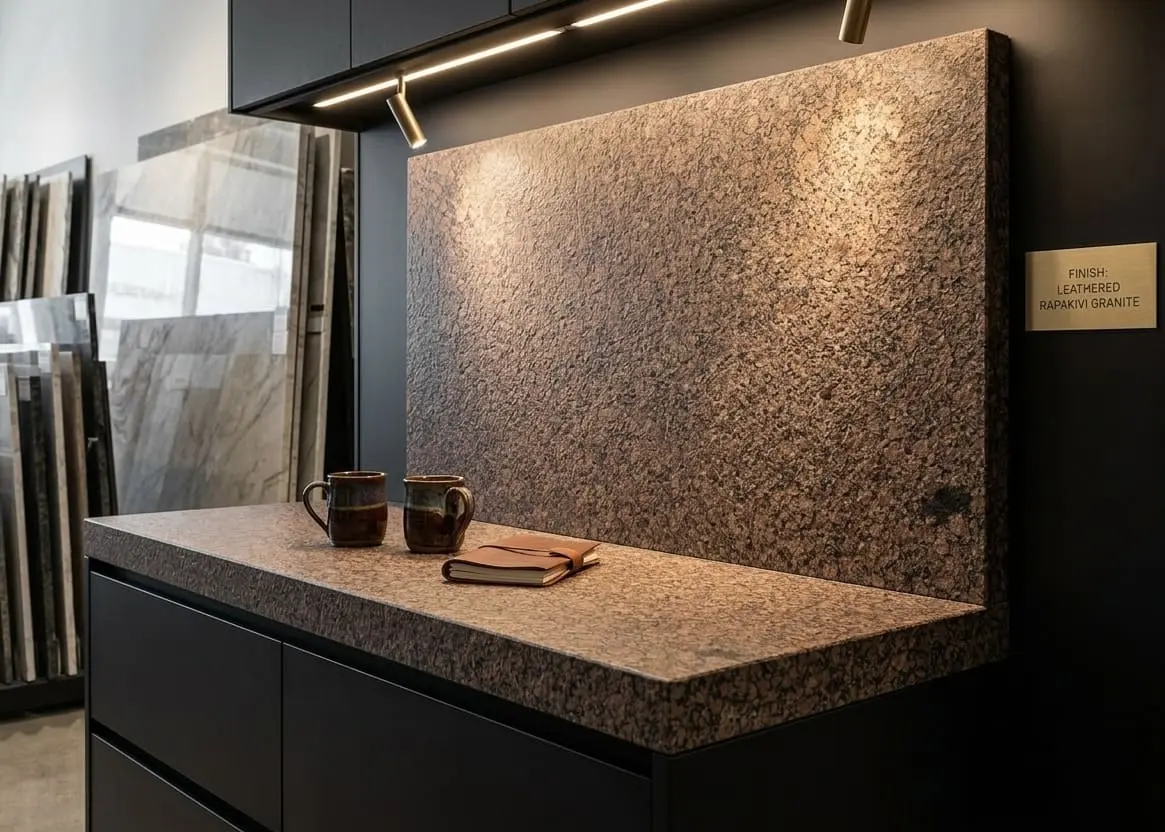
Leathered Finish
The leathered finish is applied through mechanical brushing and is known to compress surface pores, adding subtle texture and a low-sheen tone that can deepen the warmth of the brown ground color.
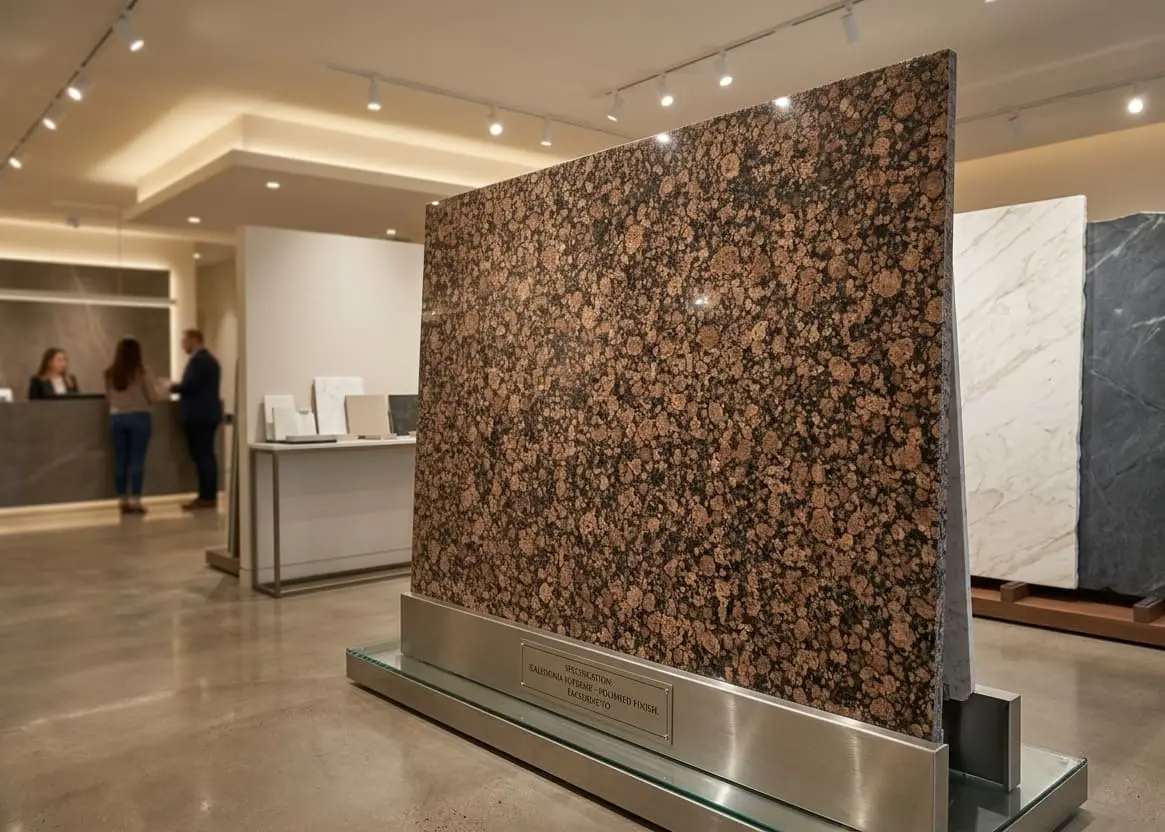
Specialty Finishes
Specialty finishes such as flamed or brushed tend to alter surface topography more aggressively and are typically chosen where additional traction is a practical consideration.
Brown Granite Slab Applications for Residential and Commercial Spaces
The finish characteristics of Baltic brown granite slabs translate differently depending on where the stone is used. In kitchen environments, its density and heat resistance make it a practical consideration for countertop surfaces and kitchen islands. In bathroom settings, the low moisture absorption associated with dense silicate stone can help reduce the risk of water-related surface degradation, making it suitable for vanities and wet area applications.
The earthy palette of this Finnish granite tends to integrate naturally with wood tones and neutral finishes, and pairs well alongside warmer natural stones such as Walnut brown marble where a tonal layering effect is desired. For wall cladding, fireplace surrounds, and high-traffic flooring, honed and leathered slabs are generally preferred for their reduced glare and added traction.
Caring for Your Natural Stone Slab
Regardless of the application or finish selected, Baltic brown granite benefits from a consistent maintenance routine to preserve its appearance over time. Despite its density, the stone is porous and benefits from a penetrating sealer that can help reduce liquid absorption and lower the risk of staining. A standard penetrating sealer addresses staining only and does not prevent etching. Because Baltic brown is silicate-based rather than calcite-based, it tends to be less reactive to acidic contact than marble or limestone.
Resealing typically falls within a range of once every one to two years depending on use and cleaning habits. The water bead test is a reliable gauge: when water spreads rather than beads on the surface, a fresh application is likely due. pH-neutral cleaners are recommended, as acidic or abrasive products can compromise both the sealer and the surface finish over time.
Frequently Asked Questions
Baltic brown granite is a natural igneous stone from Finland's Wiborg batholith, belonging to the wiborgite variety of rapakivi granite, recognized for its large orthoclase feldspar crystals rimmed by oligoclase set against a warm brown matrix.
Baltic brown develops through a two-stage process in which oligoclase mantles form around orthoclase phenocrysts, creating the rimmed, pebble-like patterning characteristic of wiborgite-type rapakivi granite and rarely found in most commercially available brown granites.
Its Mohs hardness of 6 to 7 and silicate mineral base are associated with strong resistance to scratching, heat, and moisture, making Baltic brown granite well-suited to kitchen countertops, bathroom vanities, flooring, wall cladding, and fireplace surrounds.
Four finishes are available: polished, honed, leathered, and specialty. Honed and leathered are generally preferred for high-traffic surfaces and flooring. Polished suits lower-traffic surfaces and wall applications. Specialty finishes are typically selected for exterior applications.
Resealing generally falls within a range of once every one to two years depending on use and cleaning routine. The water bead test is a reliable indicator: when water spreads rather than beads, a fresh application is likely needed.
Transform Your Space
For those sourcing Baltic brown granite slabs for a residential or commercial project, Nova Tile and Stone carries current inventory at showroom locations in Reno, Sacramento, Minden, and Fernley. Each natural stone slab is available for in-person viewing so you can evaluate finish options and natural variation before selecting. Whether the project calls for a kitchen countertop, bathroom vanity, fireplace surround, or flooring, our team can help match the right slab from our current inventory. Visit any of our four locations to explore our full natural stone slab selection.