Hardness, Porosity, and Sealing Requirements
Quartzite forms when sandstone undergoes heat and pressure during metamorphic processes, producing a stone that is considerably harder and denser than marble. Allure quartzite registers between 7 and 7.5 on the Mohs hardness scale, placing it well above marble at 3 to 4 and comfortably above everyday kitchen tools that might scratch a softer surface. This hardness makes it a practical choice for countertops in active kitchens, bathroom vanities, and flooring, particularly in households where the work surface sees regular use.
One point worth noting: quartzite is not the same as engineered quartz. Engineered quartz is a manufactured, non-porous product. Quartzite, as a natural stone, has some porosity and requires sealing to perform well over time. For most quartzite varieties, resealing every 12 to 18 months is appropriate, though actual frequency depends on use and the specific stone. A pH-neutral stone cleaner handles day-to-day maintenance and helps preserve the seal between resealing cycles. Trade professionals working on larger installations may want to factor sealing schedules into project timelines from the start.
Kitchen Countertops, Backsplashes, and More
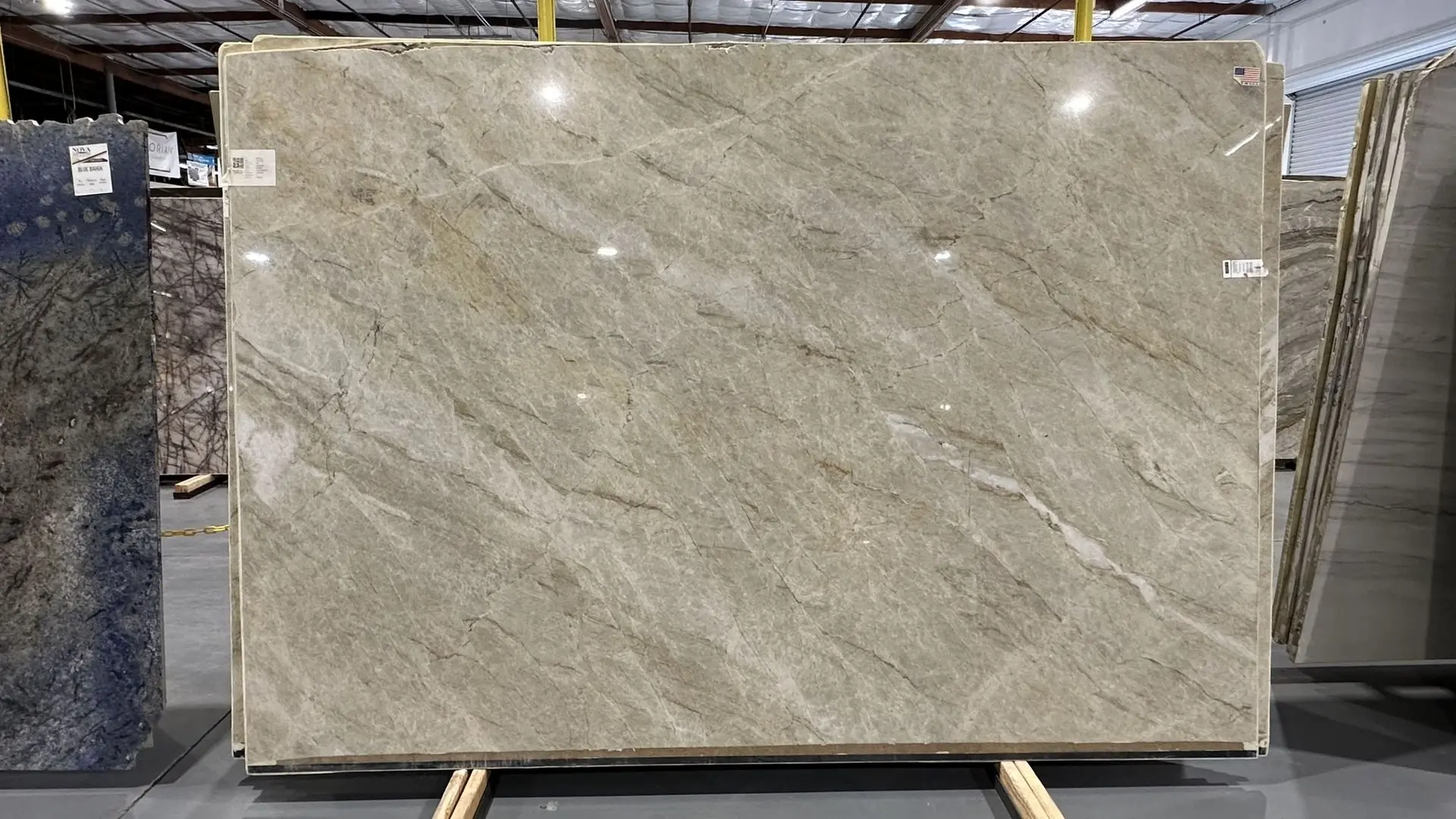
Kitchen countertops are the most common application, and the stone's hardness and heat resistance support that role well. Quartzite can still be affected by thermal shock, sealers, or finish damage. It also works on kitchen backsplashes, feature walls, bathroom countertops, shower surrounds, and flooring. The neutral beige and taupe palette suits spaces designed around a clean, calm aesthetic, and the natural variation in each slab means no two installations look exactly alike. The stone transitions naturally between residential and commercial settings where both durability and visual consistency matter across large surface areas.
Keeping Allure Quartzite in Good Condition
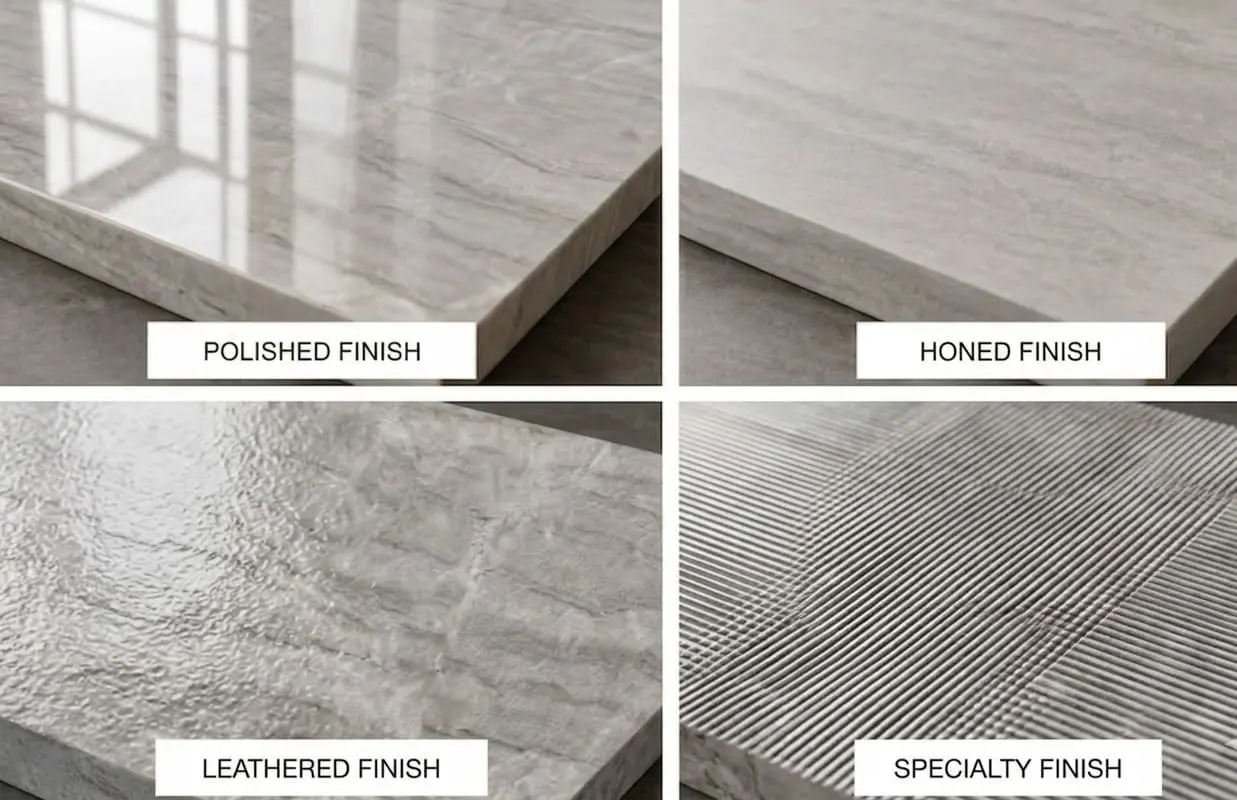
Day-to-day cleaning is straightforward. A pH-neutral stone cleaner or mild dish soap with warm water handles most spills and surface buildup. Rinse thoroughly and dry with a microfiber cloth to prevent water spots and soapy film that can dull a polished finish over time. Avoid acidic cleaners, vinegar-based products, and anything abrasive, as these can break down the seal and affect the surface appearance with repeated use.
Resealing every 12 to 18 months is a practical general guideline for quartzite in active areas. A simple water bead test helps indicate whether the seal is still performing. If water begins to absorb into the surface rather than beading up, it is time to reseal.