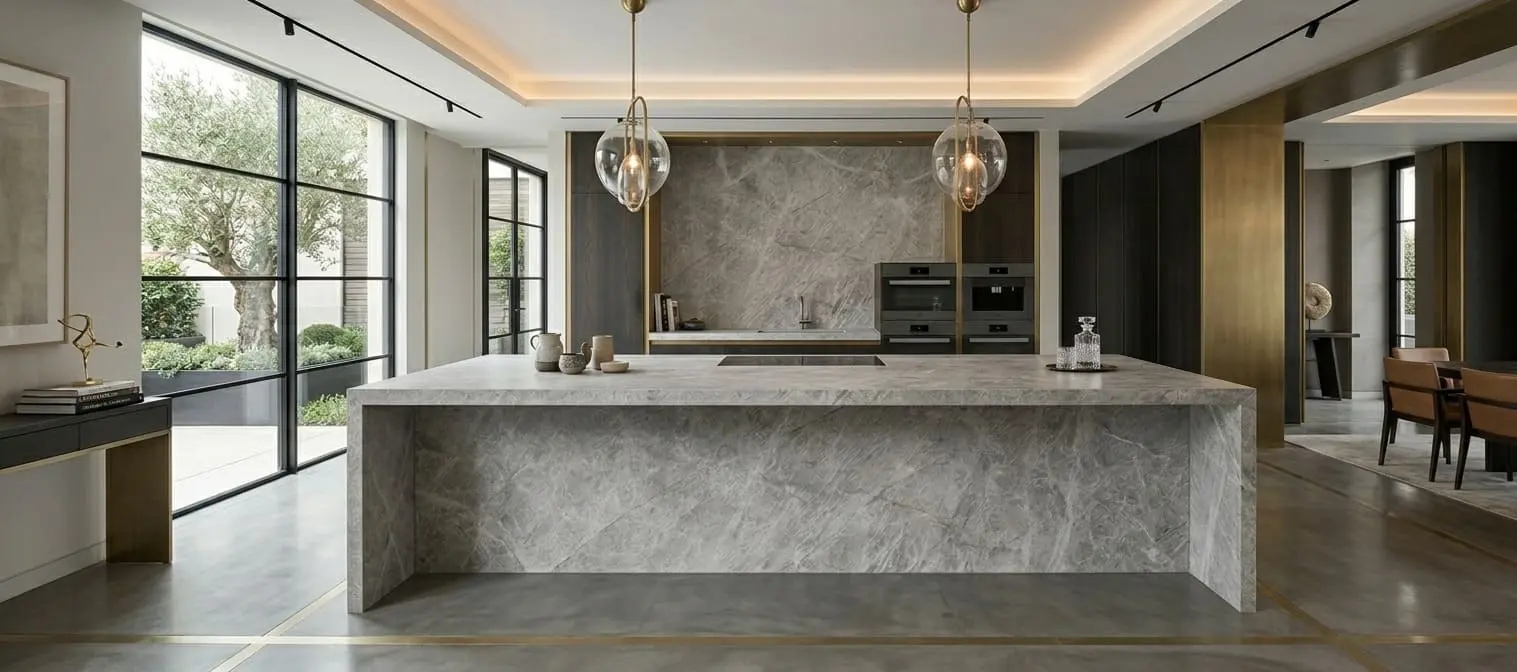
How Durable Is Allure Quartzite?
Quartzite rates 7 to 7.5 on the Mohs hardness scale, is generally harder than granite, and is known for strong scratch resistance among natural stone countertop materials. As a natural quartzite material, Allure quartzite leathered resists scratching from knives and kitchen tools and tends to hold its surface appearance under regular daily use.
The leathered finish offers two practical advantages over polished stone. Its matte texture can help reduce the visibility of fingerprints, smudges, and water spots. The surface micro-texture also provides additional grip in wet conditions, which is a useful quality on bathroom vanities and outdoor kitchen surfaces. These characteristics make it a considered choice for high-traffic residential and commercial settings.
Because leathered quartzite tends to be slightly more porous than polished quartzite, sealing at installation is recommended, with resealing every one to two years. For daily cleaning, mild dish soap and warm water with a soft cloth is sufficient. Acidic cleaners, vinegar, bleach, and ammonia should be avoided as they can degrade the sealer over time.
Where Can Allure Quartzite Leathered Be Used?
Allure quartzite leathered performs well across a broader range of applications than a standard countertop stone, in both interior and exterior settings.
The leathered texture can help conceal everyday kitchen marks. Fingerprints and water rings are less visible on a textured surface than on polished stone, making it a practical consideration for busy family kitchens and commercial prep areas. On bathroom vanities, the cool gray and silver palette pairs naturally with a wide range of fixture finishes, and the texture can help reduce the water spotting common with polished installations.
For fireplace surrounds, the matte surface suits the warmth those applications call for, and quartzite's heat tolerance makes it a practical material here. As a full-height backsplash or feature wall, the flowing veining of Allure can turn a functional surface into a focal point.
Outdoors, quartzite is known for UV stability and tends to hold its color better than softer natural stones under prolonged sun exposure. It generally handles temperature fluctuation and freeze-thaw cycles well, making it a practical consideration for outdoor kitchens, bar tops, and exterior cladding. The leathered finish can help reduce sun glare and provides grip in wet conditions, both useful advantages over polished stone in exterior settings.