Allure Quartzite Backsplash
Choosing a backsplash material involves balancing how a surface looks against how well it holds up over time. An Allure quartzite backsplash addresses both concerns without compromise. Quarried in Brazil, Allure quartzite is a metamorphic stone formed when heat and pressure transform sandstone at a molecular level, producing a surface that carries the flowing movement of marble but ranks harder on the Mohs scale. At a 7 on the Mohs hardness scale, it sits harder than granite, which means a kitchen backsplash made from this stone resists the scratches, heat exposure, and everyday wear that come with an active cooking environment.
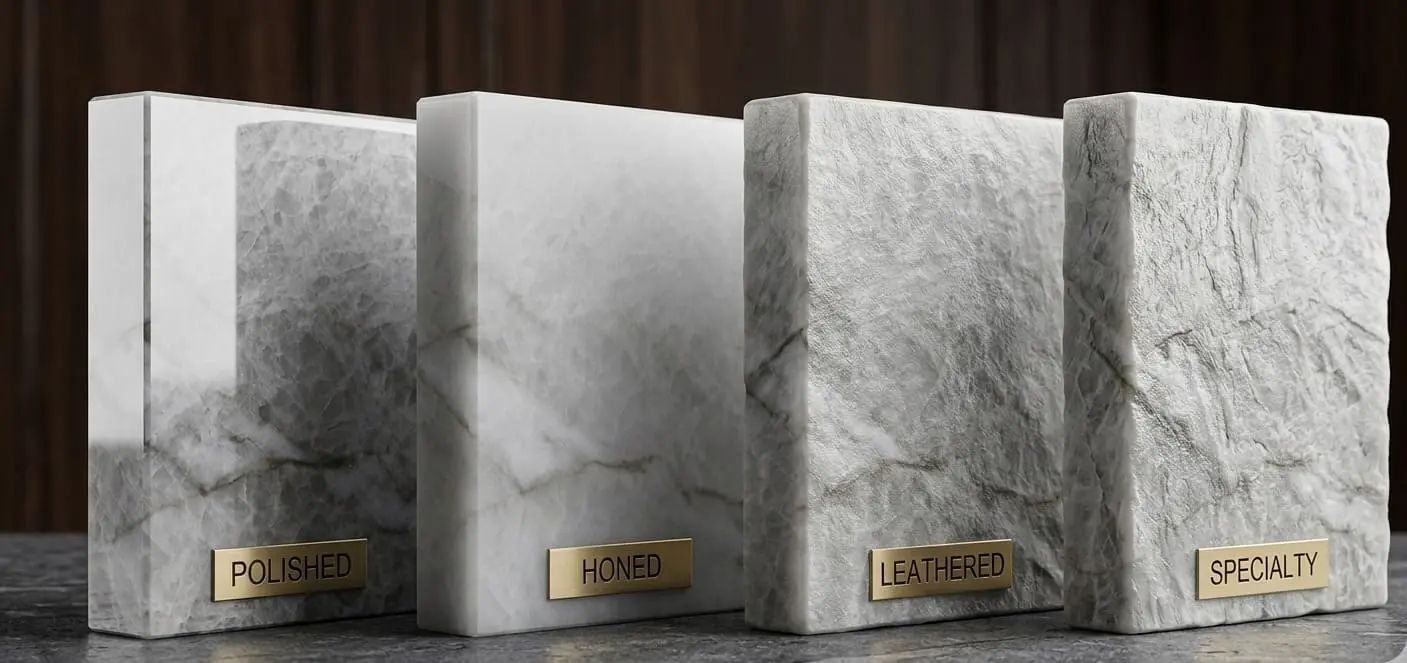
What Allure Quartzite Looks Like
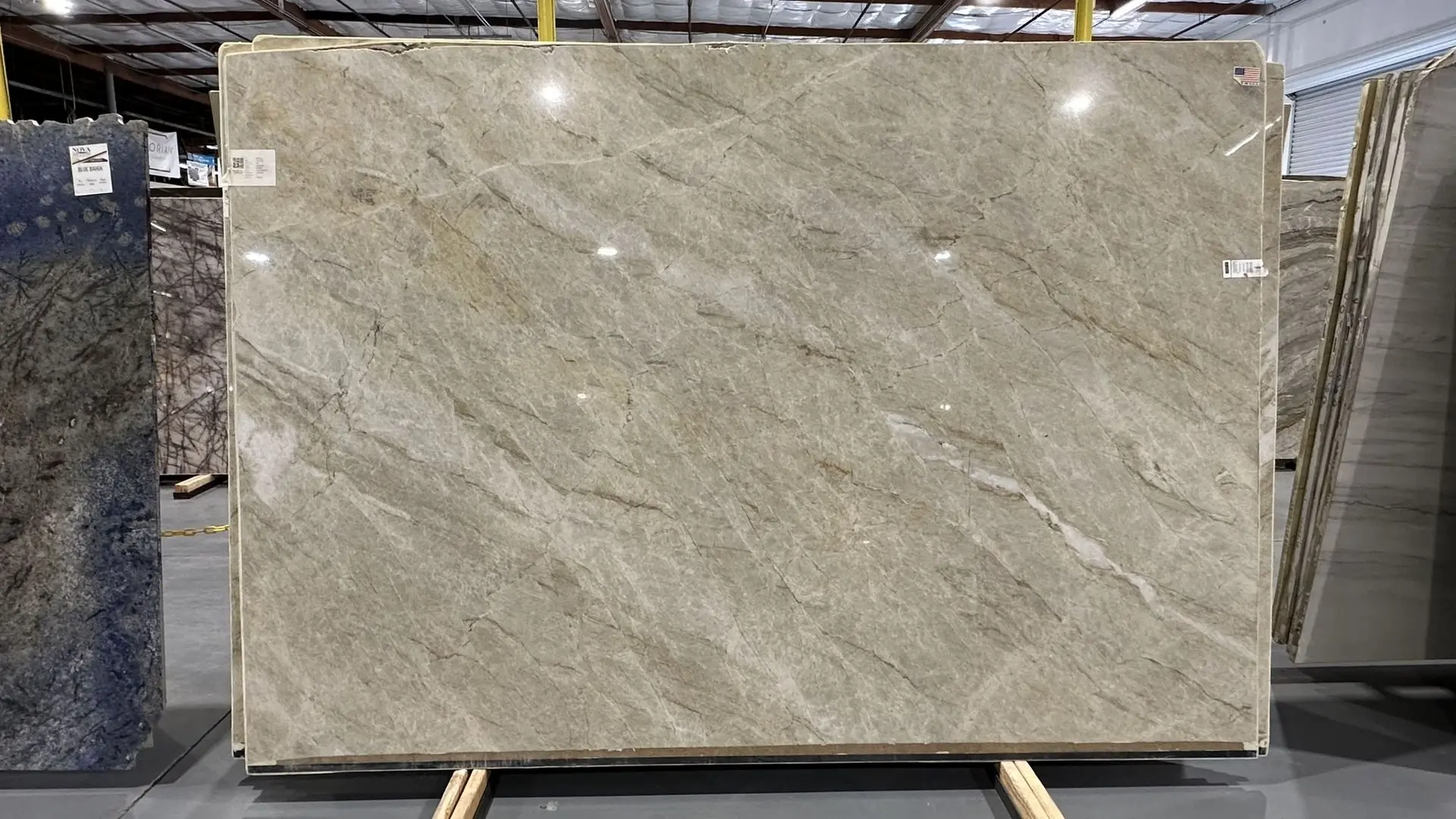
Allure quartzite features a warm, neutral base in creamy whites, soft beiges, and subtle grays, with flowing veins that sweep organically across the slab face. Depending on the individual slab, those veins can range from pale white to cool gray, with some slabs carrying light blue undertones. Because this is a natural stone, color and veining patterns vary from slab to slab. That variation means an Allure quartzite backsplash will reflect the specific character of the slab selected for the installation.
The surface is typically available in a polished finish, which brings out the stone's translucent quartz elements and gives the veining additional depth. That reflective quality allows the backsplash to pick up ambient light in the space, making smaller kitchens read as more open without heavy visual intervention.
Featured Product
Allure
Quartzite
Thickness:2.0 cm
Finish: Polished
Why Allure Quartzite Works Well Behind a Range or Cooktop
A backsplash directly behind a range or cooktop takes more direct heat and moisture exposure than most other surfaces in a kitchen. Natural quartzite handles both without degrading the way some softer stones can. The material does not absorb heat the way tile grout lines can, and the slab format eliminates the grout joints where grease and residue tend to accumulate in tiled installations.
For households where the kitchen sees regular, heavy use, that combination of heat resistance and reduced maintenance is a practical advantage. A damp cloth and a pH-neutral stone cleaner are typically all that is needed for routine care. Periodic sealing helps protect against potential staining over time, but quartzite is less porous than marble, which reduces how often resealing is required. Contractors and fabricators working with this material regularly can apply for a trade account for access to trade pricing and inventory.
Design Pairings That Work
The neutral color palette of Allure quartzite makes it one of the more versatile natural stone slabs for pairing with cabinet finishes. White upper cabinets with dark lower cabinets are a natural fit, where the stone's cool-toned veining acts as a visual bridge between the two tones. Warm wood stains in species like ash, poplar, or walnut also pair well, as their cooler undertones complement rather than compete with the stone.
For hardware and fixtures, black finishes create strong contrast against the lighter slab face. Brushed gold reads as a warmer, contemporary pairing. Matte silver recedes and lets the stone carry the visual weight. In bathroom applications, the same tonal neutrality makes Allure quartzite a practical choice for a full-height backsplash behind a vanity, where it can coordinate with both warm and cool tile flooring choices.
Frequently asked questions
Allure quartzite backsplashes require straightforward routine care. Cleaning requires only a damp cloth and a pH-neutral stone cleaner. Because quartzite is less porous than marble, it requires less frequent sealing, though periodic resealing is still recommended to protect against potential staining.
Quartzite is a naturally occurring metamorphic stone quarried from the earth, while quartz (sometimes called engineered quartz) is a manufactured product made from ground stone and resin. Allure quartzite is a 100% natural material, meaning each slab carries its own color and veining pattern. Engineered quartz offers more color consistency but does not have the natural variation that characterizes Allure quartzite.
Yes. Running Allure quartzite as a full-height backsplash is one of the more common installation approaches for this material. The continuous slab surface eliminates grout lines across the entire wall section and allows the stone's veining to flow without visual interruption. Many designers specifically recommend this approach to get the full effect of the stone's natural movement.
Sealing is recommended before installation and periodically afterward. While quartzite is harder and less porous than marble, it is still a natural stone and benefits from a quality penetrating sealer to reduce the risk of staining from cooking oils, sauces, and other kitchen substances. The frequency of resealing depends on the level of daily use and the specific sealer used.
The most reliable way to choose is to view individual slabs in person, since natural variation between slabs can be significant. We carry natural stone slabs at our showroom locations in Reno, Sacramento, Minden, and Fernley. Our commission-free design consultants can help you evaluate which specific slab's coloring and patterning best fits your cabinetry, flooring, and overall design direction. Free design consultations are available at all four locations.
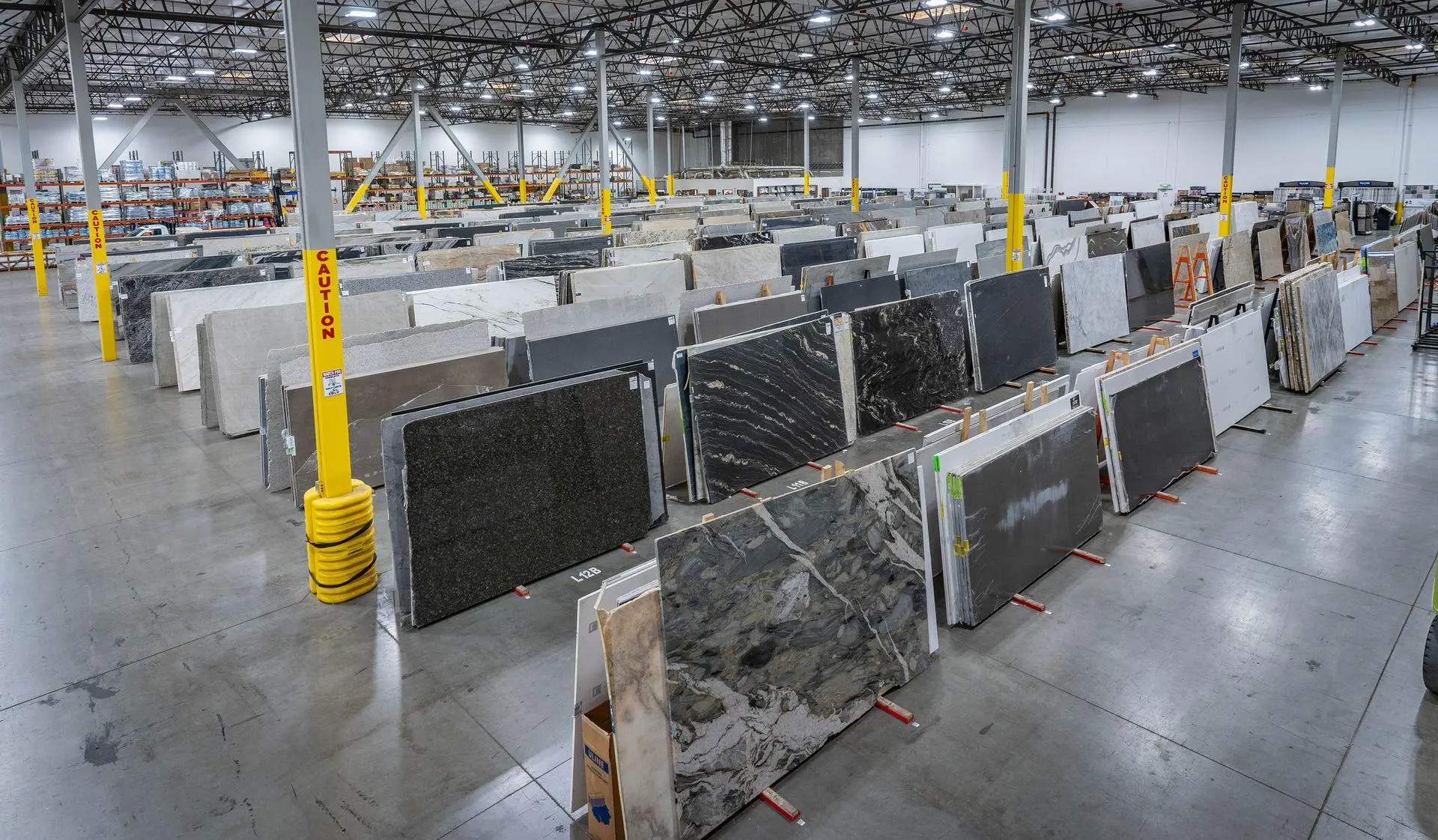
Viewing Allure Quartzite Slabs at Our Showrooms
Because Allure quartzite slabs vary in color and patterning, reviewing individual slabs in person makes a meaningful difference in the selection process. What reads as primarily gray in one slab may lean more cream or carry stronger blue in another. We carry natural stone slabs across our four showroom locations in Reno, Sacramento, Minden, and Fernley, where our commission-free design consultants can walk you through current slab inventory and help you find a slab whose specific patterning fits your project. Free design consultations are available at all four locations.