At a Glance
- Permeable pavers rely on open joints and a prepared base, not the stone alone, to move water through the surface.
- Soil type, slope, and maintenance shape how permeable pavers drain over time.
- Granite, quartzite, travertine, and porcelain are outdoor-suitable stone categories at Nova.
- Textured finishes suit wet areas better than polished surfaces.
- Local stormwater rules in Reno, Minden, and Sacramento may influence design choices.
In This Post
- Benefits of permeable pavers for stormwater control
- Where stone pavers fit in water drainage solutions
- Stone comparison, advantages, and limitations
- A five-step selection guide
- How Nova supports your project
- Key takeaways and FAQs
Why Do Permeable Pavers Suit Dry Climates?
Permeable pavers can help dry-climate properties manage runoff by letting rain and snowmelt soak through open joints instead of sheeting off hard surfaces. Results depend on soil, base design, and upkeep.
Dry regions rarely get steady rain. Instead, short, intense storms and winter snowmelt hit compacted soil and paved surfaces, sending water toward storm drains faster than the ground can absorb it.
That pattern makes surface drainage a real design question in Reno, Minden, and Sacramento, even where annual rainfall is modest. Small amounts of precipitation can still create meaningful runoff from driveways and walkways, which is why drainage planning belongs early in any outdoor stone project.
Permeable pavers are paving units set with open, aggregate-filled joints over a prepared base, so rain and snowmelt can soak in instead of running off. Stone and porcelain permeable pavers add a durable surface, but soil, slope, and the base layers do most of the drainage work.
Key Benefits of Permeable Pavers for Stormwater Control
- Less surface runoff: Water can soak through joints and ease pressure on storm drains when soil allows.
- Reduced ponding: Faster surface drainage can mean fewer standing puddles after storms.
- Cleaner runoff: The aggregate layers beneath the surface can filter some sediment before water leaves the site.
- Planning support: Infiltration features may help projects align with regional stormwater goals.
- Lasting appearance: Natural stone and porcelain are durable, though periodic sealing and routine care preserve the finish.
 Conceptual rendering
A UNR Extension LID guide lists pavers among practices that cut runoff volume and improve water quality in northern Nevada.
Federal guidance adds a caution. The EPA permeable pavement guidance notes that performance depends more on the layers beneath the surface and the surrounding soil than on the paver itself.
For homeowners comparing water drainage solutions, the best permeable pavers for water drainage are the ones matched to site soil, slope, and exposure, then maintained consistently.
Dry-climate storms often bring a sudden surge of runoff. Slowing that first rush matters, because fast-moving water carries dust, oil residue, and fine sediment toward storm drains and nearby creeks.
Sealing deserves attention too. Granite, quartzite, and travertine need sealing, so confirm the right sealer and maintenance schedule for the exact product before use.
Where Do Stone Pavers Fit in Water Drainage Solutions?
Stone suits several outdoor zones where runoff concentrates. Browse exterior stone slabs online, then match each material to the zone it will serve.
Driveways and Parking Courts
Driveways collect roof runoff, vehicle fluids, and fine dust. Permeable pavers can slow that flow, but porous surfaces are not suited to spill-prone zones, so keep fuel and chemical handling elsewhere.
Granite and quartzite are outdoor-suitable and floor-rated categories. Load limits for vehicle areas should be confirmed with the project engineer and the product manufacturer.
 Conceptual rendering
Patios, Walkways, and Pool Surrounds
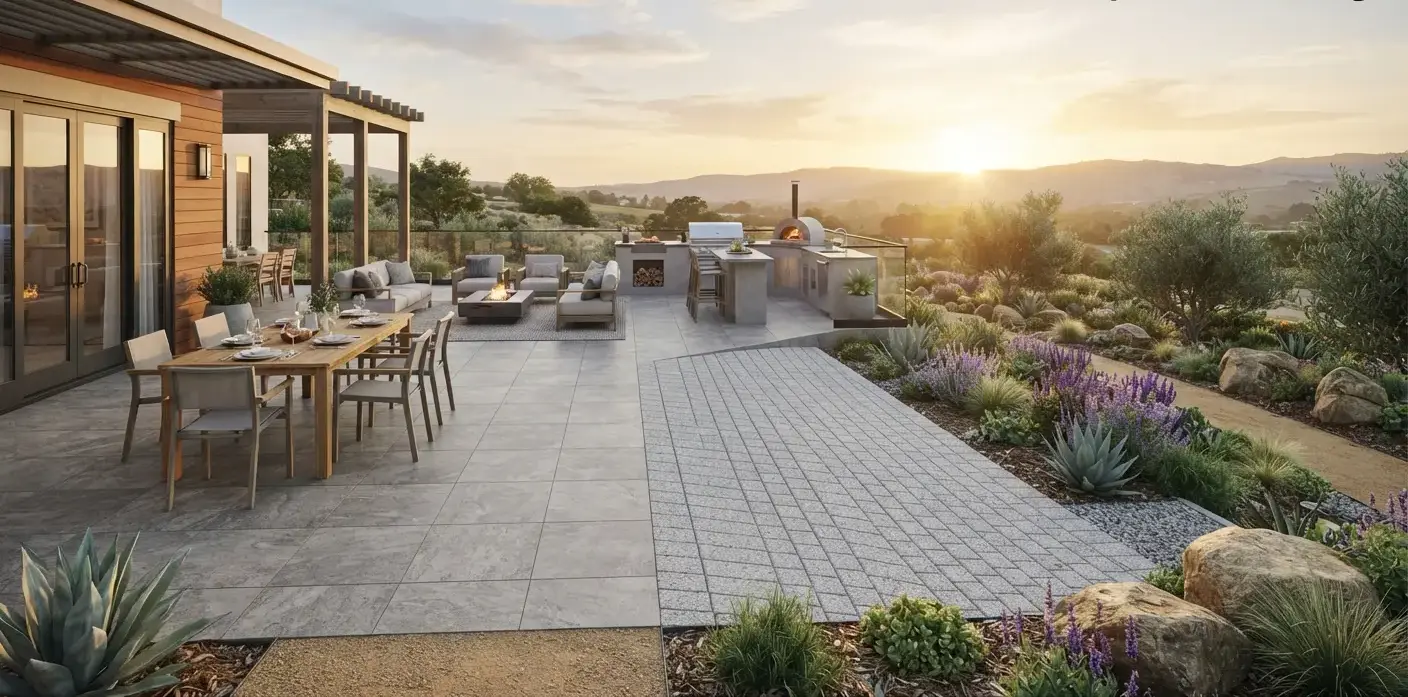
Patios and walkways with permeable pavers shed water toward landscaping when joints and grading work together. Polished surfaces become slippery when wet, so choose textured finishes near pools and entries.
Gravel or planted borders beside permeable pavers give water a soft landing zone. Native, drought-tolerant plants can use that moisture, which helps reduce runoff leaving the property.
Porcelain is in Nova's UV-resistant category and generally does not require sealing, though routine cleaning still helps. Travertine is generally outdoor-approved; verify the exact product's UV rating and frost data.
Cold Snaps, Snowmelt, and Frost
Reno and Minden winters add freeze-thaw cycles to the equation. Permeable pavers can move meltwater off the surface, yet frost suitability still needs confirmation from the exact product's data.
Avoid sand for traction on permeable pavers, since fine particles can clog joints. Keep plowed snow storage away from paved areas so meltwater does not carry sediment onto them.
Joints, Edges, and Overflow Routes
Water needs a place to go during heavy storms. Designers often pair open joints with overflow paths, so extreme rainfall does not pond against walls, garages, or doors.
Stone Comparison for Outdoor Drainage Projects
Use this comparison to narrow outdoor stone choices before consulting a design professional.
Stone | Outdoor Use | UV Category | Sealing | Wet-Area Note |
Granite | Outdoor-suitable | UV-resistant | Needs sealing | Choose textured finish |
Quartzite | Outdoor-suitable | UV-resistant | Needs sealing | Choose textured finish |
Travertine | Generally outdoor-approved | Not in UV-resistant category; verify product rating | Needs sealing | Textured finish; check frost data |
Porcelain | Outdoor-suitable | UV-resistant | Generally not required | Choose matte or textured finish |
Marble and dolomite are better reserved for indoor spaces, so both are left out of this outdoor comparison.
Advantages and Limitations of Permeable Pavers
 Conceptual rendering
Advantages
- Can reduce runoff and ease strain on storm drains
- Lets nearby landscaping receive some of the water
- Supports regional low impact development goals
- Pairs durable stone with attractive finishes
Limitations
- Fine sediment can clog joints without regular cleaning
- Clay or compacted soils may drain slowly
- Not suited to spill-prone or hazardous-material areas
- Natural stone may need periodic sealing
Five Steps to Match Stone to Your Drainage Plan
- Map your water flow. Note where roof, driveway, and slope runoff collects after storms.
- Confirm soil and local rules. Review the Truckee Meadows stormwater program or local Sacramento requirements with a qualified professional.
- Match stone to exposure. Weigh sun, frost, and traffic against each material's outdoor suitability.
- Choose a safe finish. Select textured surfaces for wet areas and settle joint widths with your designer.
- Request guidance. Request a slab quote to compare options with a consultant.
How Nova Tile and Stone Supports Your Project
Nova Tile and Stone team supplies exterior stone and porcelain products for permeable pavers and other drainage-conscious hardscape projects. Commission-free design consultants help compare material options and narrow selections, while Nova serves strictly as a material supplier.
Arranged delivery assistance is available for slab orders. Consultants can review available finishes, sealing needs, and outdoor suitability before a purchase decision is made.
They can also help evaluate both appearance and performance, including selecting granite tones that complement desert landscaping while keeping finish durability and sealing requirements in focus.
Visit the Reno showroom to review exterior stone finishes in person. Minden customers can stop by the Minden showroom for the same guidance. Sacramento projects are supported through the Sacramento showroom team.
Ready to talk through your site? Book a design appointment to compare stone options with a consultant.
Key Takeaways
- Permeable pavers drain through open joints and a well-designed base, so surface material alone is not the solution.
- Soil type, slope, and maintenance can change results significantly from site to site.
- Granite, quartzite, travertine, and porcelain are outdoor-suitable; marble and dolomite suit indoor use.
- Choose textured finishes where surfaces stay wet.
- Verify UV and frost data for the exact product, especially for travertine.
- Confirm local stormwater requirements before finalizing materials.
Plan Your Drainage-Ready Stone Project
A thoughtfully selected stone surface can enhance your drainage plan while keeping outdoor spaces more usable following storms. Nova’s commission-free design consultants are available to help compare materials that suit your property's layout, finish preferences, and environmental conditions.
MINDEN SHOWROOM
2548 Business Pkwy, Minden, NV 89423
 Google Maps
Store hours this week:
- Mon. - Fri.: 7:30 am - 6:00 pm
- Sat.: 9:00 am - 3:00 pm
- Sun.: Closed
RENO SHOWROOM
12835 Old Virginia Rd Suite 24, Reno, NV 89521
Store hours this week:
- Mon. - Fri.: 7:30 am - 6:00 pm
- Sat.: 9:00 am - 3:00 pm
- Sun.: Closed
SACRAMENTO SHOWROOM
6100 Warehouse Way, Sacramento, CA 95826
Store hours this week:
- Mon. - Fri.: 7:30 am - 5:00 pm
- Sat. - Sun.: Closed
Share photos, measurements, and any drainage challenges, and leave with a clear recommendation of outdoor-appropriate stone solutions. Book your free consultation today.
Note: Some images on this page may be conceptual renderings created to illustrate design possibilities and may not depict actual installations.
Frequently Asked Questions
Yes, in many cases. Dry regions still see short, intense storms and winter snowmelt that overwhelm hard surfaces.
Permeable pavers let water soak in where soil allows, but results depend on soil type, base design, and maintenance, so confirm the plan with a qualified local professional.
Soil sets the pace. Sandy soils generally absorb water faster, while clay or compacted ground drains slowly and may need extra storage or an overflow route in the design. A qualified professional can evaluate site soil and recommend a drainage approach before materials are selected.
Granite, quartzite, travertine, and porcelain are outdoor-suitable categories at Nova, while marble and dolomite are better reserved for indoor spaces. Granite, quartzite, and porcelain are UV-resistant. Travertine is not in that category, so verify the exact product's UV rating. Natural stone needs sealing, while porcelain generally does not.
Fine sediment is the most common clogging concern, so regular sweeping or vacuuming helps joints keep draining. Avoid sand for traction in cold weather, keep soil and mulch from washing onto the surface, and clean spills promptly. Skip abrasive cleaners, which can damage stone finishes.
Nova Tile and Stone serves Reno, Minden, and Sacramento with exterior stone and porcelain materials, commission-free design consultants, and arranged delivery assistance for slabs. Nova supplies materials only, so a licensed contractor handles the building work. Visit a showroom to review finishes in person before choosing.