At a Glance
- Outdoor stacked stone isn't hard to maintain. Upkeep comes down to three early choices: stone type, panel texture, and wall placement.
- Granite asks the least of an owner, quartzite is a close second, and travertine works best on covered, dry walls.
- Marble and dolomite are better kept for indoor features, not patio walls.
- In Reno and Minden, sprinklers leave more hard water spots than rain does, so redirect spray away from the wall.
- Flatter panel faces shed leaves and dust, and blended mid-tone colors hide spots best.
- Near a grill, keep stacked stone a step back from the cooktop and use a flat granite surface where grease lands.
In This Post
- Why Sprinklers Matter More Than Rain in the High Desert
- Which Stone Asks the Least of You
- Matching the Stone to How You Use the Yard
- Panel Texture and Color Change the Cleaning
- Trees, Planters, and Downspouts Near the Wall
- Keep the Grill From Becoming the Upkeep
- Conclusion
- Frequently Asked Questions
- Sources
Outdoor stacked stone isn't hard to maintain. For most walls, upkeep comes down to three choices made before the stone goes up: the type of stone, the texture of the panel, and how far the wall sits from sprinklers and grills.
Granite, quartzite, and travertine are all good fits for exterior walls, and granite asks the least of an owner. We don't recommend marble or dolomite for a patio wall; we keep both for indoor features.
This guide is written for high-desert yards in Reno and Minden, where homeowners are choosing stone for an outdoor kitchen base, a garden wall, or an entry accent. At Nova Tile and Stone, stacked stone sits in our pavers and exterior stone category beside pool coping and pavers.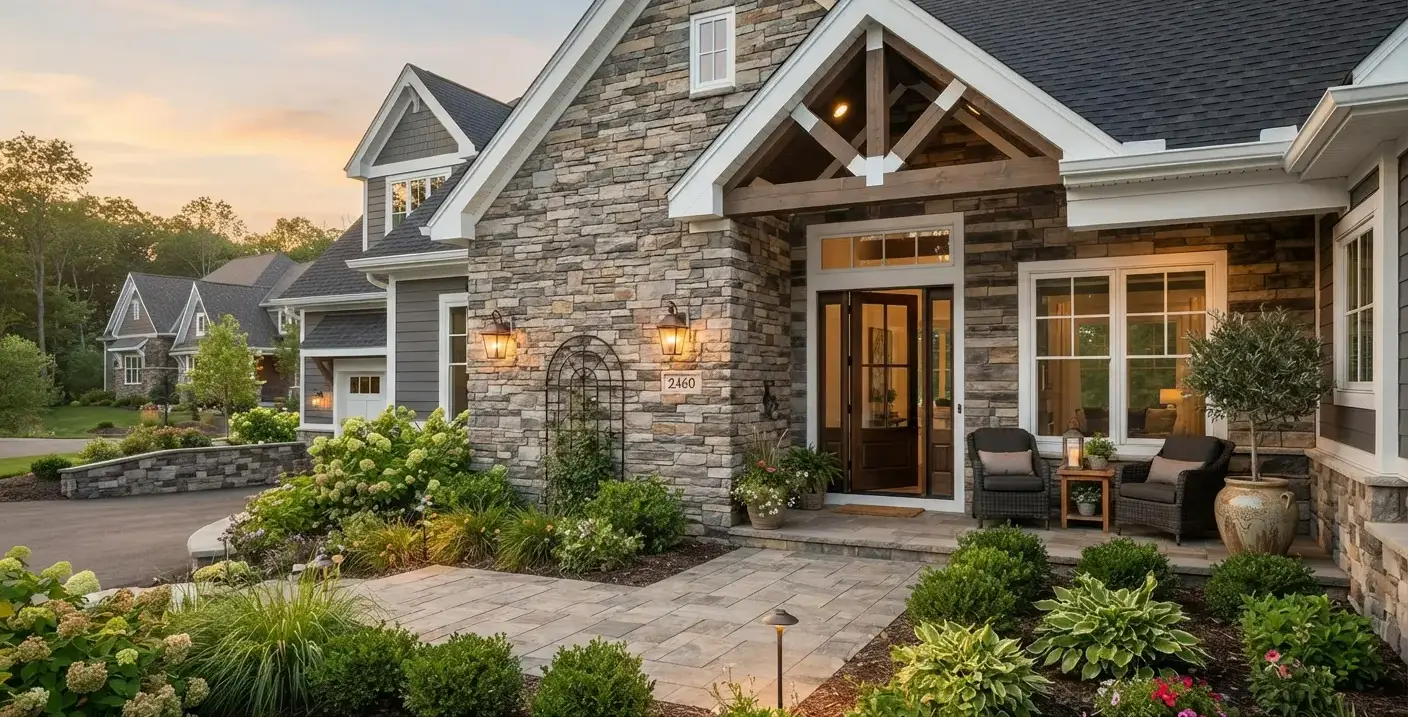
Why Sprinklers Matter More Than Rain in the High Desert
In northern Nevada, much of the water that reaches an outdoor wall doesn't come from the sky. The Western Regional Climate Center reports that Reno averages 49 days a year with measurable precipitation, and Nevada's valleys average about nine inches of precipitation annually. That's good news, because it means the owner, not the weather, controls most of the water the wall sees.
A wall in the path of a lawn sprinkler, on the other hand, gets wet every time the system runs. The same WRCC summary notes that low humidity and abundant sunshine produce rapid evaporation, so irrigation water dries fast and leaves its minerals behind on the stone.
The Natural Stone Institute's care guide lists hard water spots among the common marks found on stone. Our advice is to redirect sprinkler heads away from the wall before choosing a color, because that one change removes a cleaning task that would otherwise repeat all summer.
Drip irrigation is a gentler choice for planters that run along a wall. It waters the soil at the roots rather than spraying the stone face, and it helps keep the lowest course dry.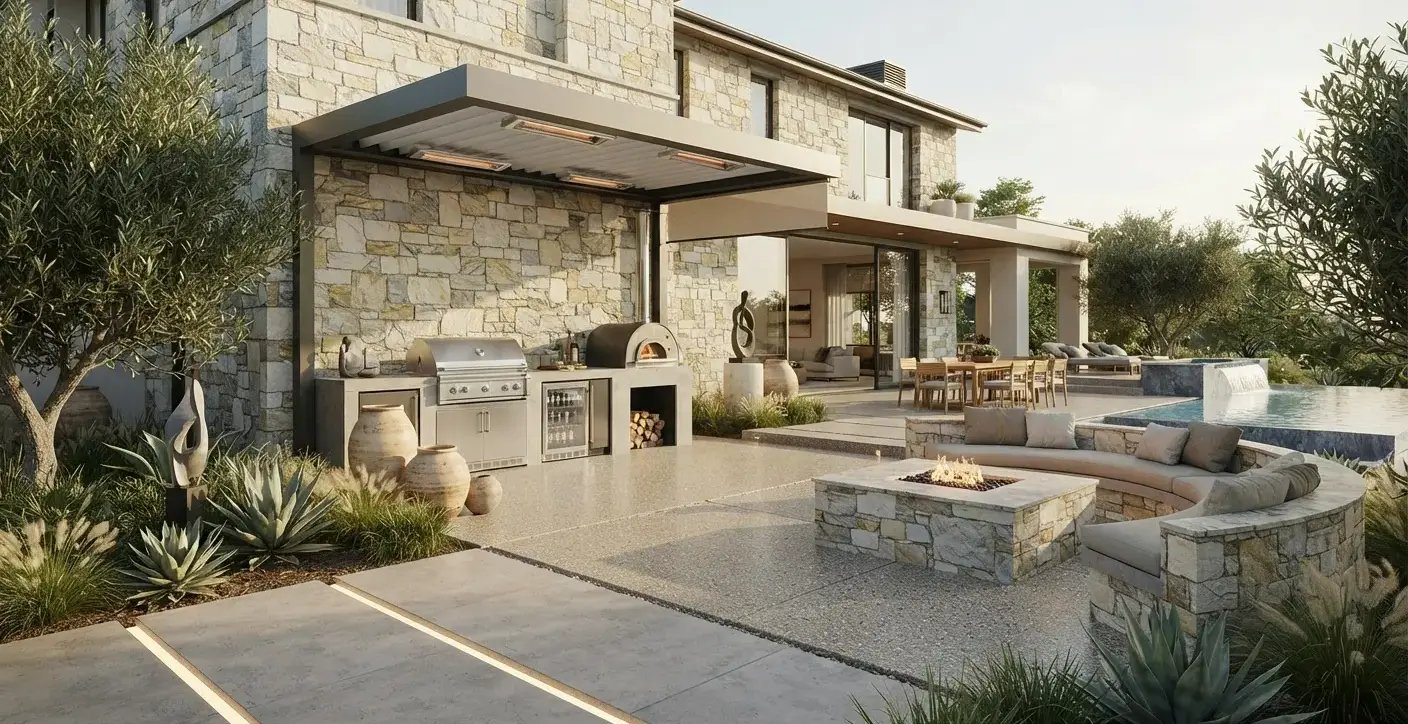
Which Stone Asks the Least of You
Granite asks the least. It's dense, it handles sun and the odd splash well, and a light routine keeps it looking right. It's the stone we suggest for owners who want a wall that rarely needs a second thought.
Quartzite is a close second. It holds up well outside with the same light routine, and it's a good pick for owners who want a lighter, more varied look than most granites offer.
Travertine asks the most of the three. Its natural holes collect dust, acidic cleaners like vinegar can dull it, and those same holes can hold water, which matters in a climate that freezes. It's a beautiful stone where it stays covered and dry.
We don't recommend marble or dolomite for patio walls. Both are lovely indoors, but neither belongs on a wall that faces Nevada weather.
The gap between stone types is real. ASTM International's stone committee has noted that how well natural stone holds up to repeated freezing and thawing varies from one type of stone to another.
That matters in Reno and Minden, where WRCC notes that across northern and central Nevada, freezes start early in autumn and last until late spring. In spring and fall, a wall soaked by evening sprinklers can freeze overnight, which is another reason to choose a dense stone and keep the spray off the wall.
Matching the Stone to How You Use the Yard
The right stone depends less on the wall itself and more on what happens around it. Three common situations show how the choice plays out.
For an outdoor kitchen where the family cooks several nights a week, granite is the clear pick. It resists stains, but grease still needs a prompt wipe, and it pairs naturally with a granite counter.
For a covered entry or a porch accent wall that sees little water and no cooking, travertine is a lovely choice. Its warm tones stand out where the wall is protected, and the extra care it asks for barely comes into play.
For a garden wall that borders a lawn, quartzite or granite in a blended mid-tone makes the most sense. Both handle a lawn-side spot well, though redirecting the spray still saves cleaning, and the mid-tone hides whatever does land. If one stone has to cover all three spots, choose granite.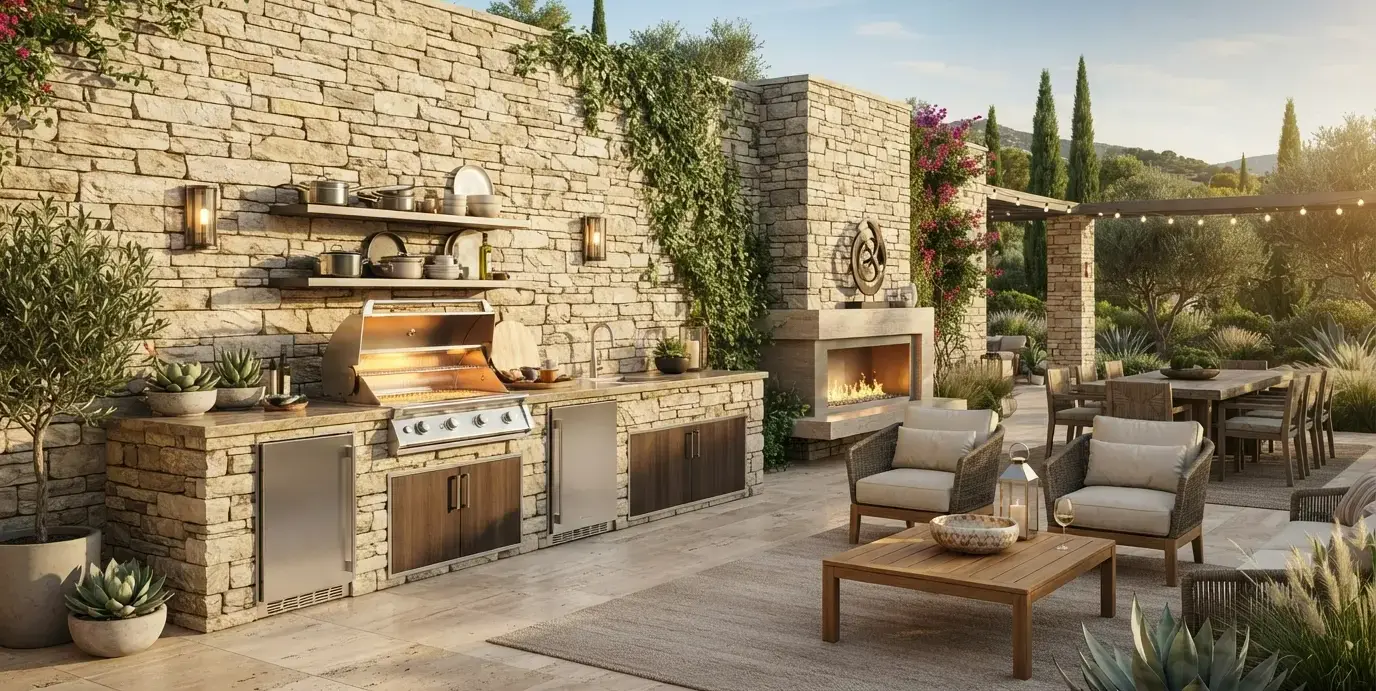
Panel Texture and Color Change the Cleaning
Texture decides how much a wall holds onto. A deeply ridged face catches leaves, dust, and cobwebs on every ledge, while a flatter, smoother face sheds most of that with a simple rinse.
Color decides what shows. In our experience, blended mid-tones such as warm grays and soft browns hide dust and water spots better than very dark or very pale stone, which is why we lean toward them for walls near a lawn or driveway. Very dark stone shows pale mineral spots clearly, and very pale stone shows dust and soil.
Neither choice changes how long the stone lasts. Both change how often the wall looks like it needs attention, so compare a few textures and tones side by side at one of our showrooms, ideally with photos of the spot where the wall will go.
Trees, Planters, and Downspouts Near the Wall
Leaves, bark, and bird droppings are the other everyday marks on an outdoor wall, and they're less of a worry than most owners expect. The Natural Stone Institute notes that outdoors, once the source is removed, sun and rain will generally bleach these organic stains out over time.
Northern Nevada helps here. WRCC puts northern and central Nevada at roughly 65 to 75 percent of possible sunshine, so a wall in full sun tends to clear light organic marks sooner than a shaded one.
Shade is where to pay closer attention. A wall that stays damp in shade, especially one hit by sprinklers, gives algae, mildew, and moss a foothold, and NSI groups all three as biological stains that need cleaning rather than waiting out.
Planting beds are the next thing to check. Soil splashed up by irrigation stains the lowest course of stone first, so a strip of gravel or mulch between the bed and the wall keeps the bottom row looking like the top.
Downspouts and roof edges matter most of all. A gutter that empties onto a wall, or a roof line that drips onto its top, soaks the same spot every storm, so route that water away before the stone is chosen.
Keep the Grill From Becoming the Upkeep
On an outdoor kitchen, grease does more to a stacked stone wall than weather does. Every ledge beside or behind a grill collects oil spatter, and the Natural Stone Institute notes that oil-based stains darken stone and usually have to be dissolved rather than simply wiped away.
Our recommendation is to keep the stacked stone a step back from the cooktop and use a flat stone surface where the spatter lands. A flat surface wipes clean quickly, while a ridged one holds grease in every groove.
Granite makes a practical counter for that spot, and its color can be pulled from the same tones as the wall. Our live slab inventory is updated weekly, so you can look for a granite that suits your stacked stone before you visit. When one stands out, the slab quote request form takes the slab name and any bundle number you noted.
Conclusion
Outdoor stacked stone stays easy to live with when the stone and the spot are chosen together. Before picking a stone, stand where the wall will go and note three things: what sprays or drips on it, what cooks near it, and how much the trees around it shed. Those answers point to the right stone and texture faster than any inspiration photo.
Bring those notes to a free design consultation, a 45-minute, no-obligation session where our team helps match stone, texture, and color to the spot. Contractors and designers planning several yards can apply for a trade account for job-site delivery and a dedicated rep
Frequently Asked Questions
Granite is the lowest-maintenance choice among the natural stones suited to exterior walls. Quartzite is a close second, while travertine needs a little more attention because its natural holes hold onto dust and debris. We don't recommend marble or dolomite for exterior walls.
Yes. Sprinkler water dries on the stone and can leave hard water spots behind, especially in a dry, sunny climate. Redirecting sprinkler heads away from the wall is the simplest way to avoid them.
Travertine works on outdoor walls, but it takes a little more care than granite or quartzite. Its natural holes collect dust, and acidic cleaners such as vinegar can dull the surface. Its holes can also hold water, which matters where winters freeze.
It can, but grease collects on every ledge of a stacked stone face. Keeping the stacked stone a step back from the cooktop and using a flat stone surface where the spatter lands makes cleanup much easier.
A flatter, smoother face is the easiest to keep clean, since leaves and dust have fewer ledges to settle on. A deeply ridged face looks more rugged but holds onto more debris. Blended mid-tone colors also help hide what does settle on the ledges.
Sources
- Western Regional Climate Center, Climate of Nevada | https://wrcc-archive.dri.edu/Climate/narrative_nv.php
- Natural Stone Institute, Care & Cleaning of Natural Stone | https://www.naturalstoneinstitute.org/consumers/care/
- ASTM International, Proposed Standard Aids in Testing Natural Stone Resistance to Freeze-Thaw Cycles | https://www.astm.org/news/press-releases/proposed-standard-aids-testing-natural-stone-resistance-freeze-thaw-cycles
Note: Some images on this page may be conceptual renderings created to illustrate design possibilities and may not depict actual installations.