The best hardscape ideas for small backyards and side yards include a compact paver patio, large-format porcelain pavers, stepping stones set in gravel, a low stone seating wall, a small fire pit area, and a narrow paver or gravel path. Hardscape is the non-living part of a landscape, such as pavers, natural stone, gravel, and walls, and it suits small spaces because it creates usable, lower-maintenance areas where lawn often struggles. In side yards, gravel, river rock, and permeable pavers also help manage drainage.
Below, we cover each idea, design tips that make compact spaces feel larger, and material considerations such as slip resistance, maintenance, and climate.
Why Hardscape Works Well in Small Outdoor Spaces
Small yards come with their own challenges. Grass struggles in shaded corners, narrow strips along the side of the house often turn into muddy or weedy dead zones, and there is rarely enough room to separate a dining area from a garden or play space.
Hardscape addresses these problems directly. A stone or paver surface gives you a stable, level area that stays usable year-round. It reduces the amount of lawn you have to water and mow, which matters in regions with hot, dry summers. It also lets you create defined zones in a space that might otherwise feel like one undivided patch of ground. When you plan the hardscape first and then fill in with planting, even a very small yard can feel organized and functional.
Start With How You Want to Use the Space
Before choosing materials, it helps to decide what you want the space to do. A small backyard usually cannot do everything, so prioritizing one or two main uses leads to a better result. Common goals include:
- A place to eat outdoors with a small table and chairs
- A quiet seating area for reading or morning coffee
- A fire pit or gathering spot for evenings
- A garden area with raised beds or containers
- A clean, functional pathway to a gate, shed, or trash bins
Once you know the main purpose, you can size the hardscape accordingly. A bistro table for two needs far less room than a six-person dining set, and a simple path needs only enough width for comfortable walking. Measuring your furniture and the clearance around it is an important planning step, and those numbers are worth bringing to a free design consultation.
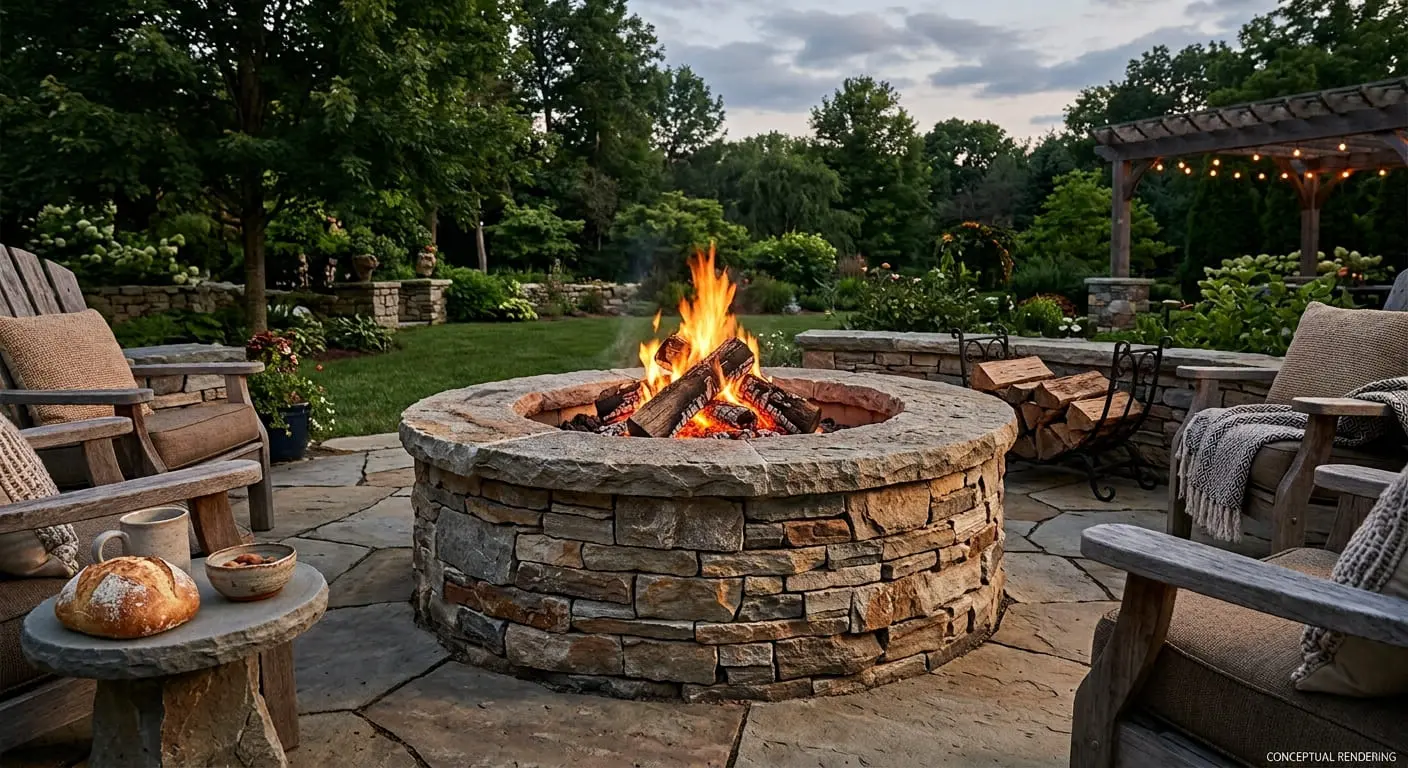
Small Backyard Hardscape Ideas
Create a Compact Paver Patio
A modest patio is often the anchor of a small backyard. Concrete pavers, natural stone pavers, and porcelain pavers all work well here, and each offers a different look. Concrete pavers come in a wide range of shapes and colors at an approachable price point. Natural stone pavers such as travertine, bluestone, or sandstone bring organic color variation and texture. Porcelain pavers offer a clean, consistent appearance and are available in looks that mimic wood, concrete, and natural stone. If you are working with a tight budget, our overstock sale offers discounted materials, though selection varies and all sales are final.
For a small patio, consider shapes other than a basic rectangle. A circular or curved patio can soften the hard lines of fences and walls, while a square patio set on an angle can make the yard feel less boxy.
Use Large-Format Porcelain Pavers to Open Up the Space
Larger pavers often make a small space feel bigger. Fewer joints mean less visual clutter, so the surface reads as one continuous plane. Large-format porcelain pavers, such as 24x24 or 24x48 sizes, are a common choice for modern and contemporary yards. Outdoor porcelain pavers are usually thicker than indoor tile, often around 2 cm, so choose products rated for exterior use rather than interior tile.
If your yard connects directly to an indoor room, an outdoor paver that echoes the color or look of your interior flooring creates a smooth visual flow from inside to out.
Build Zones With Changes in Material
In a small backyard, you can separate areas without building walls or fences. A change in material does the job on its own. For example, you might use pavers for a dining area, switch to decomposed granite or gravel for a lounge corner, and add a stepping stone path that connects the two.
To keep the look unified, choose materials in related tones. Warm beige pavers paired with tan gravel and buff stepping stones feel connected, while mixing too many unrelated colors can make a small yard feel busy.
Add a Stone Seating Wall or Built-In Bench
Freestanding outdoor furniture takes up floor space, which is limited in a small yard. A low seating wall built from stacked natural stone or segmental wall block, or from a structural core faced with stone veneer, can double as a bench, a planter border, and a visual edge for the patio.
A seating wall placed along one side of a patio can replace several chairs, leaving more open floor area for a table or walking room.
Create a Small Fire Pit Area
A fire pit does not require a large yard. A compact circular patio with a fire feature at its center can fit into a corner and serve as a gathering spot. Pavers or natural stone make a noncombustible surround. The inside of a wood-burning fire pit, however, is typically lined with fire brick or a steel insert, since many pavers and stones can crack under direct heat. Keep river rock away from the flames, because moisture trapped inside it can cause it to crack or burst.
Before planning a fire feature, check local codes, burn restrictions, and any homeowners association rules. Many communities require clearance from structures, fences, and overhanging trees, and some limit wood burning on certain days.
Try Stepping Stones Set in Gravel or Groundcover
Stepping stones are a flexible hardscape option for small spaces. Large flagstone pieces, cut stone pavers, or porcelain pavers can be set in gravel, mulch, or low-growing groundcover to create a path or a casual patio. This approach feels lighter than a solid paved surface, allows water to soak into the ground, and leaves room for planting between the stones.
Low-growing plants between stepping stones can soften the hardscape and add color. Creeping thyme tolerates light foot traffic and adds fragrance, while dwarf mondo grass works well in gaps that are rarely stepped on.
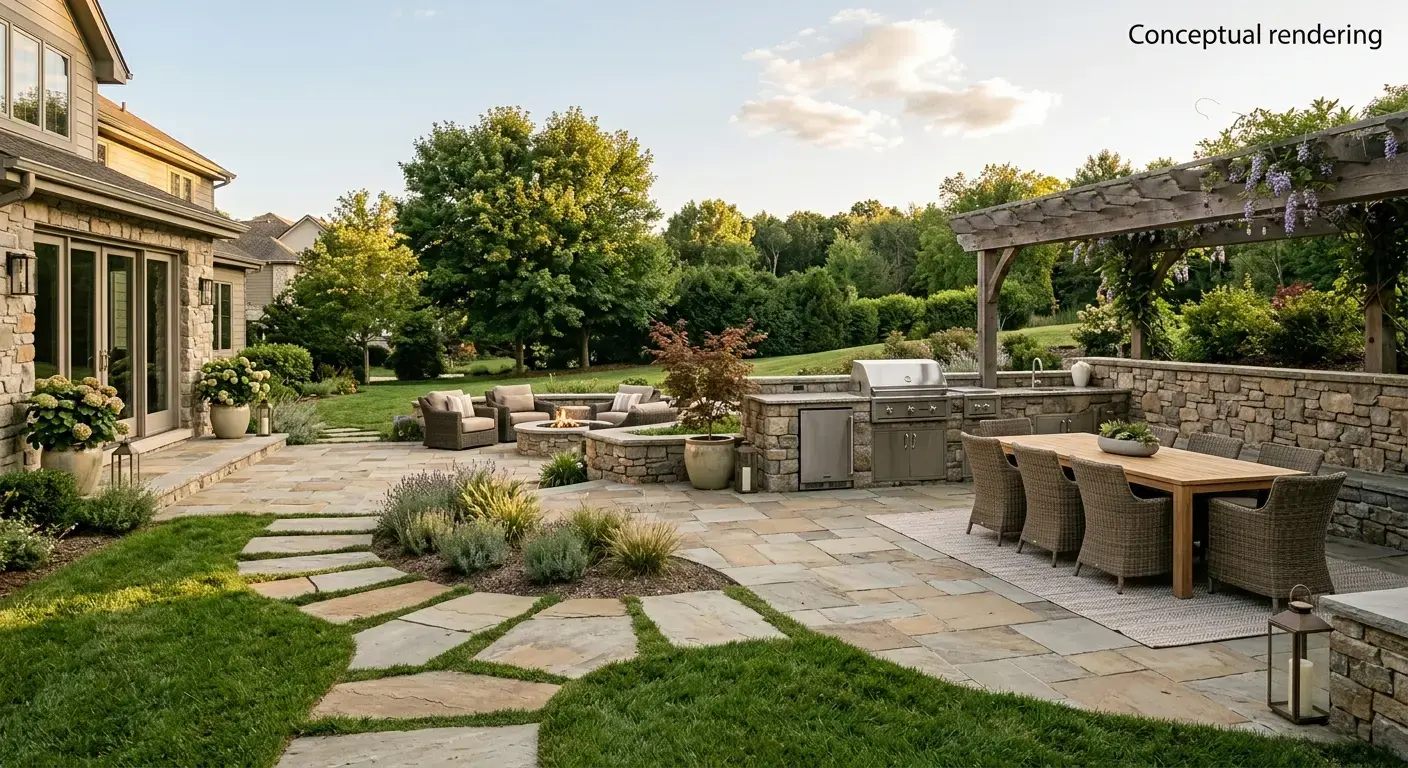
Side Yard Hardscape Ideas
Turn a Narrow Side Yard Into a Pathway
A simple, well-defined path makes a narrow side yard easy to walk through and gives it a finished appearance. Pavers laid in a running bond pattern along the length of the path can make a narrow space feel orderly, while stepping stones set in gravel create a more relaxed, garden-style look.
For most side yards, a path around three to four feet wide allows comfortable walking and leaves enough room to roll a wheelbarrow or trash bins through.
Use Gravel and Stone for Drainage-Friendly Surfaces
Side yards frequently deal with runoff from roofs and neighboring properties. Gravel, river rock, and permeable paver systems built over an open-graded base allow water to soak in rather than pooling on the surface. A dry creek bed made from river rock and larger boulders, graded to slope away from the foundation, can carry water away from the house while adding visual interest to a space that might otherwise be purely functional.
If your side yard has ongoing drainage concerns, it is worth consulting a landscape professional before choosing a surface, since grading and drainage should be addressed first. Landscape contractors and designers sourcing materials for client projects can apply for a trade account for trade pricing and job-site delivery.
Create a Tidy Utility Zone
Many homeowners use the side yard for trash and recycling bins, a potting bench, or garden storage. A level paver or stone pad gives these items a clean, stable spot and keeps the area from becoming muddy. If your side yard also holds HVAC equipment or a water heater, keep hardscape and screening clear of the spacing required by the manufacturer and local code, so the equipment stays ventilated and easy to service.
Make a Side Yard Garden Nook
If your side yard gets good light, it can become a small garden retreat. A narrow strip of pavers with raised beds or large containers along one side creates a practical growing area. Adding a small bench or a single chair at the end of the path turns the side yard into a quiet spot to sit.
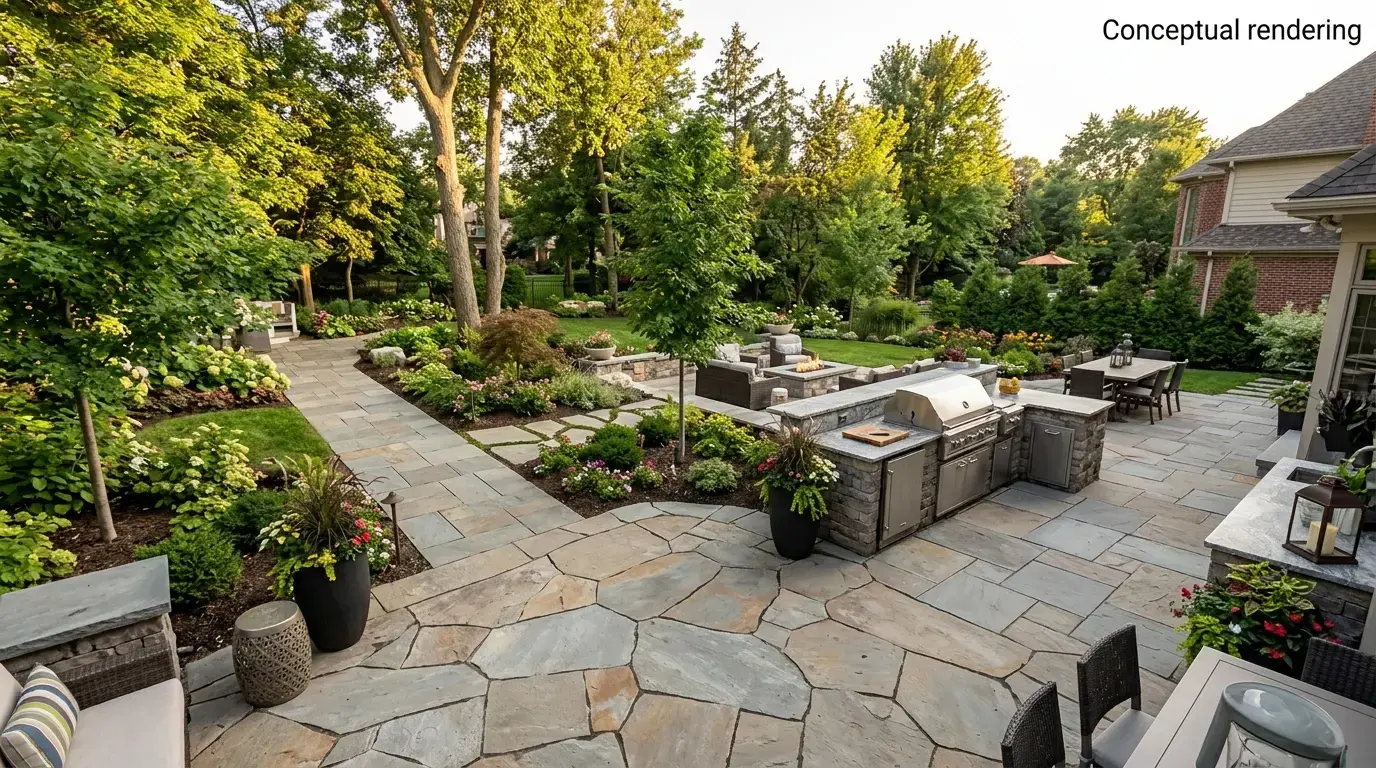
Design Tips That Make Small Spaces Feel Larger
Keep the Material Palette Simple
In a small yard, two or three complementary materials usually work better than many. A single paver style for the main patio, one gravel or groundcover option, and one accent stone for walls or edging is often enough. Comparing paver, gravel, and stone colors side by side at one of our showroom locations can make it easier to narrow down a palette.
Pay Attention to Pattern Direction
The direction of your paver pattern affects how the space feels. Running pavers lengthwise along a narrow side yard draws the eye forward and emphasizes depth. Laying them across the width can make a narrow space feel wider. Herringbone and diagonal patterns add movement and visual interest to a small patio without adding more materials.
Consider Color and Heat
Light-colored pavers and stone reflect more sunlight and stay cooler underfoot in summer, and they also help small spaces feel more open. Darker materials absorb more heat in full sun, so they may be better suited to shaded areas.
Leave Room for Planting
A small yard covered entirely in hardscape can feel harsh and hot. Leaving planting pockets along edges, between stepping stones, or in raised beds keeps the space balanced.
Practical Considerations Before You Choose Materials
A few practical factors are worth thinking through before selecting materials for a small backyard or side yard.
Slip resistance. Outdoor surfaces get wet from rain, irrigation, and pool splash. Natural stone with a textured finish, such as flamed, brushed, or tumbled, offers better traction than a polished or honed surface. For porcelain pavers, check the manufacturer's specifications to confirm the product is intended for exterior wet areas.
Maintenance. Gravel may need occasional raking and topping off, and pavers set in sand may need periodic sweeping and joint sand replenishment. Porcelain pavers have very low water absorption and generally resist staining, while porous natural stones such as travertine and sandstone may benefit from periodic sealing.
Climate. In areas with freeze-thaw cycles, confirm that the material is rated for exterior use in cold weather, since some porous stones absorb water that can expand when it freezes. For porcelain pavers, look for products tested for frost resistance under ASTM C1026. In hot, sunny areas, consider surface temperature and color, and keep in mind that very light, smooth surfaces can create glare in full sun.
Conclusion
A small backyard or side yard does not have to be an afterthought. With thoughtful hardscape choices, even a compact space can become a place to dine, relax, garden, or simply move through with ease. Start by deciding how you want to use the space, keep your material palette simple, and use pattern, color, and planting to make the area feel open. Whether you prefer large-format porcelain pavers, natural stone, or stepping stones set in gravel, the right combination can make a small yard feel like an extension of your home. If you would like help comparing pavers, natural stone, and porcelain options for your project, our team offers free design consultations at our showrooms in Sacramento, Reno, Minden, and Fernley. Each location carries exterior stone for patios, walkways, and outdoor living areas.
Note: Some images on this page may be conceptual renderings created to illustrate design possibilities and may not depict actual installations.
Frequently Asked Questions
There is no single best material, since the right choice depends on your style, budget, and climate. Concrete pavers come in a wide range of shapes and colors and generally cost less than natural stone, natural stone offers organic texture and color variation, and large-format porcelain pavers create a clean, consistent surface that can make a small space feel larger.
Use larger pavers with fewer joints, keep the material palette to two or three complementary options, choose lighter colors, and use pattern direction to your advantage. Leaving planting areas along the edges also helps the space feel open rather than boxed in.
A narrow side yard can become a pathway, a garden nook with raised beds, a utility area for bins and equipment, or a drainage-friendly space with gravel and river rock. Many homeowners combine a simple paver or stepping stone path with planting along one or both sides.
Yes. Stepping stones set in gravel or groundcover are flexible, allow water to drain naturally, and create a lighter look than a solid paved surface. They work well for paths, casual seating areas, and spaces where you want to mix hardscape with planting.
A path around three to four feet wide works well for most side yards. This width allows comfortable walking and leaves enough room to roll trash bins, a wheelbarrow, or garden equipment through the space.