At a Glance
- Biggest risk: moisture reaching the wall behind the stone when drainage details are missed
- Product check: confirm exterior approval, freeze-thaw data, and water absorption for the exact stone
- Visual check: review several pieces in daylight to judge color and texture range
- Care check: ask about sealing and cleaning guidance before ordering
- Best next step: review wall conditions with a qualified professional
In This Guide
- Benefits of planning ahead
- Five mistakes to avoid on exterior walls
- A comparison table, pros and cons, and a five step checklist
- How Nova Tile and Stone supports exterior stone planning
- Key takeaways and frequently asked questions
What Causes Stacked Stone Problems on Exterior Walls?
The most common stacked stone mistakes on exterior walls include skipping exterior ratings, overlooking moisture and drainage details, ignoring wall load, underestimating color variation, and neglecting sealing guidance. Most stacked stone problems can be reduced with early planning and product-specific confirmation, including absorption results from ASTM C97 testing.
Stacked stone adds depth and natural character to entries, accent walls, and outdoor living areas. Exterior walls, however, face rain, sun, and temperature swings that interior walls rarely experience.
Climate matters across Reno, Minden, and Sacramento, where winter cold, summer sun, and seasonal moisture can all influence how a wall performs over time.
This guide covers the planning errors behind disappointing results, along with practical ways to confirm a product before ordering. Each point focuses on selection, specification, and care, so decisions stay informed from the start.
Natural stone varies by quarry and lot, so even careful choices benefit from a review by a qualified wall professional and a check of local building requirements.
What Careful Planning Protects on Exterior Walls
Stacked stone is a layered, dimensional cladding, so small oversights can repeat across an entire wall surface. Early, informed decisions tend to protect both appearance and long-term performance.
Industry groups such as the Natural Stone Institute offer thin veneer education that explains product types and best uses, helping buyers compare options with realistic expectations.
- Reduced risk of moisture-related staining, though results depend on wall design and local conditions
- More consistent color and texture across the finished wall
- A better match between the product and its exterior exposure
- Clearer care expectations, including sealing and gentle cleaning
- Fewer surprises at delivery, since quantities and lots are reviewed early
- Stronger curb appeal that holds up better with proper care
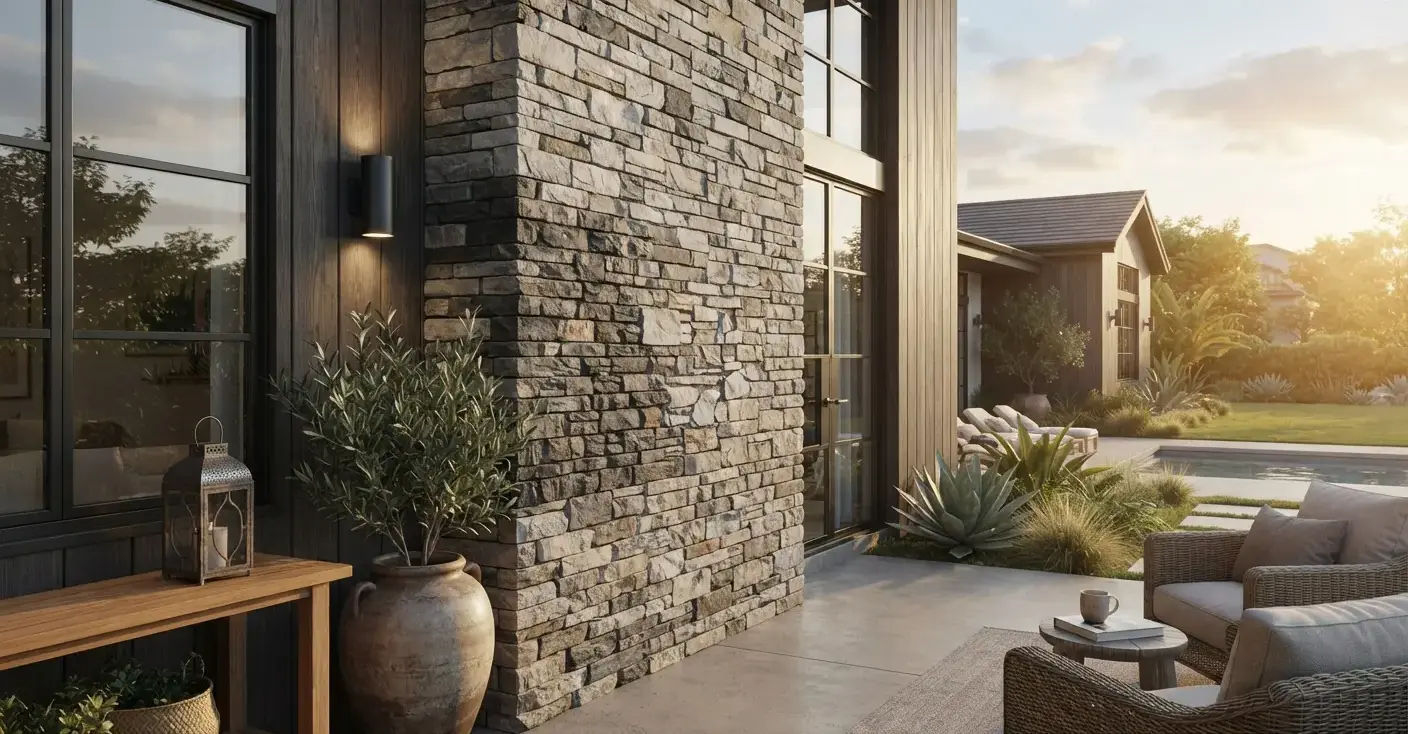 Conceptual rendering
Avoiding Stacked Stone Mistakes in Planning and Design
These are the mistakes to avoid when choosing stacked stone for exterior walls. Each one relates to selection, specification, or care, so confirm details against product data and a qualified wall professional.
1. Choosing Without Confirming Exterior Suitability
Not every stacked stone product is rated for outdoor use. Ask for the manufacturer's exterior approval, freeze-thaw results, and water absorption data. If those details are unavailable, treat the stone as indoor use only.
Sun exposure adds another variable. Granite and quartzite sit in Nova's UV-resistant category, while travertine is generally outdoor-approved but not part of that group. Marble and dolomite are better reserved for indoor spaces.
2. Overlooking Moisture and Drainage Details
Stacked stone can absorb and hold moisture, so water that reaches the wall behind it needs a path out. Building envelope writers trace many veneer leaks to flashing and drainage failures rather than the stone itself.
Warm weather adds another factor, since inward vapor drive research shows stored moisture can move toward the wall behind adhered veneer. Professional review of the wall design is the safest response.
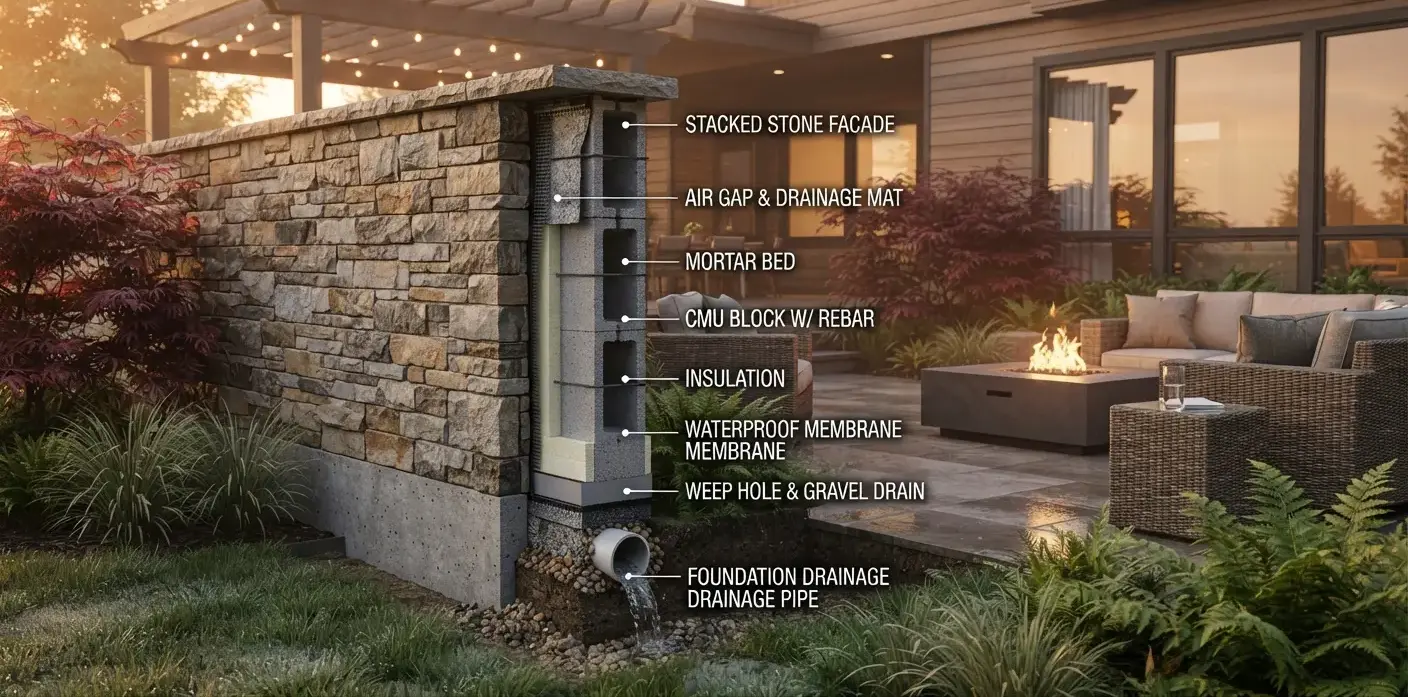 Conceptual rendering
3. Ignoring Wall Load and Backing Conditions
Stone is heavier than most siding materials. Compare the product's weight per square foot with what the existing wall and backing are designed to carry, and confirm the answer with a professional.
Corners, window returns, and transitions also deserve attention. Specialty pieces and trim details affect both appearance and water shedding, so review them on a drawing before ordering.
4. Underestimating Color and Texture Variation
Natural stone varies by quarry, lot, and piece. Judging from a single piece can hide the true range, which may surprise buyers once a full wall comes together.
View several pieces in daylight and in shade, confirm everything comes from one lot, and allow a modest overage for waste and future needs.
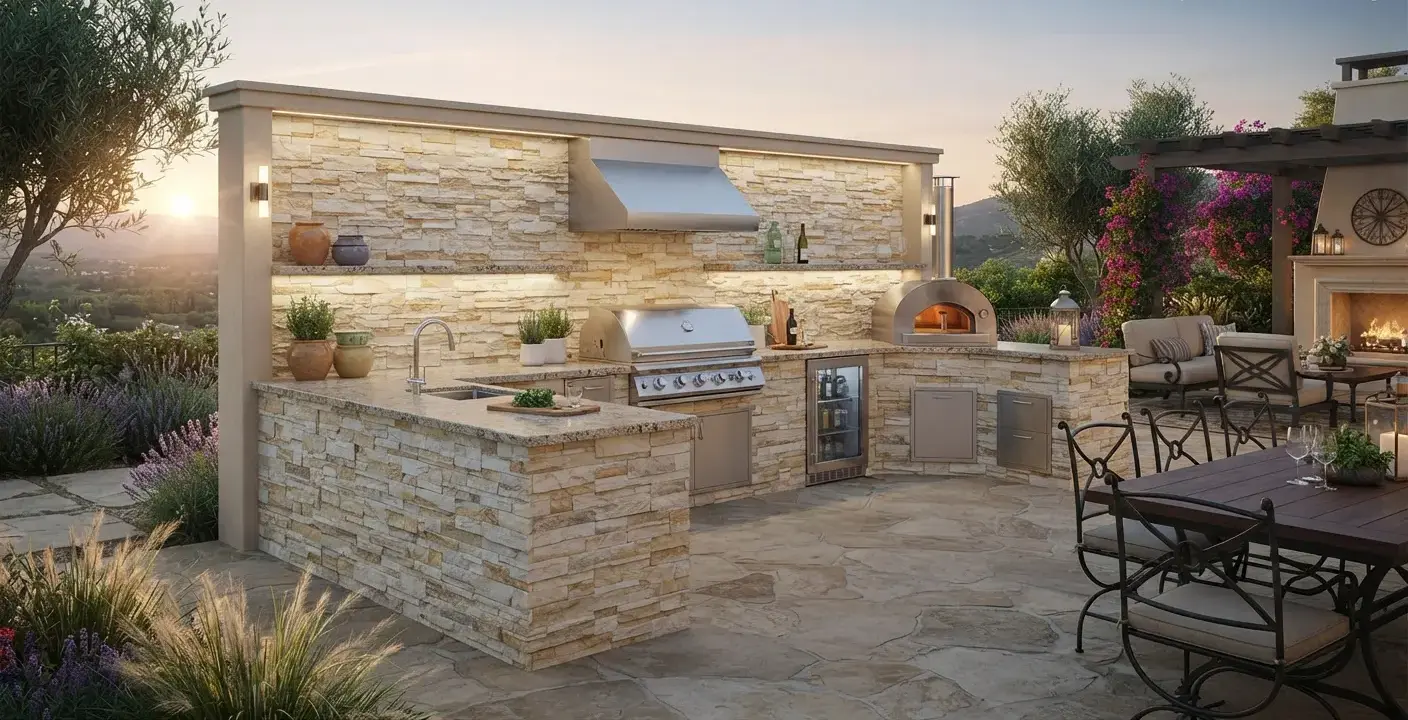 Conceptual rendering
5. Skipping Sealing and Care Planning
Many natural stone products, including quartzite and travertine, benefit from sealing, though requirements vary by product. Ask for the exact sealing guidance before ordering, since it shapes long-term appearance.
Care habits matter as well. Clean spills promptly and avoid abrasive cleaners. Durable stone still depends on proper care to preserve its appearance.
Common Mistakes Compared With Better Approaches
Planning Area | Common Mistake | Better Approach |
Exterior rating | Assuming any stacked stone suits outdoor walls | Confirm exterior approval and freeze-thaw data for the exact product |
Moisture | Leaving drainage details to chance | Review flashing and drainage with a qualified wall professional |
Weight | Ignoring panel weight and backing | Compare product weight with wall design limits |
Color | Judging from one piece | Review several pieces from one lot in daylight |
Care | Delaying sealing questions | Request sealing and cleaning guidance up front |
Advantages and Limitations of Exterior Stacked Stone
Advantages
- Natural texture and shadow lines add depth to exterior walls
- A wide range of tones suits many architectural styles
- Real stone character that can age gracefully with proper care
Limitations
- Moisture details need careful planning
- Natural color variation requires lot review
- Sealing and cleaning routines may apply, depending on the stone
- Not every product suits every climate or exposure
Five Checks to Reduce Stacked Stone Problems Before Ordering
- Confirm the exterior rating, freeze-thaw results, and water absorption data for the exact product.
- Review wall conditions, drainage, and weight limits with a qualified wall professional.
- Compare several pieces from one lot in daylight to judge color and texture range.
- Request sealing and cleaning guidance specific to the stone.
- Confirm quantities with a modest overage, then arrange delivery.
How Nova Tile and Stone Supports Exterior Stone Planning
Nova Tile and Stone works with commission-free design consultants who can discuss product data, exposure questions, and color range before an order is placed. That expert guidance helps buyers compare stone options with confidence.
Visit the Reno showroom to review stone pieces in natural light. Customers near Minden can visit the Minden showroom for the same hands-on review. Sacramento customers can also visit the Sacramento showroom.
Outdoor kitchens often pair stacked stone walls with granite or quartzite counters, and buyers can browse natural stone slabs online to coordinate tones. Matching slab surfaces can be planned through the slab quote request form.
Arranged delivery assistance helps coordinate timing once quantities are confirmed. When ready to talk through a wall, book an appointment with a design consultant for product-specific guidance.
Key Takeaways
- Confirm exterior suitability for the exact product before choosing stone.
- Moisture and drainage details deserve professional review, since many stacked stone problems trace back to water.
- Review several pieces from one lot to manage natural color variation.
- Ask about sealing, cleaning, and UV exposure before ordering.
- Avoiding stacked stone mistakes starts with early questions rather than late corrections.
Avoid Common Exterior Stone Wall Mistakes
Planning an exterior stone wall is easier with clear answers up front. A design consultant can walk through product data, exposure questions, color range, and delivery timing, so decisions feel confident rather than rushed. Bring wall photos, rough dimensions, and style ideas to make the conversation more productive.
Reno
12835 Old Virginia Rd, Suite 24 Reno, NV 89521
- Mon – Fri: 7:30am – 6:00pm
- Sat: 9:00am – 3:00pm
- Sun: Closed

BOOK NOW
Minden
2548 Business Pkwy, Minden, NV 89423
- Mon – Fri: 7:30am – 6:00pm
- Sat: 9:00am – 3:00pm
- Sun: Closed
BOOK NOW
Sacramento
6100 Warehouse Way, Sacramento, CA 95826
- Mon – Fri: 7:30am – 6:00pm
- Sat: Closed
- Sun: Closed

BOOK NOW
Customers in Reno, Minden, and Sacramento can start with a no-obligation conversation. Book your free consultation today!
Frequently Asked Questions
The most common issues include choosing a product without exterior approval, overlooking moisture and drainage details, ignoring wall load, underestimating color variation, and skipping sealing guidance. Early product review and advice from a qualified wall professional can help reduce these risks, though results still depend on climate and exposure.
Stacked stone can absorb and hold water, so moisture that reaches the wall behind it needs a way to drain. When flashing or drainage details are missed, staining and hidden damage may follow. Professional review of the wall design helps reduce that risk.
Yes. Assuming every product handles full sun is a frequent error. Granite and quartzite fall in the UV-resistant category, while travertine is generally outdoor-approved but not part of that group. Verify the exact product's UV rating or the manufacturer's sun exposure approval before ordering.
Many natural stones, including quartzite and travertine, benefit from sealing, though requirements vary by product and exposure. Ask for product-specific sealing guidance before ordering, clean spills promptly, and avoid abrasive cleaners. Durable stone still relies on proper care to preserve its appearance.
Natural stone varies by quarry, lot, and piece. Review several pieces in daylight, confirm everything comes from one lot, and allow a modest overage for waste and future needs. A showroom visit makes the true color range easier to judge before ordering.
Note: Some images on this page may be conceptual renderings created to illustrate design possibilities and may not depict actual installations.