At a Glance
- Patios and walkways carry foot traffic, so thinner pavers often work when properly supported.
- Driveways usually need thicker stone or smaller formats to handle vehicle loads.
- Larger formats generally need more thickness than smaller ones under the same load.
- Freeze-thaw winters and strong sun both influence material choice.
- Confirm thickness and load ratings on the exact product's specification sheet.
In This Guide
- Why depth affects long-term performance
- Thickness guidance for patios, walkways, and driveways
- A comparison table of common ranges
- Advantages and disadvantages of thicker pavers
- A five-step selection process
- How Nova supports exterior stone projects
- Key takeaways and frequently asked questions
How Thick Should Exterior Pavers Be?
Exterior pavers are typically thinner for patios and walkways and thicker for driveways, because vehicles place far greater loads on stone than foot traffic does. The exact depth depends on material, format size, and the support beneath each unit.
Paver thickness is one of the most overlooked decisions in outdoor hardscape planning. Choosing the right paver depth for outdoor projects helps protect surfaces from cracking, shifting, and early wear. Getting thickness right early also prevents avoidable repairs later.
Granite, quartzite, travertine, and porcelain all suit exterior spaces, though each handles load, moisture, and sun differently. Marble and dolomite are better reserved for indoor use, so exterior planning centers on the other materials.
This guide explains how traffic, format, climate, and finish shape the decision, so every patio, walkway, and driveway receives the depth it actually needs.
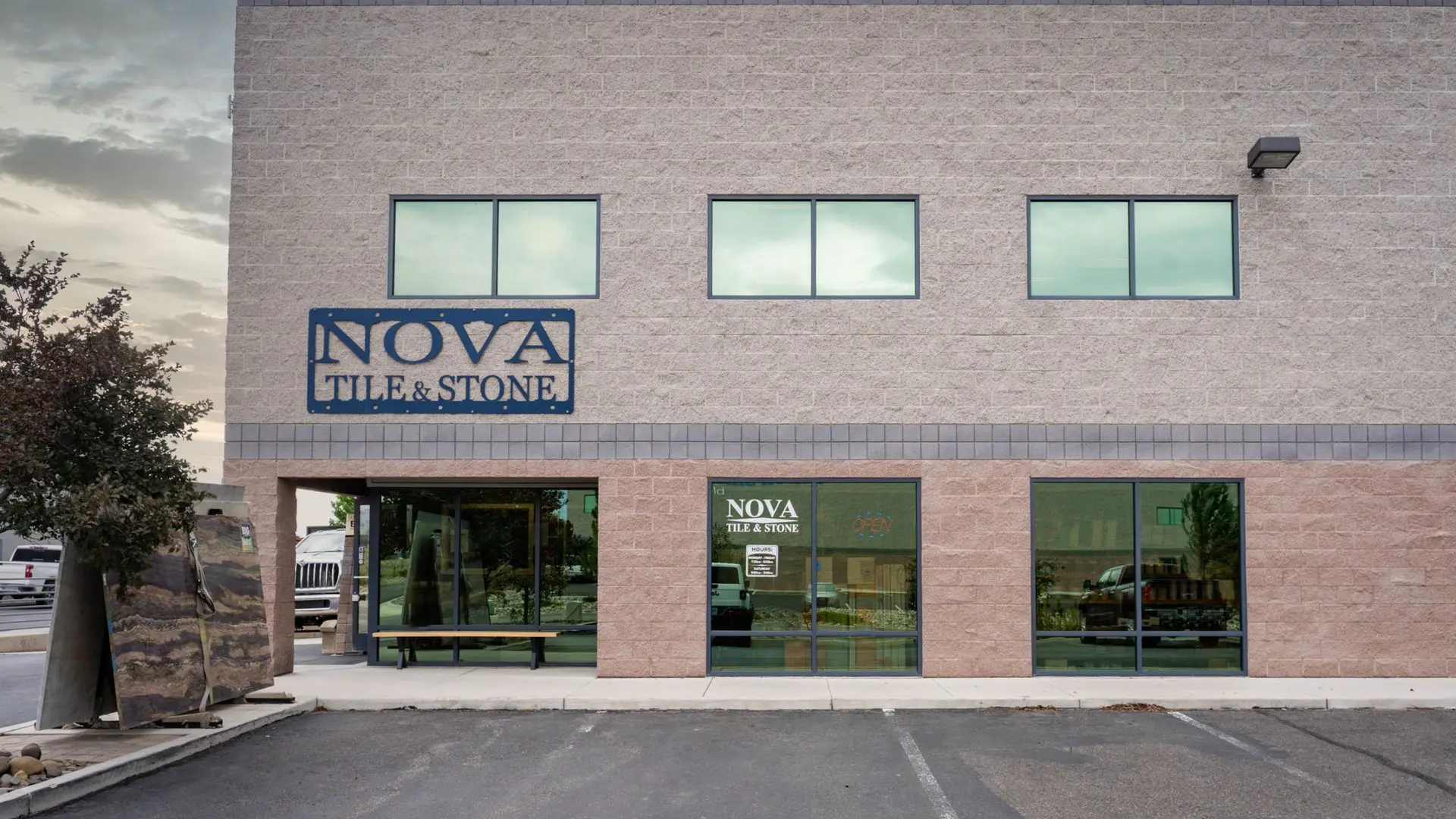
Nova Tile and Stone team serves customers in Reno, Sacramento, and Minden with exterior stone and porcelain materials, and design consultants are available to review each project's details.
Why Does Paver Thickness Matter for Long-Term Performance?
Thickness controls how much weight a paver can carry before it flexes and cracks. Thicker units generally resist bending better, although stone strength and the support system beneath also play a part.
Industry stone ordering guidance explains that expected traffic, format size, stone strength, and subgrade conditions all influence the required depth. Larger pieces under heavier traffic generally need thicker stone.
Material strength matters as well. A stone with a lower modulus of rupture generally needs more thickness than a stronger stone to carry the same load, which is why specification sheets deserve a close read.
Choosing the correct depth offers several practical benefits:
- Better resistance to cracking under expected loads, when the support system suits the site
- Longer surface life, though sealing and routine care still preserve appearance
- Steadier walking surfaces with fewer shifting or rocking units
- More design freedom, since larger formats become practical at suitable depths
- Fewer repairs over time when thickness matches the traffic level
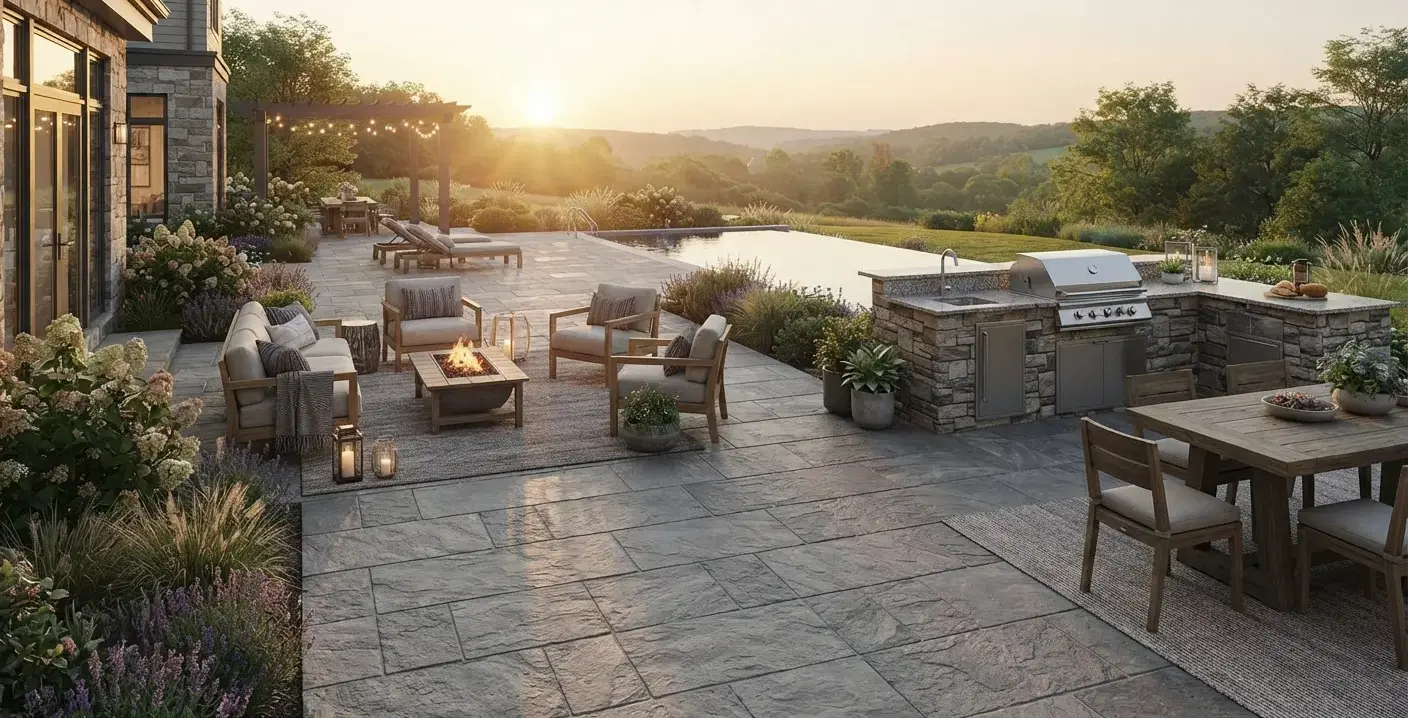 Conceptual rendering
Granite, quartzite, and travertine typically need sealing, while porcelain generally does not. Browse exterior stone slabs online to compare materials alongside thickness options.
Paver Thickness Guide for Patios, Walkways, and Driveways
Each application carries a different load profile. Choosing the right paver depth for outdoor projects means matching thickness to the heaviest traffic the surface will realistically see.
Patios and Outdoor Living Areas
Patios mainly carry foot traffic, furniture, and the occasional grill. Units around 3/4 inch to 2 inches are common, with larger formats generally benefiting from additional depth.
Technical literature on exterior granite pavers describes units from one to three inches thick, with strength, service loads, and weathering exposure guiding selection.
Polished finishes become slippery when wet, so leathered, textured, or specialty finishes often suit wet patio zones better. Confirm the exact product's slip rating before ordering.
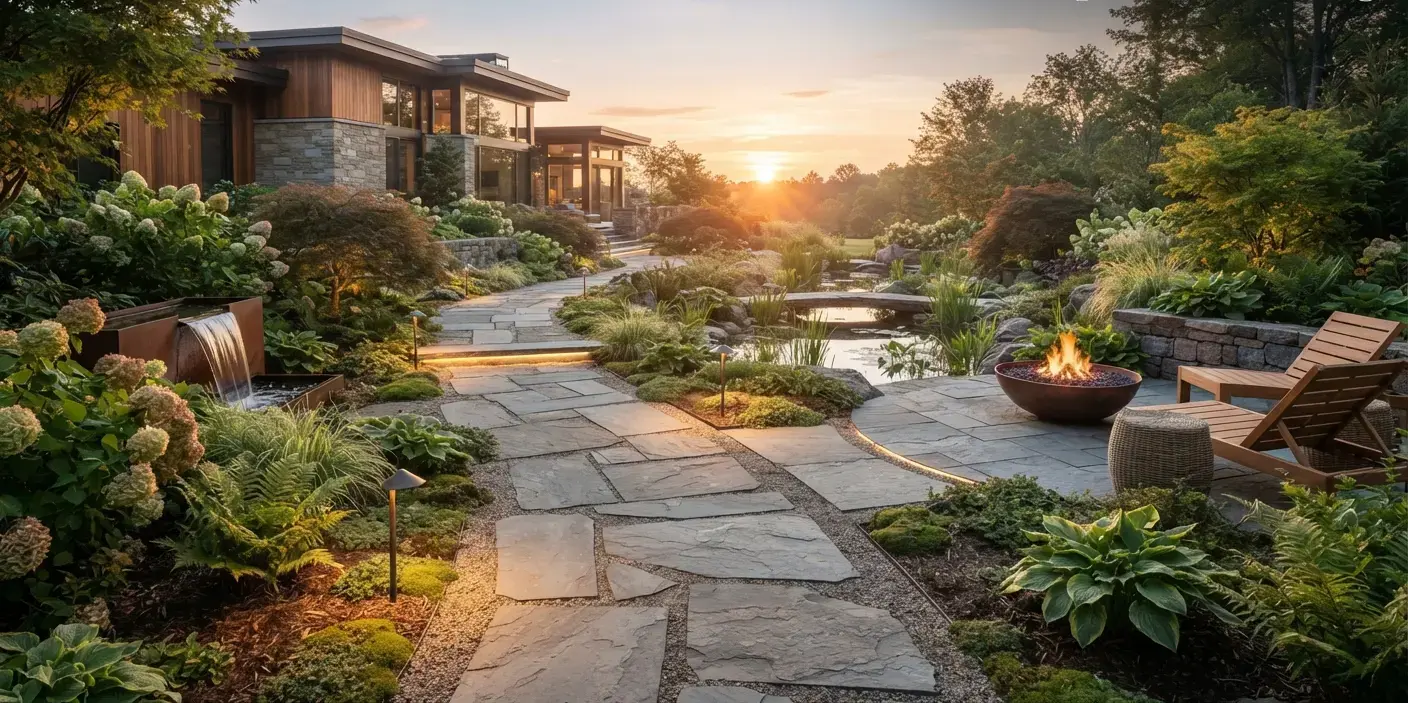 Conceptual rendering
Walkways and Garden Paths
Walkways see steady footsteps but rarely heavy loads. Units around 3/4 inch to 1 1/4 inches commonly perform well, and smaller formats add resilience at the same depth.
In freeze-thaw climates such as Reno and Minden, verify each product's freeze-thaw results or water absorption data before ordering. Granite, quartzite, travertine, and porcelain are the usual exterior choices.
Design plays a role too. Rectangular formats suit long, linear paths, while smaller square formats create classic patterns. Either way, consistent thickness along the path keeps edges level and comfortable underfoot.
Driveways and Vehicle Areas
Driveways demand the most from any paver. Vehicles concentrate heavy loads on small areas, so thicker stone, smaller formats, and a support system designed for vehicles are typical. Dense materials such as granite and quartzite are common starting points.
Coverage of dimension stone standards notes that engineers reported a disproportionate share of paver failures under vehicle traffic, often because designs were not matched to the loads imposed.
A thickness that suits foot traffic may fail under a delivery truck. Porcelain should only be considered for vehicles when the specific product carries a manufacturer vehicle-load rating.
Comparison of Common Thickness Ranges
These ranges are general references only. Confirm exact figures on the product specification sheet.
Application | Common Thickness Range | Suitable Materials | Key Check |
Patio | 3/4 inch to 2 inches | Granite, quartzite, travertine, porcelain | Slip rating and format size |
Walkway | 3/4 inch to 1 1/4 inches | Granite, quartzite, travertine, porcelain | Freeze-thaw or absorption data |
Driveway | 2 inches or more, or smaller formats | Granite and quartzite; others only with a confirmed load rating | Manufacturer load rating |
Format matters as much as thickness. A large slab-style paver and a small unit of identical thickness will not carry the same load, so always compare size and depth together.
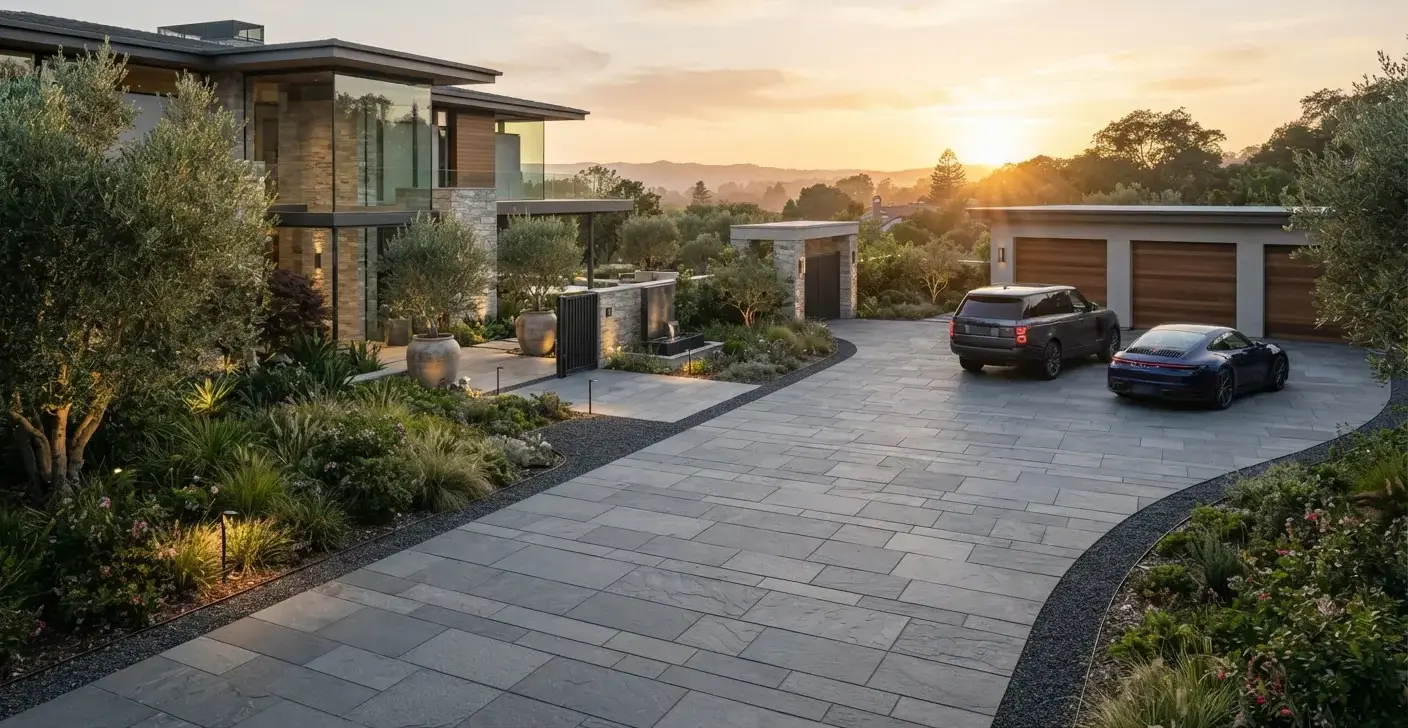 Conceptual rendering
Thicker Pavers: Advantages and Disadvantages
Thicker units suit demanding spaces, yet they are not the right answer everywhere.
Advantages
- Greater resistance to bending and cracking under heavier loads
- More flexibility with larger, bolder formats
- Added margin where traffic may change over time
Disadvantages
- Heavier units need more planning for delivery and handling
- Added height must align with doors, steps, and adjacent surfaces
- Thicker is not always better, since pedestrian areas may gain little
Five Steps to Select the Right Thickness
- Define the heaviest use. Decide whether the surface sees foot traffic only, occasional vehicles, or regular driveway parking.
- Choose a suitable material. Granite, quartzite, and porcelain are generally UV-resistant, while travertine needs its exact UV rating confirmed for full-sun areas.
- Match format to depth. Larger pieces need more thickness than smaller ones under the same load.
- Review climate and finish. Check freeze-thaw data, sun exposure, and textured finishes for wet areas.
- Request expert review. Send the project details through the quote request form for guidance.
How Nova Tile and Stone Supports Exterior Projects
Nova Tile and Stone supplies natural stone and porcelain materials for exterior projects. Commission-free design consultants help match thickness, material, and finish to the intended use, so this paver thickness guide becomes a practical plan.
Visit the Reno showroom to compare exterior stone finishes in person.
The Minden showroom serves Carson Valley projects with the same expert guidance.
Customers in the Sacramento area can visit the Sacramento showroom for hands-on comparisons.
Bring the project's dimensions, intended use, and photos of the space. A consultant can then compare materials, finishes, and available thicknesses against expected traffic and flag specification details worth confirming.
Arranged delivery assistance is available for project sites. To review thickness options for a specific project, schedule a consultation with a Nova design consultant.
Key Takeaways
- Choosing the right paver depth for outdoor projects starts with the heaviest realistic traffic, not the average.
- Patios and walkways generally allow thinner units, while driveways usually need thicker stone or smaller formats.
- Larger formats need more depth than smaller ones under the same load.
- Confirm freeze-thaw, UV, sealing, and load details on each product's specification sheet.
- Use this paver thickness guide as a starting point before expert review.
Plan Your Exterior Stone Project
Selecting the right depth is easier with expert input. A Nova design consultant can review traffic, format, material, and climate, then point toward practical options suited to the project and the climate.
Reno
12835 Old Virginia Rd, Suite 24 Reno, NV 89521
- Mon – Fri: 7:30am – 6:00pm
- Sat: 9:00am – 3:00pm
- Sun: Closed
BOOK NOW
Minden
2548 Business Pkwy, Minden, NV 89423
- Mon – Fri: 7:30am – 6:00pm
- Sat: 9:00am – 3:00pm
- Sun: Closed
BOOK NOW
Sacramento
6100 Warehouse Way, Sacramento, CA 95826
- Mon – Fri: 7:30am – 6:00pm
- Sat: Closed
- Sun: Closed

BOOK NOW
Questions about thickness, finish, and delivery are always welcome, and the conversation stays focused on your goals. Book your free consultation today!
Frequently Asked Questions
Patio pavers commonly range from about 3/4 inch to 2 inches, depending on material, format size, and support. Pedestrian use allows thinner units, while large formats or heavy furniture may call for more depth. Always confirm thickness and load details on the product specification sheet.
Not automatically. Driveways place concentrated vehicle loads on the surface, so thicker stone or smaller formats are typically needed. A walkway paver should only be used for vehicles if the manufacturer confirms a suitable load rating for that exact product and application.
Climate mainly affects material and finish. Freeze-thaw winters in Reno and Minden make absorption and freeze-thaw data worth checking, while strong Sacramento sun makes UV ratings important. Granite, quartzite, and porcelain are generally UV-resistant, while travertine should have its exact UV rating confirmed.
Granite, quartzite, and travertine typically need sealing to help protect against stains and moisture. Porcelain generally does not, though regular care still helps preserve the surface. Marble and dolomite are better reserved for indoor spaces, so exterior projects usually focus on other materials.
Polished surfaces become slippery when wet, so leathered, textured, or specialty finishes often suit pool-adjacent or rain-exposed areas better. Finish availability varies by material, so a design consultant can help confirm the exact product's slip rating and finish options before ordering.
Note: Some images on this page may be conceptual renderings created to illustrate design possibilities and may not depict actual installations.
Sources
- Landscape Architect Magazine, Natural Stone Ordering 101: https://landscapearchitect.com/landscape-articles/2009-march-lcn-hardscapes-natural-stone-ordering-101
- ASTM International, dimension stone standards feature: https://www.astm.org/news/stone-cold-dimension-stone-standards-jf24
- ASTM International, Design and Selection of Exterior Granite Pavers: https://store.astm.org/stp13543s.html