AT A GLANCE
- Check the density class first. ASTM C568 groups limestone into low, medium and high density, with maximum water absorption ranging from 12% to 3%.
- Limestone is acid-sensitive, so spills like wine and citrus can etch the surface, and sealers do not prevent etching.
- Textured finishes such as tumbled, brushed or sandblasted offer more grip outdoors than honed or polished surfaces.
- Dense, low-absorption limestone handles freeze-thaw cycles better, while deicing salts can wear down the surface over time.
- Light colors tend to stay cooler in the sun, and a breathable penetrating sealer helps reduce staining.
- Buy enough from one production lot, since color can vary between quarry blocks.
IN THIS POST
- Is All Limestone the Same Outdoors?
- Why Does Limestone React to Acid?
- Which Limestone Finish Works Best Outside?
- Can Limestone Pavers Handle Freezing Winters?
- Do Limestone Pavers Get Hot in the Sun?
- Should You Seal Limestone Pavers?
- Why Do Limestone Pavers Vary From Piece to Piece?
- Conclusion
- Frequently Asked Questions
- Sources
Before buying limestone pavers, check seven things: the stone’s density class, its sensitivity to acid, the surface finish, how it handles freeze-thaw cycles and deicing salt, how hot it gets in the sun, whether it needs sealing, and how much it varies from piece to piece. Together, these factors decide how limestone performs on patios, pool decks and walkways.
Limestone is a sedimentary stone made mainly of calcium carbonate, which is why it reacts to acids. ASTM C568 sorts limestone into low, medium and high density classes, with maximum water absorption ranging from 12% down to 3%. Denser limestone with a textured finish usually holds up best outdoors, especially in climates where winters freeze.
Use the seven sections below as a checklist when you compare limestone with other pavers and exterior stone.
1. Is All Limestone the Same Outdoors?
No. Limestone varies widely in density and water absorption, and those two numbers have a big effect on outdoor performance. ASTM C568, the standard specification for limestone dimension stone used in building and structural work, groups limestone into three approximate density classes.
Class | Density (lb/ft³) | Max absorption by weight | Min compressive strength |
| I, low density | 110 to 135 | 12% | 1,800 psi |
| II, medium density | Over 135 to 160 | 7.5% | 4,000 psi |
| III, high density | Over 160 | 3% | 8,000 psi |
As a rule, denser limestone absorbs less water and tends to hold up better under foot traffic. That matters for patios, pool decks and anything exposed to rain or irrigation spray. Softer, more porous limestone can still work outdoors, but it usually needs more care.
Origin matters too. Limestone from different quarries and countries can share a similar color but have very different properties, so a product name alone does not tell you how a stone will perform.
When you compare options, check the product’s specifications for its density class, absorption and compressive strength. Two pavers that look nearly identical in a showroom can perform very differently after a few seasons outside.
2. Why Does Limestone React to Acid?
Most limestone is made mainly of calcite, a form of calcium carbonate, which dissolves when it touches acid. Some limestones also contain dolomite, a calcium magnesium carbonate that reacts more slowly, but all limestone should be treated as acid-sensitive. On a patio, that reaction shows up as etching: dull, rough or lighter spots where the surface has been eaten away.
Common outdoor sources of acid include:
- Spilled wine, citrus juice, soda and vinegar-based marinades
- Fallen fruit and decaying leaves
- Some fertilizers and garden products
- Acidic or “heavy-duty” masonry cleaners
Etching is different from staining. A stain is something absorbed into the stone. An etch is physical damage to the surface, and a sealer cannot fully prevent it. Penetrating sealers, the type usually recommended outdoors, slow down absorption rather than forming a hard coating over the stone.
Etching also tends to be less noticeable on textured outdoor finishes than on a smooth indoor surface. Tumbled and brushed limestone already have a soft, matte look, so small etch marks often blend in as the stone weathers. A stone care professional can help with larger or more visible spots.
To limit etching, rinse spills quickly, use pH-neutral cleaners made for natural stone and avoid placing limestone directly under a fruit tree. For an area where acidic spills are frequent, such as an outdoor kitchen or bar, granite or porcelain pavers may be a more practical choice.
3. Which Limestone Finish Works Best Outside?
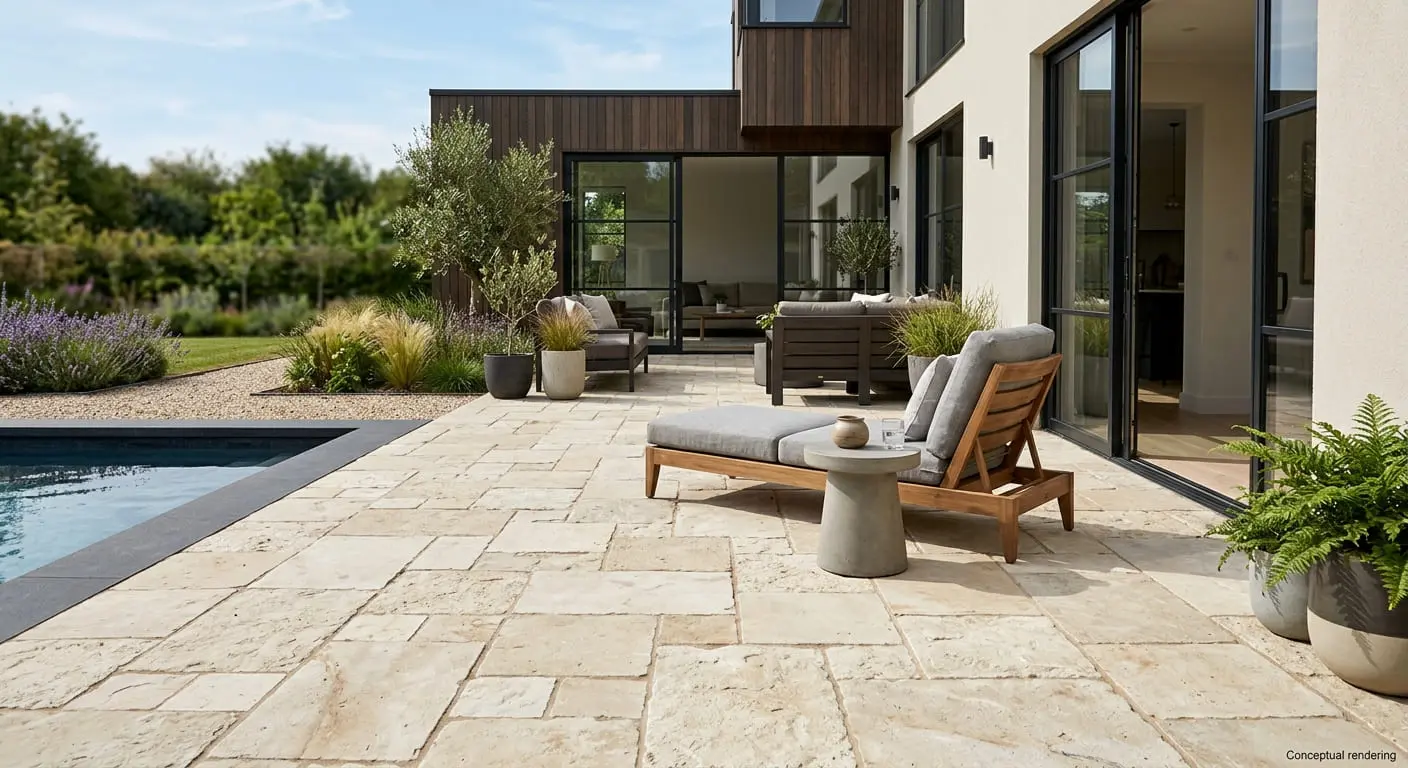
Textured finishes usually work best outdoors because they offer more grip when wet. The finish you choose also affects how the stone looks and how easily it shows wear.
- Tumbled: Softened edges and a weathered, old-world look. Small surface pits help hide dirt and minor wear.
- Brushed: A gently textured surface with a soft, leathery feel. A middle ground between grip and a clean look.
- Sandblasted or bush-hammered: A rougher texture that adds traction around pools, steps and sloped walkways.
- Split face or natural cleft: An uneven, rustic surface often used for walls, borders and informal paths.
- Honed: A flat, smooth matte surface. It can feel slicker when wet, so it is often better suited to covered areas.
Polished limestone is generally not recommended for outdoor floors. It can be slippery when wet, and sun, weather and foot traffic will wear the shine away unevenly.
Style is part of the decision as well. Tumbled limestone suits cottage, Mediterranean and rustic designs, while brushed or honed pavers in larger formats lean more modern.
If the pavers will surround a pool, look closely at texture and ask about slip resistance before you decide. A free design consultation is a good time to compare finishes side by side and talk through where each one makes sense.
4. Can Limestone Pavers Handle Freezing Winters?
Dense, low-absorption limestone can handle freezing winters well, but porous limestone is more likely to show damage. When water soaks into a stone and freezes, it expands. Over many freeze-thaw cycles, that pressure can cause flaking or spalling, where thin pieces break away from the surface.
Climate matters a lot here. Our showroom areas range from Sacramento Valley homes that rarely see a hard frost to high-desert homes in northern Nevada where winter nights drop below freezing again and again. If your patio freezes regularly, put density and absorption at the top of your list.
Deicing salt is the other concern. Salt dissolved in water moves into the pores of the stone, then recrystallizes as it dries. Repeated cycles can make the surface crumble or flake over time, a problem sometimes called salt fretting. The same process can affect limestone around saltwater pools.
A few habits help:
- Choose medium- or high-density limestone for areas that freeze
- Talk with your installer about drainage so water runs off the paved area instead of pooling on it
- Use sand for traction, or a deicer the stone or sealer manufacturer approves
- Shovel snow early so it does not melt and refreeze on the surface
5. Do Limestone Pavers Get Hot in the Sun?
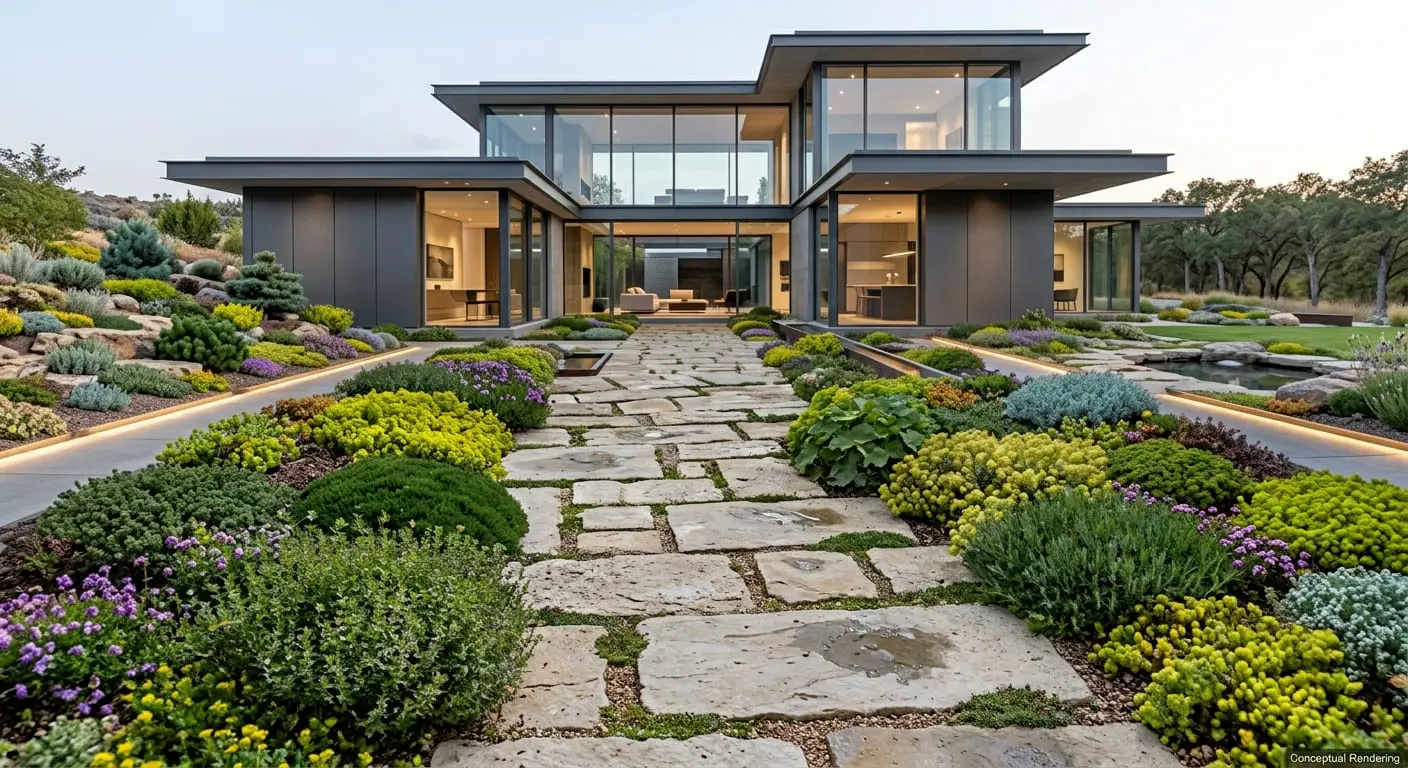
Light-colored limestone tends to stay cooler than dark pavers, because pale surfaces reflect more sunlight instead of absorbing it. That is one reason limestone is a common pick for pool decks and sunny patios.
Most outdoor limestone comes in creams, beiges, light grays and soft whites. Darker limestones, such as blue-gray or charcoal varieties, absorb more heat. Color is the biggest clue you can see, though the stone’s makeup and surface also play a part. Any stone in full afternoon sun will still get warm, so “cooler” does not mean cool to the touch on every summer day.
If barefoot comfort is a priority, compare light and dark stones in natural daylight, and notice how similar-colored surfaces around your home feel in the afternoon sun. These checks can tell you more than a product description.
Lighter colors also show dirt, leaves and tree debris more easily. A mid-tone cream or warm beige is often a reasonable compromise between heat and upkeep.
6. Should You Seal Limestone Pavers?
In most outdoor settings, a breathable penetrating sealer is worth considering for limestone. Penetrating sealers, also called impregnating sealers, soak into the pores and reduce how much water and oil the stone absorbs, which helps with staining. Some are also formulated to reduce salt and freeze-thaw damage, so check the product’s label for outdoor and freezing-climate use.
A sealer will not stop acid etching, and it will not make the stone completely stain-proof. It mainly gives you more time to clean up spills.
Avoid topical film-forming sealers on outdoor limestone unless the product is specifically made for it. Films can trap moisture underneath, change the surface texture and become slippery when wet.
Before sealing a whole patio, test the product on a spare paver or a hidden corner. Some sealers slightly deepen the color of the stone, and a test piece shows you the result before you commit.
To check whether your pavers need sealing, sprinkle a little water on the surface. If it darkens the stone within a few minutes, the stone is absorbing water and may need a fresh coat. How often you reseal depends on sun exposure, foot traffic and the product you use, so follow the sealer manufacturer’s directions.
7. Why Do Limestone Pavers Vary From Piece to Piece?
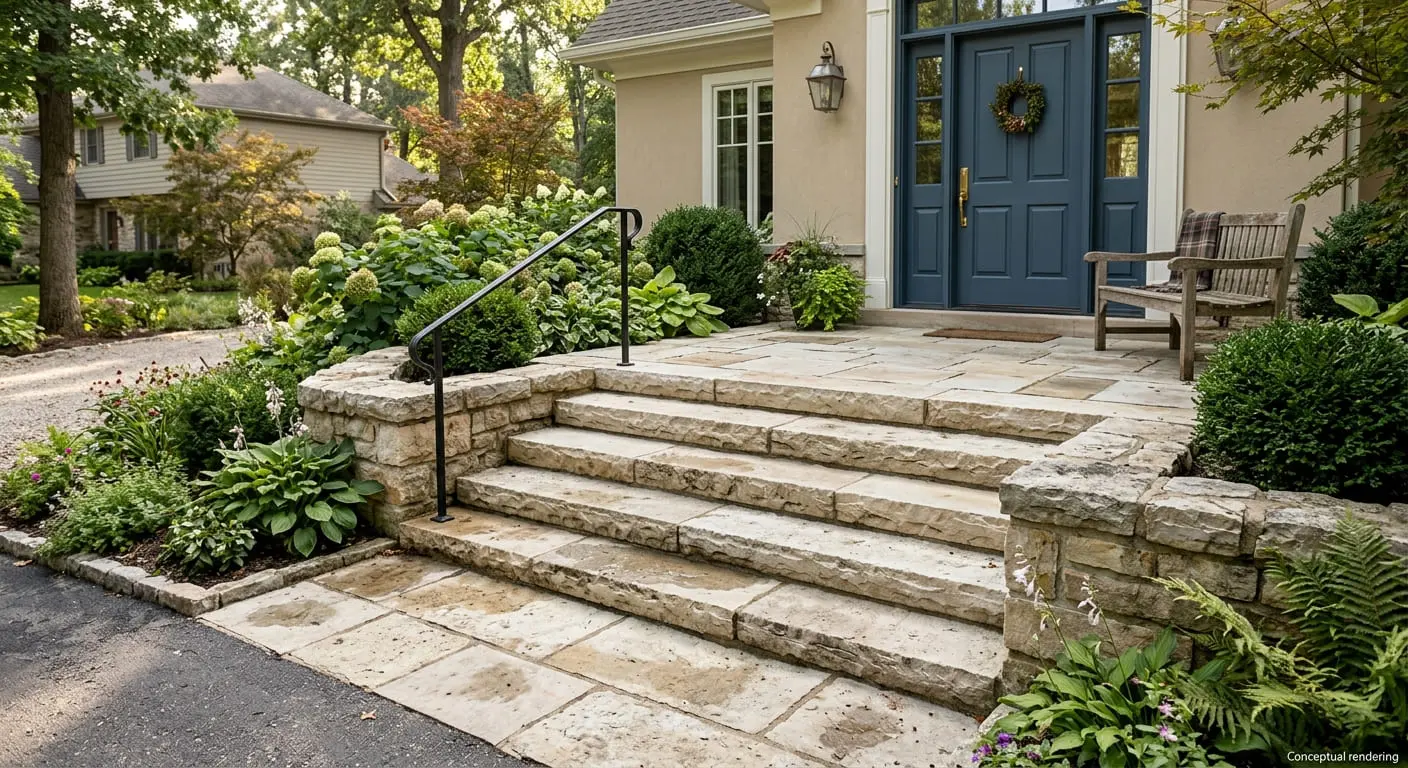
Most limestone forms over very long periods from shell fragments, tiny fossils and other sediment, so color and texture shift from block to block. Some pieces show visible fossils, small pores, color clouds or faint veining, while others have a very fine, even grain. This variation is a natural trait of the stone, but it can surprise people who expect every paver to match.
Variation also happens between production lots. Pavers cut from different quarry blocks can differ noticeably in tone. A few steps help you avoid mismatches:
- Look at several pieces, not one sample, to see the full range
- Buy enough for the whole project from the same lot
- Plan for extra material to cover cuts, breakage and future repairs
- Ask your installer to pull pavers from several crates or pallets as they work so the color blends evenly
Limestone also changes slowly outdoors. Sun, rain and foot traffic soften its color and texture over time. Some homeowners like that weathered character, while others prefer a more uniform look, so it is worth knowing up front.
If you are shopping on a tighter budget, our overstock sale can be a good place to look. Quantities are often limited, so confirm there is enough from a single lot to finish your project. Contractors and designers ordering for client projects can apply for a trade account to get trade pricing and job-site delivery.
Conclusion
Limestone pavers suit patios, pool decks and walkways when the stone matches the setting. Start with density and absorption, especially if your area freezes. Then choose a textured finish for grip, a lighter color if heat is a concern and a breathable penetrating sealer to help with everyday spills and moisture. Finally, plan around the traits that come with limestone, such as acid sensitivity and natural variation from piece to piece.
The easiest way to compare is in person. Seeing several pieces side by side shows you the real color range, texture and finish far better than a photo. We would be glad to help you compare paver and exterior stone options at any of our showrooms in Sacramento, Reno and Minden. Bring your project photos, measurements and questions, and we will help you narrow down what fits your space.
Note: Some images on this page may be conceptual renderings created to illustrate design possibilities and may not depict actual installations.
Frequently Asked Questions
Yes, limestone pavers are a common choice for pool decks. Light colors tend to stay cooler underfoot, and textured finishes such as tumbled, brushed or sandblasted add grip when wet. For saltwater pools, choose a dense stone and a sealer labeled for saltwater pool use.
Dense limestone can perform well outdoors for decades with reasonable care. How well it holds up depends on its density, the climate, drainage and maintenance habits such as sealing and avoiding acidic cleaners and harsh deicers.
Natural limestone pavers generally cost more than standard concrete pavers. Price varies with the quarry, size, thickness, finish and density class, so it helps to compare specific products side by side.
Sweep regularly, then wash with water, a soft brush and a pH-neutral cleaner made for natural stone. Avoid acidic or harsh masonry cleaners, which can etch the surface. If you use a pressure washer, keep the pressure low and the nozzle at a distance to protect the finish.
Travertine is a form of limestone deposited by mineral-rich spring water and groundwater. Gas bubbles and plant material trapped as it forms leave natural holes and a layered texture. Standard limestone usually has a more even, solid surface. Both are made mainly of calcium carbonate, so both are sensitive to acid and benefit from similar care.
SOURCES
- ASTM International, ASTM C568/C568M-22: Standard Specification for Limestone Dimension Stone: https://store.astm.org/c0568_c0568m-22.html
- U.S. General Services Administration, Historic Preservation Technical Procedures: Limestone Characteristics, Uses and Problems: https://www.gsa.gov/portal/content/111930
- Natural Stone Institute, Effects of Deicing Chemicals in Natural Stone: https://www.naturalstoneinstitute.org/events/calendar-of-events/effects-of-deicing-chemicals-in-natural-stone/
- Stain-Proof by Dry-Treat, Product Catalog: Sealers 101: https://www.chemical-concepts.com/wp-content/uploads/2025/02/Stain-Proof-Dry-Treat-Catalog.pdf
- Lawrence Berkeley National Laboratory, Heat Island Group Research on Cool Pavements: https://newscenter.lbl.gov/?p=23861
- Rutgers Center for Green Building, NJ Green Building Manual: High Reflectance Hardscape Materials: https://greenmanual.rutgers.edu/nr-high-reflectance-hardscape-materials/